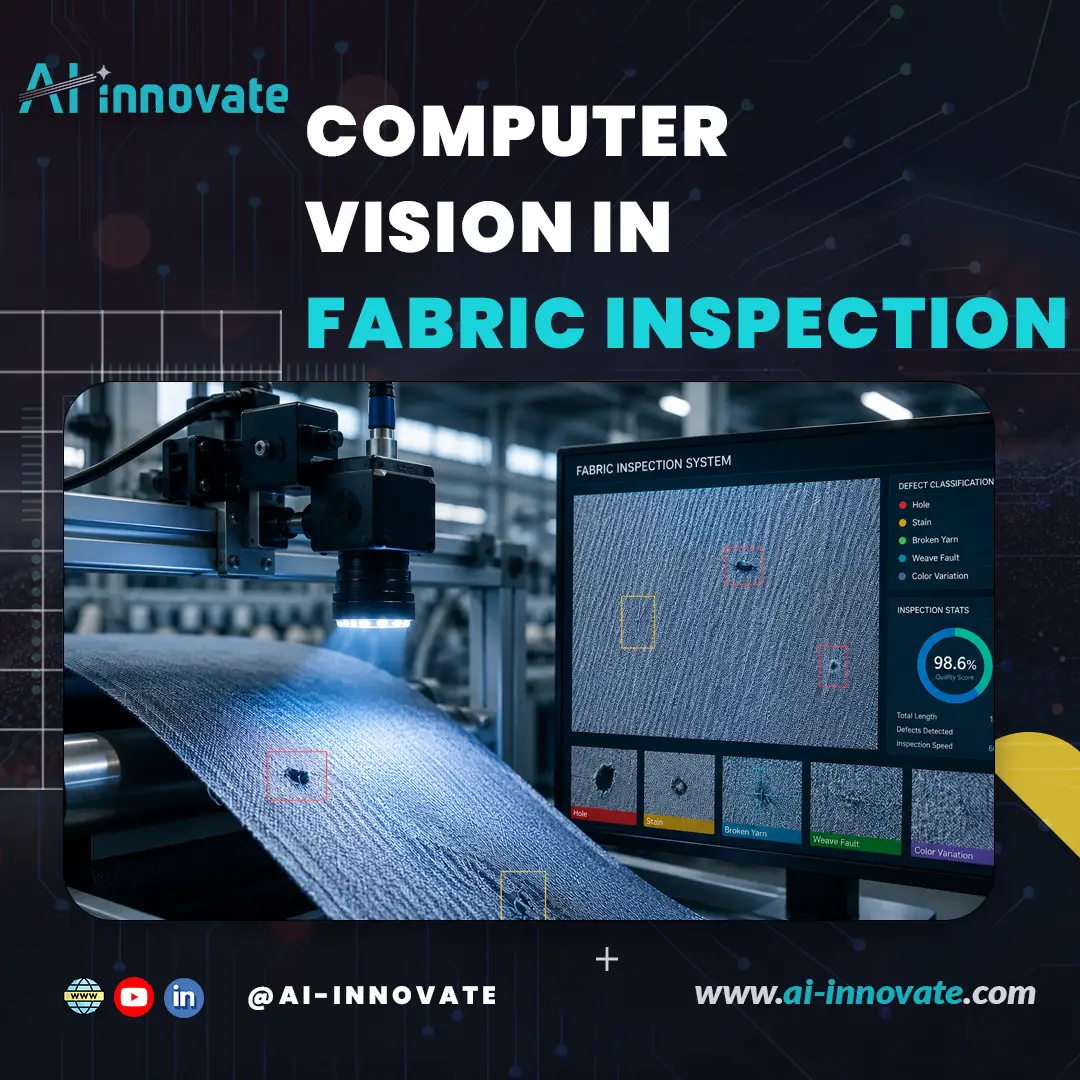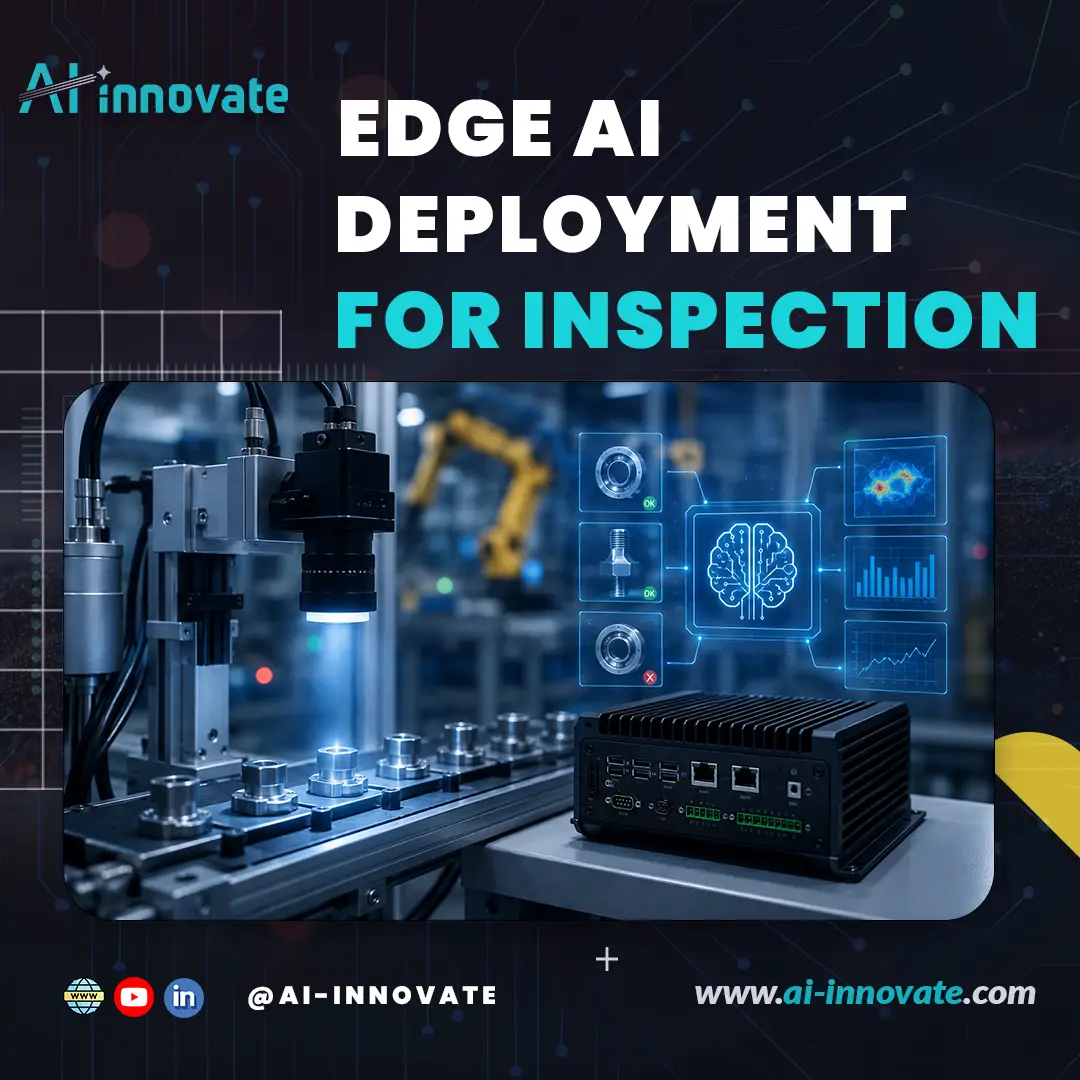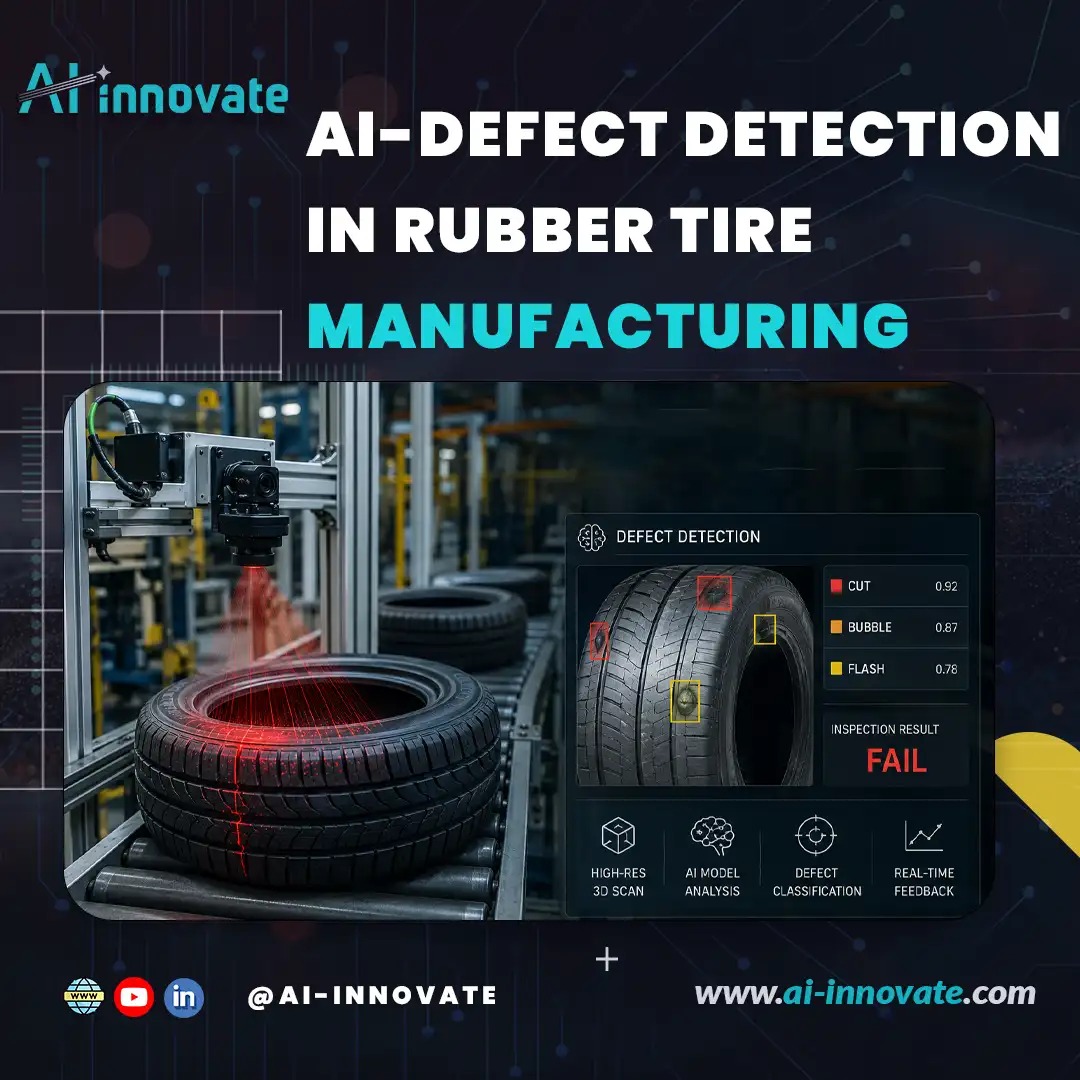





AI has recently become the hot topic of many discussions, and most of the time, the debate is centered around the advantages or disadvantages of it. The concern has found its way to the manufacturing world, and many seek to know what exactly AI brings to the table. When it comes to surface defect detection, the benefits are rather obvious and can be seen through real-time detection and faster processes, so the challenges might get overlooked. As with everything else, AI surface defect detection systems have their own limits, and acknowledging these limits opens the door to better integration. In this blog, we explore the most common challenges in AI surface defect detection systems for informed decision making and how to overcome them.
Smarter Surface Defect Detection Powered by AI
AI-driven vision systems detect scratches, dents, and surface irregularities with exceptional accuracy. Improve quality, reduce scrap, and ensure consistent manufacturing standards with intelligent surface defect detection.

Data & Training Challenges
Data is the backbone of any AI system. Without the correct data, AI surface defect detection systems will struggle to perform. This reliance causes issues such as:
- Limited defect samples: Many manufacturing processes are designed to reduce defects, which is good for production but problematic for AI training. Rare defects may only appear sometimes, which makes it hard to collect enough examples for the model to learn from.
- Highly imbalanced datasets: A typical dataset may contain thousands of images of acceptable surfaces for every image containing a defect. This imbalance can cause models to become biased toward predicting “no defect”.
- Complex and subtle defect patterns: Surface defects can be different sizes, shapes, contrasts, and textures. Scratches, pits, stains, or micro-cracks may look different depending on the material and how it was processed.
- Time-consuming data labeling: Labeling defect data requires knowledge of the subject. Quality engineers must tell the difference between defects and acceptable surface variation, which makes annotation slow and expensive.
Environmental & Hardware Issues
Even the best AI model can’t make up for poor image quality. It’s often just as important to make the imaging environment stable as it is to improve the algorithm itself.
Common Environmental Challenges
- Lighting variability: Things like changes in the amount of light, reflections from shiny surfaces, or shadows can make defects in images look different.
- Dust, oil, and contamination: The air in places like factories often contains tiny particles or other types of residue. These can make it hard to see small details on surfaces or can add noise to images.
- Vibration and movement: If machines vibrate or parts move, it can cause blurry or misaligned images.
- Temperature and humidity fluctuations: Things like changes to the environment can have an effect on camera sensors, lenses and lighting.
- Read Also:
Hardware-Related Challenges
- Insufficient camera resolution: Low-resolution cameras may not be able to see small surface defects, such as micro-cracks or subtle texture differences.
- Inadequate lighting design: If the lighting isn’t positioned right or isn’t consistent, it can hide defects or create false patterns.
- Hardware degradation over time: Cameras, lenses and lights can drift out of calibration or degrade over time.
Operational & Integration Hurdles
Poor integration results in inconsistent quality decisions on top of creating confusion among operators and slowing the production down. Using AI in the production process brings its own challenges, not just technical issues.
- Legacy equipment compatibility: Many factories still use older machines that weren’t made to work with modern AI systems or data storage methods.
- Complex system integration: AI inspection needs to communicate with other software systems, such as MES, QMS and production control software.
- Unclear decision logic: Defining pass, fail, and review thresholds can be difficult, especially for borderline cases.
- Scalability across lines and plants: A system that works well on one production line may not work the same way across multiple facilities with different conditions.
Organizational & Human Factors
Outside of the systems, human and organizational readiness is essential for leveraging AI to its full potential. Even the most accurate AI system will fail if people don’t trust it or adopt it. To make this happen, you need to manage any changes, provide training, and be open about what you’re doing.
- Black-box perception: Deep learning models can be tricky for teams to explain to auditors or customers, because they aren’t always clear how they work.
- Insufficient training: Without proper training, staff may misuse the system or ignore its outputs altogether.
- Resistance to workflow changes: AI inspection can change responsibilities and processes, which can lead to resistance if it’s not managed carefully.
- Unclear ownership and accountability: It may be unclear whether AI systems fall under quality, engineering, or IT responsibility.
How Manufacturers Can Approach These Challenges Strategically
None of the above mentioned challenges in AI surface defect detection systems are impossible to solve. In fact, it’s fairly easy with the right strategy.
Challenge Area | Specific Challenge | Mitigation Strategy |
Data & Training | Rare or insufficient defect samples | Use data augmentation, synthetic defect generation, and transfer learning |
Data & Training | Imbalanced datasets | Apply weighted loss functions or anomaly detection trained on normal samples |
Data & Training | Changing defect patterns | Implement continuous data collection and model retraining |
Environment | Lighting and reflection variability | Use controlled, diffuse, or polarized lighting setups |
Environment | Dust, vibration, and noise | Install protective enclosures and perform regular calibration |
Hardware | Limited image resolution | Deploy high-resolution cameras or multi-sensor systems |
Operations | Real-time speed vs accuracy | Use edge AI devices and optimized inference models |
Integration | Legacy system compatibility | Introduce modular AI systems with standardized interfaces |
Integration | Multi-site scalability | Centralize model management and deployment pipelines |
Human Factors | Lack of trust in AI output | Use explainable AI to highlight defect regions and confidence scores |
Human Factors | Operator skill gaps | Provide structured training and clear escalation workflows |
How AI-innovate Supports Reliable AI Surface Defect Detection Systems
AI-innovate helps manufacturers address the technical, operational, and organizational challenges of AI surface defect detection by providing practical, production-ready inspection products. Our solutions support manufacturers with:
- AI-based surface defect detection and decision support through AI2Eye, enabling consistent identification of defects despite data imbalance, environmental variation, and subtle surface patterns
- Synthetic data generation and validation using AI2Cam, helping teams overcome limited defect samples and reduce the burden of manual data labeling
- Scalable deployment and system integration powered by AIxCore, allowing AI inspection workflows to connect with existing cameras, production lines, and quality systems
- Explainable and adaptable AI inspection workflows that improve trust, support operator training, and enable continuous model improvement across lines and facilities
Whether manufacturers are dealing with data scarcity, complex integration, or organizational adoption, AI-innovate’s products help turn common challenges in AI surface defect detection systems into manageable, long-term capabilities within modern manufacturing environments.
Conclusion
Despite everything, AI is still a great investment for surface defect detection in manufacturing. The benefits are numerous and the challenges can be overcome. In my opinion, the most successful AI inspection systems use AI to help make decisions, rather than replacing the need for engineering expertise. When problems are dealt with in a way that looks at the bigger picture and is done early, using technology like AI to spot problems on surfaces can become a reliable and manageable part of modern manufacturing.
If you think carefully about how to do this and keep making improvements, you can turn these problems into strengths that will last. This will show how good AI-powered quality control can be.
Sources
Ai-Innovate uses only high-quality sources, including peer-reviewed studies, to support the facts within our articles.
- Springer — AI Perspectives. (2023). AI-Driven Quality Control for Smart Manufacturing: Opportunities and Challenges. Explores how artificial intelligence is reshaping defect detection and quality assurance in smart manufacturing, including technical hurdles and integration pathways. Retrieved from https://link.springer.com/article/10.1007/s44248-023-00004-w
- TEKsystems. (2025). Overcoming AI Implementation Challenges. Discusses common roadblocks organizations face when integrating AI systems (such as data preparation, talent gaps, and change management) and offers practical strategies to address them. Retrieved from https://www.teksystems.com/en-jp/insights/article/overcoming-ai-implementation-challenges
- Dataspan AI Blog. (2025). Automated Defect Detection: How GenAI and Synthetic Data Are Transforming Visual Inspection in Manufacturing. Covers how generative AI and synthetic training data improve defect detection accuracy and accelerate machine vision deployment. Retrieved from https://www.dataspan.ai/blog/automated-defect-detection-how-genai-and-synthetic-data-are-transforming-visual-inspection-in-manufacturing
- Multishoring Blog. (2025). AI in Manufacturing Quality Control. Provides an overview of how AI tools are being applied to automate quality checks, reduce errors, and enhance production efficiency across manufacturing sectors. Retrieved from https://multishoring.com/blog/ai-in-manufacturing-quality-control
Confused About Where to Start with AI?
Our specialists help you identify the right AI approach based on your process, data, and goals.
FAQ
Can AI detect "unseen" or new types of defects?
Standard supervised models only recognize what they were trained on. However, unsupervised anomaly detection (using autoencoders or foundation models) can flag any deviation from “normal” patterns, allowing the system to identify novel defects it has never seen before.
Can AI integrate with my existing production line?
Yes. Most modern solutions are modular and use standard APIs to connect with existing PLCs, SCADA, or Manufacturing Execution Systems (MES).
What types of defects can AI identify?
Modern systems detect a wide range of surface issues including scratches, cracks, dents, corrosion, discoloration, missing components, and micro-cracks as small as 0.1mm.