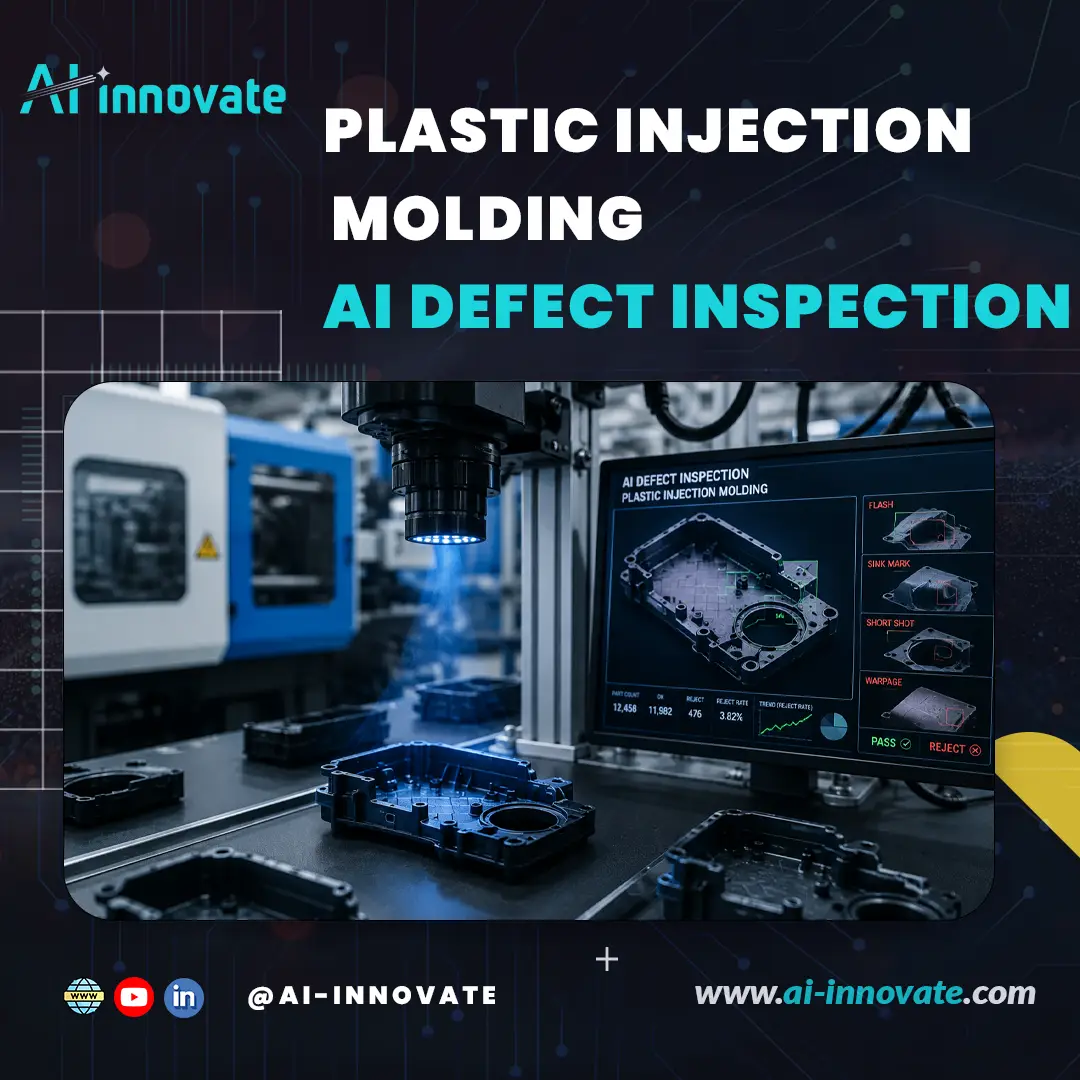





A single defect that reaches a customer can cost far more than one caught on the line, once you factor in returns, warranty claims, and rework. That is the core problem quality teams face every day: manual inspection is slow, inconsistent, and gets worse the longer a shift runs. Computer vision real-time quality control solves this by watching every part, continuously, at full line speed, without fatigue or shift-to-shift variation. This matters because inspection gaps compound quietly until they show up as recalls or lost contracts.
This article explains how real-time inspection actually works, what the data shows, and how manufacturers are putting it to use on the floor today.
What Real-Time Computer Vision Inspection Actually Means
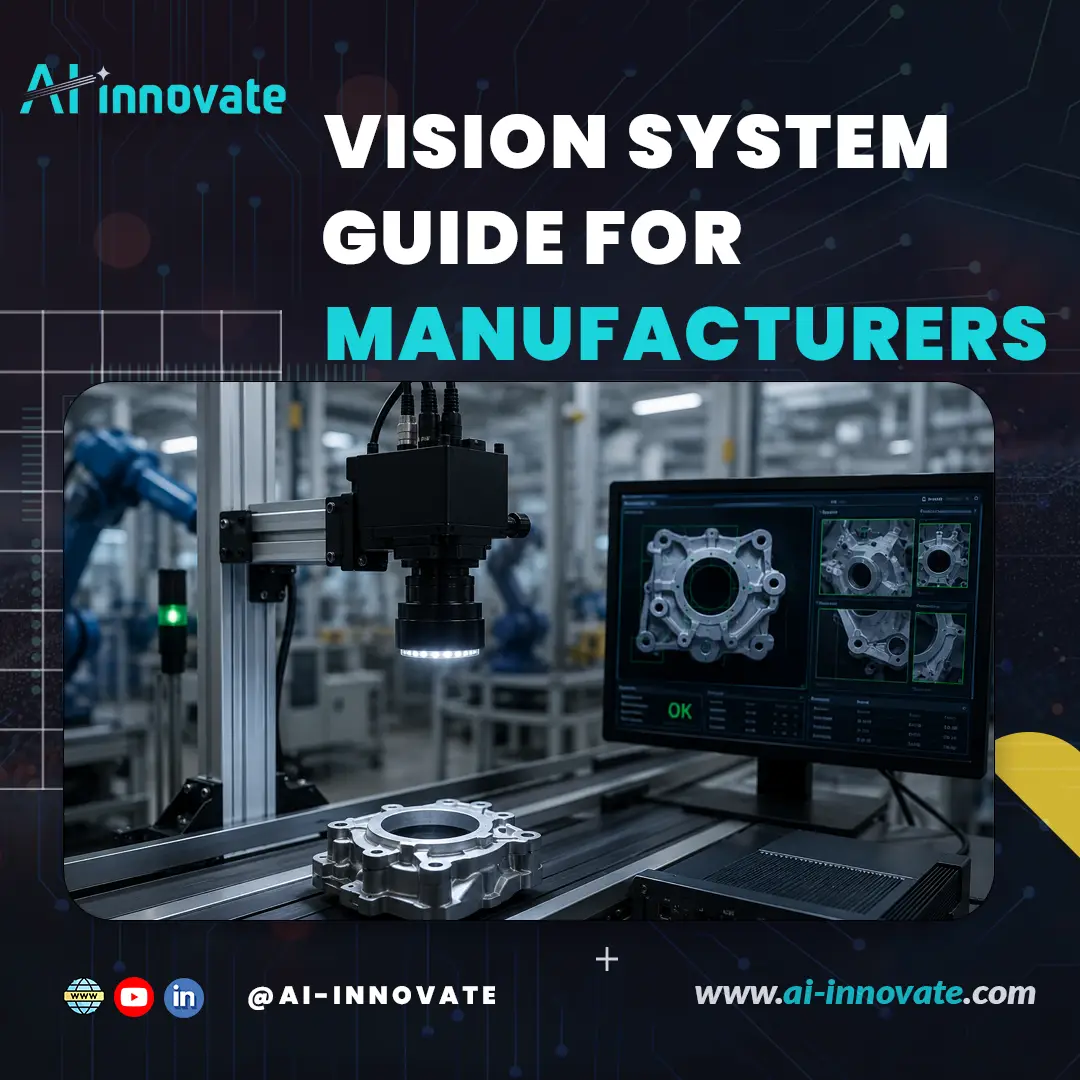
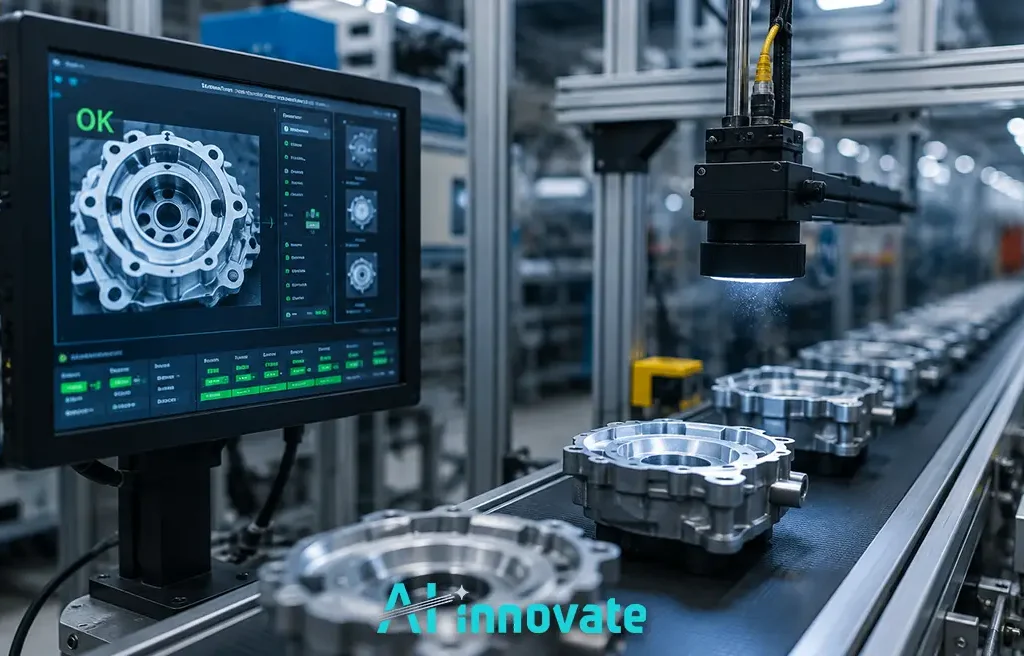
Real-time computer vision inspection uses cameras, sensors, and trained AI models to check products as they move through production, catching flaws in milliseconds instead of after a batch is complete. It differs from older sampling-based checks, which reviewed only a fraction of output and often caught problems too late to prevent further waste.
It also differs from early rule-based machine vision, which relied on fixed thresholds and struggled with any change in lighting, part orientation, or product design. Deep learning inspection systems, built on convolutional neural networks and vision transformers, learn defect patterns from labeled examples and adjust as new variations appear on the line. That adaptability makes industrial AI visual inspection systems practical for high-mix production.
This shift changes what inspection does inside a plant. It stops being a final checkpoint and becomes part of AI-based production monitoring, supporting broader AI-driven quality control strategies rather than sitting apart from them.
Why Manual Inspection Still Falls Short
Human inspectors bring judgment AI can’t fully replace, but the data on manual visual checks is consistent. Research from Sandia National Laboratories shows human inspection accuracy declines measurably over a shift, past the two-hour mark of continuous review.
The main limitations show up in a few predictable ways:
- Fatigue. Detection accuracy commonly drops after a few hours of continuous inspection, with the steepest decline late in a shift.
- Inconsistency. Different inspectors often score the same defect differently, weakening quality records across shifts.
- Throughput limits. A trained inspector typically reviews a few hundred parts per hour, well below what high-volume lines need.
- Cost of scale. Adding coverage usually means hiring more people, while a vision system can extend to new stations at a fraction of the cost.
These constraints are exactly what real-time computer vision inspection addresses, which is why quality inspection has become the leading application of machine vision in manufacturing.
How Inline Inspection Works on the Production Line
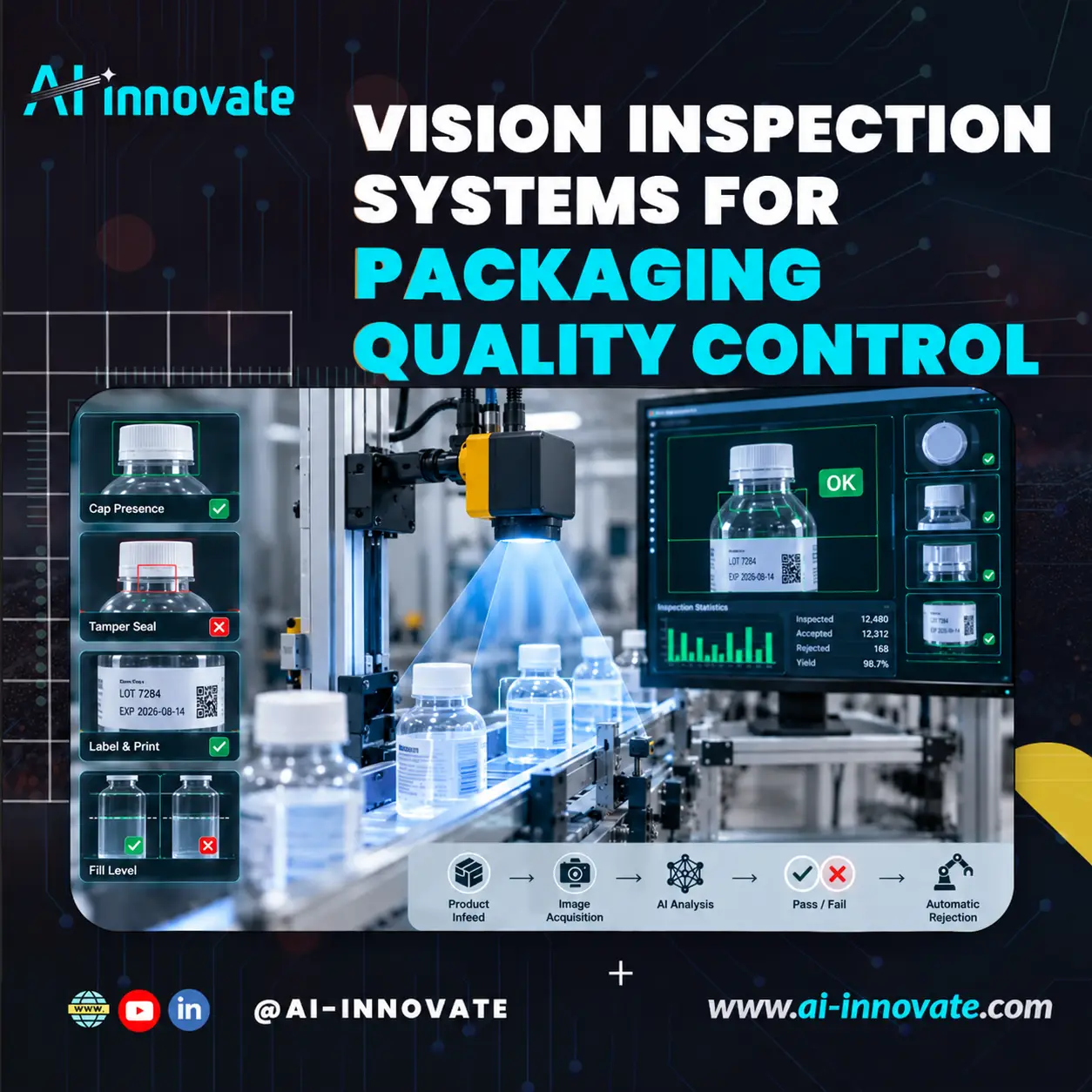
An inline quality control AI system generally follows four steps as parts move down the line.
| Stage | What Happens | Typical Speed |
|---|---|---|
| 📷 Image Capture | Industrial cameras with optimized lighting capture every product from one or multiple viewing angles as it moves through the production line. | Continuous • Matches Line Speed |
| 🧠 AI Analysis | A trained computer vision model compares each image against learned defect patterns to identify abnormalities in milliseconds. | < 100 ms |
| ✅ Classification | The system automatically classifies the defect type, severity, and location while determining whether the product passes or fails inspection. | Instant |
| ⚙️ Automated Action | Accepted products continue through production, while defective items are rejected, diverted, or flagged for operator review. | Real Time |
Systems like AIxEye enable real-time visual defect detection directly on production lines, turning inspection into a continuous process instead of a post-check step. Instead of sampling a batch after the fact, the system evaluates parts as they pass through, catching a developing problem before hundreds more units are affected.
Speed only matters if the hardware can keep up. A model that takes several seconds to return a result isn’t useful on a line producing thousands of parts an hour.
Computer Vision Quality Control Market Data for 2026
The scale of adoption this year reflects how far real-time defect detection in manufacturing has moved past pilot programs. A few figures worth knowing, drawn from verified market research:
- The global computer vision market was valued at $19.82 billion in 2024 and is projected to reach $58.29 billion by 2030, growing at a 19.8% CAGR, according to Grand View Research.
- The broader machine vision market was valued at $20.38 billion in 2024 and is forecast to reach $41.74 billion by 2030, at a 13.0% CAGR, per the same research firm.
- MarketsandMarkets separately forecasts the global machine vision market to grow from $15.83 billion in 2025 to $23.63 billion by 2030, an 8.3% CAGR, with quality assurance and inspection as a leading segment.
- The North America machine vision market is projected to reach $6.66 billion by 2030, up from $4.13 billion in 2024, as manufacturers integrate deep learning-based vision platforms, per MarketsandMarkets.
- Quality inspection remains the largest single application of computer vision within manufacturing, ahead of positioning, guidance, and identification use cases, according to Grand View Research’s market segmentation.
- Research from Sandia National Laboratories shows human visual inspection accuracy declines measurably with fatigue, a gap that consistent, camera-based inspection does not share.
Exact detection accuracy and payback figures vary by vendor, defect type, and production environment, so it’s worth asking any vendor for outcomes specific to your own product line.
Where Real-Time Inspection Delivers the Most Value
Machine vision real-time defect detection shows up differently across industries, but a few patterns are consistent:
- Automotive. Body panel inspection, weld verification, and paint defect detection benefit from checks that stay consistent every shift.
- Electronics. Fine-pitch components and micro-defects, sometimes smaller than a millimeter, are caught more reliably by high-resolution cameras than by the unaided eye.
- Pharmaceuticals and medical devices. A single mislabeled or improperly sealed unit can trigger a costly recall, so consistent inline inspection carries outsized value here.
- Food and packaging. High-speed lines rely on continuous checks for fill levels, seal integrity, and label placement without slowing throughput.
For manufacturers deciding where to start, real-time defect analysis is often the highest-return entry point, since the cost of an escaped defect grows the further it travels down the supply chain.
Common Challenges When Deploying Smart Factory Inspection Systems
Most stalled computer vision projects don’t fail because the model is weak. They fail for a smaller, more predictable set of reasons.
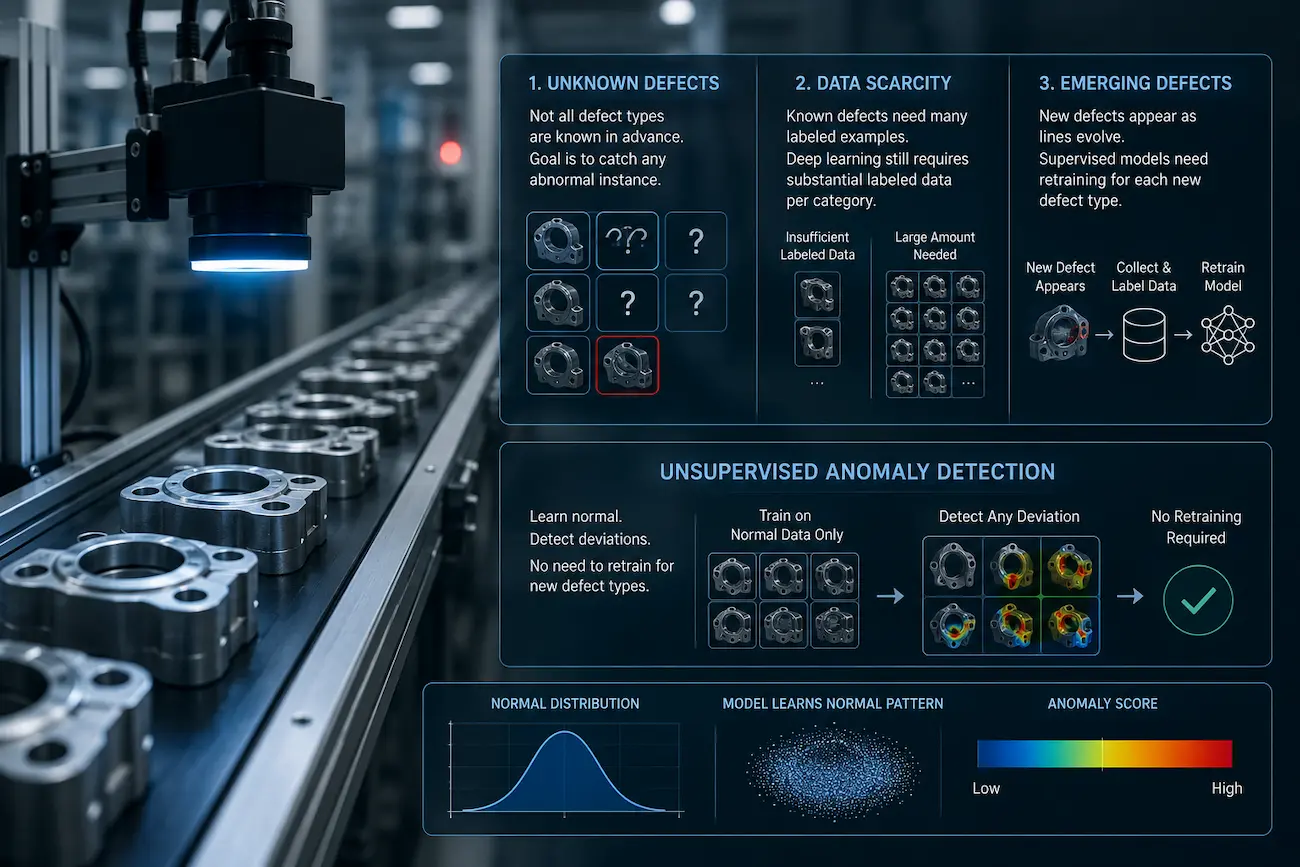
- Thin or unbalanced training data. Defects are rare by nature, so datasets often lack enough real examples, especially for uncommon failure types.
- Lighting and environmental variance. A model trained under stable lab lighting can lose accuracy once it meets the dust, glare, and vibration of a real factory floor.
- The lab-to-production gap. Systems tuned on clean demo datasets often need retraining once they meet real part variation at scale.
- Integration friction. Connecting results to MES, ERP, or CMMS systems takes planning; without it, defect data stays siloed instead of driving upstream fixes.
Simulation tools can close some of these gaps before a system touches the line. AIxCam lets engineers test automated visual inspection systems workflows without physical camera hardware, speeding up development and preparing models for rare defect scenarios ahead of deployment.
How to Roll Out Real-Time Defect Detection on Your Line
For manufacturers moving toward production line computer vision, a staged rollout tends to work better than a full-facility launch. Covering every station at once usually means the team never gets deep enough on any single point to fix the issues that come up.
- Identify the highest-cost defect point. Check scrap reports, warranty data, and returns to find where defects cost the most, not just where they’re most visible.
- Audit existing camera and lighting infrastructure. Determine what can be reused, what needs different lighting for a vision model, and what needs replacing.
- Build a representative training dataset. Include edge cases and rare defect types, not just the common ones. A model trained only on obvious defects misses the subtle ones that cause the most expensive problems.
- Pilot on a single line before scaling facility-wide. Running one line first means integration issues with MES, ERP, or CMMS systems surface early.
- Track accuracy against a defined baseline for a few weeks before expanding. Comparing detection and false positive rates against the pilot’s own data gives a realistic picture of performance.
- Connect inspection data to quality and process systems so defect trends inform upstream corrections, not just downstream sorting.
Skipping ahead in this sequence is usually where projects run into trouble. A rollout that respects this order tends to reach full-line deployment with fewer surprises and a clearer picture of ROI before the budget for scaling gets approved.
How AI-innovate Supports Real-Time Quality Control
Ai-Innovate assists manufacturers in identifying potential defects and then builds AI inspection systems tailored to their specific equipment and data, rather than implementing a generic model.
The components we use:
- AIxEye handles real-time visual defect detection and process monitoring, catching flaws on the line as they happen instead of at final inspection
- AIxCore is the industrial AI edge computer powered by NVIDIA Jetson Orin AGX, running inference on-site so a defect alert arrives fast enough to act on
- AIxCam provides simulation tools and synthetic data generation for rare defect modes that don’t occur often enough on the live line to train a reliable model
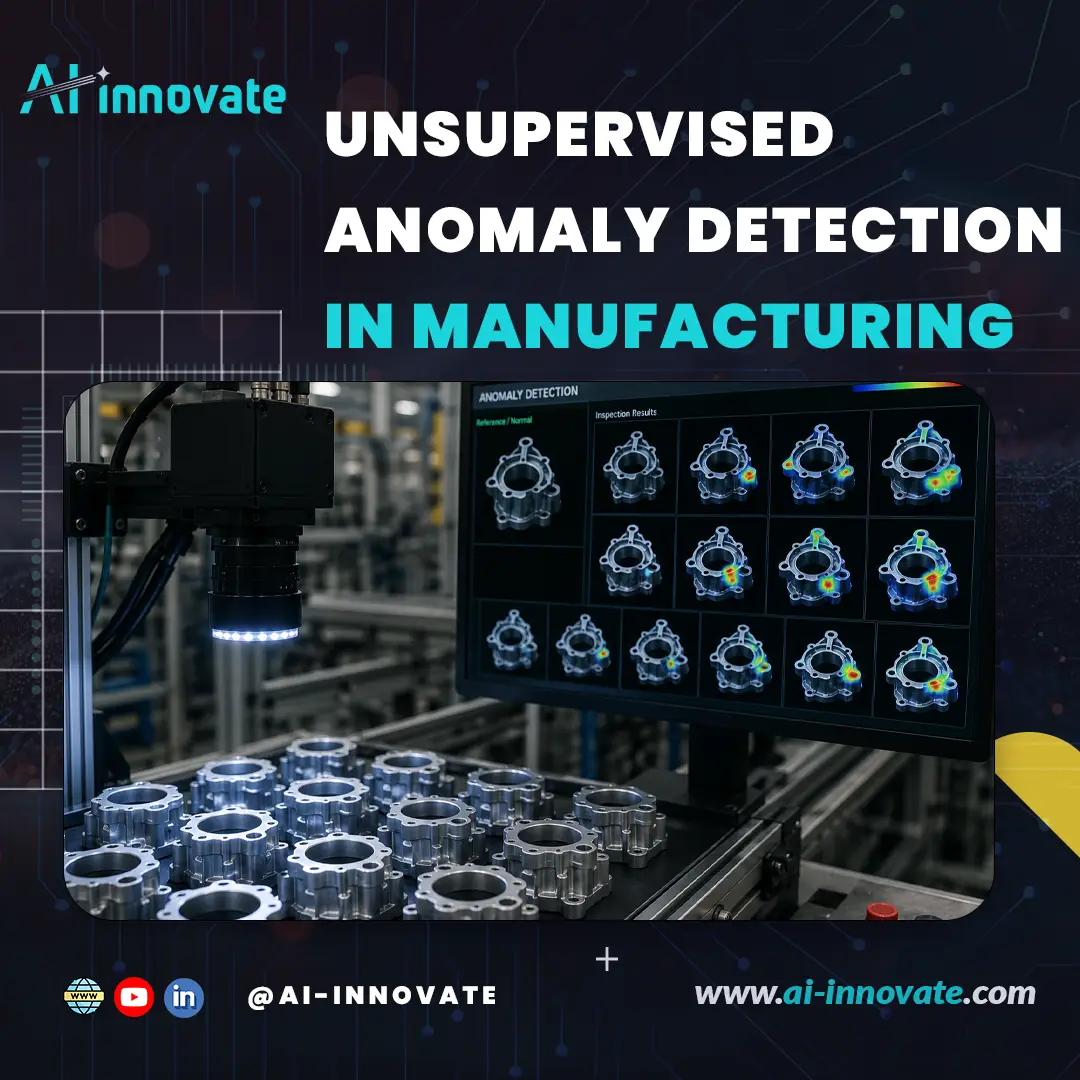
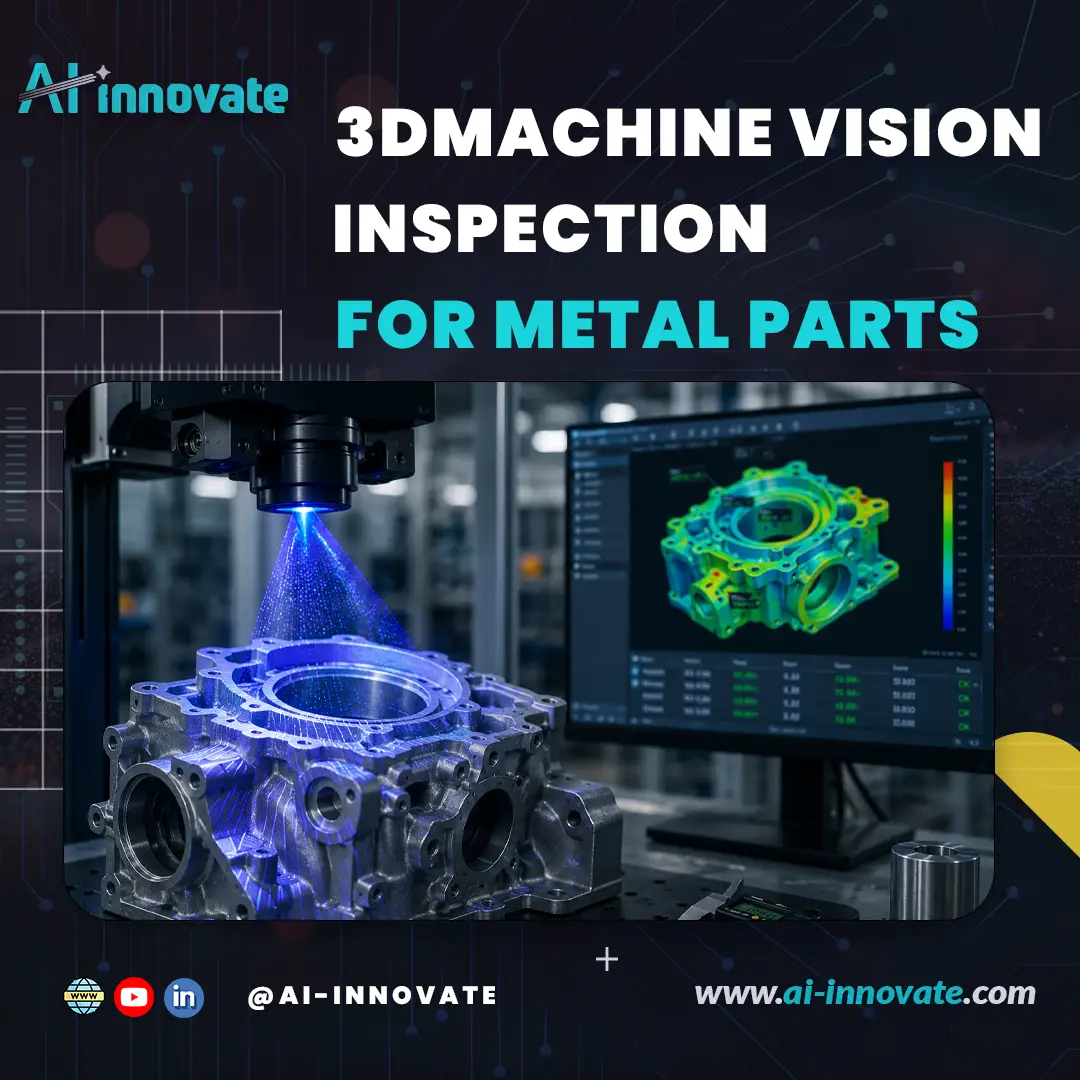
- AIxAM detects surface and geometry anomalies on three-dimensional parts using multi-view images and depth data, extending defect detection to wear and deformation standard cameras may miss
The starting point is always the same: your highest-cost defect point and the condition data you can actually capture. Call +1 (514) 813-1809 or email Info@ai-innovate.com to scope a real-time inspection pilot around your biggest opportunity.

The Bottom Line on Real-Time Computer Vision Inspection
Real-time computer vision inspection is running in production across automotive, electronics, pharmaceutical, and food manufacturing today, well past the experimental stage. The market data backs up what plant managers report seeing firsthand: fewer defects reaching customers, faster root-cause identification, and inspection coverage that scales without a matching increase in headcount. None of this replaces sound process design, and results still depend on quality training data and careful integration with existing systems. For manufacturers still relying only on manual sampling, the gap between what’s achievable and what’s currently in place keeps widening each year, and a focused pilot on the highest-cost defect point remains the most reliable way to prove the case before scaling further.
FAQ
Sources
Ai-Innovate uses only high-quality sources, including peer-reviewed studies, to support the facts within our articles.
- ScienceDirect. Computer Vision Applications for Smart Manufacturing and Quality Inspection. https://www.sciencedirect.com/science/article/pii/S187705092302207X
- Averroes AI. How Computer Vision Is Used for Quality Control Inspection. https://averroes.ai/blog/how-computer-vision-is-used-for-quality-control-inspection
- Zeta Motion. What Is Computer Vision in Quality Control? https://zetamotion.com/what-is-computer-vision-in-quality-control/
- Intel. How to Improve Quality Control with Computer Vision. https://www.intel.com/content/www/us/en/goal/how-to-improve-quality-control-computer-vision.html
- Atria Innovation. Quality Control Through Computer Vision. https://atriainnovation.com/en/blog/quality-control-through-computer-vision/
- Tupl. Computer Vision in Manufacturing: Applications and Benefits. https://tupl.com/insights/computer-vision-manufacturing