




Manufacturing quality control has changed a lot in the last few years. Visual quality inspections used to be dependent on human inspectors, who would check products and report them manually. More and more facilities are now turning to AI-driven systems that can catch defects faster, more consistently, and at production speed. Using AI for visual quality inspections is no longer a futuristic concept, but a practical tool that’s already helping manufacturers protect their reputation for quality.
In this guide, we’ll break down the main types of AI inspection systems, the techniques behind them, the industries using them, and what to keep in mind as you plan your own deployment.
Using AI for Visual Quality Inspections , in Modern Manufacturing
Discover how AI-powered visual inspection systems help manufacturers detect defects faster, improve product consistency, reduce manual errors, and streamline quality control processes across production lines.

What Are the Main Types of AI Visual Inspection Systems?
Different products and production lines need to be differently inspected. AI automated visual inspection systems generally fall into four broad categories, each suited to specific defect types and use cases.
Surface Inspection methods
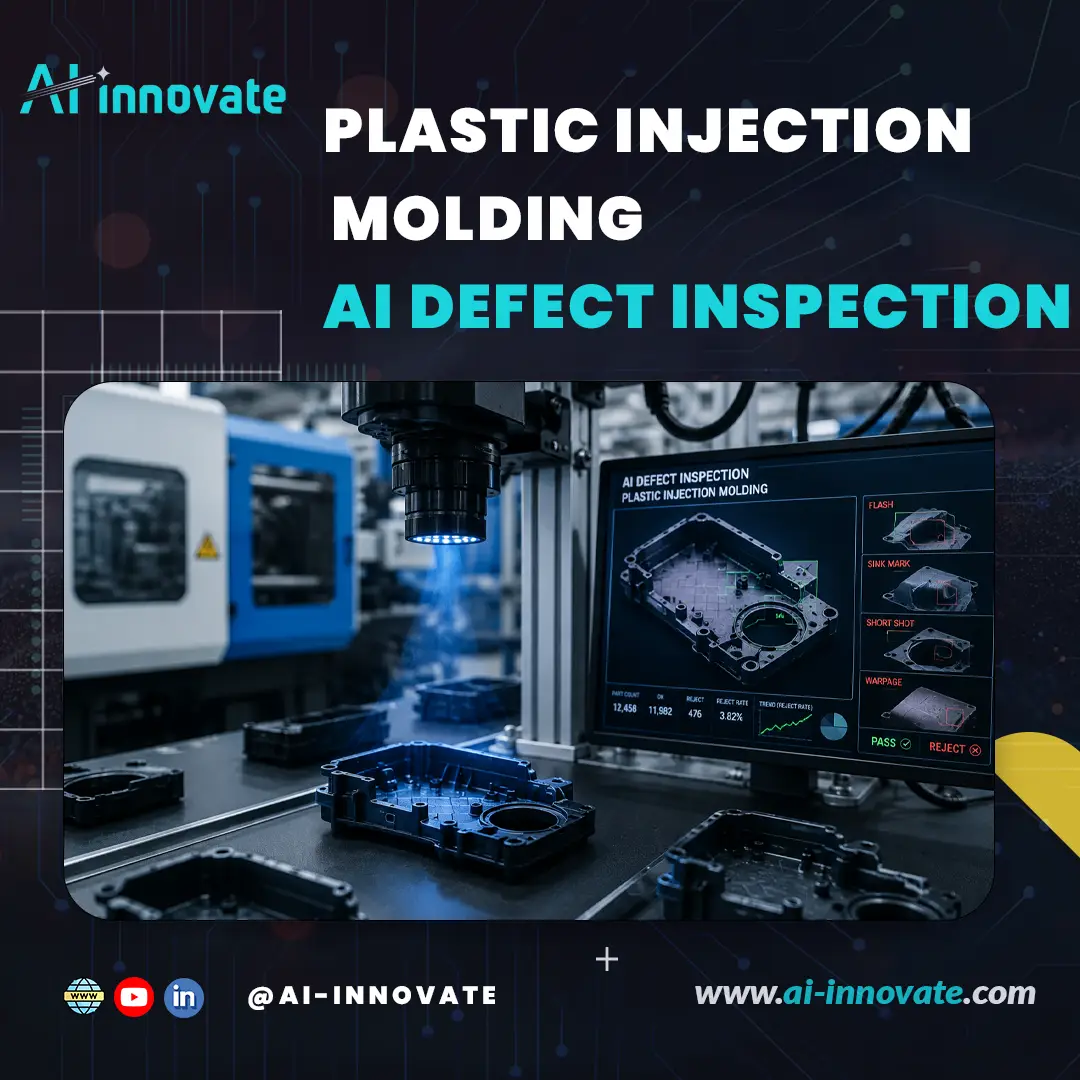
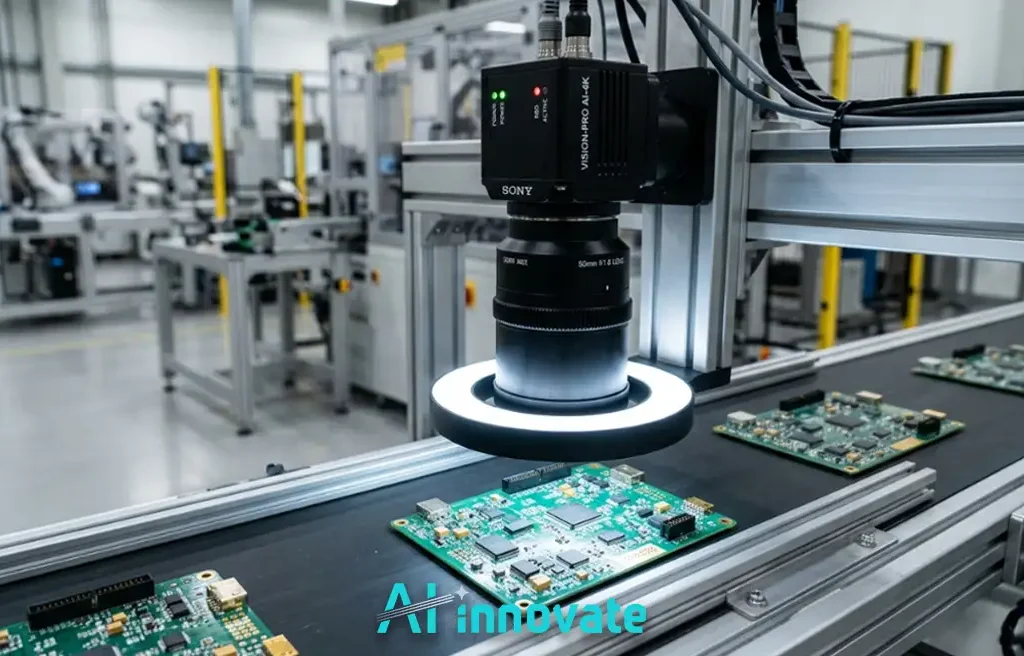
Surface inspection systems are built to catch defects on the outside of a product. They’re widely used in electronics, automotive, and metal fabrication, where surface flaws can lead to functional failures or customer returns.
Common defects detected are:
- Scratches, dents, and chips
- Stains or discoloration
- Coating inconsistencies
- Corrosion or oxidation
Dimensional Inspection
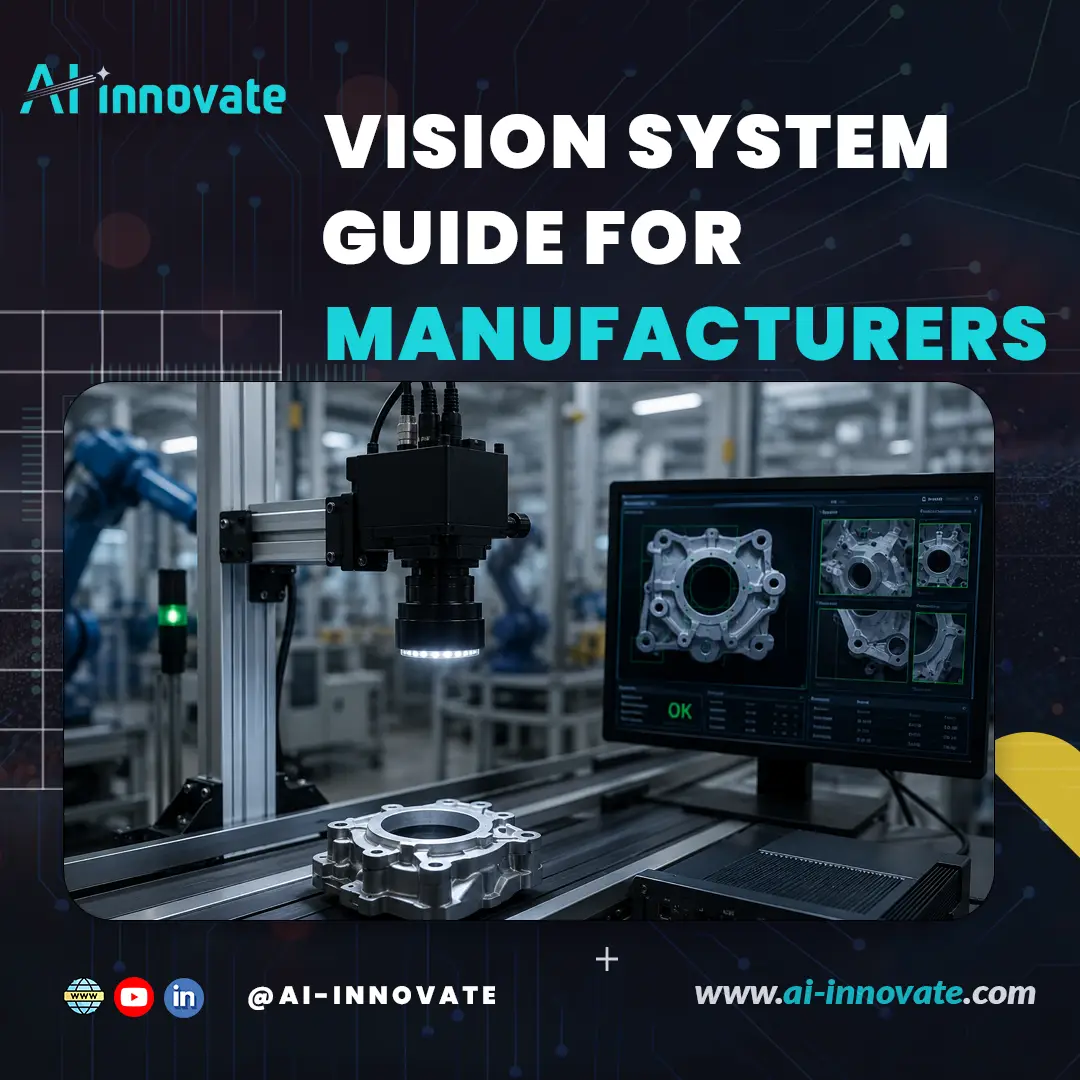
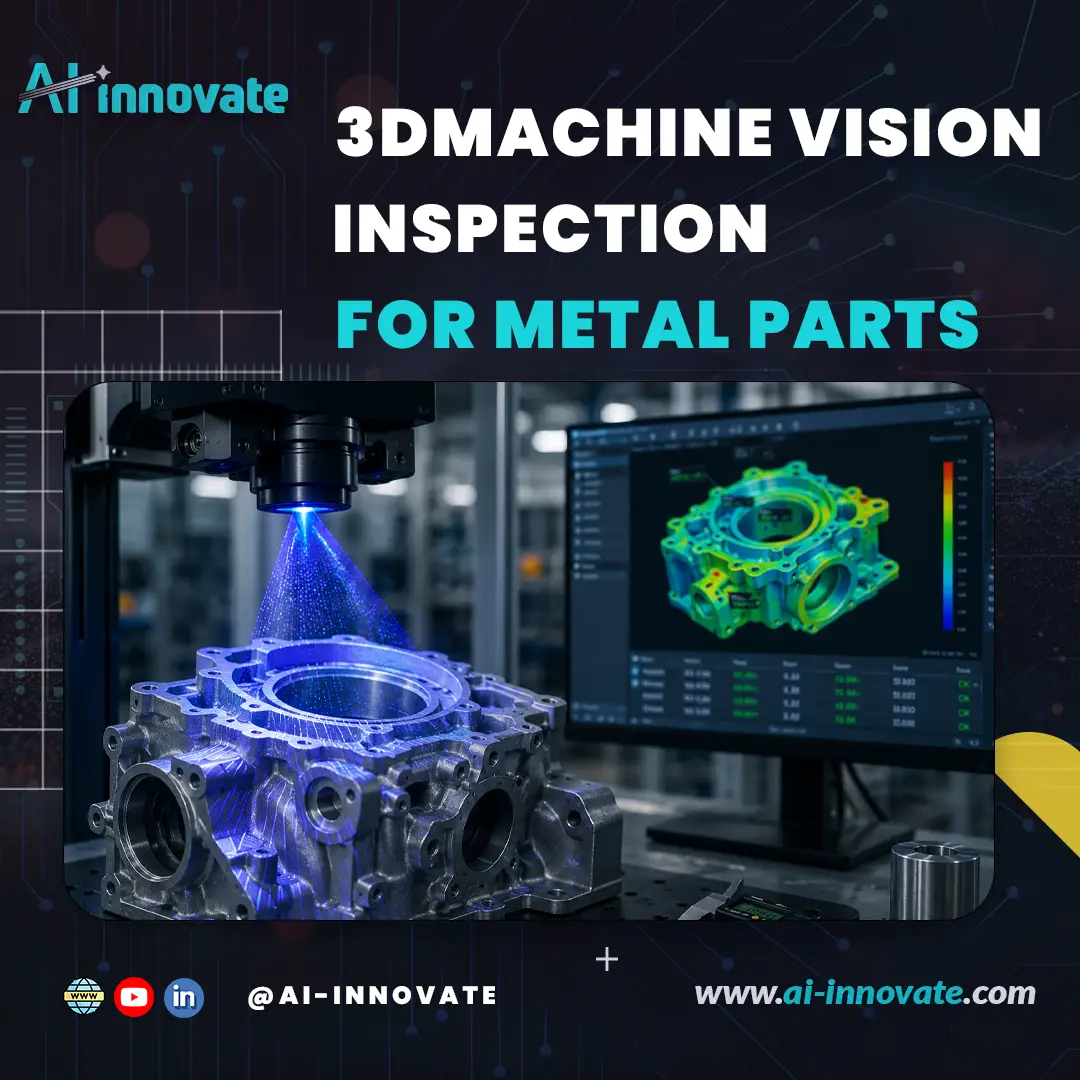
Dimensional inspection focuses on measurements, alignment, and geometric accuracy. These systems use 3D cameras or laser scanners to verify that parts fall within spec.
What it typically checks includes:
- Part dimensions and tolerances
- Component alignment and positioning
- Shape and geometric accuracy
- Assembly fit and clearance
Pattern and Label Inspection
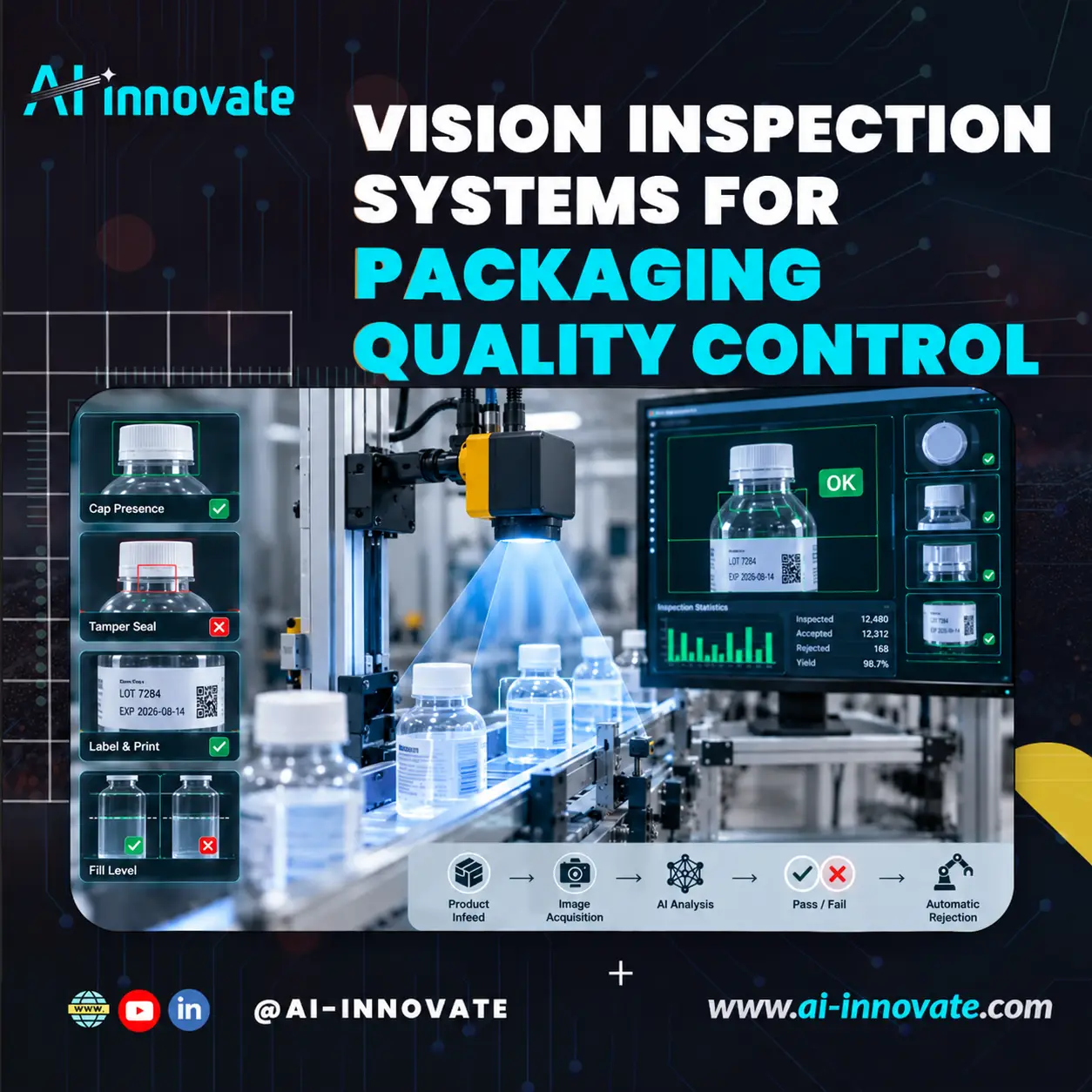
Pattern and label inspection confirms that printed elements, barcodes, and labels are correct and properly placed. Even small errors here can lead to compliance issues or product recalls.
Key defects this catches are:
- Misprinted or missing labels
- Barcode readability problems
- Text errors or misalignment
- Wrong label on the wrong product
Internal Defect Detection
Some defects can’t be seen on the outside, which is where internal inspection systems come in. These use X-ray, CT scans, or infrared imaging to check the interior of products.
Where it’s most useful:
- Food (contamination, foreign objects)
- Electronics (solder joints, internal damage)
- Pharmaceuticals (cracks, fill volume)
- Machinery components (internal cracks or voids)
What AI Techniques Power These Systems?
The power behind AI visual inspection comes from several different techniques, often used in combination depending on the complexity of the inspection.
Classical Computer Vision
Classical computer vision uses techniques like edge detection, contour analysis, and template matching. It’s reliable for simple, repetitive inspections where defects are predictable and consistent.
Deep Learning and CNNs
Convolutional Neural Networks (CNNs) are the workhorse of modern visual inspection. They can recognize complex patterns and subtle defects that traditional vision systems missed, especially on textured or variable surfaces.
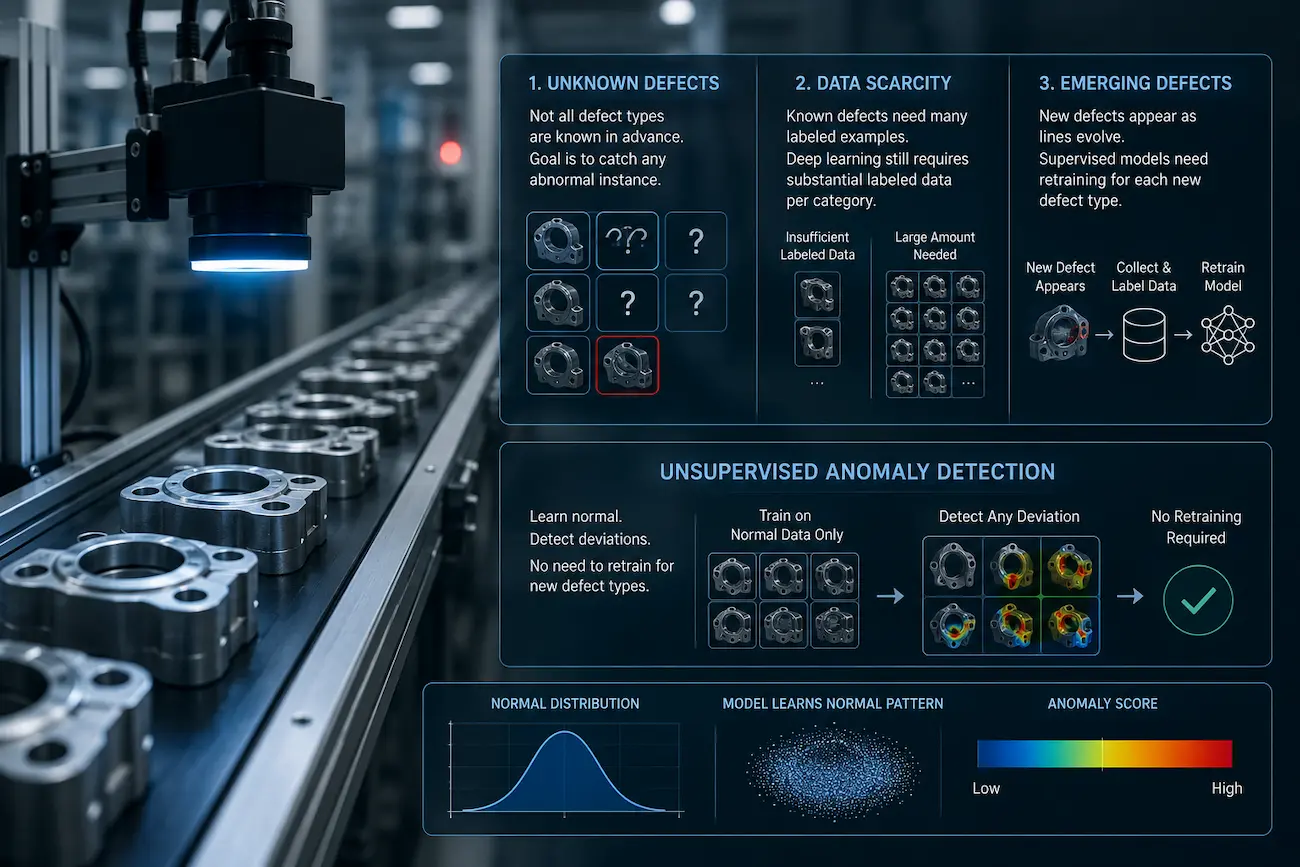
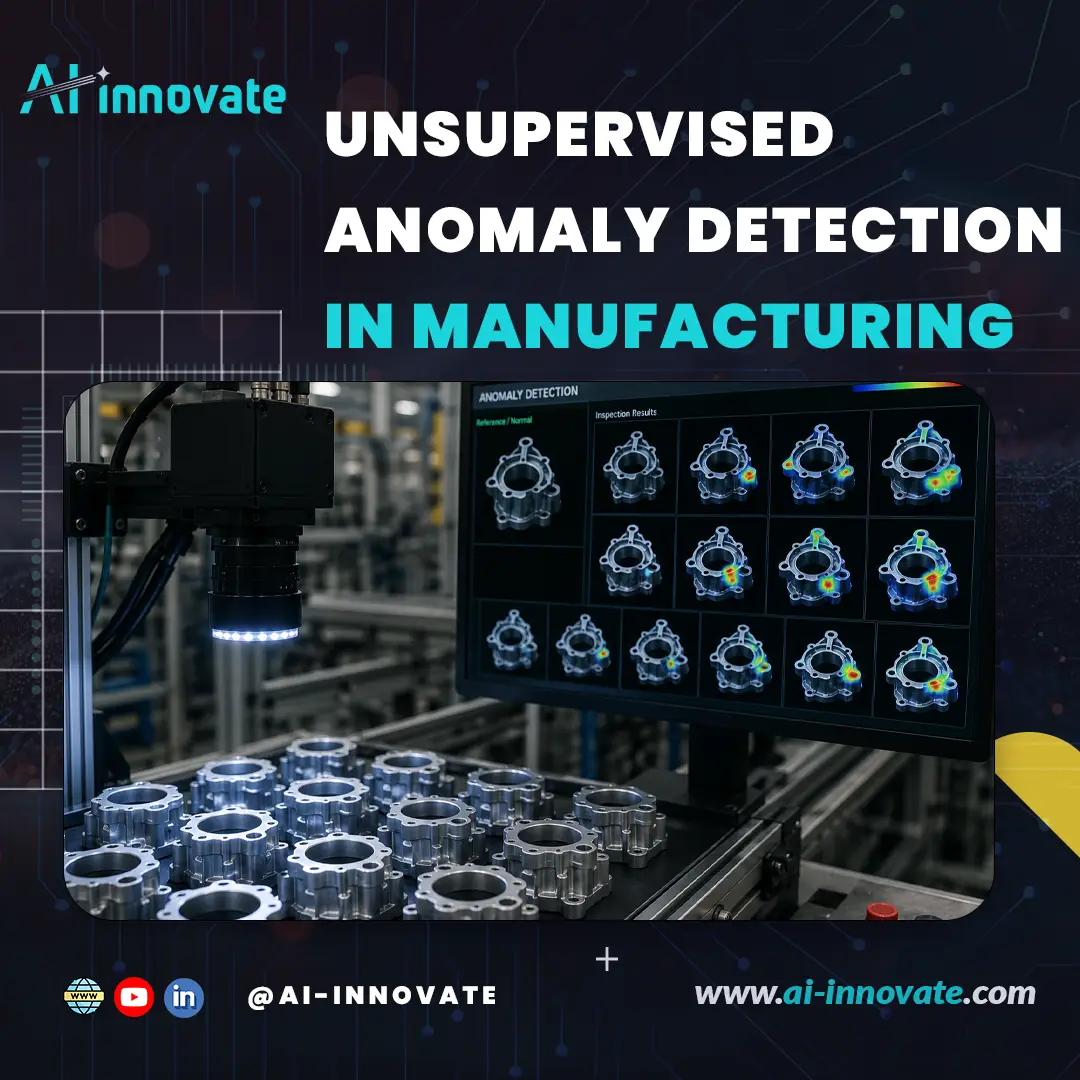
Anomaly Detection Models
Anomaly detection models are designed to spot defects without having seen every possible failure type. This makes them especially useful for rare, unpredictable, or first-time defects.
Generative AI for Synthetic Data
Generative AI creates artificial defect examples to expand limited real-world datasets. This is huge for industries where defects are rare and gathering enough real examples for training would take years.
This Topic might also interest you :
Where Is AI Visual Inspection Being Used?
AI inspection systems show up across nearly every manufacturing industry. The specific use case looks different in each, but the goal is always the same: catch problems earlier and more reliably.
Electronics Manufacturing
Electronics is one of the biggest adopters of AI inspection. Common applications include:
- Detecting soldering defects on PCBs
- Spotting screen scratches and surface flaws
- Identifying misaligned components
- Verifying component placement and orientation
Automotive
Automotive manufacturers use AI to maintain quality across high-speed production lines:
- Checking body panel quality
- Verifying paint finish and coating
- Confirming assembly alignment
- Inspecting weld and joint integrity
Pharmaceuticals
In pharma, the stakes for missed defects are especially high:
- Inspecting tablets and capsules for cracks or chips
- Checking vials and packaging integrity
- Verifying label accuracy
- Detecting contamination
Food and Beverage
Food production lines move fast, and AI helps keep up:
- Sorting misshapen or damaged produce
- Checking fill levels in containers
- Verifying label and packaging accuracy
- Detecting foreign objects
Textiles and Apparel
Textile manufacturers use AI to catch defects that human inspectors often miss on fast-moving fabric:
- Identifying stains and discoloration
- Spotting tears or weave defects
- Detecting sewing or stitching issues
- Verifying pattern consistency
What Are the Emerging Trends in AI Visual Inspection?
The technology behind visual inspection keeps evolving. Here are some of the biggest trends shaping where the industry is heading.
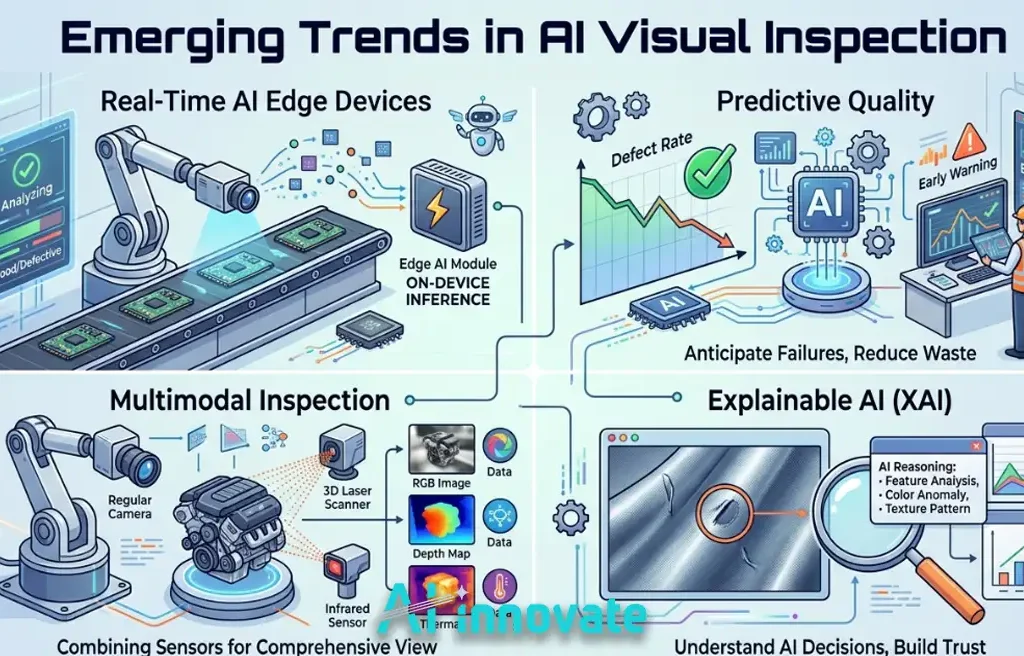
Real-Time AI Edge Devices
Moving AI processing closer to the production line, instead of relying on cloud servers, reduces latency by a lot. This means that any problems can be spotted and sorted quickly and easily.
Predictive Quality
By combining inspection data with broader AI analytics, defects can be detected before they occur. This shifts quality control from reactive to proactive.
Multimodal Inspection
Newer systems combine visual data with thermal, X-ray, and even acoustic data for a more complete picture. This is especially useful for complex products where a single sensor type can miss certain failure modes.
Explainable AI (XAI)
One of the biggest concerns with AI inspection has been the “black box” problem. Explainable AI tools now make AI decisions transparent, so operators can understand exactly why a defect was flagged and trust the system over time.
What Are the Best Practices for Deploying AI Inspection?
Successful AI inspection deployments come from a structured approach that balances technology, data, and human intelligence.
1. Start Small
Pilot AI on a single production line or product before rolling it out across your operation. This lets you work out kinks without disrupting the whole plant.
2. Label Data Carefully
Model performance lives and dies by data quality. Make sure your defect labeling is accurate, consistent, and reviewed by people who know what they’re looking for.
3. Build Feedback Loops
AI models need to keep learning. Set up systems where new defect types are captured, labeled, and used to retrain models.
4. Balance Automation and Human Oversight
AI handles speed and consistency well, but humans are still better at complex judgment calls and edge cases. The strongest systems combine both.
5. Measure ROI
Track concrete metrics like defect detection rates, false reject rates, throughput improvements, and cost savings. This gives you the data to expand the system with confidence.
Bring AI-Powered Visual Inspection to Your Production Floor
AI for visual quality inspections only creates real value when it’s deployed with the right hardware, data infrastructure, and decision-making capabilities. Moving from manual checks and isolated inspection stations to scalable, production-floor impact takes reliable edge processing, strong training data, and inspection systems that can support fast, repeatable, and traceable quality decisions across high-volume manufacturing.
At AI-innovate, we help manufacturers bridge the gap between visual inspection strategy and production-floor execution by providing:
- Intelligent visual inspection with AIxEye, enabling real-time detection of surface defects, assembly issues, and product anomalies across complex production environments
- Edge AI infrastructure with AIxCore (powered by NVIDIA Jetson Orin AGX) for real-time processing, sensor integration, and on-site analytics across inspection and validation workflows
- Synthetic data generation through AIxCam, helping teams strengthen AI models when defects are rare, datasets are limited, or edge-case scenarios are difficult to capture in volume
Final Thought
Using AI for visual quality inspections is one of the most practical and high-impact approaches to modernizing their quality control today. From surface defects to internal flaws, from electronics to food production, the technology has matured to the point where it delivers real, measurable gains.
The key is choosing the right system for your needs, training it on solid data, and integrating it into your production environment with the right infrastructure behind it. We believe with the right approach, AI inspection can help you stay ahead of quality issues before they reach your customers.
FAQ
What is the difference between computer vision and AI visual inspection?
Standard computer vision relies on static, rule-based algorithms to check fixed pixel values. AI visual inspection uses deep learning neural networks to mimic human judgment, adapting easily to variations in lighting, part positioning, and complex surfaces.
What is the typical return on investment (ROI) timeline?
Most manufacturing facilities see full cost recovery within 6 to 18 months. Savings come from a drastic reduction in manual labor costs, lower product scrap rates, and the total elimination of expensive product recalls.
Can AI detect sub-surface or internal defects?
No, standard visual AI only inspects surface-level characteristics visible to standard cameras. To identify internal structural flaws, voids, or hidden cracks, you must pair the AI software with alternative imaging tech like X-ray, ultrasound, or thermal infrared sensors.
Sources
Ai-Innovate uses only high-quality sources, including peer-reviewed studies, to support the facts within our articles.
- MDPI Electronics. (2023). A Systematic Literature Review on Artificial Intelligence and Explainable Artificial Intelligence for Visual Quality Assurance in Manufacturing. Peer-reviewed review examining how AI and explainable AI techniques are applied to visual quality control, defect detection, and process optimization across industrial sectors. Retrieved from mdpi.com
- Artificial Intelligence Review (Springer). (2024). Surface Defect Inspection of Industrial Products with Object Detection Deep Networks: A Systematic Review. Comprehensive review of deep learning–based object detection methods for industrial defect inspection, including benchmark datasets, evaluation metrics, and key challenges. Retrieved from link.springer.com
- Jidoka Tech. What Is AI Visual Inspection? Industry primer explaining how AI-powered visual inspection systems work, where they’re deployed on the factory floor, and the business case for automating quality checks. Retrieved from jidoka-tech.ai
- ResearchGate. AI and Computer Vision-Based Real-Time Quality Control: A Review of Industrial Application. Review paper covering real-time quality control systems built on AI and computer vision, with a focus on practical industrial use cases. Retrieved from researchgate.net
- N-iX. Computer Vision Defect Detection. Technology consultancy overview of how computer vision is used for defect detection, including model architectures, data requirements, and deployment considerations. Retrieved from n-ix.com