




One small defect can cause a lot of problems in a production run. When they occur too often, they can damage the quality of its products and seriously hurt the company’s reputation. According to IBM, defects that get missed during early inspection often lead to a chain of problems, including extra work, wasted materials, delays in production, and long-term reliability issues that are much more expensive to fix later than they would’ve been if they had been caught earlier. Often, the real damage is discovered only after the quality has already gotten worse and the prices of products have gone down.
The problem is that many inspection systems weren’t designed for how fast and complicated modern manufacturing has become. Production lines becoming more varied and complicated and fast day by day, because the consumerism and the demand for certain products raising day by day, and most importantly customers are demanding about quality more than ever before. All this points leads to undestanding the manual check ups for defects are not enough any more. Small defects and problems can sneak through production undetected, and there should be a reliable system for perventing them.
Finding defects today directly affects how much a product is made, how well it works, how much customers trust the company, and how much money the company makes. Finding out about this late can cause more problems. It removes the opportunity to understand what went wrong and why.
AI is becoming a very important way to deal with this challenge. Artificial Intellegence can help manufacturers find defects earlier by continuously and automatically inspecting products at production speed.
This guide will inform you on how defect detection in manufacturing is changing specially with AI in 2026, including modern inspection methods, the real cost of missing defects, and proven strategies for improving quality without slowing down production.
Defect Detection in Manufacturing Catch Issues Before They Cost You.
Modern defect detection uses AI-powered inspection to identify flaws in real time, reduce scrap and rework, and protect product quality. Learn how automated inspection systems help manufacturers maintain consistency and improve operational efficiency.

Understanding Manufacturing Defects and How AI Helps Prevent Them
Manufacturing defects can appear as surface flaws, dimensional deviations, incorrect assembly, or subtle inconsistencies that affect performance over time. Many problems are not caused by one issue, but by a few small problems that happen over time. These problems can be caused by things like small changes in materials or equipment that wear out over time.
Ai defect detection prevent these defects by continuously learning normal production behavior and monitoring for early deviations. By studying patterns in images, time, and process data, AI-based systems can find new quality problems before they become repeatable defects. This allows manufacturers to step in earlier, make changes to their processes, and keep the same high quality as production conditions change.
Why Quality Control Is Important
Quality control is key to how well a manufacturing operation runs. When defects are found late or keep happening, costs go up because of things like wasted materials, having to redo work, unexpected downtime, and lost production capacity. These costs are usually connected to other costs. As problems move through the production process, they get worse. Effective AI-driven quality control reduces these losses by identifying issues early, stabilizing processes, and preventing defects from spreading.
Key Takeaways
Defect detection in manufacturing has shifted from end-of-line inspection to continuous, insight-driven quality control.
AI enables earlier detection, clearer process understanding, and more effective prevention of costly defects.
Production Defects and AI-Based Solutions
Knowing what problems can occur in production lines and how AI can solve them gives us a clear idea of how modern inspection systems can ensure consistent quality when used on a large scale. As AI grows quickly, it’s becoming more important for manufacturers to know about new advancements and solutions. This helps them make sure their products are of high quality.
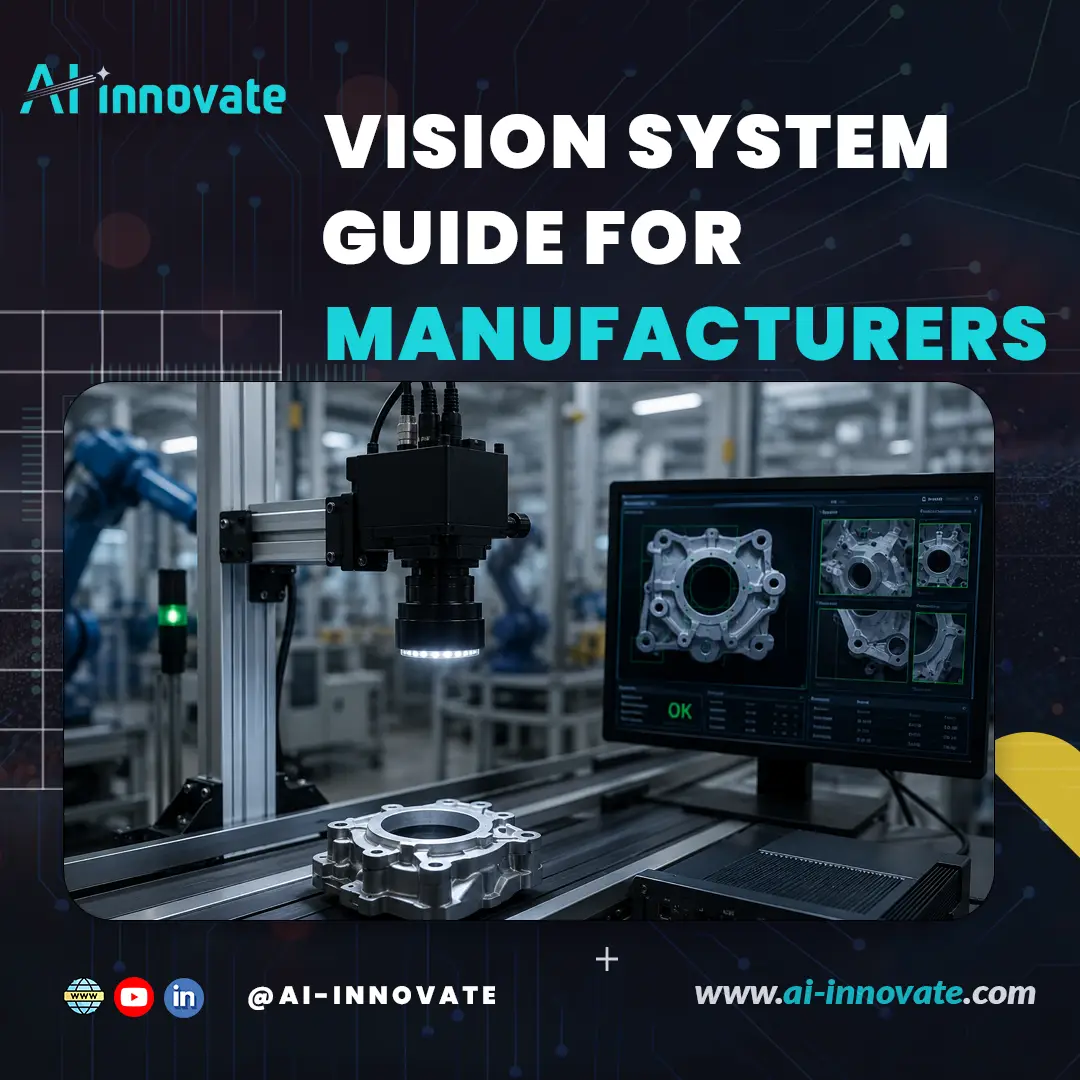
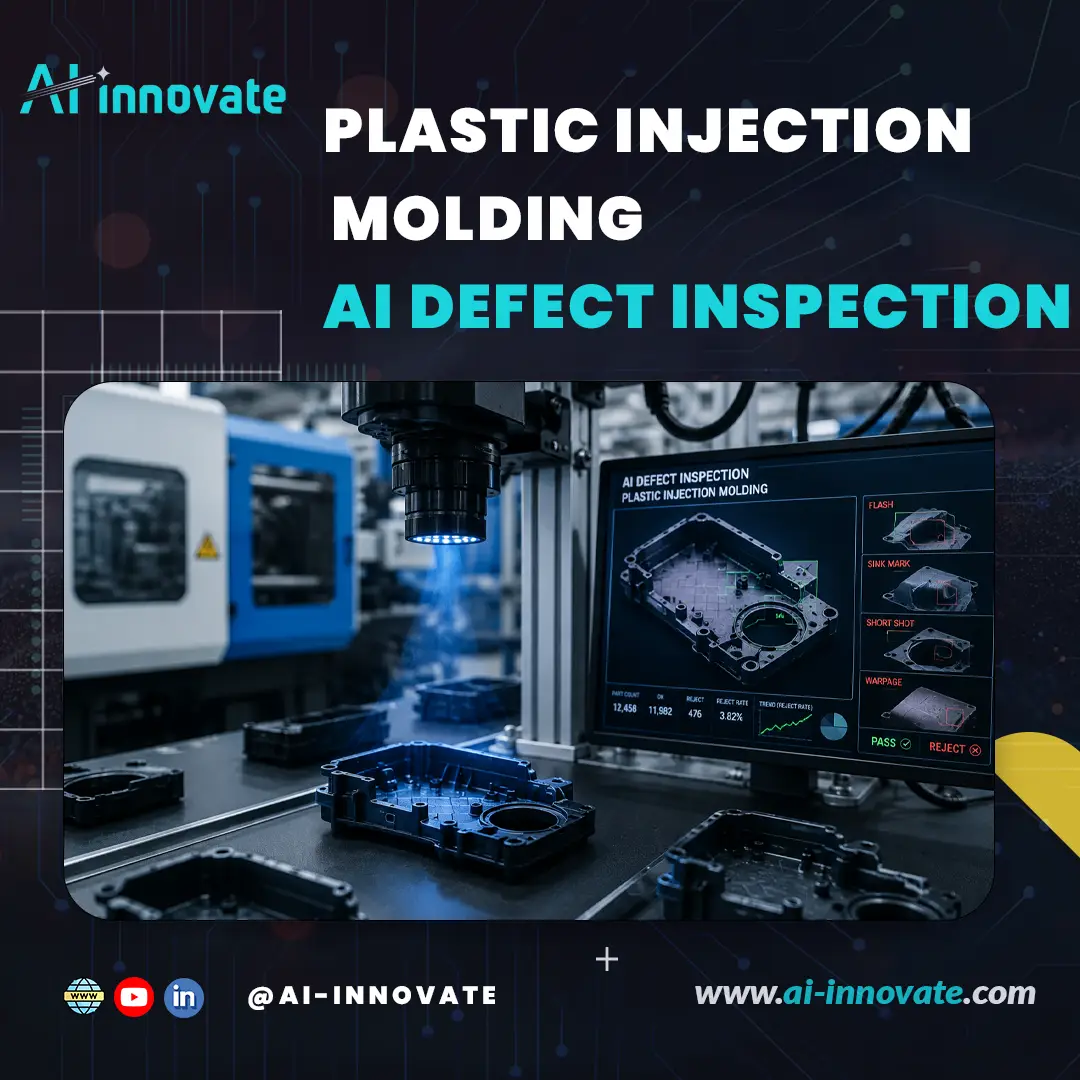
- Surface defects (scratches, cracks, dents, coating irregularities) : Common in metal parts, plastic housings, coated components, and finished surfaces. AI-powered surface defect detection, looks for surface texture and appearance as they happen. This helps to spot small changes early on and take action before problems happen again.
- Dimensional inconsistencies and geometric deviations : Frequently seen in machined metal components, molded plastic parts, and precision assemblies. AI analyzes shape and measurement patterns across production runs, detecting gradual drift and alerting teams before parts fall outside acceptable tolerances.
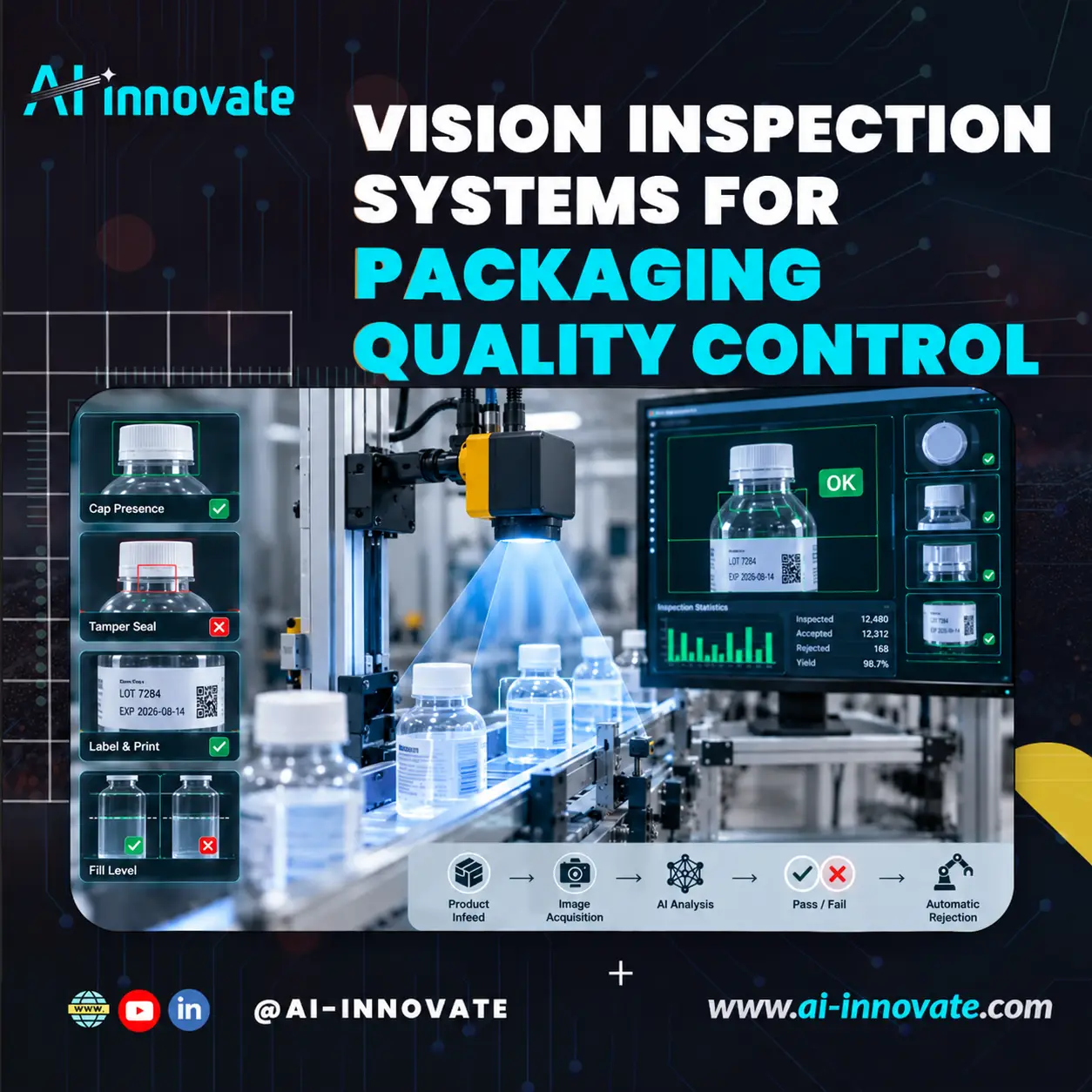
- Packaging defects (seal failures, mislabeling, incorrect fills, damaged packaging): It is common in the production of food, beverages, pharmaceuticals, and consumer goods. Automated visual inspection systems check things like whether the seal is good, where the label goes, how well the print looks, and how full the package is. They do this right away, which helps prevent problems like packaging mistakes that can lead to recalls, problems following rules, or customers being unhappy.
- Misaligned, missing, or incorrectly assembled components : Typical in electronics, automotive assemblies, and multi-part products. AI for material defect identification verifies part presence, orientation, and alignment at speed, ensuring assembly issues are detected immediately and do not propagate downstream.
- Read Also:
Key AI Techniques and Algorithms Used in Defect Detection
Modern defect detection systems use a combination of computer vision and machine learning techniques in 2026, each suited to different inspection challenges. Instead of using just one algorithm, effective systems typically use a combination of methods that work together to handle variation, speed, and complexity.
- Computer Vision and Image Processing: Core vision techniques are used to capture, preprocess, and enhance images. This includes normalization, contrast enhancement, noise reduction, and feature extraction to ensure defects are visible and comparable across varying conditions.
- Convolutional Neural Networks (CNNs): CNNs are widely used for visual defect detection because they learn spatial patterns directly from images. They are effective for identifying surface defects, shape anomalies, and visual inconsistencies across materials such as metal, plastic, fabric, and packaging.
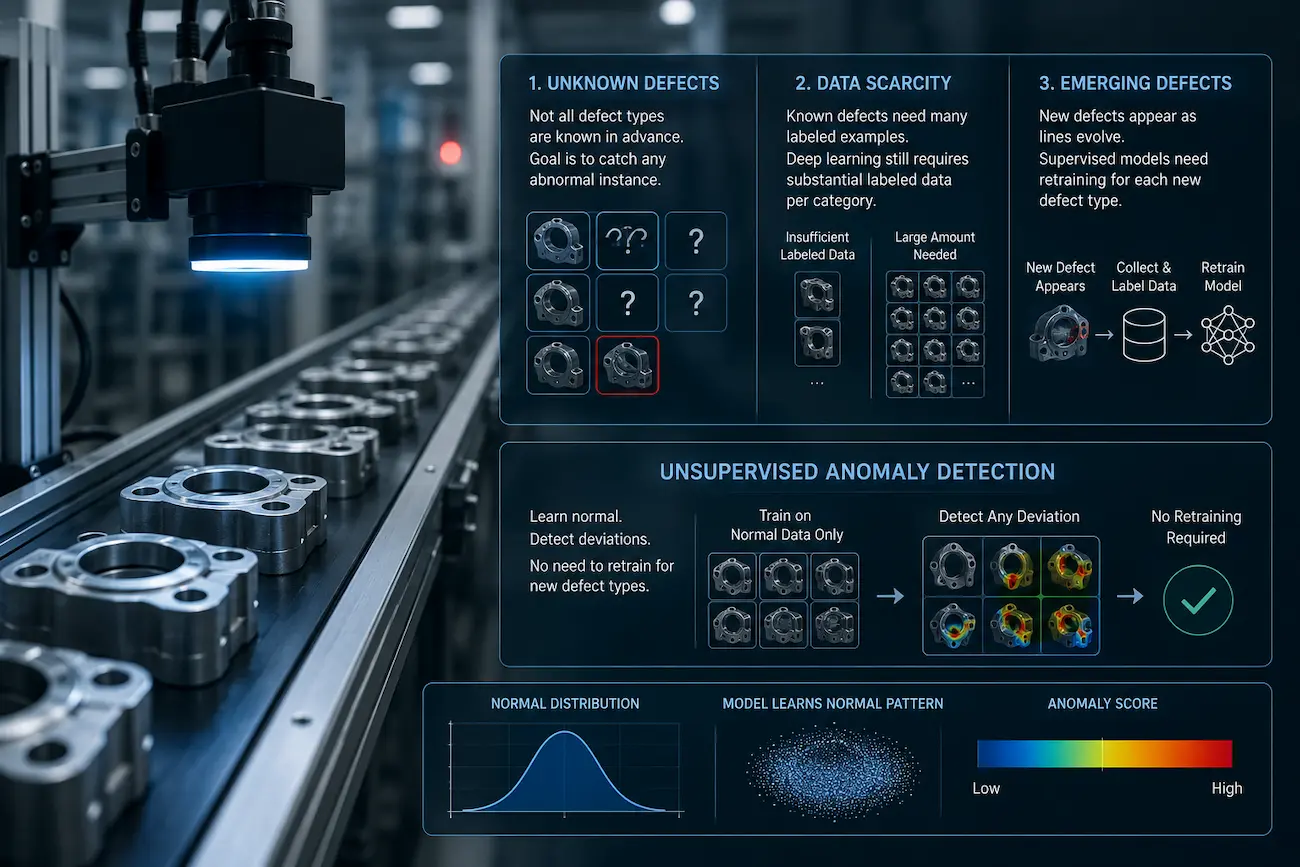
- Anomaly Detection Models: In cases where defects are rare or difficult to label, anomaly detection techniques learn what normal production looks like and flag deviations. These models are particularly useful for early defect detection and process drift monitoring.
- Object Detection and Segmentation Algorithms: These algorithms locate and classify defects within an image, rather than simply flagging that a defect exists. They are commonly used in assembly verification, packaging inspection, and applications where defect location and size matter.
- Time-Series and Trend Analysis: When inspection data is collected continuously, Time-Series models help identify recurring patterns and intermittent defects. This allows manufacturers to link visual anomalies with process changes, equipment behavior, or environmental conditions.
Industries That Benefit Most From AI-Based Defect Detection
While AI can find defects in many manufacturing settings, it has the most impact in industries where problems are expensive to fix, production is fast, or there is a lot of variation.
- Automotive and Transportation: Early defect detection is critical in high-production environments, where strict tolerances must be met. AI assists in identifying surface defects, assembly issues, and dimensional deviations before they impact safety, reliability, or downstream assembly.
- Electronics and PCB Manufacturing: Small parts, tight assemblies, and fast lines make it hard to check by hand. AI-based inspection verifies how components are placed, the quality of the solder, and how well the PCB boards and parts are assembled
- Textile, Fabric, and Leather Production: AI is good at finding tears, misweaves, stains, and other problems with the fabric that can spread quickly.
- Aerospace and High-Performance Manufacturing: Strict quality control requirements and low defect tolerance in Aerospace manufacturing demand consistent inspection. AI technology can detect subtle surface flaws, coating irregularities, and assembly errors while providing traceable inspection data.
- Read Also:
Types of Defects in Manufacturing
Surface Defects
Surface defects are visible imperfections that affect the external quality of a product.
Common examples include:
- Scratches
- Dents
- Discoloration
- Surface contamination
These defects are typically identified using:
- Visual inspection systems
- Optical metrology
- AI-based computer vision models
Surface defects detection is one of the most common applications of automated quality control systems.
Dimensional Defects
Dimensional defects occur when a product deviates from its required geometric specifications.
Examples include:
- Incorrect length, width, or height
- Shape deformation
- Misaligned components
Detection methods include:
- Coordinate Measuring Machines (CMM)
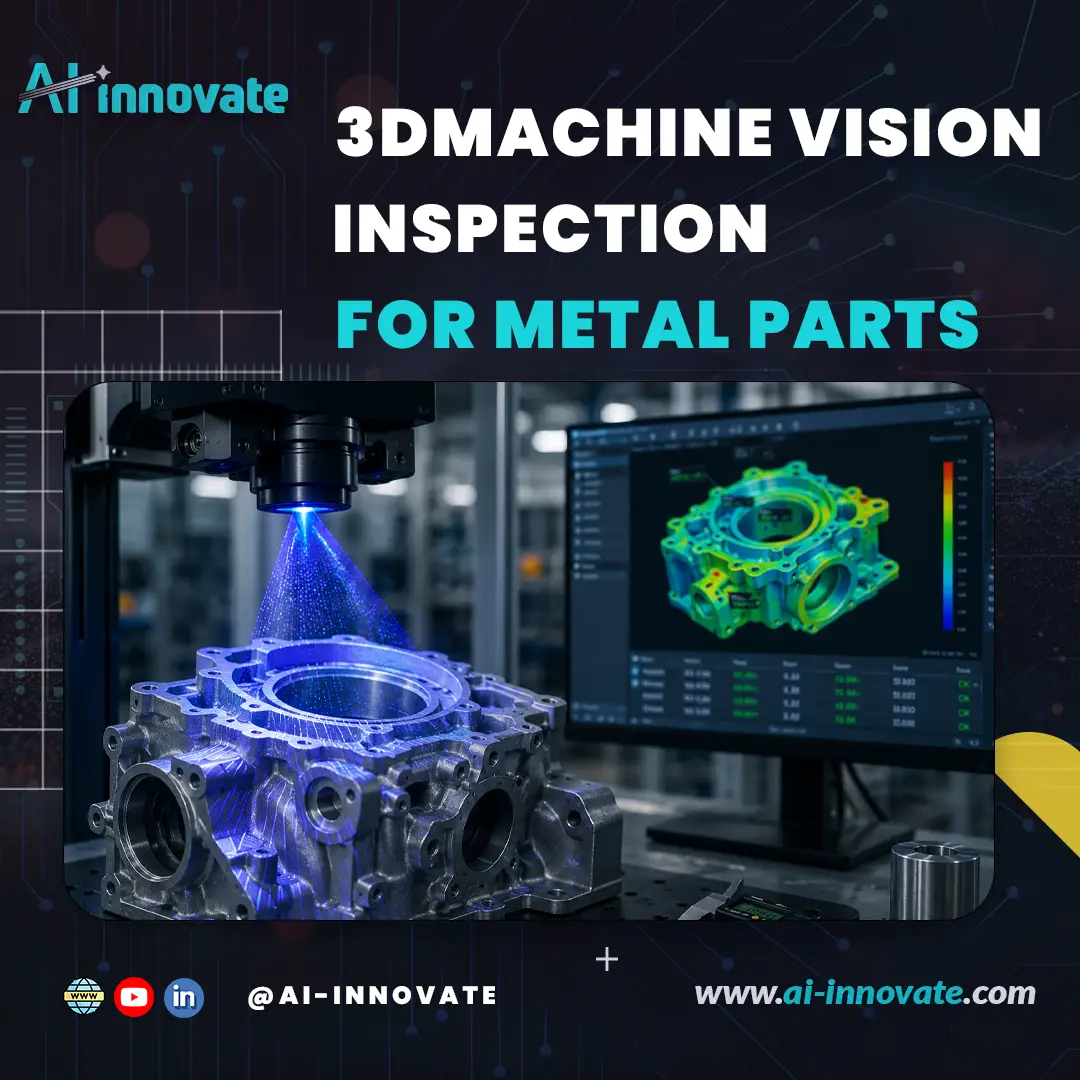
- Laser scanning systems
- 3D measurement technologies
These systems ensure that manufactured parts meet strict engineering tolerances.
Subsurface Defects
Subsurface defects exist below the surface and are not visible during standard inspection.
Examples include:
- Internal cracks
- Voids or air pockets
- Structural inconsistencies
Detection techniques include:
- X-ray imaging systems
- Ultrasonic testing (UT)
- Non-destructive testing (NDT) methods
These technologies allow inspection without damaging the product.
Material Defects
Material defects originate from inconsistencies in the raw material itself.
Examples include:
- Uneven density
- Alloy composition variations
- Contamination in raw materials
Advanced detection methods include:
- Spectroscopy
- X-ray diffraction
- Chemical composition analysis
These defects are critical because they directly impact product durability and performance.
How AI Innovate Helps Manufacturers Improve Defect Detection
Adopting AI for defect detection is most effective when it supports understanding, not just automation. AI Innovate helps manufacturers build inspection systems that reveal how defects form and how processes behave over time.
- AI2Cam enables teams to simulate cameras, lighting, and defect scenarios during development, helping them understand inspection sensitivity and validate models before deployment.
- AI2Eye delivers real-time, inline inspection that captures defects as they emerge, allowing manufacturers to link defect occurrence with specific production stages and operating conditions.
- AIXCore connects inspection outputs with process and time-based data at the edge, supporting trend analysis, root cause investigation, and faster corrective action.
Together, these solutions help manufacturers move from reactive defect detection to proactive quality control, reducing recurring defects, stabilizing processes, and improving overall production performance.
Confused About Where to Start with AI?
Our specialists help you identify the right AI approach based on your process, data, and goals.
Conclusion
Finding defects in manufacturing is more than just looking closely at products and rejecting them. As production environments become faster and more complex, the real challenge is finding defects early enough to limit their impact and understanding the conditions that cause them. If defects are missed, it costs more money because the product has to be scrapped, reworked, or stabilized. Also, if defects are missed, it’s hard to understand how the process is working. Modern methods that combine advanced imaging and artificial intelligence (AI) allow manufacturers to find more defects, make sure things are consistent, and make quality control a part of the production process all the time, not just at the end.
I think the most successful manufacturers are those that treat defect detection as a way to learn, not just as a way to control. AI is most valuable when it helps teams see patterns they couldn’t see before and act on them quickly. As AI continues to improve, manufacturers that invest in understanding these tools and adding them to their processes in a smart way will be better able to protect quality, reduce cost, and increase production.
Sources
Ai-Innovate uses only high-quality sources, including peer-reviewed studies, to support the facts within our articles.
- IBM Think. (2024). AI in Manufacturing: Enhancing Efficiency and Quality
Explores how AI improves inspection, defect detection, and operational decision-making across manufacturing environments.
Retrieved from https://www.ibm.com/think/topics/ai-in-manufacturing - Innovation, Science and Economic Development Canada. (2023). Artificial Intelligence in Manufacturing
Overview of AI adoption in industrial production, including quality control, automation, and process optimization.
Retrieved from https://ised-isde.canada.ca - National Research Council Canada. (2023). Digital Manufacturing and Industrial Quality Technologies
Discusses applied research on intelligent inspection systems, sensing technologies, and data-driven quality assurance.
Retrieved from https://nrc.canada.ca
FAQ
What is the "Cost of Quality"?
True quality-related costs (waste, rework, and recalls) can reach 15% to 20% of sales revenue for many organizations. Effective detection reduces these costs by catching errors early.
What is the difference between Computer Vision and Deep Learning?
Traditional computer vision uses pre-defined rules (e.g., checking if a hole is exactly 5mm). Deep learning uses Convolutional Neural Networks (CNNs) to learn from examples, allowing it to identify complex, unpredictable flaws like paint blemishes or irregular coatings that rules can’t easily define.
How quickly does the investment in AI defect detection pay off?
Most manufacturers see a return on investment within 12 to 24 months. Some high-stakes industries, like steel or semiconductors, report ROI exceeding 1900% in the first year due to massive scrap reduction.