




In industrial operations, the most expensive failures rarely happen without warning. They begin as small, almost invisible irregularities, a slight vibration change in a motor, a minor temperature fluctuation in a furnace, or a subtle deviation in product dimensions. The challenge isn’t whether warning signs exist, but whether we can detect them early enough to act. Anomaly detection for industrial processes is designed to do exactly that. By combining statistical methods, machine learning, deep learning, and multi-source data monitoring, manufacturers can identify abnormal behavior before it escalates into downtime, defects, or safety risks.
In this article, we’ll explore how industrial anomaly detection works, the key methodologies and data sources behind it, its most impactful applications, the advanced techniques shaping the field, and the benefits and challenges organizations should consider before implementation.
Anomaly Detection for Detect Deviations Industrial Processes Prevent Downtime.
AI-powered anomaly detection continuously monitors industrial processes to identify abnormal patterns, equipment issues, and performance deviations in real time. Learn how intelligent monitoring systems improve reliability, reduce failures, and optimize operational efficiency.

Core Elements of Industrial Anomaly Detection
Effective anomaly detection systems rely on several elements working together to establish what “normal” looks like and flag when something falls outside that range. Different techniques are used depending on the complexity of the process and the available data.
Statistical methods are often the starting point. One common approach is the 3-sigma rule, where measurements falling outside three standard deviations from the mean are flagged as anomalies.
Machine learning models, particularly unsupervised learning, go further. Algorithms such as clustering or isolation forests learn patterns in normal operational data without needing labeled failure examples. When new data deviates significantly from learned patterns, it’s marked as unusual.
Deep learning techniques, including neural networks, are used in more complex scenarios. These models can capture nonlinear relationships and detect subtle, high-dimensional anomalies that simpler methods might miss.
Data Sources: Building a Reliable Baseline
Anomaly detection is only as good as the data it analyzes. Modern industrial processes generate data from multiple sources:
- IoT sensors measuring vibration, temperature, pressure, and current
- Video feeds from inspection cameras
- Acoustic monitoring systems
- Production and process logs
- Control system data such as PLC outputs
By analyzing these data streams over time, systems can establish a baseline for normal behavior. For instance, a motor may exhibit a specific vibration pattern when functioning properly. Any deviation from that signature may indicate bearing wear or imbalance.
High-Impact Applications in Industrial Settings
Anomaly detection plays a central role in several critical industrial functions.
Predictive Maintenance
One of the most common applications is identifying equipment wear before failure occurs. Changes in vibration patterns, temperature spikes, or pressure fluctuations often appear long before a breakdown.
By detecting these subtle signals early, maintenance teams can:
- Schedule repairs during planned downtime
- Avoid catastrophic equipment damage
- Reduce spare parts inventory uncertainty
- Extend asset lifespan
Quality Control
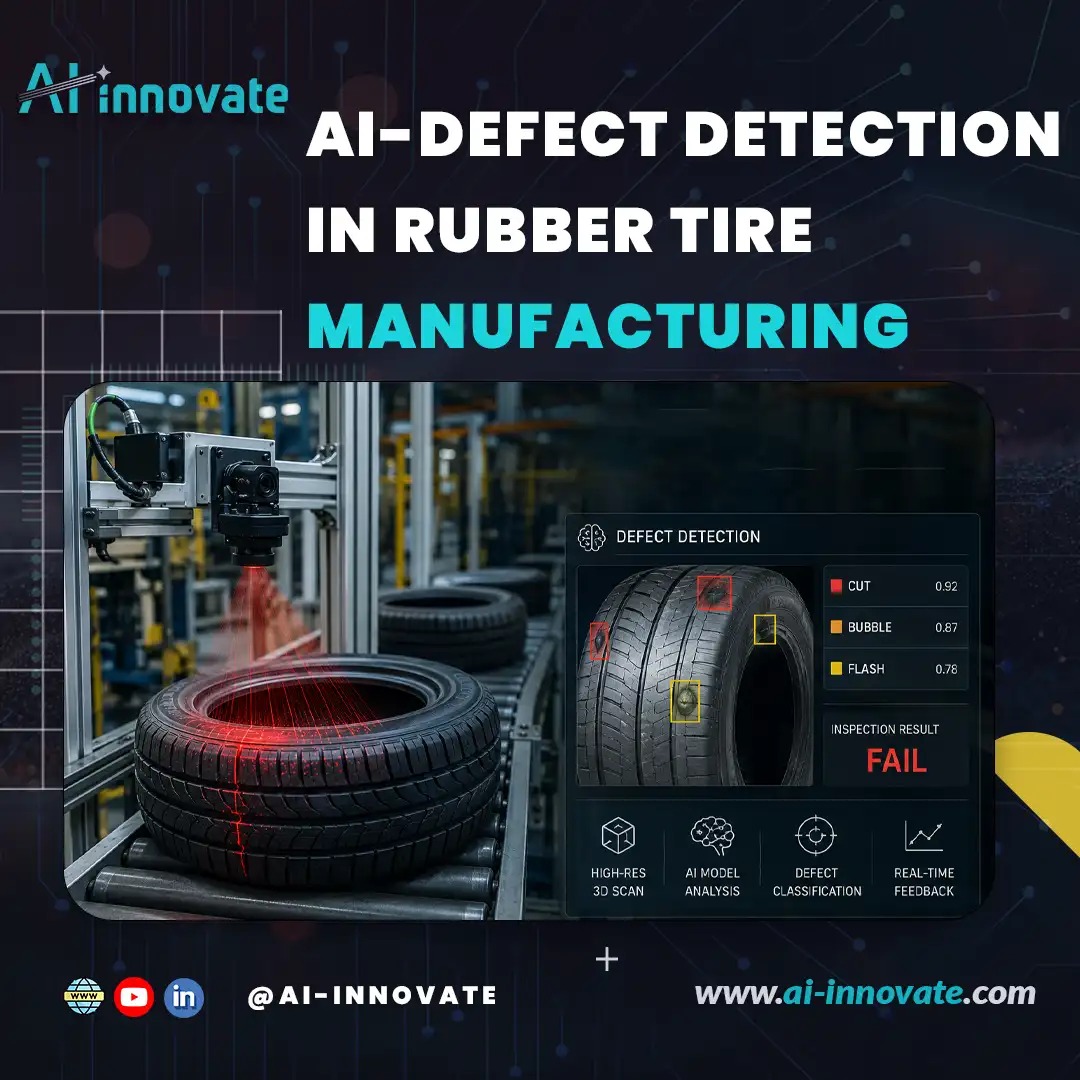
In quality-sensitive industries, small deviations can result in defective products. Anomaly detection systems powered by computer vision technology can monitor surfaces for cracks, scratches, misalignments, and contamination.
This leads to:
- Faster detection of defects
- Reduced rework
- Improved consistency
- Lower warranty and return costs
- Quality control becomes proactive rather than reactive.
Process Optimization
Anomaly detection ensures that machinery stays within its defined performance boundaries. If the pressure, temperature, or cycle time deviates unexpectedly, the system alerts operators before the production quality is affected.
This continuous monitoring supports:
- Stable production output
- Reduced material waste
- Lower energy consumption
- Improved process consistency
Advanced Techniques in Industrial Anomaly Detection
Although traditional methods remain valuable, newer AI models are expanding the possibilities.
Early vibration analysis systems relied on manually extracted features, such as frequency components or statistical metrics. Engineers would interpret these indicators to diagnose faults. Although effective, this approach required expertise and could overlook subtle patterns.
Modern deep learning models automate feature extraction. For example:
- Convolutional neural networks analyze vibration spectrograms and image-based defect data.
- Recurrent neural networks model time-series sensor behavior.
- The Adaptive Mask Inpainting Network model reconstructs normal images and highlights irregular regions.
- Diffusion-based models generate expected data distributions and localize anomalies by identifying deviations.
- These advanced models are useful for identifying rare or complex defects. They can localize anomalies precisely, making root cause analysis faster and more accurate.
Benefits and Practical Challenges
Anomaly detection delivers clear advantages in industrial settings:
- Early fault detection reduces downtime
- Improved product quality increases customer satisfaction
- Lower maintenance costs improve profitability
- Data-driven insights support better operational decisions
Yet, challenges remain.
Data quality is a major concern. Incomplete or noisy sensor data can produce false alerts. Rare anomalies may be underrepresented in training data, limiting model accuracy.
There is also the challenge of interpretability. Complex deep learning models may detect anomalies effectively, but operators need clear explanations to trust and act on alerts.
Integration with existing control systems can require significant planning. Industrial environments are often built on legacy infrastructure, making deployment more complex.
Finally, over-alerting can lead to alarm fatigue. Systems must balance sensitivity with practicality to ensure alerts remain meaningful.
How AI-innovate Enables Intelligent Anomaly Detection in Industrial Environments
Detecting anomalies early requires more than standalone algorithms. It requires reliable data capture, powerful edge processing, scalable AI deployment, and seamless integration with industrial systems. AI-innovate supports manufacturers in transforming anomaly detection from theory into operational reality by helping with:
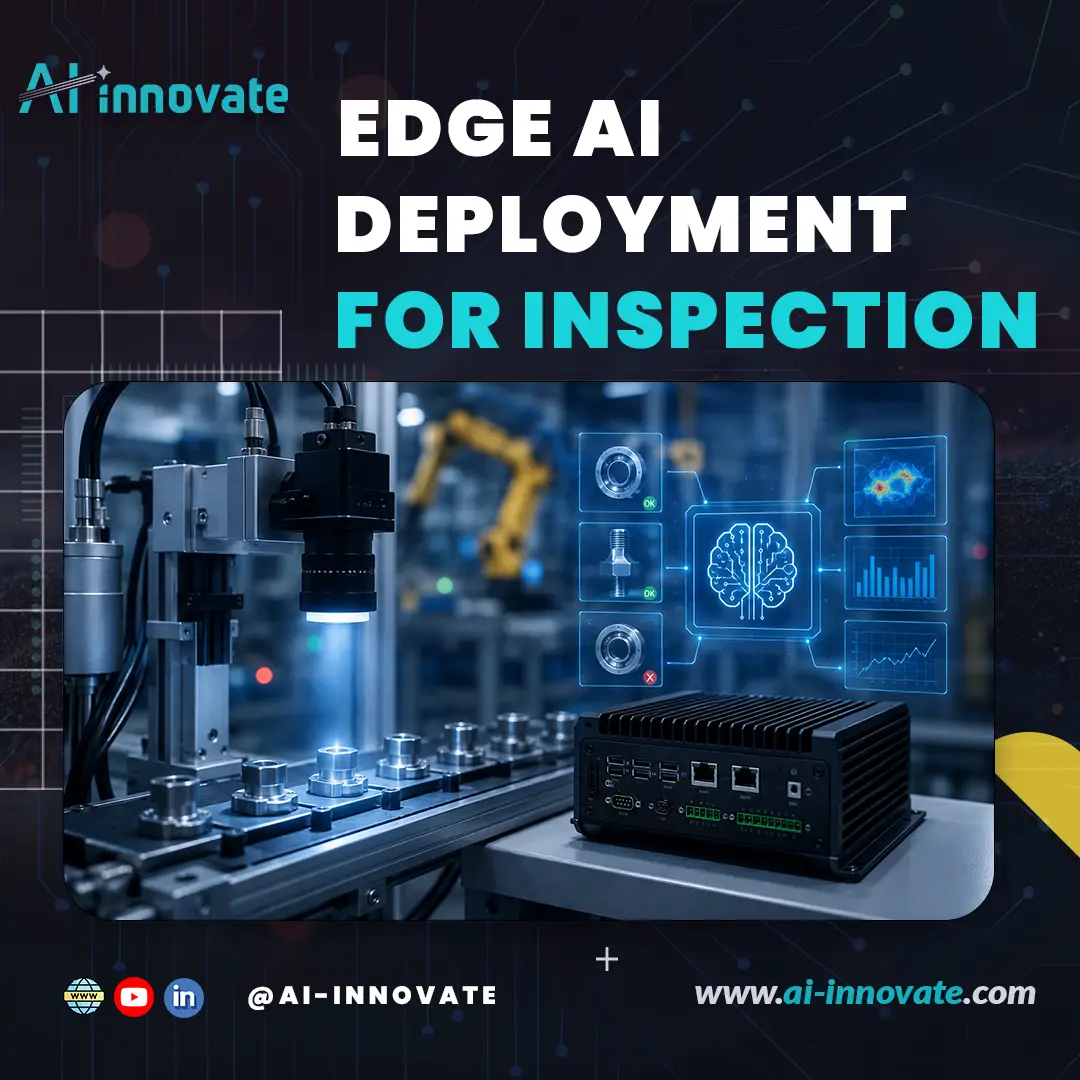
- AI-powered visual anomaly detection using AI2Eye, enabling real-time identification of surface defects, structural irregularities, misalignments, and quality deviations directly on the production line
- Synthetic data generation and validation through AI2Cam, allowing teFams to simulate rare fault scenarios, strengthen model robustness, and reduce dependency on hard-to-capture anomaly samples
- High-performance edge AI processing powered by AIxCore, built on NVIDIA Jetson Orin AGX, delivering real-time inference for vibration monitoring, machine vision, thermal analysis, and multi-sensor anomaly detection within demanding industrial environments
Whether the goal is predictive maintenance, proactive quality control, or process stability, AI-innovate’s ecosystem helps manufacturers shift from reactive troubleshooting to intelligent, data-driven operations reducing downtime, improving reliability, and strengthening long-term operational resilience.
Final Thoughts: Moving from Reactive to Intelligent Operations
Anomaly detection in industrial processes marks a change in how manufacturers approach reliability and quality. The evolution of anomaly detection, from simple statistical thresholds to advanced deep learning models, reflects the growing complexity of industrial environments.
We believe that the key is not to choose the most advanced technology available but to select the right combination of methods, data sources, and integration strategies for the specific process.
Sources
Ai-Innovate uses only high-quality sources, including peer-reviewed studies, to support the facts within our articles.
- MDPI Electronics. (2023). AI-Driven Anomaly Detection in Industrial Systems.
A peer-reviewed study outlining advanced AI methods for detecting anomalies in industrial environments, including performance evaluation and implementation considerations.
Retrieved from https://www.mdpi.com/2079-9292/12/18/3971 - Groundlight AI Blog. (2025). Using AI Anomaly Detection in Industrial Manufacturing.
A practical discussion of how anomaly detection powered by AI enhances manufacturing quality control, reduces defects, and supports predictive maintenance.
Retrieved from https://www.groundlight.ai/blog/using-ai-anomaly-detection-in-industrial-manufacturing - arXiv Preprint. (2025). Foundations and Advances in Industrial Anomaly Detection.
A research preprint exploring state-of-the-art approaches for anomaly detection in industrial systems, including novel architectures and benchmark results.
Retrieved from https://arxiv.org/abs/2501.11310 - Quix Glossary. (2025). Anomaly Detection in Industrial Systems.
An introductory resource explaining key concepts, algorithms, and typical use cases for anomaly detection in industrial and IoT applications.
Retrieved from https://quix.io/glossary/anomaly-detection-in-industrial-systems
FAQ
How much historical data is required?
While some systems can start with as few as five days of data, it is recommended to gather extensive historical data that captures various operational cycles (seasonal or product-based) to establish an accurate baseline of “normal”.
What are the key KPIs for measuring success?
Common metrics include preventing a specific failure type, reducing maintenance labor by a target percentage (e.g., 20%), or identifying a set number of actionable anomalies within the first six months to prove ROI.
How do I handle "Alert Fatigue" from false positives?
Use a multi-pronged approach: avoid over-sensitive initial thresholds, implement tiered alerts (Information, Warning, Critical), and create a human-in-the-loop feedback loop where technicians tag false alarms to retrain the model.