




Zero defects sounds impossible. Every manufacturer knows that some level of error creeps into any process, so a goal of zero can feel more like a slogan than a strategy. Yet zero defect manufacturing has become one of the most influential ideas in modern production, and the rise of AI has moved it from aspiration toward something measurable. The trouble is that the term gets thrown around loosely, often as marketing, which muddies what it actually means and what it can realistically deliver.
This guide explains what zero-defect manufacturing really is, whether it’s actually achievable, the strategies behind it, and how AI turns the goal into practical progress.
What Is Zero-Defect Manufacturing?
Zero-defect manufacturing (ZDM) is a quality approach focused on eliminating defects at their source rather than catching and correcting them after the fact. The aim is to do things right the first time, reducing waste, lowering cost, and delivering products that consistently meet specification.
As a concept, it grew out of the quality movement of the late twentieth century and was later formalized alongside Six Sigma in the 1980s. What’s changed recently is the technology: modern ZDM builds on Industry 4.0 tools like AI and big data to predict and prevent defects at both the product and process levels, which earlier quality methods couldn’t do. It’s best understood as a target and a mindset, not a literal promise that no defect will ever occur.
Zero Defects Is a Target, Not a Promise
Strictly speaking, no system literally achieves 100 percent perfection, so zero defect manufacturing is better understood as a direction than a destination. The closer you get to zero, the harder and more expensive each additional improvement becomes.
That doesn’t make the goal pointless. It makes it useful. Treating zero as the target changes how teams think: instead of accepting a “normal” defect rate, they chase down the cause of every defect and design it out. In practice, manufacturers who pursue zero defects don’t reach a perfect score, but they get dramatically closer than those who treat some failure as inevitable. The value is in the pursuit, and AI is what’s made meaningful progress toward that target realistic for the first time.
How Is Zero-Defect Manufacturing Different From Traditional Quality Control?
The core difference is timing and intent: traditional quality control inspects finished products and accepts a certain defect rate, while zero-defect manufacturing works to prevent defects from forming in the first place. One reacts to problems; the other tries to eliminate their causes.
Traditional QC treats some level of defects as a normal cost of doing business. It relies heavily on sampling, checks products near the end of the line, and focuses on catching bad parts before they ship. That approach works, but it’s fundamentally corrective. By the time a defect is found, the materials, energy, and time that went into the part are already spent.
Zero-defect manufacturing flips the logic. Instead of asking “how do we catch defects?”, it asks “why did this defect happen, and how do we stop it from happening again?” The emphasis shifts from inspection to defect prevention, and from sampling to full coverage.
| Factor | Traditional Quality Control | Zero-Defect Manufacturing |
|---|---|---|
| Goal | Keep defects within an acceptable rate | Eliminate defects at the source |
| Approach | Reactive and corrective | Proactive and preventive |
| Inspection | Sampling, often near end of line | Full inspection throughout production |
| When Defects Are Caught | After production | As they form, or before they form |
| Use of Data | Limited, for pass/fail decisions | Continuous, to drive prevention and prediction |
| Underlying Mindset | Some defects are inevitable | Every defect has a cause that can be removed |
None of this means traditional quality control is obsolete. Sampling and end-of-line checks still have a place, and most zero-defect programs build on top of them rather than throwing them out.
The difference is that zero-defect quality control treats those checks as a safety net, not the main event. The real work happens upstream, where AI now makes it possible to inspect everything and predict failures before they occur, which is what separates a modern approach from the inspect-and-hope model that came before.
The Three Strategies Behind Every Zero Defect Program
Zero-defect manufacturing is built on four core elements that the research literature pairs into practical strategies: detection, repair, prediction, and prevention. Detection identifies a defect, and the other three define what you do about it, which gives you three working approaches:
- Detect and repair. The oldest approach, and a corrective one. A defect is found and the product is fixed or scrapped. It’s necessary but reactive, and on its own it never gets you close to zero.
- Detect and prevent. A preventive approach that uses production data to stop the same defect from recurring. Finding a flaw is only the start; the goal is eliminating the condition that caused it.
- Predict and prevent. The newest and most powerful approach, relying on data-driven models to forecast when a defect will form and intervene before it happens.
The shift across these three is the heart of a modern zero defect strategy: moving from fixing defects, to preventing their recurrence, to preventing them from ever forming. That progression is also the answer to how to achieve zero defects in practice, since each step moves quality further upstream.
How Does AI Enable Zero-Defect Manufacturing?
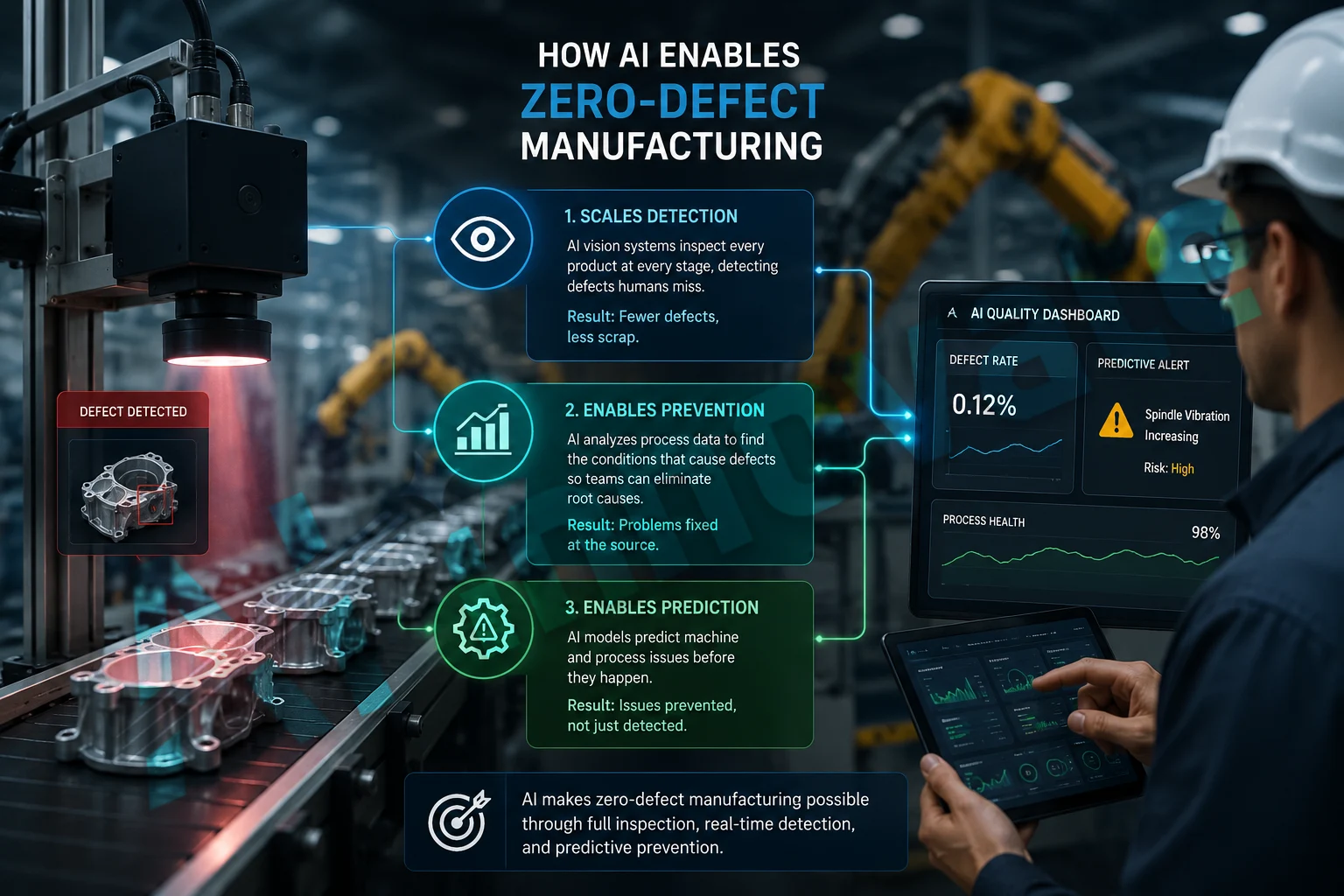
AI is what makes zero defect manufacturing practical, because it enables full inspection, real-time detection, and predictive prevention at production speed. Earlier quality methods couldn’t inspect every part or predict failures, so getting near zero was out of reach. AI changes that in three ways.
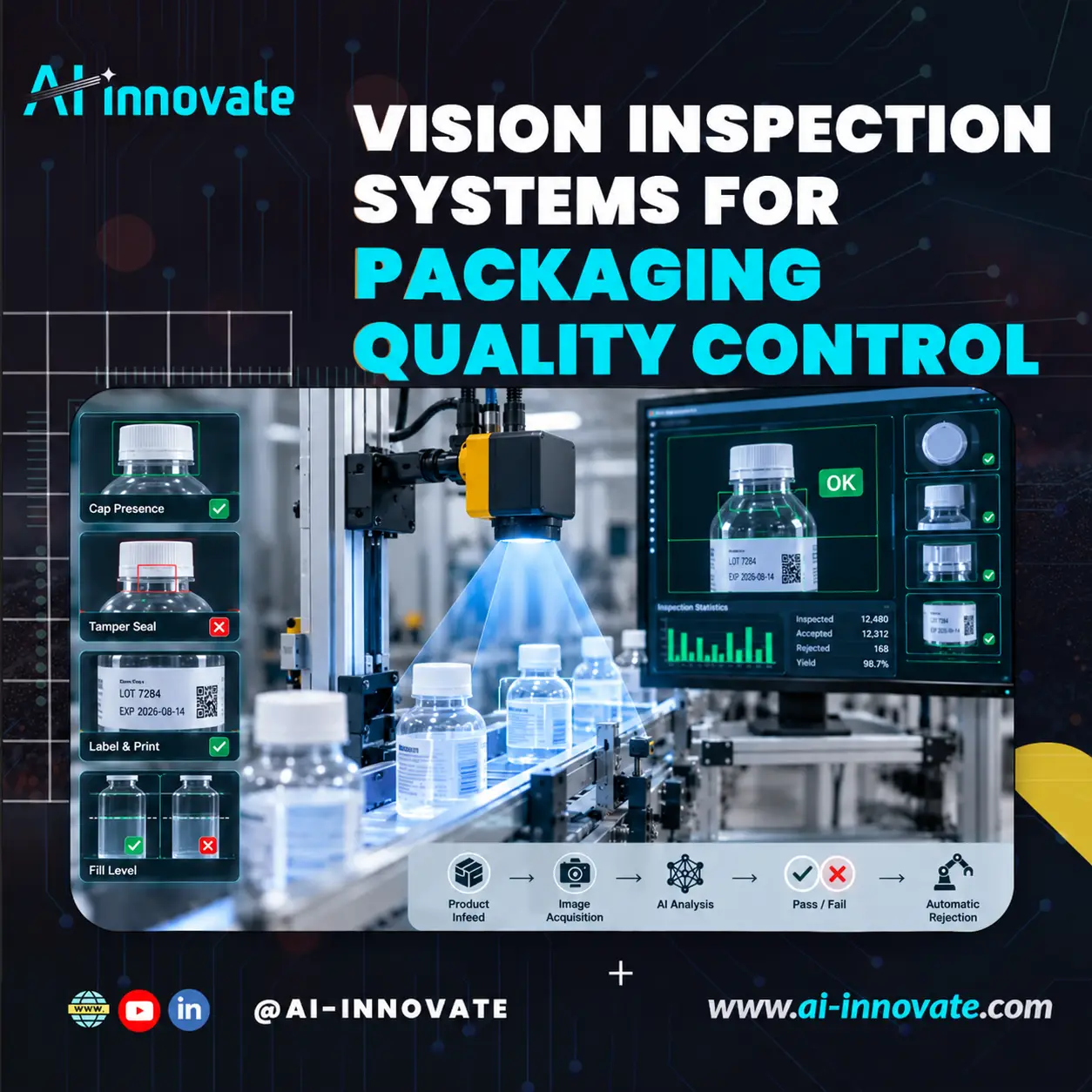
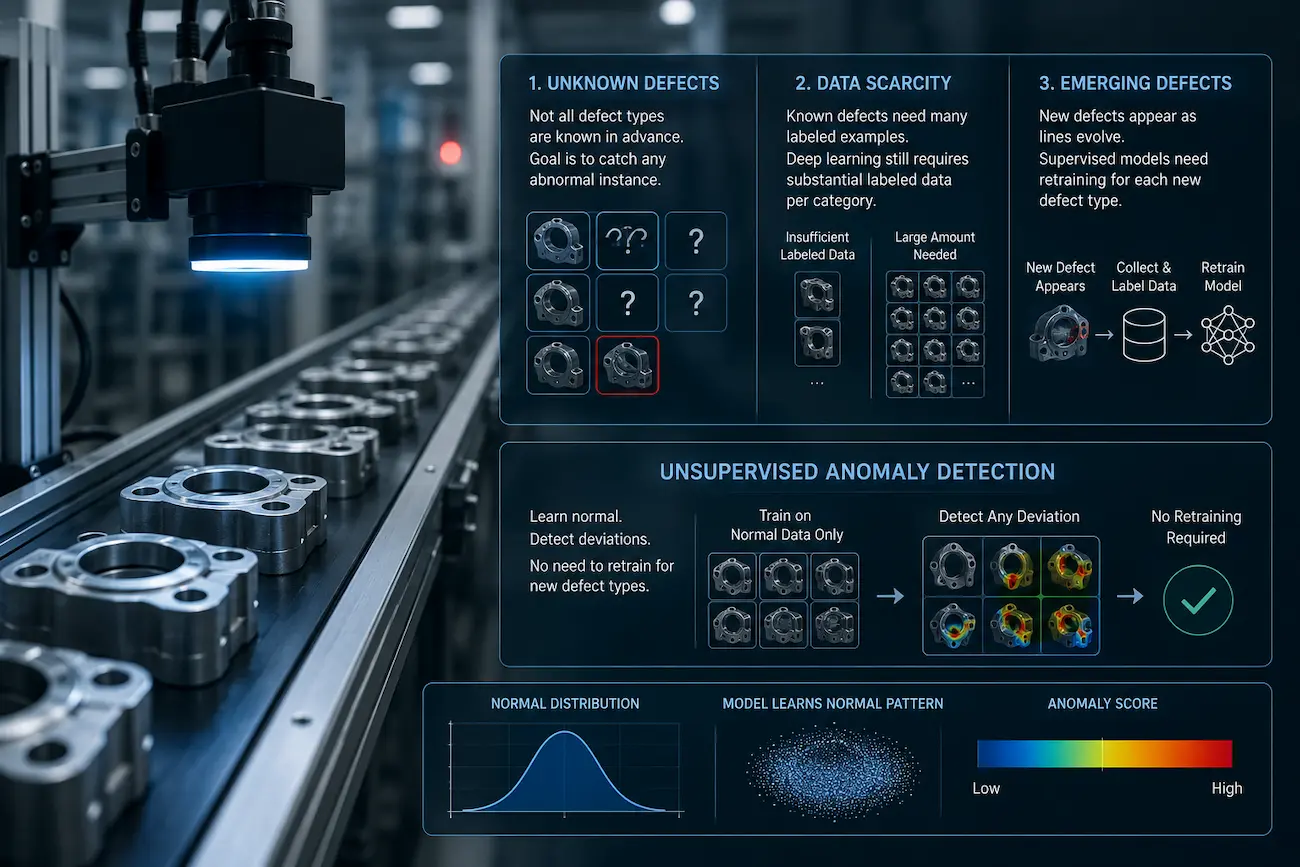
- First, it scales detection. Computer vision systems using deep learning can inspect every product at every stage, not just a sample, catching defects human inspectors miss and reducing scrap. Strong defect detection in manufacturing is the foundation everything else builds on.
- Second, it enables prevention. By analyzing process data, AI identifies the conditions that lead to defects so teams can eliminate root causes, which is the core of AI-driven quality control.
- Third, it enables prediction. AI models forecast machine and process issues before they happen, supporting the predict-and-prevent strategy that gets closest to zero. On the lines we work with, it’s this predictive layer that separates a real zero-defect program from one that’s just inspecting harder.
The Benefits Show Up Long Before You Reach Zero
The benefits show up well before you ever reach zero, which is what makes the pursuit worthwhile.
Lower scrap and rework come first, since preventing defects costs far less than fixing or discarding finished products. Fewer escapes mean fewer recalls, warranty claims, and the reputation damage that follows a quality failure in the field. Over time, the cost of quality drops as spending shifts from correcting problems to preventing them. And because zero defect quality control generates data at every step, AI for quality assurance gives manufacturers the visibility to keep improving rather than firefighting. Even partial progress toward zero pays for itself.
What Challenges Stand in the Way?
The main challenges are cost, data, complexity, and diminishing returns. None of them is a reason to avoid the goal, but each is worth understanding before committing.
- Cost and complexity. Full inspection and predictive systems require investment in cameras, sensors, edge hardware, and integration.
- Data requirements. Predictive prevention depends on quality historical data, which many plants find fragmented or incomplete.
- Diminishing returns. As you approach zero, each further gain costs more, so there’s a practical point where the effort outweighs the benefit for some operations.
- Process variation. Highly variable materials or low-volume, high-mix production make patterns harder to learn and defects harder to predict.
The honest takeaway is that zero defect manufacturing is a journey of continuous improvement, not a switch you flip.
How AI-innovate Supports Zero-Defect Manufacturing
We help manufacturers move toward zero defects by combining full inspection, root-cause prevention, and predictive capability on systems tuned to their actual production. Getting close to zero isn’t about inspecting harder; it’s about moving quality upstream, and that’s what we focus on.
The components we deploy:
- AIxEye delivers real-time defect detection and process optimization, inspecting every product at production speed rather than relying on samples.
- AIxCore is the industrial AI edge computer powered by NVIDIA Jetson Orin AGX, running inference on-site so detection and prevention happen fast enough to act on.
- AIxCam provides simulation tools and synthetic data generation, helping you train models on rare defects that haven’t appeared often enough on the line to learn from.
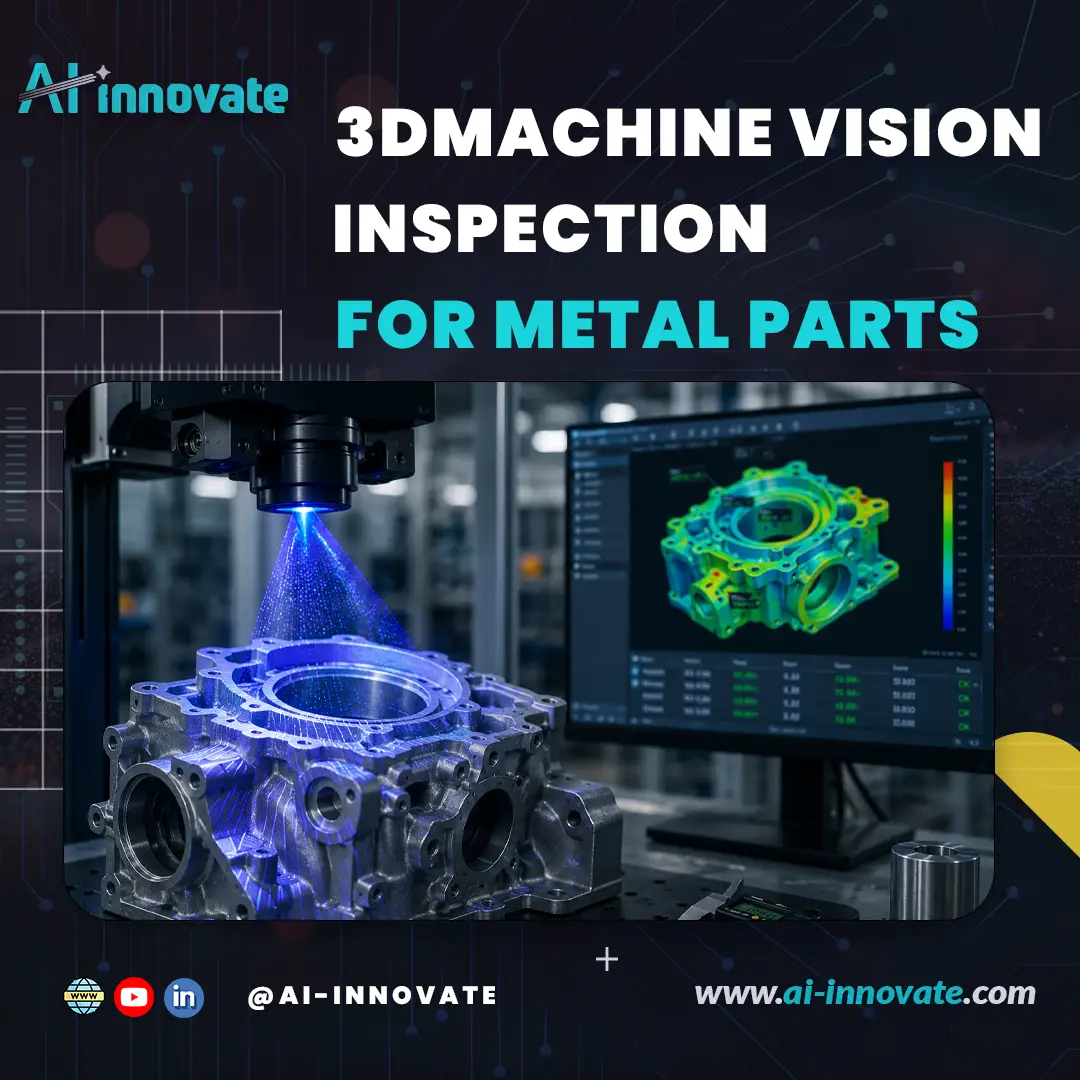
- AIxAM detects surface and geometry defects on three-dimensional parts using multi-view images and depth data, widening the range of defects you can catch and prevent.
Wherever you are on the path toward zero defects, the foundation’s the same: full visual data, explainable AI, and systems built for real production. Book a demo and we’ll talk through where your biggest quality gains are. Reach us at Info@ai-innovate.com or +1 (514) 813-1809.

Final Thoughts
Zero-defect manufacturing isn’t a promise that nothing will ever go wrong. It’s a commitment to eliminating defect causes instead of accepting them, and to moving quality further upstream over time. Understood that way, the goal stops being a slogan and becomes a practical direction that pays off long before you reach perfection.
AI is what’s made that direction realistic. By enabling full inspection, root-cause prevention, and defect prediction at production speed, it closes the gap older methods never could. No system hits a literal zero, but the manufacturers chasing it, with the right technology behind them, end up with less waste, fewer escapes, and a real edge on quality.
Frequently Asked Questions
Is zero-defect manufacturing actually realistic?
Not literally. No system reaches 100 percent perfection, but zero-defect manufacturing is a target that drives teams to eliminate defect causes rather than accept them. The pursuit gets you far closer to zero than treating some failure as normal.
Who came up with the zero defects concept?
The idea grew out of the twentieth-century quality movement and was formalized alongside Six Sigma in the 1980s, popularized by companies like Motorola and General Electric. Modern zero-defect manufacturing is its Industry 4.0 evolution.
What's the difference between zero-defect manufacturing and Six Sigma?
Six Sigma is a statistical methodology for reducing variation to a defined defect rate. Zero-defect manufacturing is a broader philosophy aimed at eliminating defects entirely. They overlap, and many ZDM programs use Six Sigma tools.
Can AI really achieve zero defects?
AI can’t guarantee zero, but it gets manufacturers far closer than older methods by enabling full inspection, root-cause prevention, and defect prediction. It’s the enabler that makes meaningful progress toward the goal realistic.
How do you measure progress toward zero defects?
Common measures include defects per million opportunities, scrap and rework rates, escape rates, and cost of quality. The trend over time matters more than any single number.
Is zero-defect manufacturing worth it for smaller manufacturers?
Often yes, if the cost of defects is high. The technology scales down to single lines, and even partial progress toward zero reduces scrap and protects customer trust. The question is whether your defect costs justify the investment.
Does pursuing zero defects mean replacing my current inspection?
No. It builds on existing inspection, adding full coverage and predictive prevention on top of the checks you already run. The aim is moving quality upstream, not tearing out what works.
Sources
Ai-Innovate uses only high-quality sources, including peer-reviewed studies, to support the facts within our articles.
- Zero-Defect Manufacturing for Engineers. Tencom (2026). Covers the definition of ZDM, its roots in twentieth-century quality philosophies, and its formalization alongside Six Sigma in the 1980s. https://www.tencom.com/blog/zero-defect-manufacturing-for-engineers
- Zero Defect Manufacturing in the Era of Industry 4.0. Frontiers (2021). Describes how ZDM incorporates AI, ML, and big industrial data into quality control loops to predict and prevent defects at product and process levels. https://www.frontiersin.org/research-topics/27428/zero-defect-manufacturing-in-the-era-of-industry-40-for-achieving-sustainable-and-resilient-manufacturing
- Role of Industry 4.0 in Zero-Defect Manufacturing: A Systematic Literature Review. ScienceDirect (2024). Defines the four core ZDM strategies: detection, repair, prediction, and prevention. https://www.sciencedirect.com/science/article/pii/S221384632400289X
- Zero-Defect Manufacturing: The Approach for Higher Manufacturing Sustainability in the Era of Industry 4.0. Taylor & Francis (2021). Explains the Detect-Repair, Detect-Prevent, and Predict-Prevent approaches. https://www.tandfonline.com/doi/full/10.1080/00207543.2021.1987551
- Artificial Intelligence for Quality Defects in the Automotive Industry: A Systematic Review. PMC / NIH (2025). Documents how AI and CNN-based computer vision strengthen defect detection, reduce scrap, and enable proactive maintenance in zero-defect strategies. https://www.ncbi.nlm.nih.gov/pmc/articles/PMC11902312/
- Zero Defect Manufacturing. ATRIA Innovation (2024). Covers the use of computer vision and deep learning to detect defects at every stage of production. https://atriainnovation.com/en/blog/zero-defect-manufacturing/