




When companies adopt AI for quality assurance, it is often presented as a technology decision, but in practice, it is an operational one. Many manufacturers explore AI inspection after experiencing defects that keep coming back, costs that keep going up for scrap, or growing complexity in inspections. The success of the algorithm depends on how well it matches real production conditions, not how sophisticated it is.
In most cases, when artificial intelligence (AI) quality initiatives fail, they have the same root causes. The problem is that it’s not clearly defined, the data is misunderstood, or the system is used as a standalone tool instead of as part of a larger quality framework.
This checklist is meant to help manufacturers adopt AI quality assurance in a step-by-step, practical way. It focuses on being prepared, being a good fit, and being valuable over time, not just on being used.
Adopting AI QA? Classification Start With the Right Checklist.
From data readiness and integration to model validation and ROI tracking, this checklist guides you through every step of adopting AI-powered quality assurance. Avoid common pitfalls, accelerate deployment, and achieve measurable quality improvements faster.

Understanding What AI Quality Assurance Really Changes
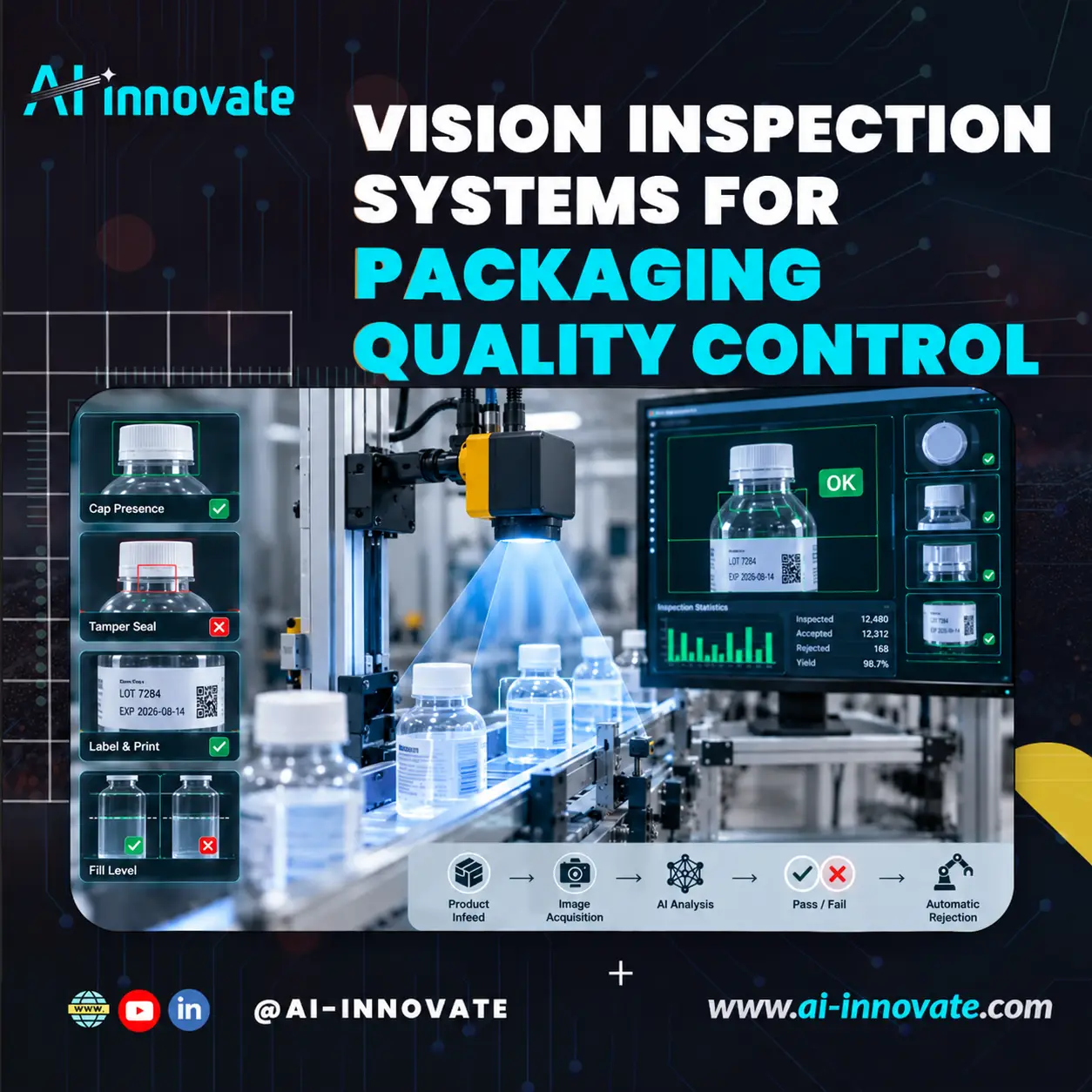
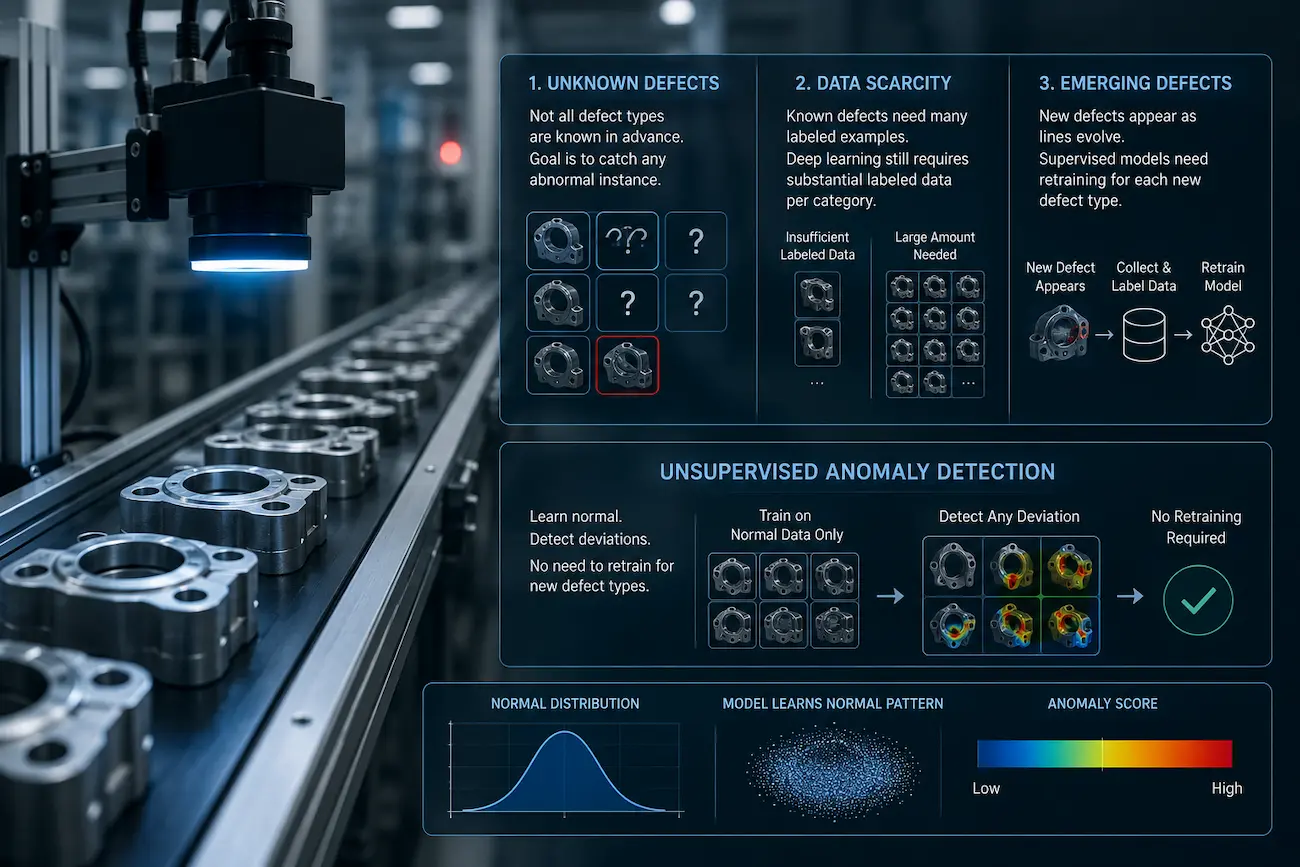
AI quality assurance does more than automate inspection. It changes how defects are understood, how processes are checked, and how decisions about quality are made. Instead of relying solely on predefined rules or human judgment, AI systems learn patterns from production data and identify deviations that would otherwise remain hidden.
To benefit from this change, manufacturers need to be clear and consistent when adopting these new standards. The following checklist explains the most important things to consider. These things will help you decide if AI quality assurance will become a part of your company’s strategy or will be a short-lived experiment.
- Read Also:
Checklist for Adopting AI Quality Assurance Solutions
Define the Quality Problem in Operational Terms
The first step is to clearly define what problem AI is expected to solve.
Teams should identify which defect types have the greatest impact on cost, safety, or performance, and where in the process those defects originate. It is also important to understand if defects are consistent, intermittent, or trending over time. If your goals are unclear, your plans will be too.
Clearly defining the problem lets us decide what data to collect, how to validate it, and what success metrics to use.
Identify Why Current Inspection Methods Are Insufficient
We should use AI to deal with the specific problems we have with the current inspection process.
It’s hard to do a manual inspection and keep up with the work because it’s tiring. Rule-based systems often don’t work well when materials, surfaces, or lighting are different. Sometimes, the way we check for defects can miss some defects that happen only sometimes. If we understand these gaps, we can make sure that AI is used in the right places. This will make sure that AI doesn’t just copy what we already have.
Assess Data Availability and Quality
AI quality assurance depends on representative and well-contextualized data.
Manufacturers should confirm that inspection images or signals are available across normal operating conditions, including both acceptable and defective parts. Data consistency across shifts and production scenarios is critical. Wherever possible, inspection data should be linked to time, equipment, or process parameters.
Good data enables learning. Poor data undermines trust.
Evaluate Process Stability and Sources of Variation
AI can adapt to changes, but if there are too many changes, it won’t work well.
It is important to regularly check that the processes can be repeated, that they are based on reliable sources, and that factors like lighting or temperature do not disrupt them. If we don’t understand variability, AI models might learn random noise instead of meaningful patterns.
Making processes more stable helps improve how well inspections are done and how much people trust the results.
Plan Integration With Production Workflows
AI quality assurance has to work within real production limits.
Manufacturers should determine whether inspection will run at the same time as production, whether edge processing is required for latency or reliability, and how inspection results will be used. Integration with other systems, such as PLCs, MES, or quality systems, should be planned early on instead of being an afterthought.
Successful AI systems work with the way people already work instead of creating a new way of doing things.
Define Validation and Acceptance Criteria
People trust AI inspection when they can see how well it works.
Before deployment, manufacturers should define the acceptable detection accuracy, false-positive rates, and validation procedures. There should also be a clear plan for retraining models when materials, products, or processes change.
Clear rules make it easy for everyone to understand what is expected, and they encourage trust between the quality and engineering teams.
Establish Ownership and Governance
AI quality assurance isn’t a one-time thing.
It is important to clearly assign responsibility for monitoring performance, managing updates, and responding to changes. If they don’t belong to anyone, AI systems usually get worse over time and people stop trusting them, even if they worked well at first.
Clear governance helps ensure long-term reliability.
Start With Controlled Deployment and Scale Gradually
It has been shown that when a company focuses on a few key areas, it tends to be more successful than when it tries to do everything at once.
Manufacturers should start by checking one thing at a time, making sure it works in the real world, and writing down what they learned. Once you’re ready, you can add more lines or products.
Controlled scaling reduces risk and helps organizations adopt it.
Measure Impact Beyond Detection Accuracy
Just because something can detect something doesn’t mean it’s a success.
Manufacturers should think about whether AI quality assurance can help reduce wasted materials and rework, allow for earlier intervention, improve process stability, or support better decision-making. These results show that they can be used in real situations.
AI inspection is effective when it improves how work is done, not just how defects are flagged.
Treat AI Quality Assurance as a Continuous Improvement Capability
Just because something can detect something doesn’t mean it’s a success.
Manufacturers should think about whether AI quality assurance can help reduce wasted materials and rework, allow for earlier intervention, improve process stability, or support better decision-making. These results show that they can be used in real situations.
AI inspection is effective when it improves how work is done, not just how defects are flagged.
Conclusion
Adopting AI quality assurance is both an operational and a technical decision. To be successful, it’s important to clearly define the problem, have strong data foundations, plan for integration in a realistic way, and have ongoing governance.
In practice, manufacturers who see AI QA as a long-term way to improve quality, not just a way to automate quickly, get more stable processes, fewer recurring defects, and more confidence in their inspection systems. A well-planned adoption process makes sure that AI helps improve quality instead of making things more complicated.
Confused About Where to Start with AI?
Our specialists help you identify the right AI approach based on your process, data, and goals.
Sources
Ai-Innovate uses only high-quality sources, including peer-reviewed studies, to support the facts within our articles.
Government of Canada. (2024). Advanced Manufacturing and Digital Technologies
Explains how digital inspection, automation, and data-driven systems support quality improvement and process understanding in manufacturing.
Retrieved from canada.caInnovation, Science and Economic Development Canada. (2023). Artificial Intelligence in Manufacturing
Overview of how AI is applied to production monitoring, quality assurance, and operational decision-making across industrial sectors.
Retrieved from ised-isde.canada.caNational Research Council Canada. (2023). Digital Manufacturing and Industrial Quality Technologies
Discusses applied research on inspection, sensing, and data integration for improving defect analysis and manufacturing quality systems.
Retrieved from nrc.canada.ca
FAQ
What is the most common mistake when adopting AI QA solutions?
The most common mistake is treating AI as a standalone inspection tool. Without integration into production workflows and ownership over performance, AI systems often fail to deliver long-term value.
Do manufacturers need large datasets before starting with AI quality assurance?
Not necessarily. Smaller, well-curated datasets with clear context are often more valuable than large volumes of poorly labeled or inconsistent data. Early pilots focus on data quality, not scale.
How long does it take to see value from AI quality assurance?
Initial value often appears during pilot deployments when defects are detected earlier or patterns become visible. Broader operational impact depends on how quickly insights are fed back into process adjustments and decision-making.