
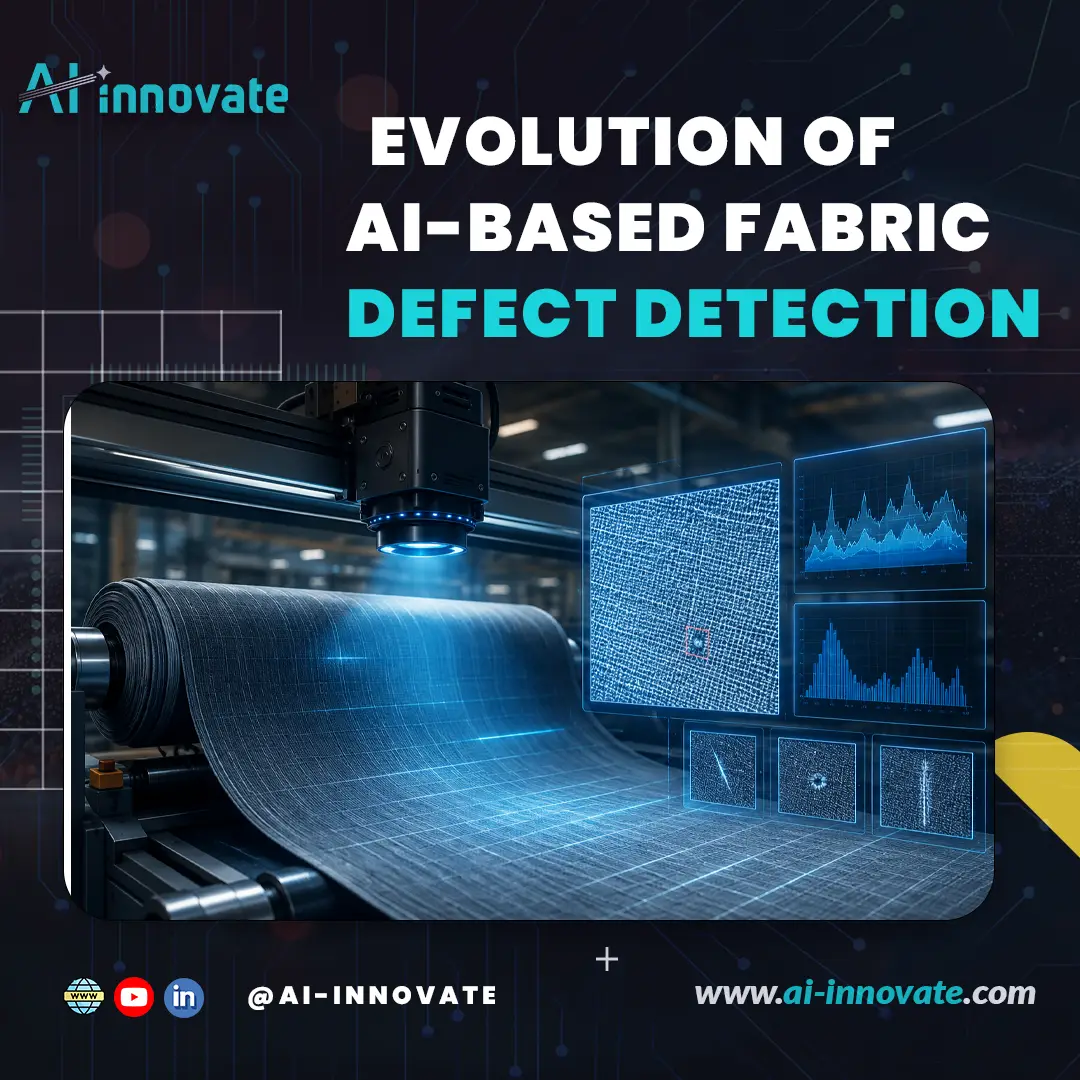

Evolution of AI‑Based
Fabric Defect Detection
From Classical Vision to Foundation Models
A six-part technical publication that traces the evolution of automated fabric defect detection, from traditional image processing to modern AI-driven approaches and foundation models.
- Peer-reviewed manuscript · Divided into six articles for readability
6 Parts
In-depth technical articles
Comprehensive Review
From classical methods to foundation models
Expert Authored
By Azadeh Ashoori, Reviewed by Hamid-Reza Pourreza
Published by AI-innovate
Research-driven insights for industry
About this Publication
This research series is based on the review paper “Evolution of AI‑Based Fabric Defect Detection: From Classical Vision to Foundation Models.”
The manuscript has been divided into six articles to improve readability on the AI‑Innovate website. Apart from editorial notes, navigation, and transitions between articles, the technical content remains unchanged.

Azadeh Ashoori
Author

Researcher specializing in artificial intelligence, machine vision, industrial inspection systems, and intelligent manufacturing technologies.

Hamid-Reza Pourreza
Scientific Reviewer

Senior computer vision scientist and professor with over three decades of experience in AI, machine vision, and medical imaging. Former Dean of Engineering at Ferdowsi University of Mashhad, with more than 200 published papers.
Read the Complete Series
Follow the evolution of fabric defect detection through six comprehensive articles.

From Manual Inspection to Feature-Based AI
The transition from human inspection to automated, feature-driven approaches.

- Read Part 1

Teacher–Student Distillation Methods
Learning normal representations efficiently through knowledge distillation.

- Read Part 2

Reverse Distillation Methods
Enhancing anomaly detection by suppressing abnormal information.

- Read Part 3

Anomaly Synthesis Strategies
Generating artificial anomalies to improve model generalization.

- Read Part 4

Frequency-Based (Spectral) Methods
Leveraging the periodic structure of fabrics in the frequency domain.

- Read Part 5

Comparative Analysis, Future Research & Conclusion
Comparing methods head-to-head and charting the road ahead, including the rise of foundation models.

- Read Part 6
Frequently Asked Questions
Who is this research series for?
Engineers, researchers, and manufacturers working in textile production, machine vision, and automated quality inspection, along with AI practitioners who want a structured overview of defect-detection methods.
Do I need technical background to understand?
A basic familiarity with machine learning or computer vision helps, but each article introduces its concepts progressively, moving from classical methods toward more advanced, modern approaches.
Are the articles available for download?
Each article is published directly on the AI-innovate website. Contact us if you would like a downloadable copy for offline reading or internal distribution.
Can I share or cite this publication?
Yes. The series is intended to be shared and referenced. When citing, please credit the original review paper and its authors, Azadeh Ashoori and Hamid-Reza Pourreza.
Looking to Apply AI for Industrial Inspection?
AI-innovate develops custom AI and machine vision solutions for textile manufacturing, automated visual inspection, and industrial quality control.