




What is the difference between a flawless polymer component and a faulty one? Sometimes, it’s a crack measuring just a few microns—invisible to the naked eye but capable of compromising an entire system. Detecting these sub-visual imperfections at scale is one of modern manufacturing’s greatest technical hurdles.
At AI-innovate, our mission is to solve these critical, real-world problems by making the invisible, visible. This guide delves deep into the science of advanced Polymer Defect Detection Methods, providing a clear analysis of the technologies capable of delivering true microscopic precision reliably and efficiently.

Visualizing Material Imperfections
Before a defect can be detected, it must be defined. In polymer science, an imperfection can range from a purely cosmetic flaw to a critical structural weakness that compromises the end product’s safety and performance.
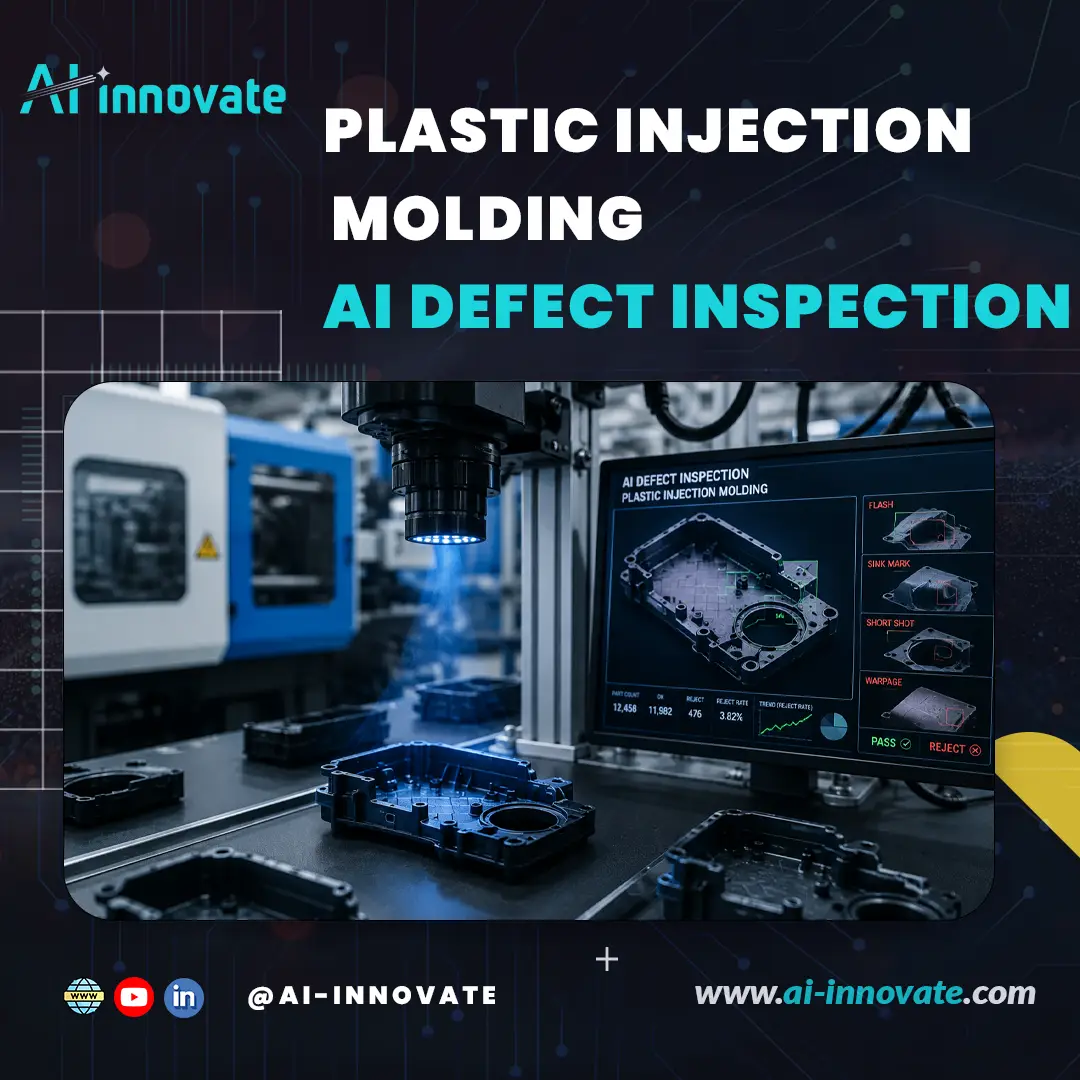
For decades, the human eye was the primary tool for this task, but its inherent subjectivity and limitations in speed and endurance make it unsuitable for the demands of modern industry. The sheer variety of potential flaws highlights the complexity of the challenge. A systematic approach to quality control must be capable of identifying a wide spectrum of these issues, including:
- Bubbles and Voids: Pockets of air or gas trapped within the polymer matrix, which can weaken the material.
- Micro-cracks: Tiny fissures, often invisible to the naked eye, that can propagate under stress and lead to catastrophic failure.
- Warpage and Sink Marks: Dimensional distortions and surface depressions caused by uneven cooling or pressure during molding.
- Color Variations and Streaks: Inconsistencies in pigmentation that affect the product’s aesthetic quality and brand consistency.
- Surface Contaminants: Foreign particles or blemishes embedded on the polymer surface.
Automated Optical Intelligence
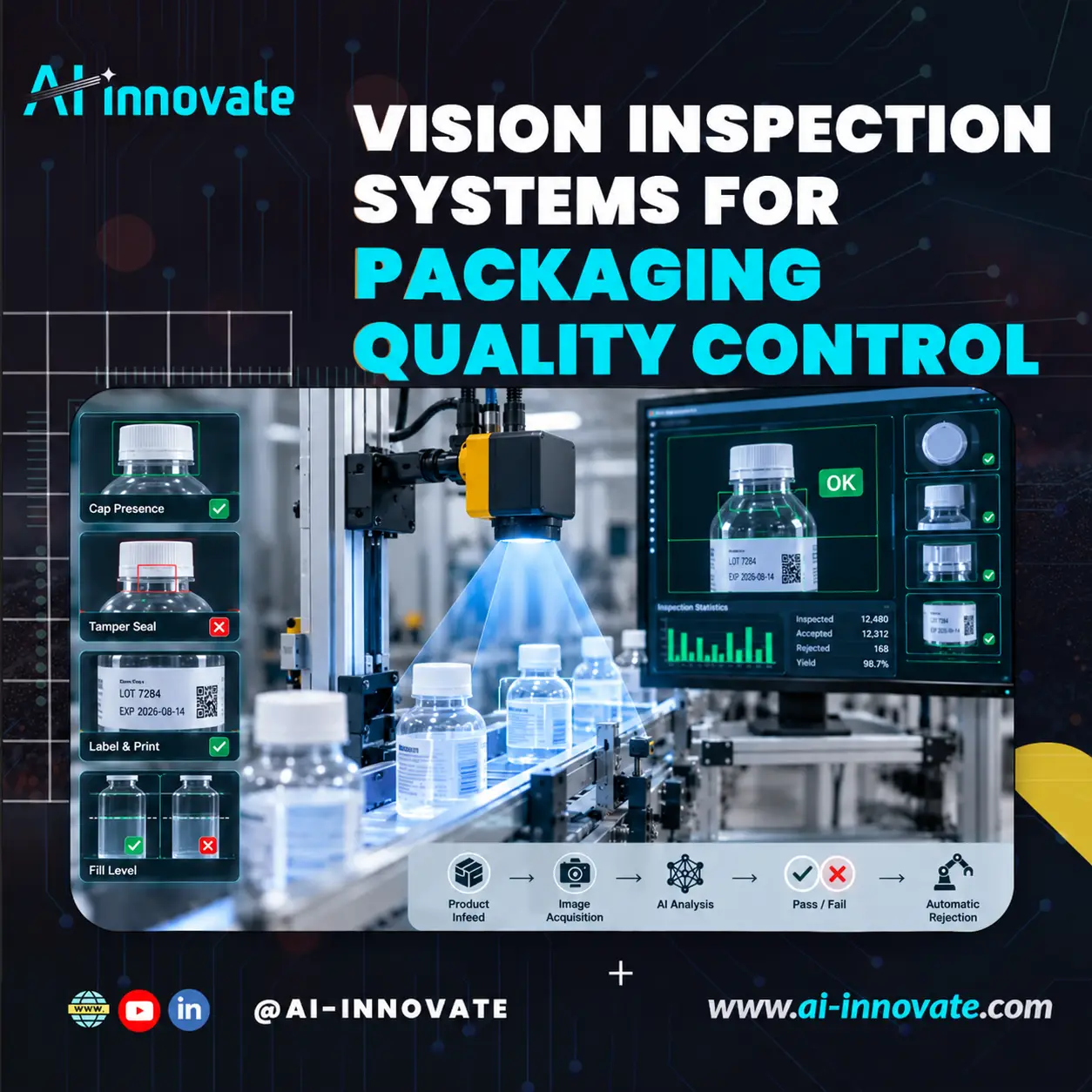
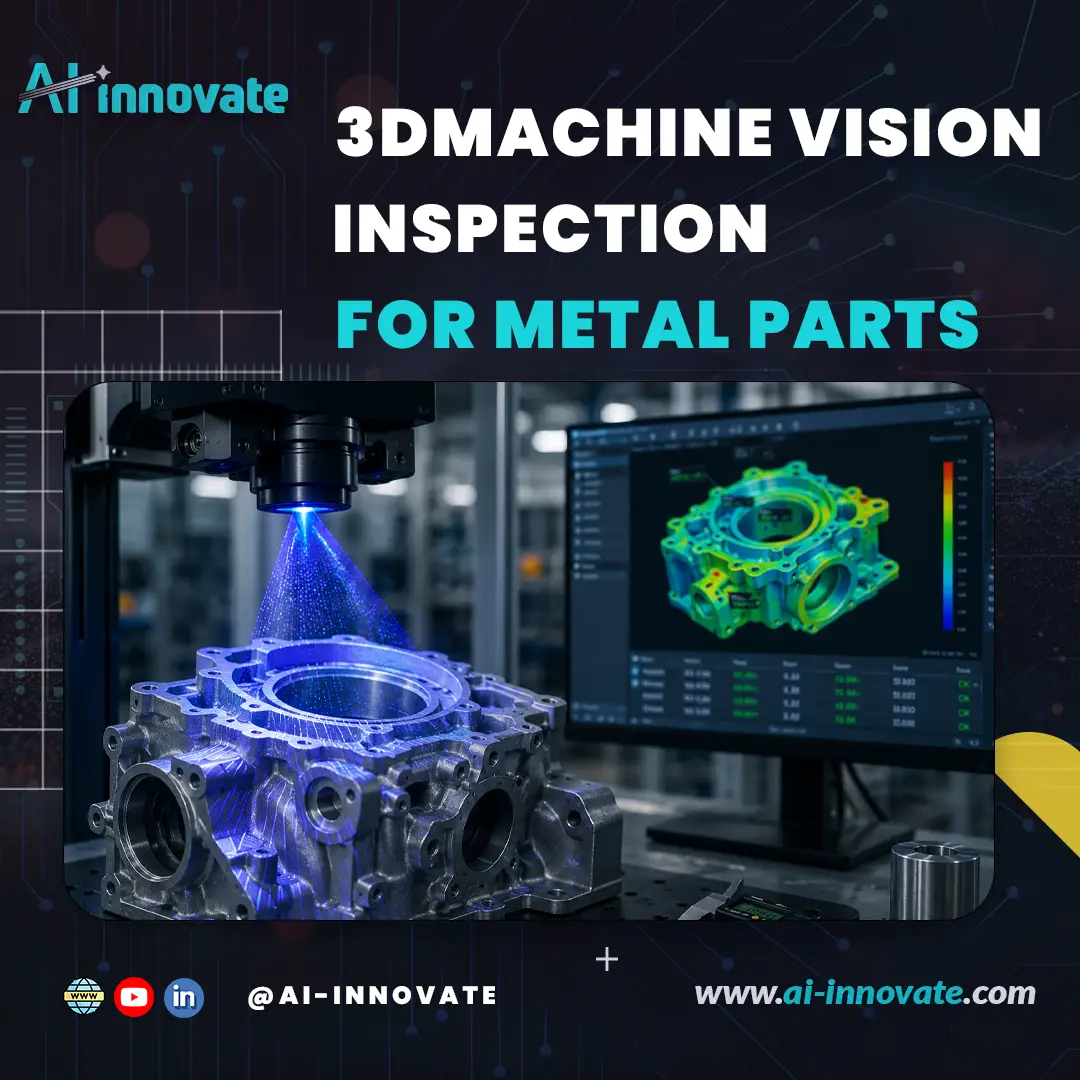
The first major evolution beyond manual inspection was the integration of automated optical intelligence. This approach leverages high-resolution industrial cameras and sophisticated image processing algorithms to digitize and analyze a product’s surface in real-time.
By establishing a “golden standard” or a digital master of a perfect product, these systems can instantly flag deviations, operating tirelessly and with a level of consistency unattainable by human inspectors.
This technological shift introduced a new paradigm in quality assurance, one built on objective data rather than subjective judgment, and represents a crucial step in the evolution of Polymer Defect Detection Methods. This intelligence delivers several key advantages which are pivotal for today’s production environments.
Enhanced Speed
Automated systems can inspect hundreds or even thousands of parts per minute, seamlessly integrating into high-speed production lines without creating bottlenecks.
Reduced Human Error
By removing factors like fatigue and subjectivity, optical intelligence ensures that inspection criteria are applied uniformly to every single product, 24/7.
Neural Networks on the Production Line
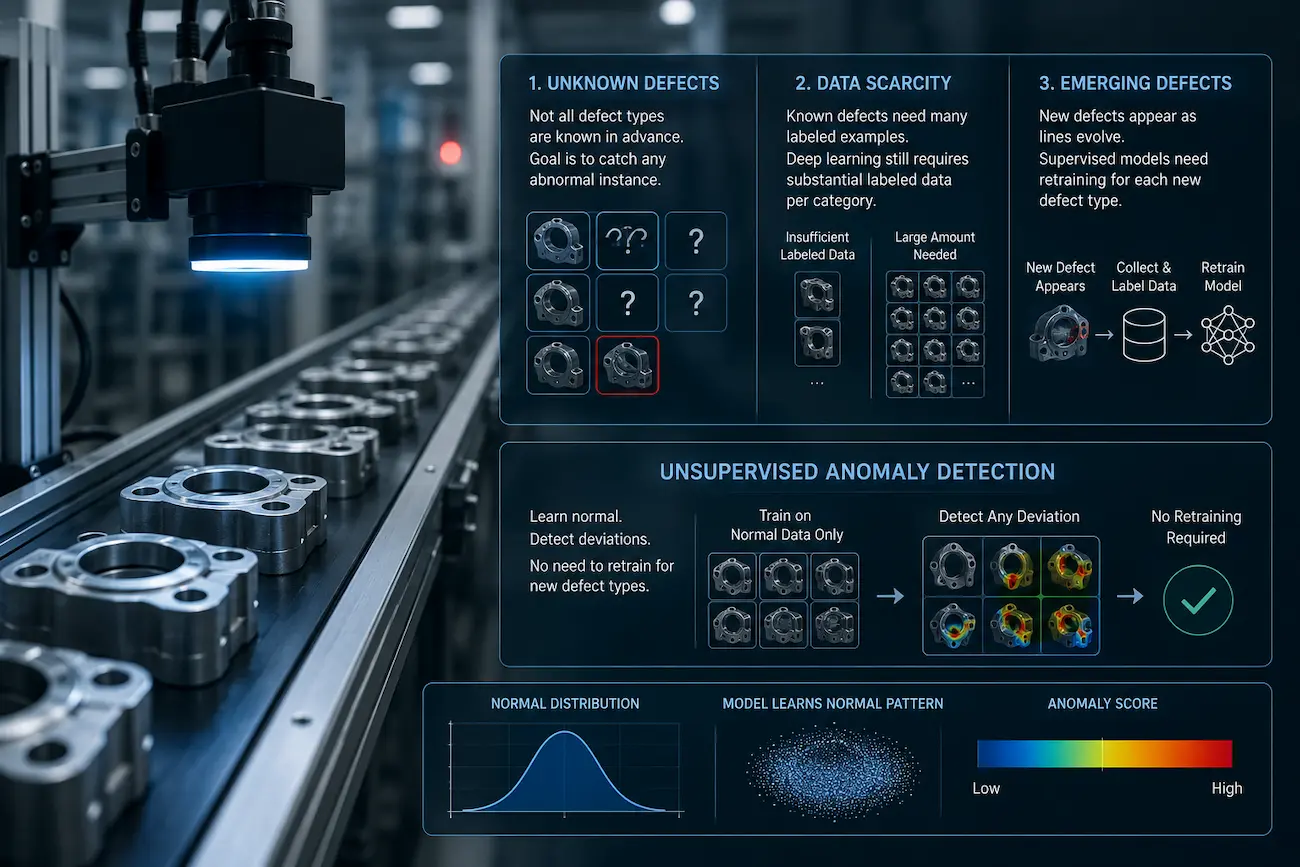
While traditional automated inspection excels at identifying pre-defined, clear-cut defects, its capabilities are often limited when faced with subtle, complex, or previously unseen imperfections.
This is where deep learning, and specifically convolutional neural networks (CNNs), fundamentally changes the game. Unlike algorithms that simply follow programmed rules, a neural network learns to recognize flaw patterns from vast datasets of images, much like a human expert develops intuition over time, but with far greater precision. This
allows them to identify nuanced defects with remarkable accuracy. This progress has been a pivotal advancement for modern Polymer Defect Detection Methods.
Case Study: Real-Time Defect Detection in PFA Tubing
To illustrate this capability, consider the manufacturing of high-purity Polyfluoroalkoxy (PFA) tubing, where even microscopic scratches or textural inconsistencies can be critical. In a referenced study, a deep learning model trained for this purpose achieved a defect detection accuracy of 99.24% on test data, effectively eliminating errors that are difficult to spot manually. Similarly, the “QuKu-ML” project successfully deployed a multi-camera, AI-driven system to automatically identify flaws in injection-molded parts, further validating this powerful approach.
Micro-Defect Detection Accuracy
For Quality Assurance Managers and Operations Directors, the ultimate measure of any inspection system is its quantifiable accuracy. The ability to detect the smallest possible flaw is directly tied to reducing waste, minimizing product recalls, and protecting brand reputation.
Modern vision systems, powered by advanced AI, have pushed the boundaries of what is possible, offering a level of precision that was once purely theoretical. To provide a clear comparison, the following table outlines the performance metrics of different inspection methodologies, drawing from industry data and technical studies.
| Method | Typical Accuracy | Minimum Defect Size | Throughput |
| Human Inspection | Variable (70-80%) | Highly limited | Low |
| Traditional AOI | High (95%+) | Limited by rule complexity | High |
| Deep Learning Vision | Very High (>99%) | As small as <0.051 mm | Very High |
As evidenced, factories that have integrated AI-based systems have reported tangible results, including reductions in final product rejections by customers of up to 30%.
Read Also: Defect Detection Using Machine LearningAccelerating Development with Emulation
The intelligence that powers these advanced inspection systems doesn’t appear overnight. It is the result of rigorous development, testing, and iteration by Machine Learning Engineers and R&D Specialists.
Traditionally, this process has been hampered by a critical bottleneck: a heavy reliance on physical camera hardware. Acquiring, setting up, and reconfiguring expensive industrial cameras for every new test scenario is costly and time-consuming.
This friction significantly slows down innovation cycles, which is a major barrier for new Polymer Defect Detection Methods. Emulation tools directly address these challenges by creating a virtual development environment, offering a suite of compelling benefits:
- Faster Prototyping: Developers can simulate various cameras, lighting conditions, and resolutions from their computer, testing ideas in hours, not weeks.
- Cost Reduction: The need to purchase and maintain an extensive inventory of physical camera hardware for testing purposes is eliminated.
- Increased Flexibility: A wide range of “what-if” scenarios can be tested, from extreme lighting to rare defect types, without complex physical setups.
- Remote Collaboration: Globally dispersed teams can work on the same virtual setup, streamlining collaboration and accelerating project timelines.
From Virtual Prototypes to Flawless Polymers

True industrial innovation occurs when breakthrough development translates into flawless execution. The journey from a developer’s virtual model to a perfectly manufactured polymer requires a seamless connection between the worlds of simulation and production. At AI-innovate, we forge that connection. Our integrated suite of tools empowers your teams across the entire product lifecycle.
Accelerate Innovation with AI2Cam
Empower your R&D and machine learning teams with our powerful camera emulator. With AI2Cam, you can rapidly prototype, test, and validate your vision applications in a flexible, hardware-free environment, turning innovative concepts into production-ready models faster than ever before.
Ensure Quality with AI2Eye
Deploy those rigorously tested models onto the factory floor with AI2Eye. Our real-time inspection system brings cutting-edge AI directly to your production line, catching the smallest defects with unmatched accuracy and optimizing your entire process. Ready to bridge the gap between development and deployment? Explore our solutions and redefine what’s possible.
Conclusion
The evolution of quality control in the polymer industry has been a journey from subjective observation to data-driven certainty. By leveraging automated optical intelligence and the profound pattern-recognition capabilities of neural networks, manufacturers can now achieve unprecedented levels of precision. Furthermore, the use of emulation tools is fundamentally accelerating the development cycle. The future of Polymer Defect Detection Methods lies in this intelligent, integrated approach, paving the way for smarter, more sustainable manufacturing in the Industry 4.0 era.
Note: Some graphics and visuals in this post were produced using AI-generated content.