




A metal part leaves the machine looking perfect. Weeks later, it fails in assembly. The defect was always there, hidden in plain sight, waiting for the right conditions to reveal itself.
These defects rarely cause immediate failure but over time, they lead to assembly issues and costly recalls. Traditional inspection ways struggle to catch these problems over and over, especially as production volumes and quality expectations rise.
Metal defect detection has become a critical capability for manufacturers aiming to maintain quality without slowing down operations. As materials, processes, and tolerances evolve, automated inspection is no longer just about finding defects. It is about understanding where and why they occur and preventing them from recurring.
This article explores how metal defect detection is applied in real manufacturing environments and where it delivers the most practical value.
Catch Every Crack , & Deformation
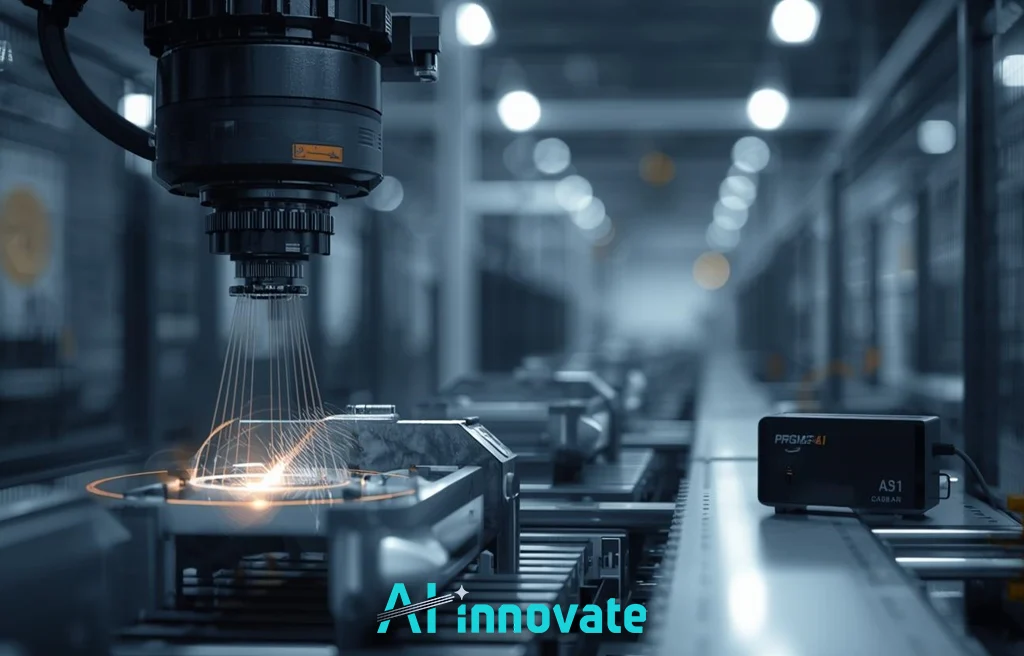
High-speed detection of metal flaws in real-time.

Why Metal Defect Detection Matters in Production
Metal parts are used in environments where reliable performance matters. Structural weakness, surface fatigue, and coating failure can reduce a part’s performance long after it leaves the factory. Many of these issues are caused by surface-level defects introduced during forming, machining, welding, or finishing.
Manual inspection often cannot be scaled up, and Human inspectors experience fatigue and lack consistency.
Automated metal defect detection addresses these challenges by providing consistent, repeatable inspections directly on the production line.
- Read Also:
Where Metal Defect Detection Delivers Real Value in Manufacturing
Metal defect detection has become essential in industries where performance, safety, and durability are tightly linked to surface quality.
Automotive Manufacturing
In automotive production, metal defect detection supports quality control across body panels, chassis components, and powertrain parts.
- detects scratches, dents, weld irregularities, and surface deformation during stamping, welding, and machining
- identifies process drift early to prevent defects from spreading across high-volume production
- reduces dependency on manual inspection in fast-moving assembly lines
Early detection allows tooling adjustments and targeted intervention without disrupting throughput.
Aerospace and Precision Engineering
Aerospace and precision manufacturing require consistent surface quality and strict traceability.
• identifies subtle machining defects that may affect fatigue life or compliance
• supports inspection of brackets, housings, and structural components with tight tolerances
• links defect patterns to specific tools or machines for process stability analysis
Automated inspection ensures consistency while supporting documentation and audit requirements.
Machining and CNC Operations
CNC machining introduces surface defects through tool wear, vibration, or improper cutting parameters.
- detects chatter marks, burrs, and micro-fractures immediately after machining
- enables corrective action while parts are still in process
- supports predictive maintenance by revealing trends in tool performance
This approach reduces rework and prevents defective parts from reaching downstream operations.
Welding and Fabrication
Welding processes introduce variability that affects both surface quality and joint integrity.
• highlights surface cracks, irregular bead geometry, and undercutting
• detects early signs of shielding issues or improper heat input
• ensures consistent weld quality across shifts and operators
Early detection improves reliability in automotive frames, industrial equipment, and structural assemblies.
Benefits Beyond Defect Detection
Metal defect detection systems provide insight beyond pass or fail decisions.
• earlier identification of process drift and instability
• reduced scrap and rework
• improved maintenance planning
• more consistent quality across production lines
• stronger traceability and reporting
When inspection data is integrated with production systems, it supports continuous improvement rather than reactive correction.
Take Metal Defect Detection Beyond Manual Inspection
Reliable metal inspection requires more than static rules or periodic sampling. Modern manufacturing environments demand detection systems that adapt to real process variation while operating directly on the production line. AI-innovate helps manufacturers deploy intelligent vision and edge-based analytics designed for consistent metal defect detection in real-world conditions.
- Real-time metal defect inspection at the edge with AI2Eye: AI2Eye enables continuous inspection of metal components on the production line, detecting scratches, cracks, weld irregularities, and surface anomalies as they form, while delivering immediate pass or fail decisions without reliance on cloud connectivity.
- Scalable AI model development and deployment using AI2Cam: AI2Cam allows teams to develop, test, and refine metal defect detection models efficiently, supporting rapid deployment across different alloys, finishes, geometries, and inspection setups.
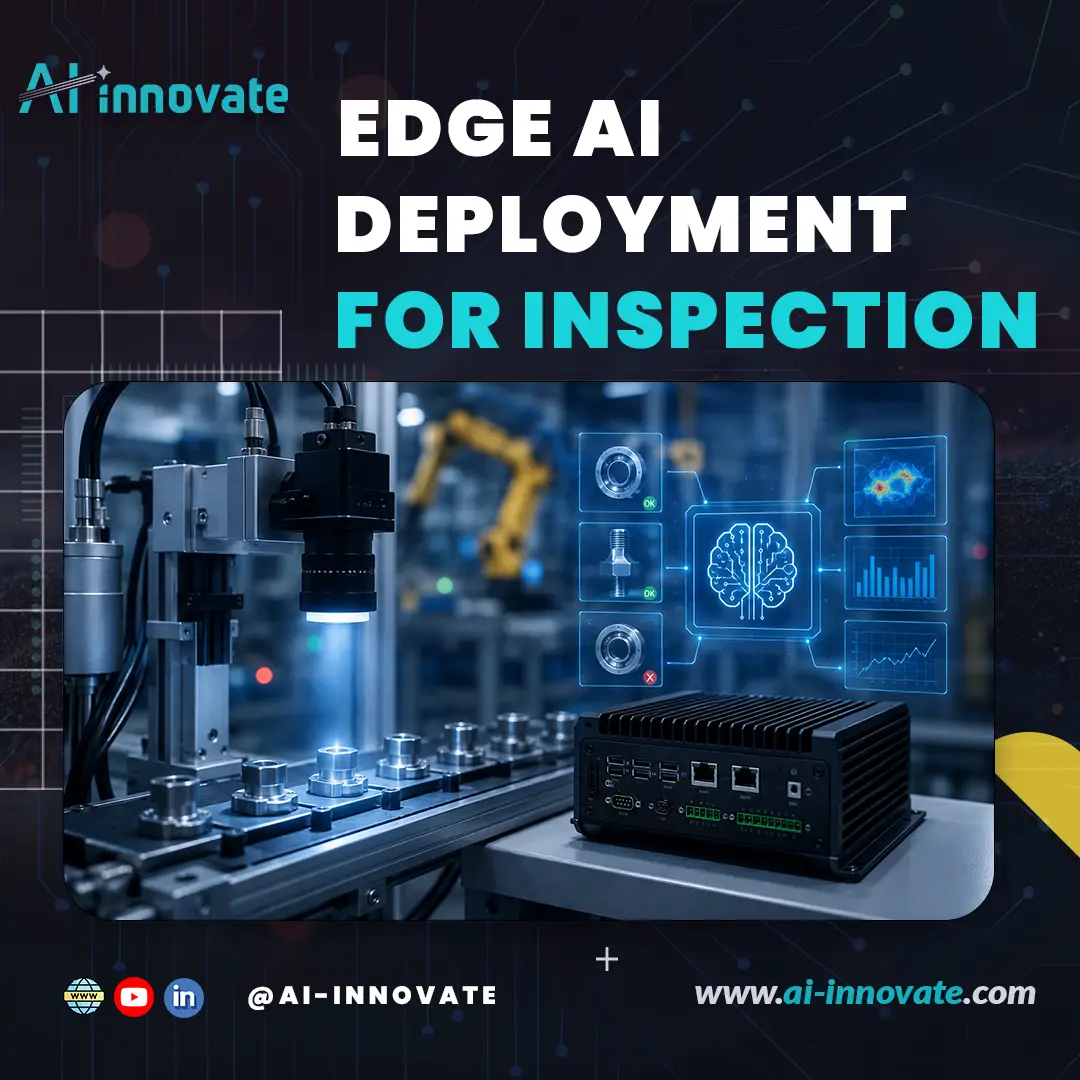
- Industrial-grade edge intelligence powered by Aixcore: Aixcore runs inspection and analytics models close to the machines, combining visual inspection data with process signals to deliver low-latency insights that support consistent quality, root cause analysis, and process optimization.
Discover how AI-innovate’s metal defect detection solutions help manufacturers reduce scrap, improve consistency, and gain deeper visibility into their production processes.
Conclusion
Metal defect detection plays a critical role in maintaining reliability across automotive, aerospace, and industrial manufacturing. Surface flaws, weld irregularities, and machining defects are often early indicators of deeper process issues, not isolated quality events. Detecting them consistently and early allows manufacturers to correct problems before they propagate downstream.
From experience working with production teams, the most effective metal defect detection systems are those that integrate directly into real workflows, adapt to material and process variation, and deliver actionable insights rather than simple pass or fail results. As manufacturing environments continue to increase in speed and complexity, intelligent metal defect detection will remain a foundational capability for achieving stable quality, reduced waste, and long-term process control.
Sources
Ai-Innovate uses only high-quality sources, including peer-reviewed studies, to support the facts within our articles.
ScienceDirect. (2023). Automated Surface Defect Detection for Metal Materials Using Deep Learning.
Covers modern AI approaches for detecting metal surface defects under industrial conditions.
Retrieved from https://www.sciencedirect.comMDPI Sensors. (2024). Vision-Based Defect Detection Methods for Industrial Metal Surfaces.
Reviews machine vision and deep learning techniques applied to metal inspection.
Retrieved from https://www.mdpi.comASME Digital Collection. (2024). Deep Learning-Based Metal Surface Inspection in Manufacturing Systems.
Discusses practical deployment of AI inspection systems in industrial environments.
Retrieved from https://asmedigitalcollection.asme.orgIEEE Xplore. (2023). Machine Vision and AI for Metal Defect Detection in Smart Manufacturing.
Explores AI-driven inspection models and their role in smart factory applications.
Retrieved from https://ieeexplore.ieee.org
FAQ
Can metal defect detection systems work reliably on reflective or textured surfaces?
Yes, modern AI-based systems are designed to handle reflective, brushed, and textured metal surfaces. Feature-based and embedding-based models are more robust than rule-based vision systems under changing lighting and surface conditions.
How is AI metal defect detection integrated into existing production lines?
Most systems are deployed inline using industrial cameras and edge devices. They integrate with PLCs and MES systems to provide real-time pass or fail decisions without disrupting production flow.
Does AI metal defect detection replace human inspectors?
No. AI systems automate repetitive inspection tasks and improve consistency, while human experts focus on root cause analysis, process optimization, and handling edge cases that require engineering judgment.