



Smart Factory Solutions: The Future of Intelligent Manufacturing

Think about how much money factories lose every year because things aren’t running smoothly, equipment breaks down, and they can’t see what’s happening on the factory floor. Old-school factories just can’t keep up these days. If manufacturers want to stay

Mary Gallerneault
Author Photo

Mary Gallerneault

PhD candidate researching AI-driven manufacturing optimization, applying machine learning and big data to improve sustainability, efficiency, and quality in advanced materials processing.

View editorial process
Hamid Reza Pourreza
Author Photo

Hamid Pourreza, PhD

Senior computer vision scientist specializing in AI-driven machine vision, medical imaging, and industrial automation with over 30 years of research and innovation.

View editorial process
9 mins to read

Updated on: May 5, 2026

Updated on: May 5, 2026

Updated on: May 5, 2026

9 mins to read

Think about how much money factories lose every year because things aren’t running smoothly, equipment breaks down, and they can’t see what’s happening on the factory floor. Old-school factories just can’t keep up these days. If manufacturers want to stay in the game, they need to get smart and connect everything.

That’s where smart factory solutions come in. They use data, automation, and AI to make factories that can think for themselves, learn as they go, and react instantly.

In this guide, we’ll go over what a smart factory is all about, the tech that makes it possible, some stories about factories that are doing it right, and how you can start making your own factory smarter.

Turn Your Factory into a Smart One

Let AI inspect, analyze, and optimize – faster and smarter than ever.

What Is a Smart Factory?

A smart factory is a highly connected production environment where machines, sensors, and systems communicate and make decisions based on real-time data. It seamlessly integrates digital technologies such as AI, the Internet of Things (IoT), and cloud computing, creating a cutting-edge, intelligent ecosystem.

Smart factories are essential today because they can instantly adapt to market demands, improve efficiency, and ensure top-tier quality with minimal waste. A modern automotive manufacturer can use AI-powered sensors to detect defects as they occur, automatically adjust machinery, and maintain uninterrupted production.

✅So basically, Smart factories use AI & IoT to create connected production environments. In these environments, machines communicate with each other, make autonomous decisions based on real-time data, adapt instantly to demands, and maintain efficient, defect-free production.

Key Takeaways

Smart factories use AI, IoT, and automation to connect machines, analyze data in real time, and make intelligent decisions without human delay.

By turning data into instant action, they boost efficiency, cut downtime, and maintain flawless quality with minimal waste. Starting small with targeted AI-driven projects like predictive maintenance or automated inspection helps manufacturers quickly prove ROI and scale transformation across operations.


What Is a Smart Factory Solution?

A smart factory solution is a highly digitized and interconnected manufacturing system that uses automation, artificial intelligence, and Internet of Things (IoT) technologies to monitor, control, and optimize production processes in real time.

In a smart factory, machines, systems, and software platforms are continuously connected, enabling real-time data exchange and intelligent decision-making across production environments. This allows manufacturers to improve efficiency, reduce errors, and adapt quickly to operational changes.

The scope of smart factory systems extends beyond production alone and typically integrates:

  • Production planning and execution
  • Supply chain coordination
  • Logistics and distribution
  • Product design and lifecycle management


This creates a unified, data-driven manufacturing ecosystem where every stage of the value chain is interconnected and continuously optimized.

Smart factory solutions are a core component of Industry 4.0, representing the shift from traditional manufacturing systems to intelligent, adaptive, and fully connected industrial environments.

The Key Technologies Driving Smart Factory Solutions

Smart factories depend on interconnected, data-driven systems that learn and improve continuously. The key technologies include:

  • Artificial Intelligence (AI) and Machine Learning (ML): Analyze production data, predict failures, and optimize operations.
  • Industrial Internet of Things (IIoT): Connects machines and sensors to monitor performance and detect anomalies in real time.
  • Big Data and Analytics: Transforms raw data into actionable insights for smarter decision-making.
  • Cloud Computing: Provides scalable storage, real-time access, and collaboration across teams and sites.
  • Robotics and Automation: Increases precision, productivity, and reliability while freeing workers for higher-value tasks.
  • Augmented and Virtual Reality (AR/VR): Enhances training, maintenance, and design visualization for improved efficiency.

The Real Advantages of Smart Factory Solutions

Massively Increased Operational Efficiency

Automation and machine connectivity eliminate bottlenecks, reduce manual intervention, and streamline production. Smart factories optimize workflows through real-time data analysis, ensuring faster and more reliable output.

Enhanced Product Quality and Drastically Reduced Defects

AI-powered quality assurance systems detect even the smallest flaws, improving consistency across production runs. Continuous feedback loops ensure that corrective actions happen instantly, minimizing waste and rework.

Significant Cost Reduction

Connected systems and predictive maintenance reduce unplanned downtime, energy waste, and operational overhead. Over time, this leads to measurable cost savings and better equipment utilization.

Greater Agility and Manufacturing Flexibility

Smart factories respond quickly to shifting demand, new designs, or production challenges. Real-time data allows manufacturers to make on-the-fly adjustments without halting the line.

Improved Worker Safety and Ergonomics

Robots and cobots perform high-risk or repetitive tasks, reducing injuries. Augmented reality tools guide workers through complex operations safely and efficiently.

Enhanced Supply Chain Visibility and Resilience

Integrated data across suppliers, logistics, and inventory enables full traceability and rapid response to disruptions. Manufacturers can predict shortages and adjust procurement before problems arise.

Smart Factory Solutions: Real Examples of How They’re Used

Predictive Maintenance

IoT sensors on critical machinery monitor vibration, temperature, and performance in real-time. Machine learning predicts failures weeks before they happen, enabling scheduled maintenance instead of costly emergency repairs.

GE Aviation:

  • Setup: Sensors on 44,000 jet engines send data to monitoring centers
  • Analysis: Combined with engine models and environmental conditions
  • Impact: Reduced airline maintenance costs and improved safety through early failure detection

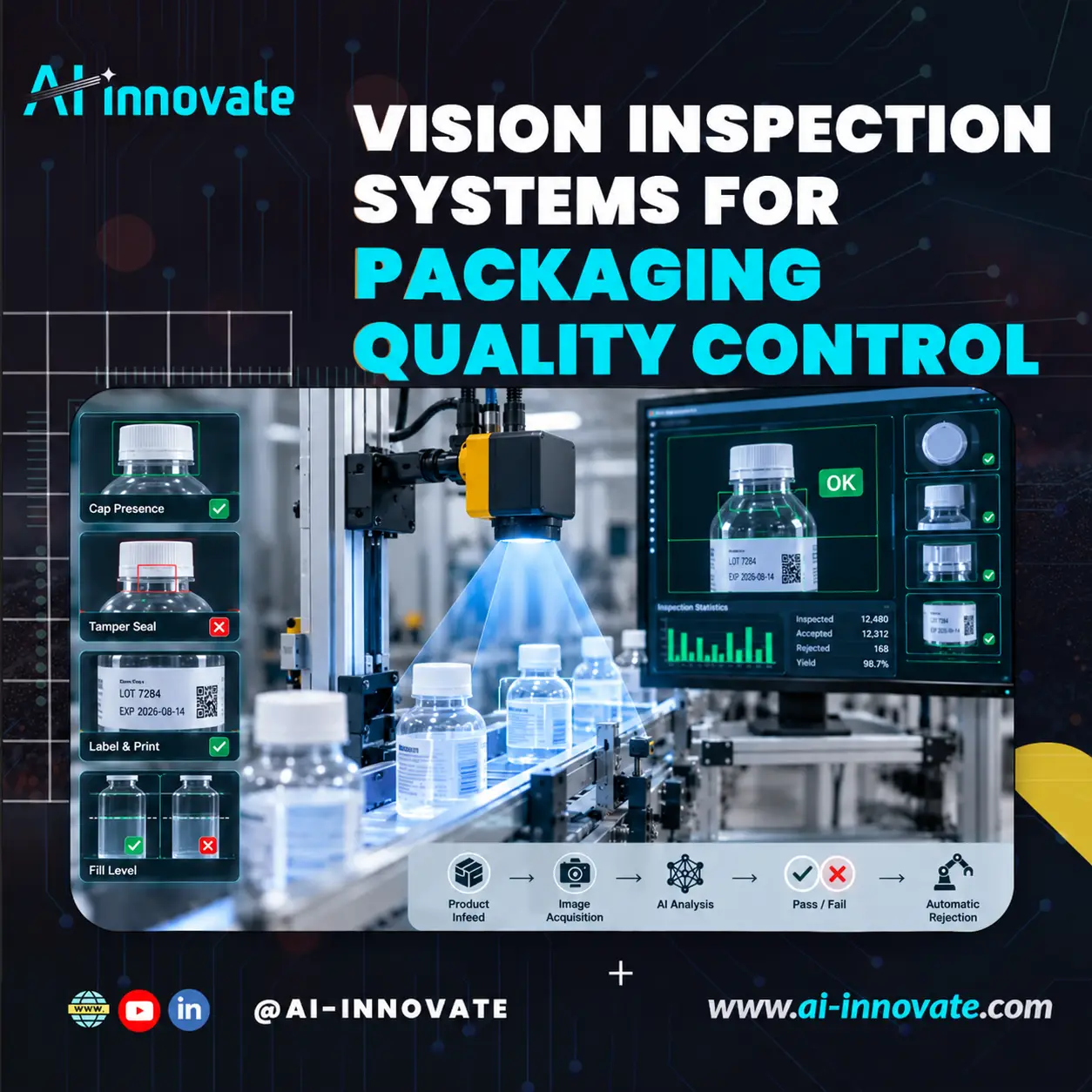
AI-Powered Quality Control

Computer vision systems inspect products faster and more accurately than human inspectors, detecting microscopic defects in milliseconds.

Audi Ingolstadt Plant:

  • Technology: Deep learning algorithms detect tiny paint defects
  • Speed: Processes 5,000 car bodies daily
  • Results: Higher detection accuracy than human inspectors, reduced rework costs

Samsung Electronics:

  • Application: AI inspects printed circuit boards (PCBs)
  • Method: Compares images against perfect models to catch misalignments and defects
  • Outcome: Significantly lower defect escape rates, freed quality engineers for root cause analysis

Digital Twins for Process Optimization

Virtual replicas of factories updated with real-time data let engineers test changes risk-free before physical implementation.

BMW Group:

  • Scale: Digital twins of all 31 production facilities
  • Capability: Engineers virtually walk-through factories, simulate production changes
  • Result: 30% reduction in production planning time

Tata Steel:

  • Purpose: Test process modifications for sustainability
  • Focus: Reduce carbon emissions and optimize energy without risking actual production

Robotic and Cobot Automation

Advanced robots are the best solution for repetitive tasks, while collaborative cobots work safely alongside humans, improving productivity and safety.

Amazon Fulfillment:

  • Technology: Thousands of Autonomous Mobile Robots (AMRs)
  • Function: Robots bring shelving units to stationary human pickers
  • Benefits: Faster fulfillment, reduced worker physical strain, higher order volume

Great Wall Motor (Thailand):

  • Application: Intelligent robots automate welding and assembly
  • Advantage: 24/7 consistent quality, frees engineers for optimization work

Your Factory Transformation Roadmap: A Step-by-Step Plan

Phase 1: Foundation & Goal Setting

Before investing in technology, identify your critical pain points. Where do inefficiencies, quality issues, or downtime cost you most? Set specific, measurable goals like reducing downtime by 25% or boosting OEE by 12 points. Assess your current infrastructure, equipment connectivity, and team capabilities. Build a strategic roadmap prioritizing high-impact initiatives with realistic timelines and budgets.

Phase 2: Test & Validate

Start with one focused pilot project that proves value quickly. Predictive maintenance on chronically failing critical assets often works well as a starting point. Choose technology partners with proven industry experience, scalable solutions, and easy integration through open APIs. Track KPIs closely, document learnings, and iterate based on real results before scaling investment.

Phase 3: Connect & Expand

Roll out successful pilots to similar operations across your facility. Prioritize integration so new solutions share data seamlessly with existing ERP, MES, and CMMS systems. Look for ERP-agnostic platforms with robust APIs. Upgrade network bandwidth, storage capacity, and computing power to handle growing data volumes as you scale.

Phase 4: Refine & Evolve

Deploy advanced analytics, AI-driven optimization, and digital twin simulations using your connected data foundation. Invest in upskilling employees to work confidently with new technologies and interpret insights effectively. Foster a culture where continuous improvement is expected and teams regularly identify new opportunities for innovation.

Challenges in Smart Factory Adoption

The path to smart manufacturing involves real obstacles. Understanding them helps you plan effectively:

  • Initial Investment & ROI: New technology requires significant capital. Build detailed business cases with measurable returns. Start with high-impact pilots that demonstrate value quickly and justify broader investment.
  • Cybersecurity Risks: More connected devices create more vulnerabilities. Build comprehensive security into your architecture from day one, including network segmentation and continuous monitoring.
  • Legacy System Integration: Connecting modern solutions with older equipment can be complex. Choose platforms with flexible APIs that work with diverse machinery.
  • Skills Gap: Invest in upskilling existing employees to operate new technologies and interpret data insights.
  • Change Management: Involve frontline workers early, communicate clearly, and celebrate wins to build organizational buy-in.

Final Thoughts: Start Small, Scale Smart

Smart factories aren’t futuristic concepts. They’re today’s competitive reality. These environments use data, connectivity, and AI to create operations that are more efficient, resilient, and sustainable. While complete transformation seems daunting, success starts with focused solutions addressing your biggest pain points. AI-powered predictive maintenance or quality control systems deliver fast ROI and build momentum for broader change.

After guiding numerous manufacturers through this journey, one truth stands out. Companies that succeed don’t wait for perfect conditions. They choose one costly problem, solve it with targeted technology, and scale what works. The manufacturers acting now will have years of advantage over those still planning. Your move.

Note: Some graphics and visuals in this post were produced using AI-generated content.

Ai-Innovate uses only high-quality sources, including peer-reviewed studies, to support the facts within our articles.

  1. Oracle. (2025). Smart factory and smart manufacturing solutions. Oracle.
    Retrieved from https://www.oracle.com/industrial-manufacturing/smart-factory-and-smart-manufacturing/
  2. Siemens. (2025). Smart factory: The digital transformation of manufacturing. Siemens.
    Retrieved from https://www.siemens.com/us/en/company/topic-areas/smart-factory.html
  3. ACTIA EMS. (2024). Smart factory: Connecting technology and industrial performance. ACTIA.
    Retrieved from https://ems.actia.com/https-ems-actia-com-en-news-smart-factory/
  4. F7i AI. (2024). Smart factory solutions: The ultimate guide. F7i AI.
    Retrieved from https://f7i.ai/blog/smart-factory-solutions-the-ultimate-guide
  5. Sustainable Manufacturing Expo. (2024). Smart factory solutions: Lessons from industry leaders. Sustainable Manufacturing Expo.
    Retrieved from https://www.sustainablemanufacturingexpo.com/en/articles/smart-factory-solutions-lessons.html
  6. TWI Global. (2025). What is a smart factory? The Welding Institute (TWI).
    Retrieved from https://www.twi-global.com/technical-knowledge/faqs/what-is-a-smart-factory

Confused About Where to Start with AI?

Our specialists help you identify the right AI approach based on your process, data, and goals.

FAQ

What is the role of humans in the factory of the future?

In the factory of the future, humans and intelligent machines will work side by side. Automation handles repetitive tasks, while people focus on analysis, creativity, and oversight,interpreting data, managing exceptions, solving complex problems, and maintaining advanced systems to continuously improve operations.

Smart factory ROI is measured through efficiency and performance metrics. Key indicators include improved equipment effectiveness, reduced downtime, lower operational costs, enhanced quality, and faster time-to-market. Together, these gains reveal how automation and AI translate into measurable financial returns and competitive advantage.

Smart factories deliver strong benefits but require tailored strategies. For small firms, modular solutions like predictive maintenance offer scalable value. Large enterprises gain from full integration but face transition challenges. A clear roadmap, business alignment, and phased adoption ensure successful, high-impact implementation

ABOUT THE AUTHOR

Ehsan Joshani

Ehsan Joshani is a researcher, project manager, data scientist, and business development consultant with expertise in quality control and analytics

Latest Posts

Have a question?

"*" indicates required fields

Full Name*
Would you like to stay up-to-date with the news about Ai Innovate projects, offers and clients' success stories?
Shopping Basket