




Smart factories are turning from a vision into a reality. These factories are using smart factory solutions to keep an eye on, study, and improve production processes as they happen, and the backbone of it all is data. Massive amounts of operational data need to be collected and processed, and that’s why we have big data architecture for smart factory solutions.
It’s essential for manufacturers to understand this architecture if they want to stay competitive and make decisions based on solid insights instead of guesswork, so in this blog, we’re covering the importance and core components of big data architectures, and the key functions enabled by them.

The Critical Role of Big Data Management
Modern manufacturing generates a lot of data from machines, sensors, robotics, and supply chains. If you don’t have the right tools in place, you’ll quickly get buried under a sea of data and struggle to find the gems of useful information. A solid big data architecture makes sure that information is captured right, stored safely, and processed quickly. Good data management lets factories spot patterns, find inefficiencies, and make proactive decisions. For example, analyzing machine performance data can reveal potential breakdowns before they happen, saving time, reducing maintenance costs, and avoiding production delays.
Big data management also helps with compliance and traceability. The rules in industries like cars, planes, and food manufacturing need you to keep track of how things are made and how they’re checked for quality. Having a structured architecture makes sure that all the relevant data is available for audits and quality certifications.
To sum it up, if you can manage big data effectively, you can turn raw information into something valuable.

Breaking Down the Core Components of a Big Data Architecture
A well-designed big data architecture handles the full lifecycle of data, from collection to storage and processing. The main layers and their roles can be summarized as follows:
| Layer | Purpose | Examples / Notes |
| Data Sources | Capture operational and production data | IoT sensors, machines, robots, PLCs, production monitoring systems |
| Data Ingestion Layer | Collect and integrate data from multiple sources | Real-time streaming, batch uploads, APIs, message queues |
| Data Processing Layer | Transform raw data into usable insights | Streaming: real-time anomaly detection Batch: periodic analysis for reports and trends |
| Data Storage Layer | Store processed and raw data for future use | Data Lake: raw or semi-structured data for advanced analytics Data Warehouse / Database: structured, aggregated data for reporting and dashboards |
What Smart Factories Can Do With Big Data
A solid architecture is key to unlocking some really important smart factory capabilities.
- Predictive Maintenance: By keeping an eye on machine health all the time, smart factories can predict equipment failures before they happen. For example, vibration or temperature data from motors can indicate wear, allowing technicians to perform maintenance only when needed rather than on a fixed schedule.
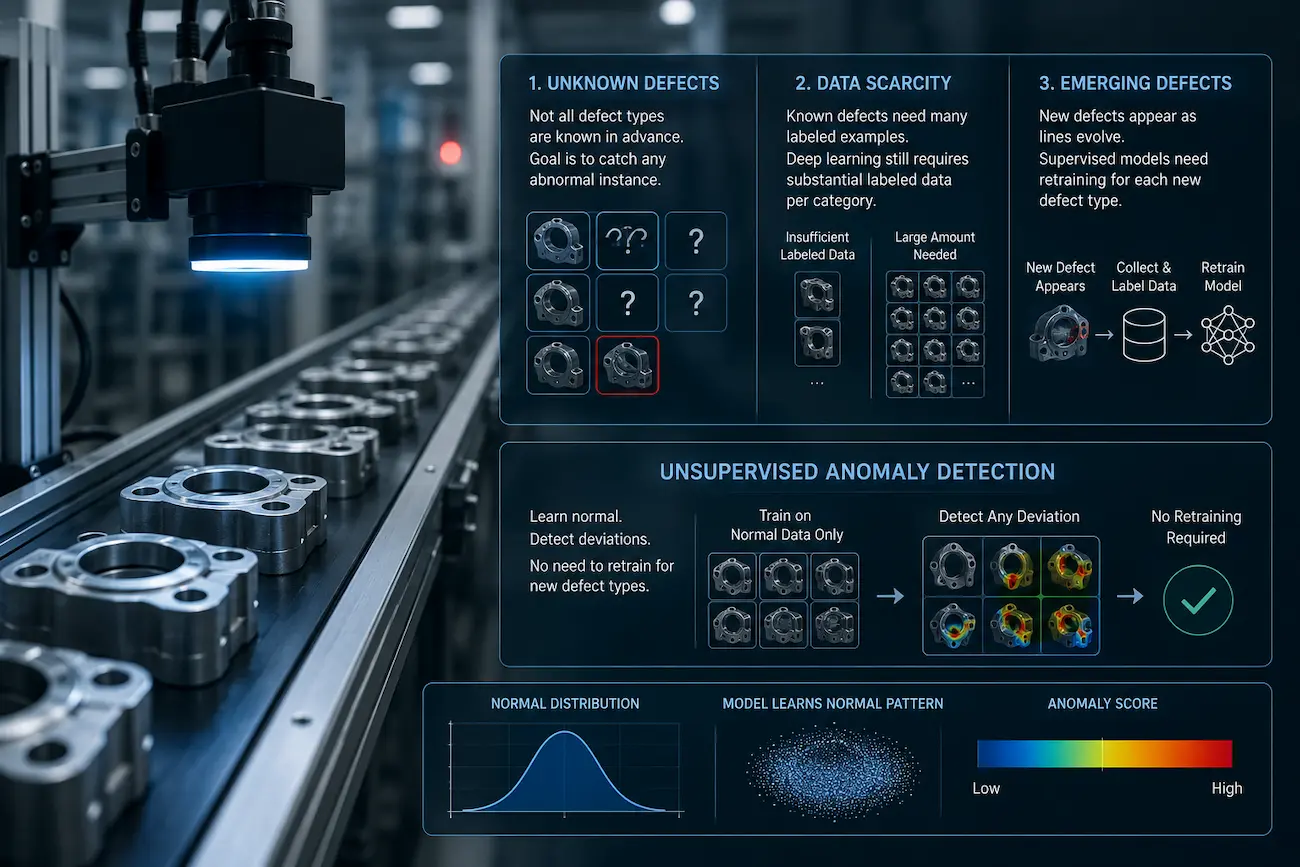
- Quality Control: Big data helps factories detect defections early in the production process. Checking sensor readings or images from quality inspection cameras makes sure that products meet the right specs every time.
- Process Optimization: Data-driven insights makes workflows, energy consumption, and resource allocation better. By looking at trends on production lines, factories can spot bottlenecks, tweak machine settings, or reorganize processes to boost efficiency.
- Autonomous Operations: Advanced big data architectures help people make decisions on their own. For example, machines can adjust production speed or reroute workflows automatically based on real-time data.
Take your smart factory to the next level with AI Innovate‘s AI2Cam and AI2Eye. AI2Cam uses AI to find defects as they happen, helping with quality control, while AI2Eye keeps an eye on everything and provides data insights. This helps manufacturers improve their processes, efficiency, and decision-making across the board.
Why Investing in the Right Architecture Matters
A lot of manufacturers are looking for innovative smart factory solutions to adapt to the evolving world of industry. I believe big data architecture for smart factory solutions gives us the framework for this transformation. Without a doubt, by putting in a solid architecture, manufacturers can turn data into a strategic advantage. Smart factories equipped with advanced big data systems don’t just respond to problems, but rather, they anticipate them, learn from data, and continuously improve operations.
Note: Some graphics and visuals in this post were produced using AI-generated content.