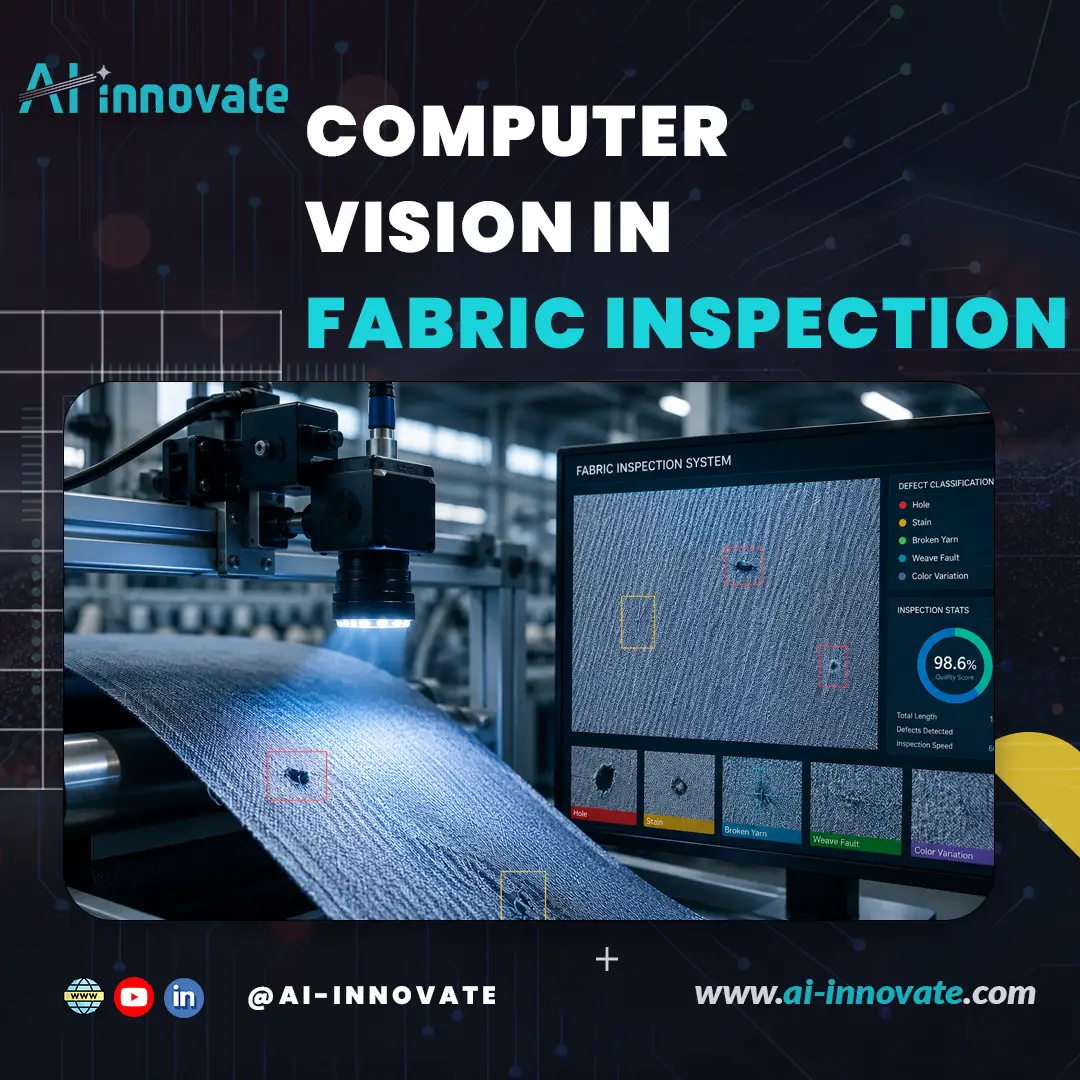
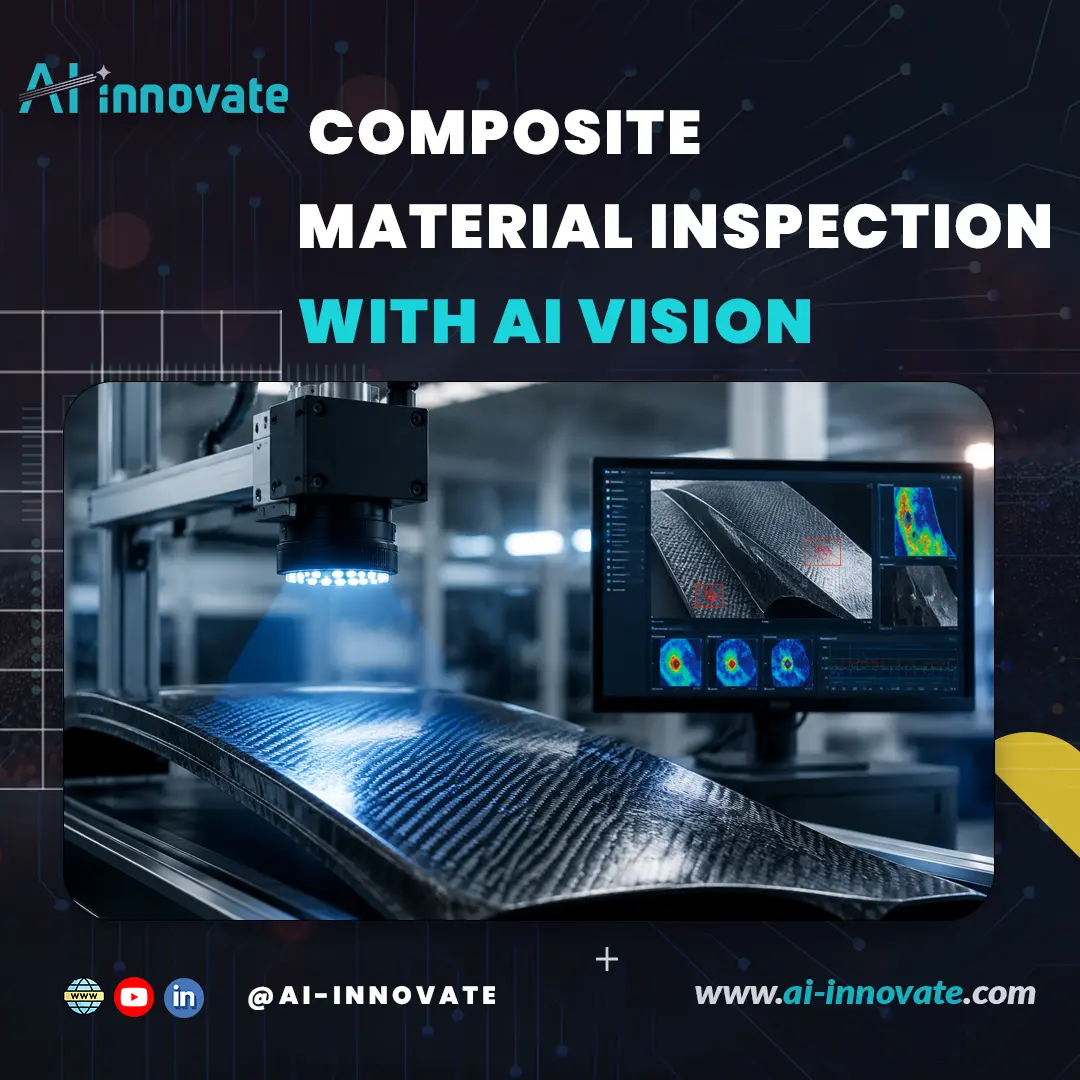
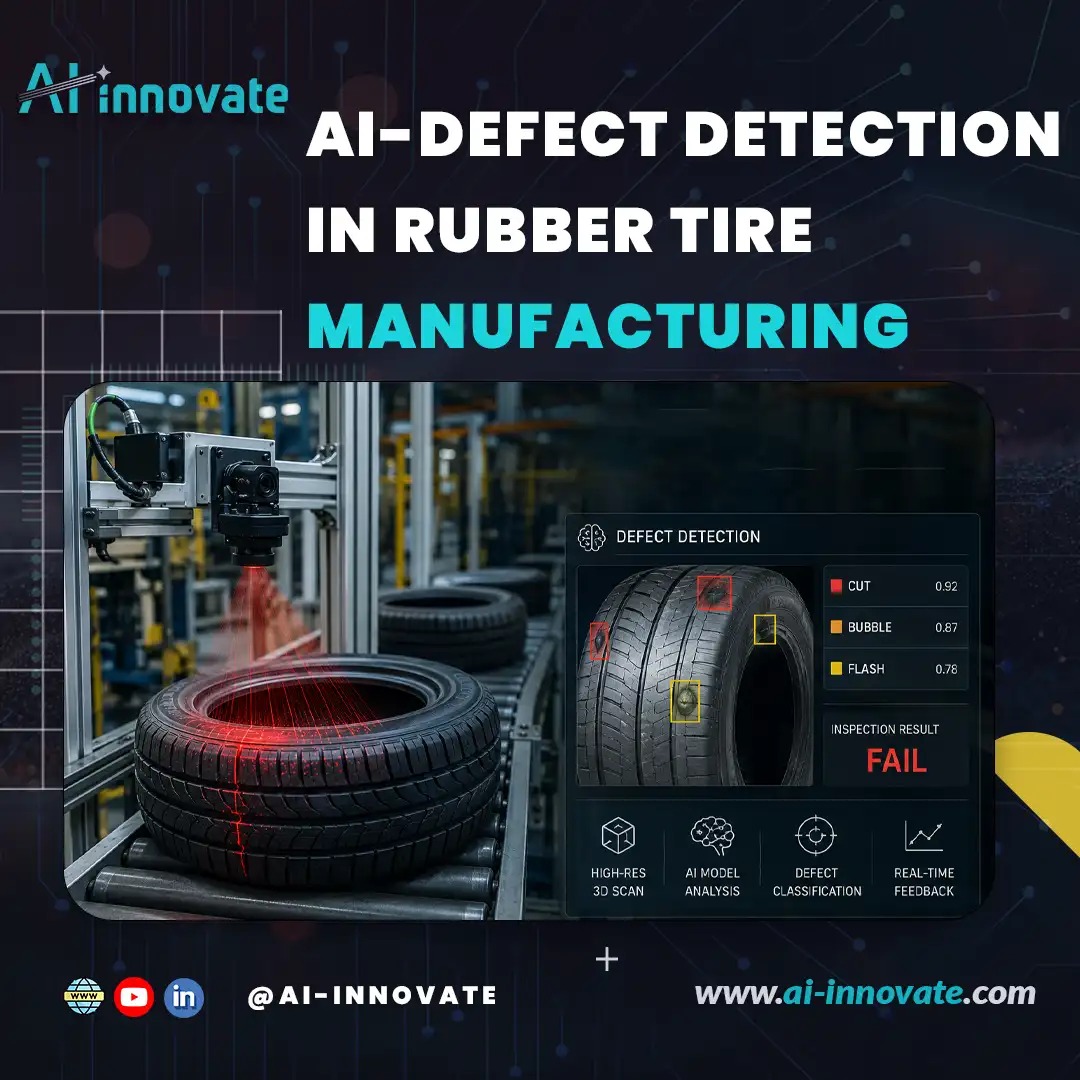
The manufacturing world has always been trying to change for the better. In recent years, manufacturing has gone through a revolution with the addition of AI to its processes. One of the most important steps in manufacturing is surface defect detection, which ensures good product quality and durability, and opens the door to customer satisfaction.
If surface defects aren’t detected properly, they can lead to rework, scrap, or warranty issues, which happened more often with traditional, human inspection. The goal of leveraging AI in
surface defect detection in manufacturing is to avoid these exact issues. In this guide, we’ll explore how AI improves surface defect detection in manufacturing, the techniques and technologies behind it, the benefits it brings, and how manufacturers can address common challenges.
AI-Powered Surface Defect Detection: An Overview
When AI is added to the equation of surface detection, it brings machine vision combined with learning-based models to automate surface defect detection. High-resolution cameras are used to acquire pictures of parts as they’re moving to be analyzed by AI models later. These AI models then determine whether the surface of the product is up to standards or not.
AI also enables us to move on from vision systems that rely on fixed thresholds and predefined rules since it can learn from data. AI systems are trained on large sets of images that represent both acceptable surfaces and known defects. Over time, AI is able to learn subtle patterns or any natural variation, while identifying hard-to-notice defects. This makes AI particularly useful in industries where surfaces vary naturally due to materials, lighting, or processing conditions.
Classification of AI Surface Defect Detection Techniques
AI surface defect detection techniques are classified by learning approach, network architecture, and detection task:
By Learning Approach:
- Supervised Learning: Uses large labeled datasets for training, common for defect classification, localization (Faster R-CNN), and segmentation (Mask R-CNN).
- Unsupervised Learning: Detects defects without labeled data, reducing annotation costs, ideal for anomalies.
- Semi/Self-Supervised Learning: Leverages small labeled sets with large unlabeled sets (e.g., Siamese Networks for similarity) to improve generalization.
By Network Architecture (Deep Learning):
- Convolutional Neural Networks (CNNs): Core for feature learning (e.g., ShuffleNet for classification).
- Object Detection Networks: YOLO (one-stage) and Faster R-CNN (two-stage) for locating defects.
- Segmentation Networks: FCN, U-Net (encoder-decoder) for pixel-level defect outlines (Mask R-CNN).
- Attention-based Networks & Transformers: Focus on crucial defect areas, improving accuracy.
- Pyramid Networks: Handle defects at multiple scales.
By Detection Task:
- Classification: Determines if a defect exists and its type (e.g., scratch, crack).
- Detection/Localization: Finds the defect’s location (bounding box) and type.
- Segmentation: Precisely outlines the defect’s shape and area, providing detailed attributes.
By Input & Integration:
- Image/Video-Based: Standard vision systems using cameras.
- Multi-Modal Fusion: Combines data from various sensors (optical, X-ray, acoustic) for holistic inspection.
- Edge AI: Deploying models on local hardware (FPGA, embedded) for low-latency, real-time inspection.
Technologies Used in AI-Driven Surface Defect Detection
On top of AI systems, several technologies work together to make AI-driven inspection possible. Together, these technologies allow AI inspection systems to operate reliably in demanding production environments:
- Industrial cameras and imaging systems capture detailed surface data at high speed.
- Controlled lighting setups highlight surface features and reduce shadows or reflections.
- Deep learning models analyze images and identify defect patterns.
- Edge devices or AI servers process inspection data in real time, granting immediate pass or fail decisions.
- Software platforms manage data, model updates, and inspection results.
Benefits of Leveraging AI in Surface Defect Detection
It’s acknowledged that AI improves the overall surface defect detection process in manufacturing. To look at it more specifically, AI improves:
- Accuracy and Consistency: AI can detect very small defects like scratches and cracks with high accuracy, which resolves human fatigue and subjective judgement. This way, all products have consistent quality.
- Speed and Throughput: AI inspection is instant. Real-time analysis of products on fast production lines prevents bottlenecks and speeds up delivery.
- Operational Costs: By eliminating defects early, AI reduces waste, scrap, rework, and warranty claims, while also cutting labor costs.
- Product Quality: Integrating AI ensures that only high-quality products reach customers, boosting satisfaction and brand reputation.
- Data-Driven Optimization: In addition to detection, AI provides valuable data on defect types, where they happen, and how often they repeat. This helps with pinpointing the root cause.
- Scalability and Adaptability: AI easily scales for large volumes while learning new defect types and identifying them. No extensive programming is needed, unlike traditional systems.
- Compliance and Traceability: Using AI provides detailed, auditable records for strict regulatory environments.
How to Overcome Common Challenges in AI Surface Defect Detection
Although AI-based inspection has numerous benefits, it does have some limits as well, but it’s possible to overcome these limits with the right solutions.
| Challenge |
Solution |
| Data scarcity and imbalance (rare defect samples) |
Use data augmentation techniques such as rotating, flipping or scaling images to expand datasets. Using synthetic data and learning from pre-trained models can also help when there are not many real defect samples. |
| Environmental variations (lighting changes, reflections, dust) |
Make sure your lights are on a timer and the same every time. Use image-processing techniques to make the brightness normal and the noise lower before analysis. |
| Complex or subtle defects and material variation |
Use high-quality cameras and, where needed, extra sensors like 3D or thermal imaging cameras. Try using deep learning models that can spot very small surface patterns, instead of using fixed rules. |
| Real-time performance requirements (speed vs. accuracy) |
Use edge AI devices for on-site processing to reduce latency. Make the models better so that they are fast and accurate, and so that they can keep up with how quickly the production line is moving. |
| Model generalization and adaptability (new products or defects) |
Keep on training models with new data and add AI systems bit by bit so that updates can be made without stopping production. |
| Integration with existing systems |
Introduce AI inspection slowly and use it together with the current tools. Use standard interfaces and modular software to make it easier to connect to older equipment. |
| False positives, false negatives, and lack of trust |
Get experts in quality to help with labelling and checking data. Use AI features that are easy to understand. These features highlight areas where there are defects and provide confidence scores. This allows operators to review the results and trust them. |
How AI-innovate Supports AI Surface Defect Detection in Manufacturing
AI-innovate supports manufacturers across surface inspection and
quality control processes by providing AI-driven tools that improve defect detection accuracy, consistency, and scalability. Our solutions help with:
AI-based surface defect detection and quality monitoring using
AI2Eye, which applies deep-learning vision models to identify scratches, cracks, inclusions, and subtle surface anomalies in real time
Data generation, simulation, and validation through AI2Cam, supporting robust model training and testing when real defect data is limited
Deployment and management of scalable AI inspection workflows powered by
AIxCore, enabling smooth integration with existing cameras, sensors, and production systems
Whether you’re inspecting high-speed manufacturing lines, working with complex surface textures, or scaling quality control across facilities,
AI-innovate’s products help manufacturers implement AI surface defect detection in manufacturing with clarity, adaptability, and seamless integration into existing processes.
Conclusion
AI is rapidly taking over many industries, and manufacturing is no exception. In fact, I believe this is where AI can shine the most, optimizing many processes and providing smoother operations. When applied thoughtfully and supported by proper data and integration, AI becomes a powerful addition to modern quality control strategies. By providing capabilities that traditional methods often lack, AI has secured its place in the future of surface defect detection and manufacturing as a whole.