




A tire is not a product where “close enough” is acceptable. It is the only part of a vehicle that touches the road, and a defect that escapes inspection, a sidewall crack, a mold-related imperfection, a hidden air bubble, does not just risk a warranty claim. It risks a safety failure. That is exactly why tire manufacturing has some of the strictest quality requirements in industrial production, and exactly why manual inspection alone has become harder to trust as production speeds and design complexity both keep rising.
The core difficulty is not that tire defects are impossible to see. Most begin as small, subtle anomalies during rubber preparation, curing, trimming, or finishing. The difficulty is finding them consistently across thousands of tires a shift, on a curved, textured, low-contrast surface that behaves nothing like the flat, uniform materials most inspection systems were originally designed for. AI-powered visual inspection has become the industry’s answer to that consistency problem, and it works differently from how most people assume automated inspection works.
This guide covers where tire defects actually originate, why tires are a genuinely hard inspection target, how AI systems handle that difficulty in practice, and what the technology actually delivers once deployed.
Why Tire Inspection Is Uniquely Difficult
Unlike flat sheet metal or glass, a tire is curved, textured, and structurally complex, with a tread pattern, sidewall markings, and material transitions that make consistent imaging genuinely hard. Rubber itself is a difficult surface for machine vision: it is low-contrast, prone to surface reflections under certain lighting, and varies naturally from tire to tire even when every one is within spec.
The same defect can look visually different on two different tires depending on curvature, angle, and surface texture, which is precisely where older rule-based inspection systems, built around fixed thresholds, tend to struggle. Add rising production speeds and increasingly complex tire designs, and manual inspection faces a scale problem that has nothing to do with inspector skill and everything to do with the sheer volume and subtlety involved.
Where Tire Defects Actually Begin
Manufacturing defects rarely announce themselves as catastrophic failures. In almost every case, they start as minor anomalies introduced somewhere earlier in production, during rubber mixing, molding, curing, trimming, or finishing.
- Sidewall cracks, often linked to material stress or curing inconsistencies
- Surface cuts, typically introduced during handling or trimming
- Air bubbles and blisters, trapped during the molding or curing process
- Tread inconsistencies, affecting pattern accuracy and performance
- Material contamination, foreign particles introduced during mixing
- Mold-related imperfections, tied to wear or damage in the mold itself
- Flashing defects, excess rubber left at mold parting lines
- Surface texture abnormalities, deviations from expected finish and grain
The challenge is not that any single defect type is exotic or hard to define. It is catching all of them, consistently, across the volume a modern tire plant produces every shift.
How AI Tire Inspection Actually Works
Modern AI-powered tire inspection combines several distinct technologies, and understanding how they fit together explains why this approach succeeds where older 2D systems struggled.
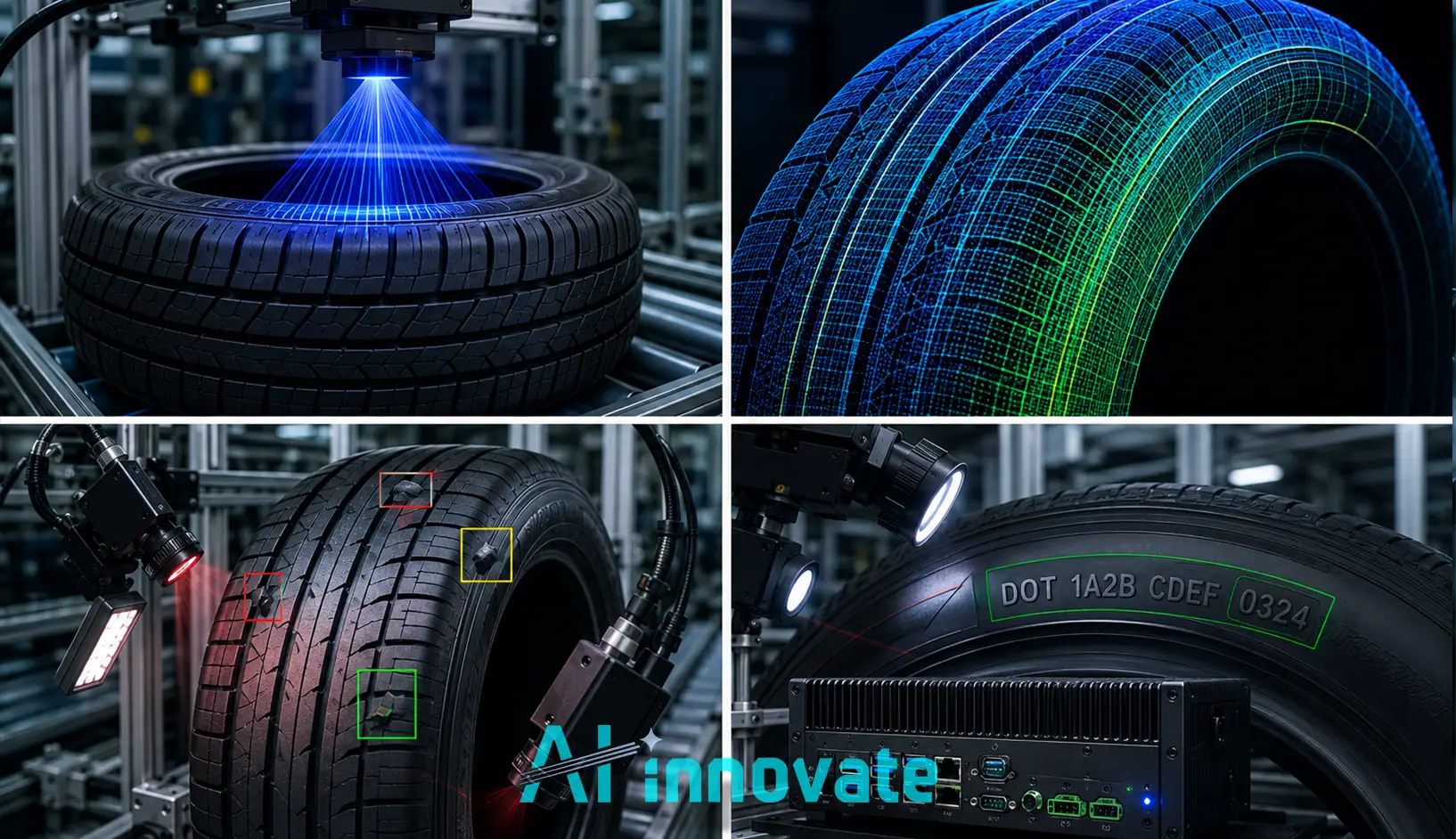
3D Surface Acquisition
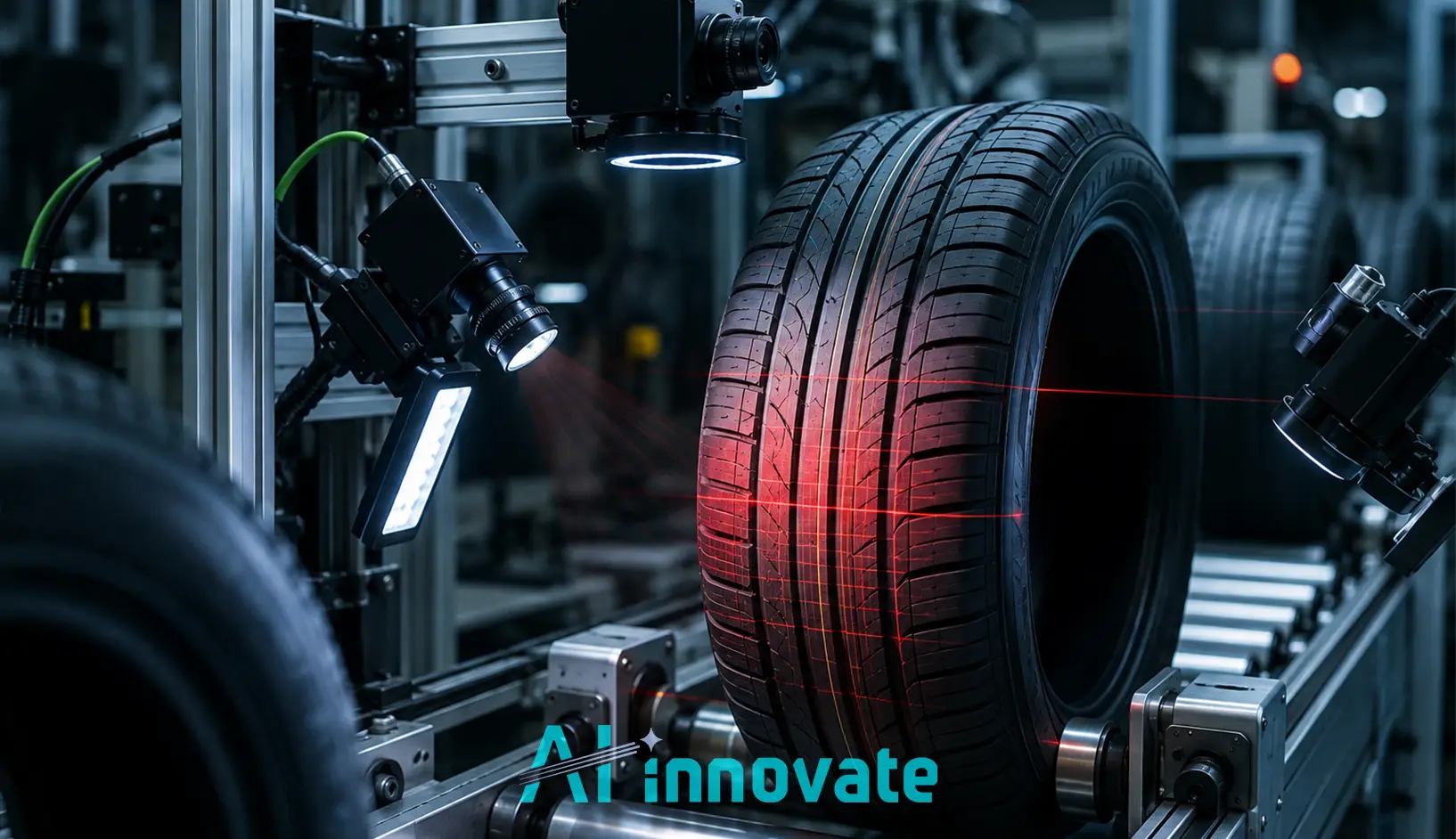
Rather than relying on flat 2D imaging, advanced systems use laser profilometry to generate a precise three-dimensional reconstruction of the tire’s surface. This captures micrometric variations, the kind of subtle folds, material inconsistencies, and improper junctions, that are effectively invisible to a standard 2D camera working with a curved, low-contrast rubber surface.
AI-Based Defect Classification
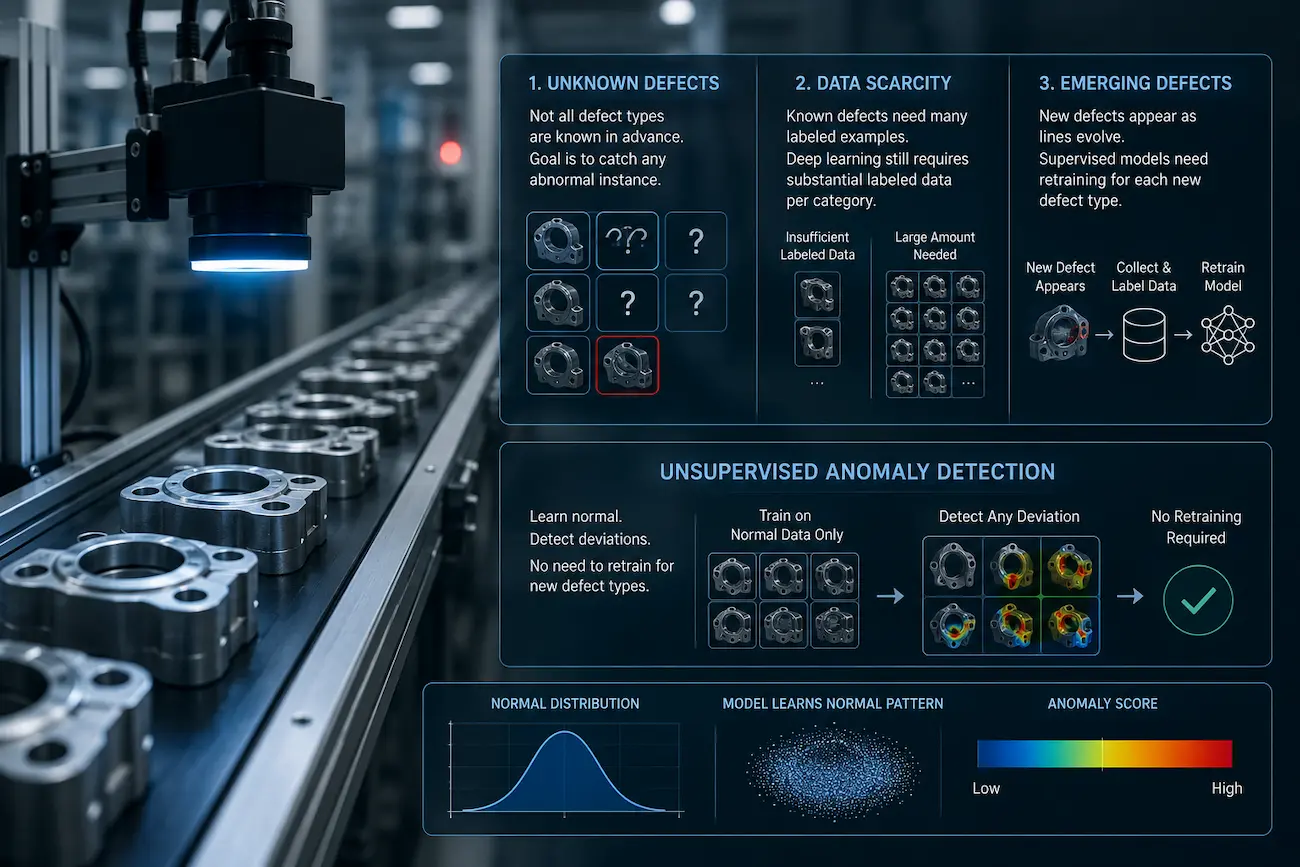
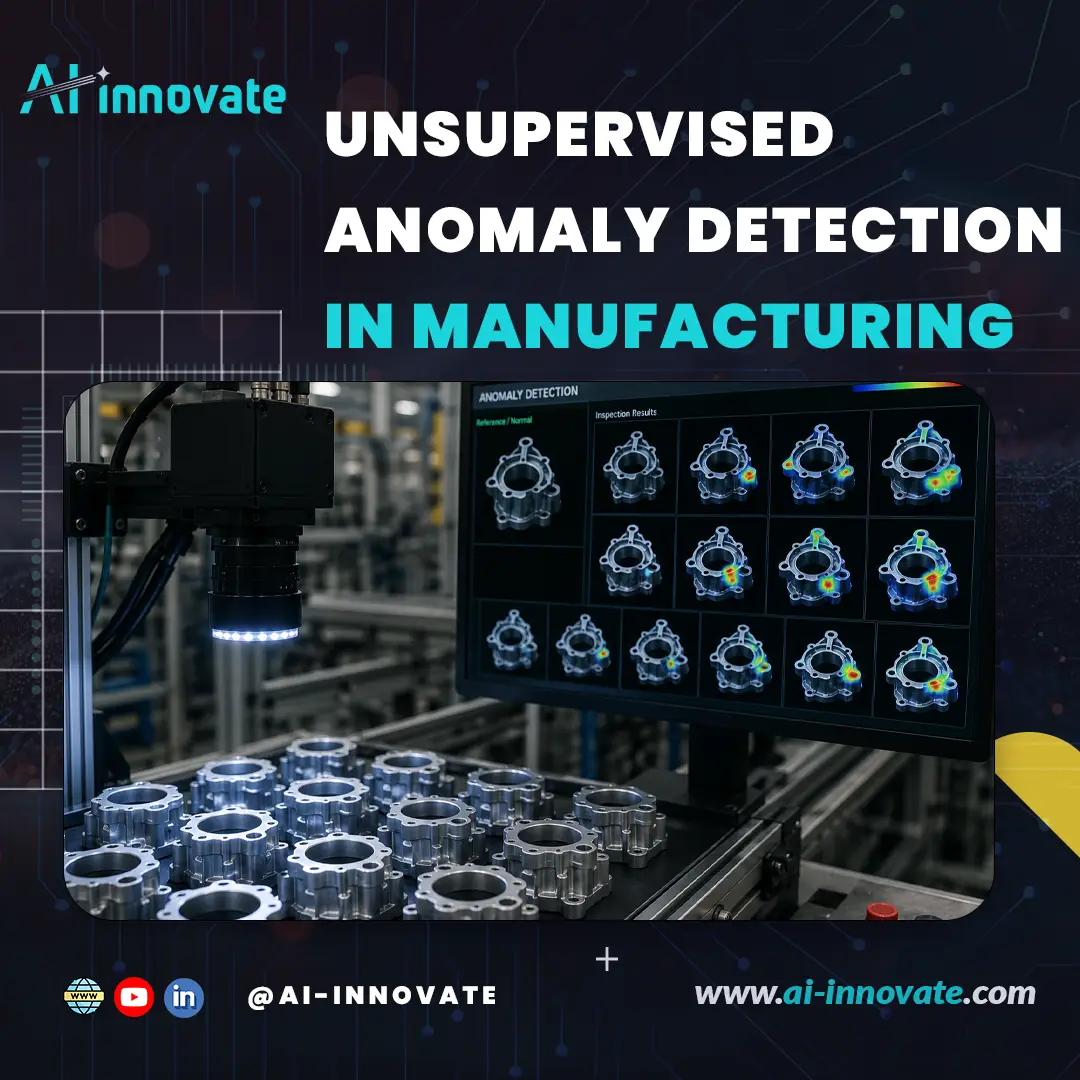
AI algorithms analyze the 3D surface model to detect and classify specific defect types. This is where the underlying approach differs most from traditional inspection: instead of checking a tire against a fixed set of rules, modern systems are trained on what thousands of acceptable tires look like, then flag anything that deviates from that learned pattern. That shift, from rule-checking to anomaly detection, is what allows AI to handle the natural tire-to-tire variation that would overwhelm a rigid, threshold-based system.
OCR for Markings and Compliance
Beyond surface defects, deep learning-based optical character recognition verifies DOT codes, symbols, and embossed markings on the tire, confirming both regulatory compliance and production accuracy. RGB imaging supports design and color verification alongside the geometric inspection.
Edge Computing for Real-Time Results
Processing high-resolution 3D inspection data at production speed requires real computing power at the line itself. Industrial edge computing, built on multi-core processors and GPU acceleration, handles this inference locally, delivering real-time results without slowing production or depending on a round trip to the cloud.
From Rule-Based Checks to Anomaly Detection
The clearest way to understand what has actually changed in tire inspection is a shift in the underlying question the system asks.
- A traditional system asks, “Does this tire meet my defined acceptance criteria?”
- An AI system trained on production data asks something closer to, “Is there anything about this tire that differs from the thousands of acceptable tires I have already learned from?”
That reframing matters enormously for tires specifically, because their curved geometry and natural material variation mean two entirely acceptable tires can look meaningfully different from each other, something a fixed rule set handles poorly and a trained model handles well.
Over time, this approach also turns inspection into more than a pass or fail gate. Patterns in the data can reveal whether a specific mold is producing more defects than others, or whether a particular line or material batch correlates with a rise in quality issues, turning inspection into a source of ongoing operational insight rather than just a checkpoint.
Real-World Adoption in the Tire Industry
AI-powered inspection has become an important part of modern tire manufacturing as producers strive for higher quality, greater efficiency, and improved traceability.
Why Manufacturers Are Adopting AI
- Improve defect detection across high-speed production lines
- Reduce dependence on manual inspection and operator variability
- Enable 100% in-line inspection without slowing production
- Strengthen product traceability through digital inspection records
- Generate production insights for continuous process improvement
Industry Trend
As tire designs become more complex and production volumes continue to increase, manufacturers are investing in AI-driven inspection systems that combine machine vision, deep learning, and automated quality control. Rather than serving as a standalone inspection tool, AI is increasingly becoming a core component of smart manufacturing and digital quality assurance.
The Business Case: What In-Line Inspection Delivers
AI-powered in-line inspection delivers value beyond defect detection by improving efficiency, reducing waste, and providing actionable production insights.
Key Business Benefits
- Reduce scrap and rework by detecting defects early in the production process.
- Increase throughput by minimizing manual inspection bottlenecks.
- Improve product consistency through automated, repeatable quality inspections.
- Enhance traceability with digital inspection records for every tire.
- Support continuous improvement by linking recurring defects to specific molds, machines, or production stages.
Return on Investment
Manufacturers implementing AI-based in-line inspection often achieve a return on investment within 12–24 months, driven by lower scrap rates, reduced labor costs, fewer warranty claims, and improved production efficiency. These benefits are consistent with the gains reported across other high-precision manufacturing industries using AI-based surface defect detection.
Getting Started: Where Tire Manufacturers Should Begin
- Map your defect history by type and location. Understanding which defects (sidewall, tread, mold-related) cost the most in scrap or field failures focuses the initial deployment where it matters most.
- Start with one inspection stage, not the whole line. Final inspection or a single high-defect stage like curing or trimming is a natural pilot point before expanding further.
- Account for tire geometry in your imaging setup. Curved surfaces and complex tread patterns need imaging and lighting specifically suited to that geometry, not a system built for flat materials.
- Plan for continuous model training. Because tire designs and materials evolve, an inspection model needs the same kind of ongoing refinement that addressing challenges in detecting defects on reflective surfaces requires in other low-contrast, reflective material contexts.
- Connect inspection data to root-cause analysis. The real long-term value comes from tracing recurring defects back to a specific mold, line, or material source, not just rejecting individual tires.
How AI-innovate Supports Tire Manufacturing Quality Control
AI-powered tire inspection requires more than a camera. It combines advanced imaging, deep learning, and edge computing to deliver accurate, real-time quality control in demanding manufacturing environments.
AI-innovate supports tire manufacturers with specialized machine vision technologies:
- AIxEye performs real-time defect detection, identifying cracks, cuts, blisters, contamination, flash, tread irregularities, and other surface defects with AI trained for rubber materials.
- AIxCam generates synthetic defect data to improve model performance when real defect samples are limited, reducing training time and increasing detection accuracy.
- AIxCore provides high-performance edge AI processing, enabling rapid inspection and pass/fail decisions without slowing production lines.
- Custom AI Models are trained using plant-specific products and quality standards, helping manufacturers achieve higher inspection accuracy while reducing false rejects.
Together, these technologies help manufacturers move beyond traditional inspection by improving defect detection, increasing traceability, reducing waste, and providing actionable production insights for continuous quality improvement.

Final Thoughts
AI-powered defect detection has changed tire quality control from rule-based checking into learned anomaly detection, a shift that matters enormously for a curved, textured, naturally variable material where two entirely acceptable tires can look meaningfully different from each other.
The manufacturers seeing the strongest results are not simply automating what inspectors used to do by eye. They are using inspection data as an ongoing source of operational insight, tracing recurring defects back to a specific mold, material batch, or process stage rather than treating each rejected tire as an isolated event. In an industry where a single undetected defect carries real safety consequences, that shift from inspection as a gate to inspection as a feedback loop is where the real long-term value sits.
Confused About Where to Start with AI?
Our specialists help you identify the right AI approach based on your process, data, and goals.
Sources
Ai-Innovate uses only high-quality sources, including peer-reviewed studies, to support the facts within our articles.
- Eurotech. (2026). Enabling 100% In-Line Quality Inspection in Tire Manufacturing. https://www.eurotech.com/use_cases/enabling-100-in-line-quality-inspection-in-tire-manufacturing/
- xis.ai. (2026). AI Tire Surface Defect Inspection for USA and Germany Plants. https://xis.ai/blogs/ai-tire-inspection-systems-for-surface-defect-detection-a-quality-control
Frequently Asked Questions
What types of defects does AI detect in tire manufacturing?
AI-powered tire inspection detects sidewall cracks, surface cuts, air bubbles and blisters, tread inconsistencies, material contamination, mold-related imperfections, flashing defects, and surface texture abnormalities, covering both cosmetic and structural quality issues.
Why is tire inspection harder than inspecting flat manufactured products?
Tires are curved, textured, and low-contrast, and their natural surface variation means two entirely acceptable tires can look different from each other. This makes rigid, rule-based inspection systems less effective than approaches trained to recognize genuine anomalies against a wide range of acceptable variation.
How does AI tire inspection differ from traditional rule-based systems?
Traditional systems check a tire against a fixed set of defined criteria. AI-based systems are trained on large volumes of acceptable production images and learn to flag genuine deviations from that pattern, which handles natural product variation far better than a fixed rule set.
What is 3D laser profilometry, and why is it used in tire inspection?
3D laser profilometry generates a precise three-dimensional surface reconstruction of a tire, capturing micrometric variations, such as subtle folds or improper junctions, that are effectively invisible to standard 2D imaging on a curved, low-contrast surface.
What is the typical ROI timeline for AI-based tire inspection systems?
Manufacturers deploying full AI-based in-line inspection systems typically report return on investment within 12 to 24 months, driven primarily by reduced scrap, lower labor costs on manual inspection, and improved product reliability.
Are tire manufacturers actually using AI inspection today, or is this still experimental?
It is already in real-world use. Nexen Tire has publicly implemented an AI-enabled inspection system to strengthen defect detection and maintain consistent quality, and other industry leaders have adopted similar systems as tire designs and production speeds continue to increase.