




Automated Test Equipment, or ATE, plays an important role in modern electronics manufacturing. As production lines have become much faster and advanced, manual testing is often too slow and inconsistent for high-volume production environments. ATE helps with testing electronic components, assemblies, and finished products automatically. It can check whether a device works correctly, identify defects early, and make sure quality standards are always met.
In this blog, we go over the main use cases for automated test equipment, the industries where it is commonly used, and the business benefits it offers.
Improve Glass Product Reliability , With Automated Test Equipment
Enhance testing accuracy, reduce inspection time, and ensure consistent quality across manufacturing, automotive, aerospace, and electronics industries using AI-powered Automated Test Equipment solutions.

Semiconductor Wafer Testing
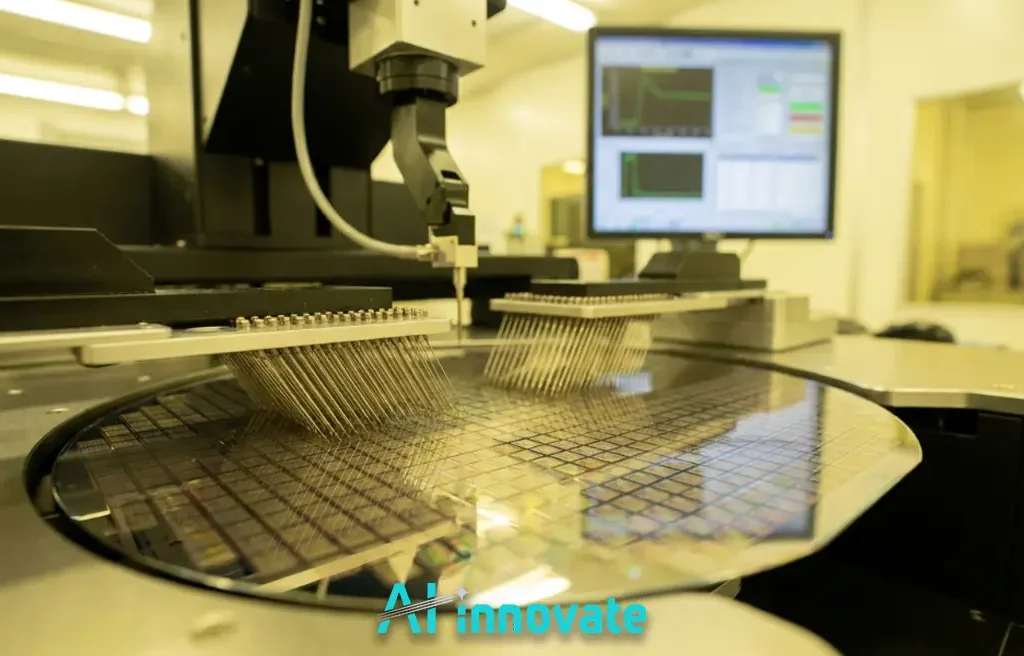
One of the most common uses of ATE is semiconductor wafer testing. At this stage, chips are tested while still on the wafer and before packaging. This avoids packaging bad chips, reduces wasted cost, and improves overall production yield. Catching defects early at the wafer stage is one of the best ways to improve semiconductor manufacturing quality.
Typical checks include:
- Die functionality
- Parametric measurements
- Leakage current
- Voltage and timing behavior
- Defective die identification
Final IC Package Testing
After a chip is packaged, it still needs to be tested to confirm that it performs correctly before shipment. This is another major use case for ATE. At this stage, ATE may test speed, power consumption, input and output behavior, thermal performance, and communication protocols.
Common examples are:
- Microcontrollers
- Memory chips
- Power management ICs
- RF chips
- Sensors
- ASICs and SoCs
Printed Circuit Board Assembly Testing
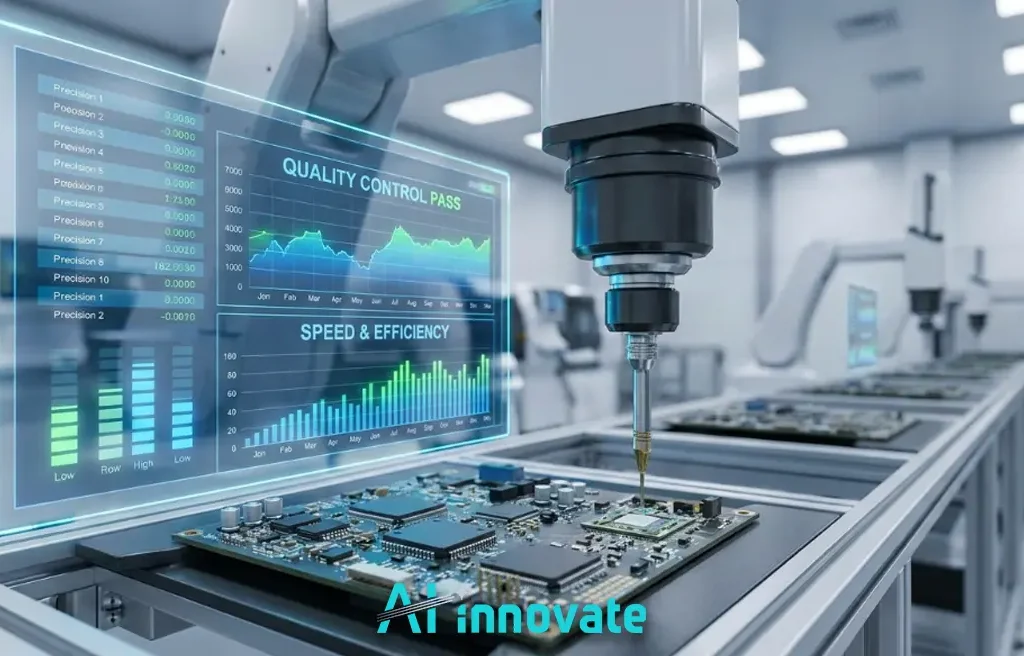
ATE is also widely used for printed circuit board assembly testing after manufacturing. Once a PCB has been assembled, it needs to be verified that the board was built correctly and works as expected. This type of testing is more common in consumer electronics, automotive control units, medical electronics, and industrial controllers.
Common PCB tests include:
- Shorts and opens
- Component placement errors
- Soldering defects
- Voltage rail validation
- Digital signal checks
- Functional verification
Functional Testing of Finished Products
ATE can also be used to test finished products by simulating real-world operation. This is done to confirm that the final device works the way it should before packaging or shipping. This type of testing is often the final checkpoint before the product leaves the factory.
Examples include:
- Testing a smartphone’s charging, display, camera, and sensors
- Testing a router’s Wi-Fi, Ethernet, and firmware behavior
- Testing a power supply’s output stability
- Testing a medical device’s buttons, alarms, display, and sensors
Automotive Electronics Testing
Modern vehicles are heavily dependent on electronics, which makes ATE an important tool in automotive manufacturing. Electronic control units, communication systems, sensors, and safety-related modules all need reliable testing at scale.
Tests may include CAN, LIN and Ethernet communication, power cycling, temperature stress and fault simulation. Automated testing is especially important in this area because automotive electronics must meet high safety and reliability standards.
Common targets consist of:
- Engine control units
- Battery management systems
- ADAS sensors
- Infotainment modules
- Airbag control modules
- Charging systems for EVs
Burn-In and Reliability Testing
ATE is often used in burn-in and reliability testing, where devices are run for extended periods under elevated temperature, voltage, or load conditions. The purpose of this testing is to identify early-life failures before the product is used in the field.
Common applications include:
- Semiconductor devices
- Power electronics
- Aerospace electronics
- Medical devices
- Industrial control systems
RF and Wireless Device Testing
Wireless devices need accurate radio frequency testing, and ATE is used to validate RF performance in products that depend on wireless communication. Typical measurements include signal strength, frequency accuracy, modulation quality, sensitivity, and transmit power.
Examples include:
- 5G modules
- Wi-Fi devices
- Bluetooth devices
- GPS receivers
- Radar sensors
- IoT modules
Power Electronics Testing
ATE is also widely used in power electronics, where devices must be tested for performance, stability, and protection behavior. Efficiency, ripple, load response, protection behavior, temperature rise, and overcurrent shutdown are usually tested. Since these products manage electrical power directly, testing accuracy is critical.
Examples include:
- AC/DC power supplies
- DC/DC converters
- Inverters
- EV chargers
- Battery packs
- Solar power electronics
Medical Device Testing
Medical electronics need reliable and traceable testing, giving ATE much value in this industry. It helps to verify device performance, support regulatory requirements, and improve product safety.
Testing may include functional checks, alarm verification, sensor calibration, electrical safety checks and the creation of traceable production records. Strong testing processes are important in medical manufacturing because failures can have serious consequences.
Examples include:
- Patient monitors
- Infusion pumps
- Diagnostic instruments
- Wearable medical sensors
- Imaging system electronics
Aerospace and Defense Testing
ATE is also used in the aerospace and defence industries, where reliability and repeatability are critical. The electronics used in these industries often operate in challenging environments and must meet rigorous performance standards. Tests may include environmental simulation, vibration testing, thermal cycling, signal integrity testing and fault detection. Consistent testing is especially important in these high-risk applications.
Common use cases include:
- Avionics modules
- Radar systems
- Communication systems
- Navigation electronics
- Satellite subsystems
- Military electronics
Telecom and Networking Equipment Testing
ATE helps to validate telecommunications and networking equipment prior to deployment. Such products must be able to handle large volumes of data while maintaining speed, stability and protocol compliance. Tests check that communication equipment performs reliably in real conditions, including throughput, latency, packet loss, signal integrity, optical power and protocol compliance.
Examples include:
- Routers
- Switches
- Optical transceivers
- Base station equipment
- Network interface cards
Battery and Energy Storage Testing
Battery and energy storage systems are another major use case for ATE. These products need careful testing because safety, thermal performance, and long-term reliability are all essential features for this type of product.
This type of testing is especially important for EVs, consumer electronics, and energy storage systems to confirm that batteries perform safely and consistently.
Common tests include:
- Capacity testing
- Charge and discharge cycling
- Internal resistance
- Thermal behavior
- Protection circuit validation
- Battery management system communication
Why Manufacturers Invest in Automated Test Equipment
ATE is valuable not only because it tests products, but also because it improves how manufacturers manage production and quality. These benefits make ATE an important part of smart factories, especially where large volumes and strict quality standards are involved.
Some of the main business benefits include:
- Increased production speed
- Reduced human error
- Better test repeatability
- Earlier defect detection
- Lower warranty costs
- Improved product quality
- Better production data collection
- Stronger support for regulatory compliance
- Easier scaling of manufacturing operations
A Simple Example of ATE in Daily Production
A manufacturer producing 10,000 smart sensors per day could use automated test equipment (ATE) to automatically connect each unit, power it on, check the firmware, validate the sensor readings, test the wireless communication, record the serial number and return a pass or fail result within seconds.
Without ATE, this process would be much more time-consuming, labour-intensive, and prone to human error. This simple example shows why automated testing becomes so valuable as production scales up.
Turn Automated Test Equipment into Measurable Manufacturing Gains
Automated test equipment only creates value when it is deployed with the right hardware integration, data infrastructure, and real-time decision-making capabilities. Moving from isolated test stations and manual validation to scalable production impact requires reliable edge processing, connected test workflows, and systems that can support fast, repeatable, and traceable inspection across high-volume manufacturing environments.
At AI-innovate, we help manufacturers bridge the gap between test automation strategy and production-floor execution by providing:
- Edge AI infrastructure with AIxCore (powered by NVIDIA Jetson Orin AGX) for real-time test data processing, sensor integration, and on-site analytics across automated inspection and validation workflows
- Intelligent visual inspection with AIxEye, enabling faster detection of visible defects, assembly issues, and product anomalies that may need to be identified alongside functional and electrical testing
- Synthetic data capabilities through AIxCam, helping teams strengthen AI models when failure cases are rare, test datasets are limited, or edge-case scenarios are difficult to capture in sufficient volume
Whether you’re improving automated testing for a single product line or scaling quality assurance across semiconductors, PCBs, wireless devices, batteries, or finished electronics, the key is combining reliable data capture, explainable AI models, and industrial-grade deployment built for real manufacturing environments.
Conclusion
Automated Test Equipment is used across many industries for faster, more accurate testing, and better consistency. Ranging from semiconductor wafer testing and PCB inspection to automotive electronics, wireless devices, medical products, and energy storage systems, ATE supports many of the quality checks that modern manufacturing depends on.
We think that as products become more complex and production demands continue to increase, ATE will remain a key tool for improving quality, reducing defects, and supporting efficient large-scale manufacturing.
FAQ
What are the examples of automated test equipment?
ATE has tested various devices, including integrated circuits (ICs), printed circuit boards (PCBs), hard disk drives (HDDs), automotive systems and modules, and the electronic systems and line-replaceable units (LRUs) that support aircraft, spacecraft and satellites. This family of technologies is known as avionics.
Why is automatic test equipment useful?
ATE minimises human error to ensure consistent test conditions. Automated data collection allows failures and processes to be analysed more effectively, and systems can easily be expanded or reprogrammed to test new product lines.
Which of the given test cases are suitable for automation testing?
Some test cases lend themselves better to automation, such as unit tests. Others, such as usability testing or exploratory testing, require human judgement. The important thing to note is that the same test cases can often be performed in either way.
Sources
Ai-Innovate uses only high-quality sources, including peer-reviewed studies, to support the facts within our articles.
- Infinita Lab. (2026). Semiconductor Testing Process: Complete Guide from Wafer to Package — A practical overview of semiconductor testing stages, including wafer probe, final test, reliability testing, and the role of automated test equipment in production. Retrieved from https://infinitalab.com/blog/semiconductor-testing-process-guide/
- Analog Devices. Automated Test Equipment — A technical resource explaining automated test equipment architectures, measurement needs, and key considerations for semiconductor and electronics test systems. Retrieved from https://www.analog.com/en/solutions/instrumentation-and-measurement/automated-test-equipment.html
- Seika Machinery, Inc. Electronics MFG & PCB Automatic Test Equipment — A vendor overview of automatic test equipment used in electronics and PCB manufacturing, including inspection and test solutions for production environments. Retrieved from https://seikausa.com/electronics-mfg-equipment/automatic-test-equipment
- Su-vastika. PCB Functional Tester — A product-focused page outlining functional testing for PCBs and its role in verifying board-level performance before deployment. Retrieved from https://suvastika.com/pcb-functional-tester/
- VVDN Technologies. ATE Is No Longer Just a Testing Tool, It’s a Manufacturing Growth Engine — An industry article on how modern ATE supports faster validation, higher throughput, and broader manufacturing performance gains beyond basic testing. Retrieved from https://www.vvdntech.com/en-us/blog/ate-is-no-longer-just-a-testing-tool-its-a-manufacturing-growth-engine/