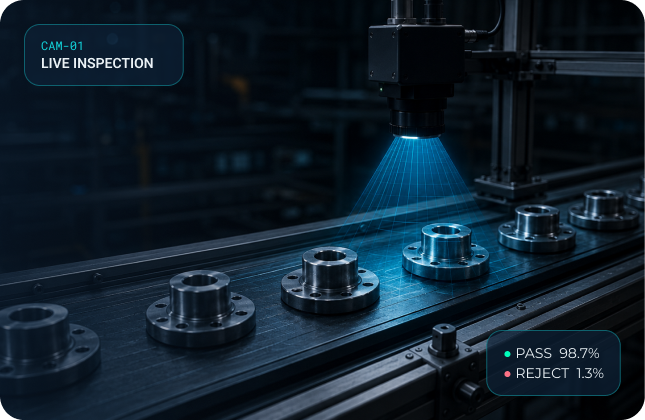
Manual Inspection
People fatigue, distraction, and shift-to-shift inconsistency leave quality to chance.

Deploy an end-to-end AI inspection system configured around
your products, defects, line conditions, and existing
infrastructure covering every unit on the line, not just a
sample.
Manual inspection depends on people and people get tired, get
distracted, and don’t always agree on what counts as a defect. Sample-
based inspection catches a fraction of production, leaving the rest
unchecked. And rule-based machine vision, while faster than a person,
tends to break down exactly where it matters most: subtle surface
defects, reflective materials, or the kind of geometric and dimensional
variation a flat image can’t judge at all.
The cost shows up downstream in scrap, rework, and customer complaints and it gets more expensive the later a defect is caught.
People fatigue, distraction, and shift-to-shift inconsistency leave quality to chance.

Only a fraction of production is ever seen — the rest ships uninspected.
Rigid rules break the moment material, lighting, or defect type changes.
AI-innovate builds AI-powered visual inspection systems
configured around your actual product, defects, and production
environment; not a generic template.
Every deployment is built to:
Depending on whether your product is flat or inherently three-dimensional, an AI visual inspection system can help you detect defects.
Scratches, dents, cracks, stains, contamination, coating irregularities, texture and colour variation, print and pattern issues. This is surface inspection territory.
Explore AIxEyeShape, profile, deformation, and dimensional variation on parts that are inherently three-dimensional, like automotive components, electronics, or aerospace parts.
Explore AIxAm
There's no single template that works across every line.
Before anything is deployed, the configuration accounts for:
Define what's being inspected and what counts as a defect.
Match the inspection system to your production rate.
Optimize sensor and illumination for consistent imaging.
Configure the system footprint to fit your production line.
Connect with your current PLC, MES, and automation infrastructure.
Align inspection records and reporting with your quality system.
Case Study
Helping textile manufacturers automate quality inspection, reduce manual QC effort, and gain real-time insight into defect formation and production trends.
Case Study
Helping aluminum manufacturers automate surface inspection, classify defects, and connect quality issues to process conditions in real time.
Case Study
Helping polymer manufacturers automate visual inspection, detect surface anomalies, reduce manual QC effort, and improve production planning through AI-powered quality intelligence.
Case Study
Helping metal coating manufacturers detect surface defects, reduce manual QC effort, and connect coating quality issues to suppliers, raw materials, and production conditions.
Case Study
Helping high-volume 3D printing operations detect major defects, identify early-stage failures, reduce waste, and improve production efficiency.
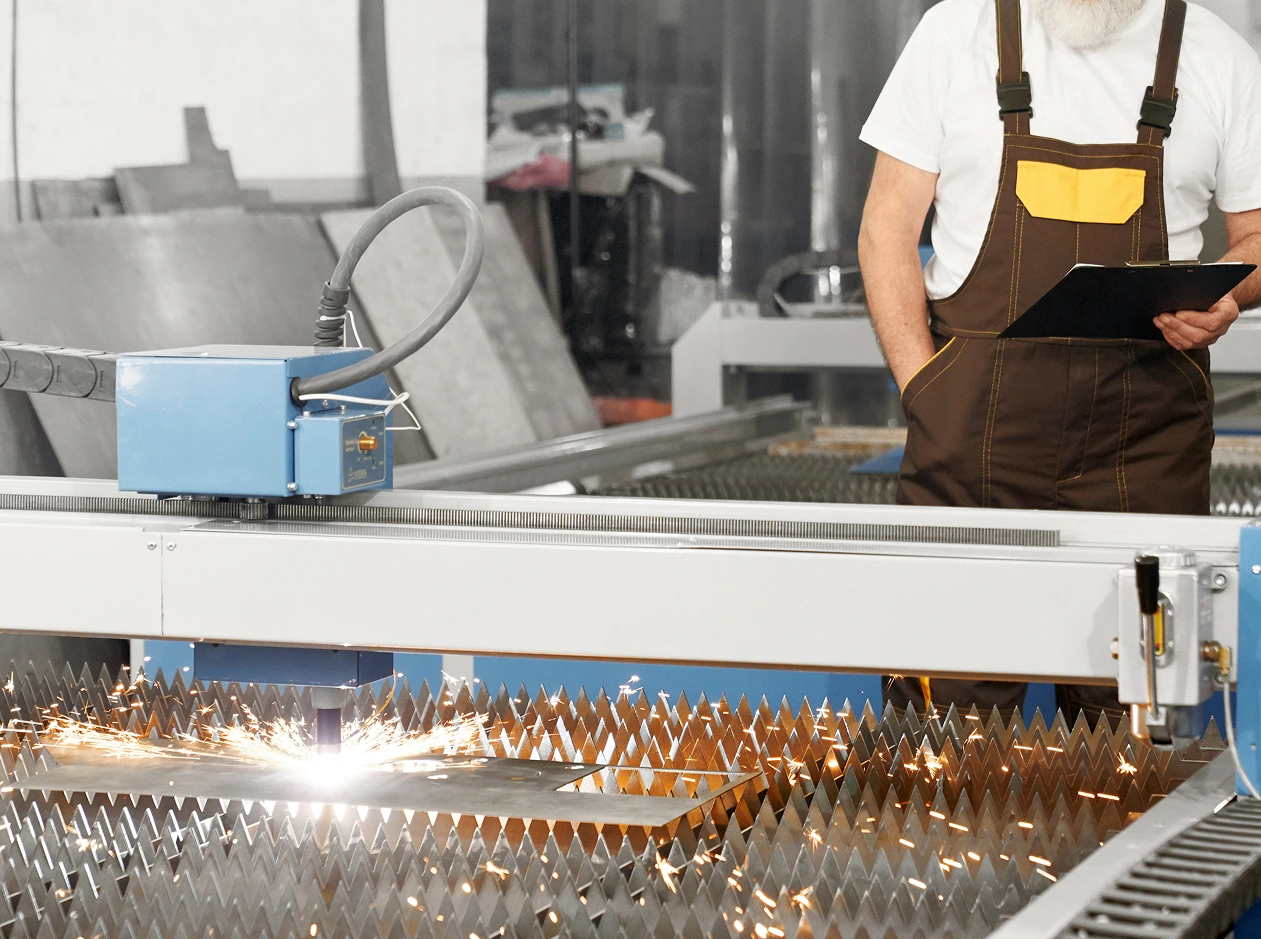
Each industry has unique inspection demands. AI-innovate
configures every system accordingly.
Continuous inspection for scratches, dents, cracks, corrosion, weld defects, and surface imperfections.
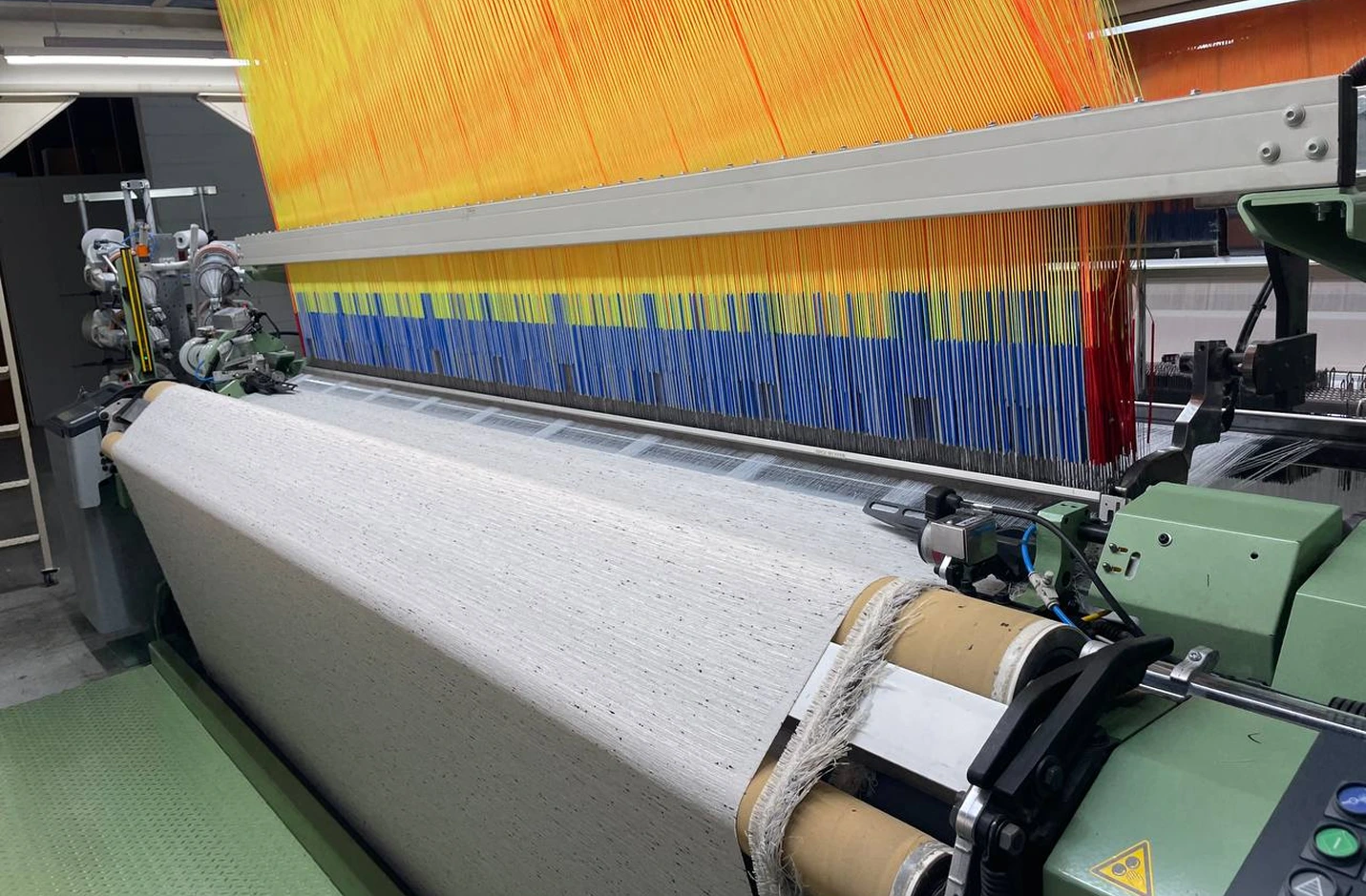
Continuous inspection for fabric defects, loose threads, pattern irregularities, and surface variations.
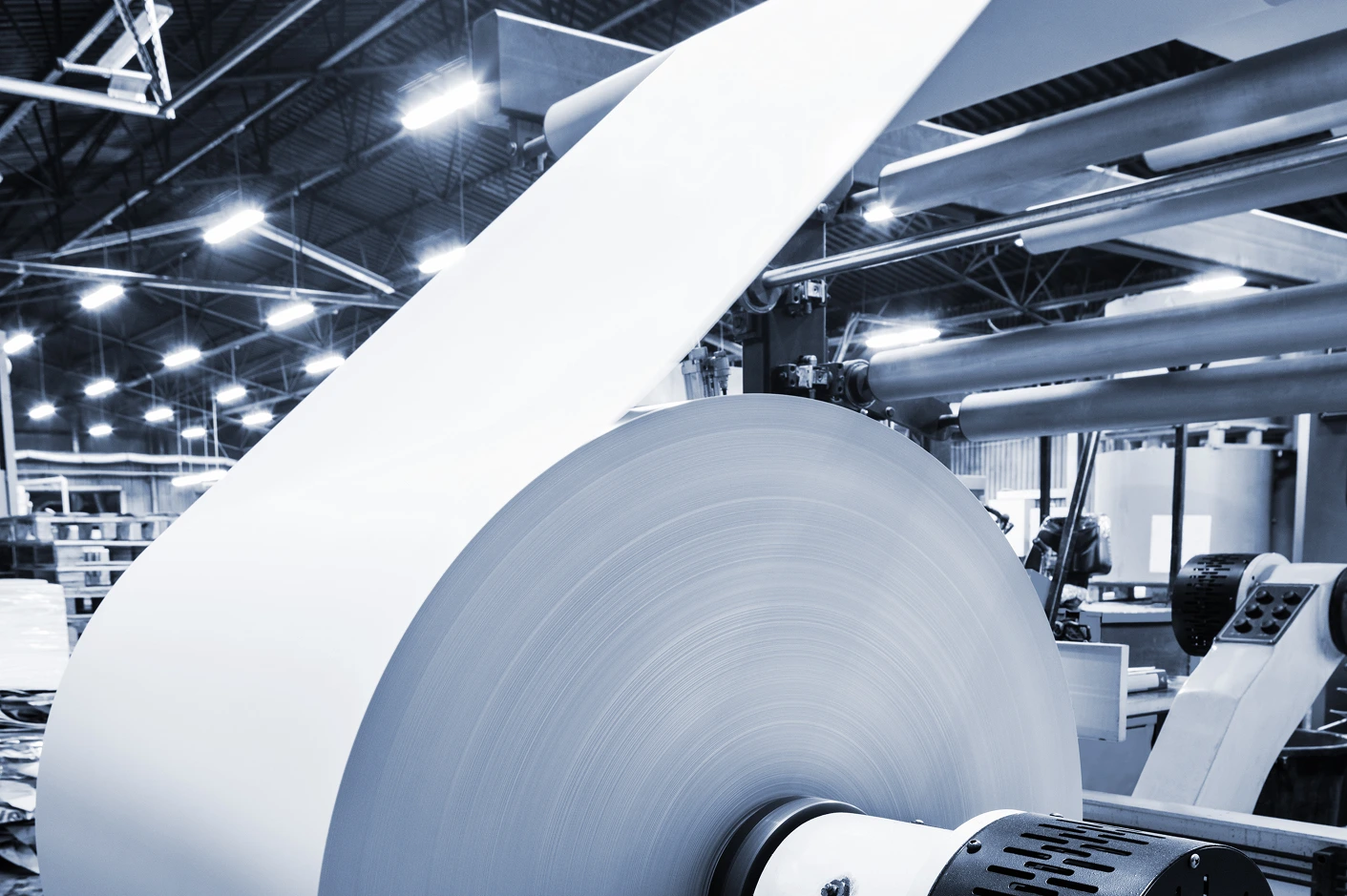
Continuous inspection for tears, wrinkles, holes, stains, coating defects, and edge cracks.
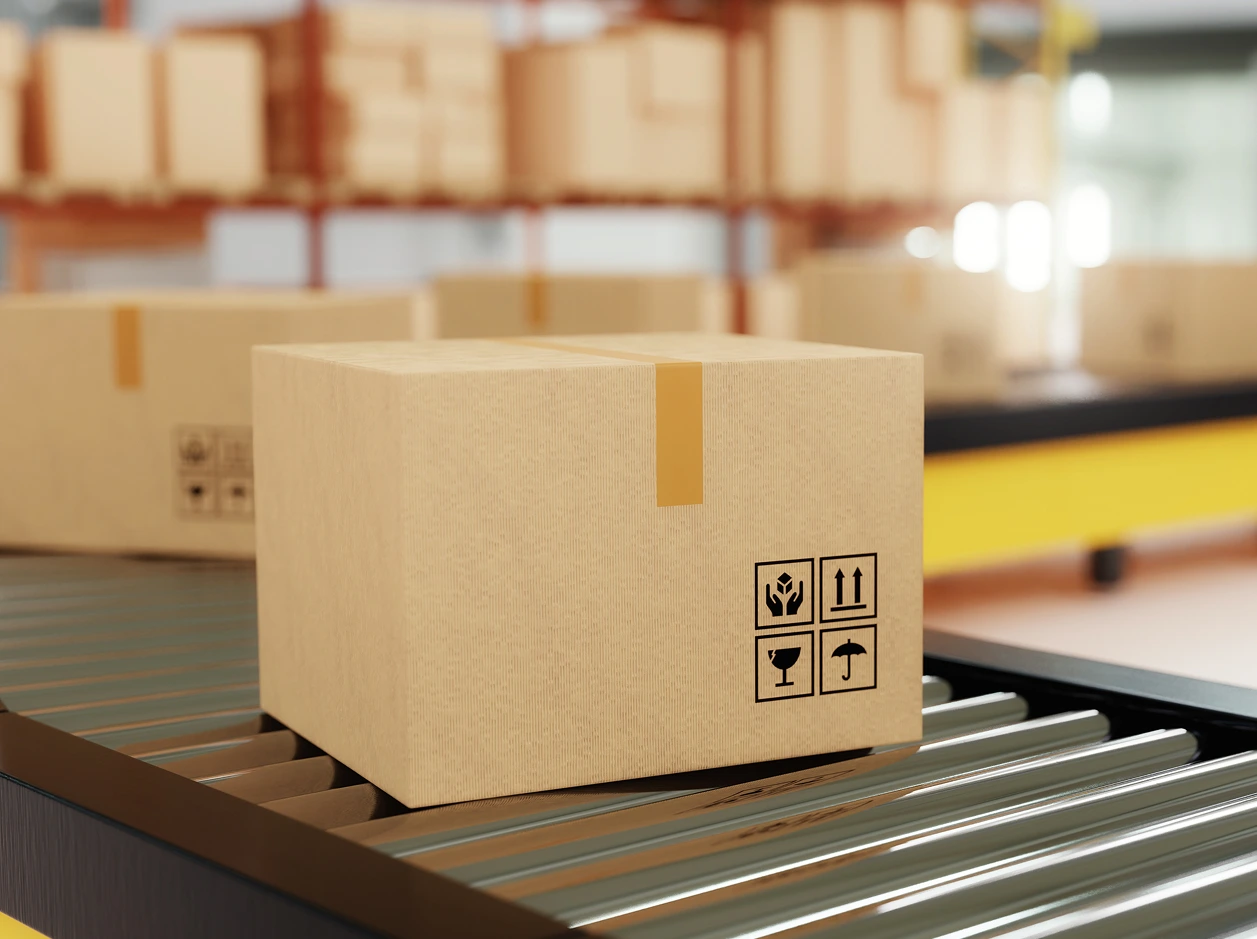
Continuous inspection for label errors, seal defects, damaged packages, barcode verification, and missing items.
Dealing with a defect, material, sensor, or installation constraint that doesn't fit a standard setup?
Already catching defects, but need to understand why they keep happening?
Already have an inspection system, but it's not performing well enough?