




A bad weld hardly goes unnoticed. It turns into rework, delays, failed inspections, or problems that show up later when the part is already in service. In an industrial environment, that’s a serious risk since welding lines move fast and even small defects can repeat across hundreds of parts before anyone catches them. While manual inspection is still important, the reality is that it’s getting harder to maintain consistent checks as production speeds increase. To help the inspectors on the floor, many manufacturers have turned to AI weld defect detection.
In this article, we inspect the effects of AI on weld defect detection, the type of defects AI can catch, how it compares to traditional inspection, and where the ROI is particularly noticeable.
Improve Weld Quality with Real-Time AI Inspection
Detect weld defects instantly with advanced computer vision and AI. Increase inspection consistency, reduce manual errors, and ensure every weld meets quality standards.

How AI Improves Real-Time Weld Defect Detection
The biggest advantage of automated weld inspection is timing.
The earlier a defect gets caught, the cheaper it is to deal with. Once a bad weld moves downstream into machining, painting, assembly, or shipping, the cost of fixing it climbs quickly. Most manufacturers have learned that lesson the expensive way at some point.
Instead of relying only on end-of-line checks, newer systems monitor weld seams while welding is actually happening. Cameras track the weld visually, thermal sensors watch heat behavior, and acoustic systems listen for changes in the welding process that don’t sound right.
Most automated weld quality control systems focus on:
- continuous weld seam inspection
- real-time defect alerts
- process consistency
- defect classification
- traceability for audits and compliance
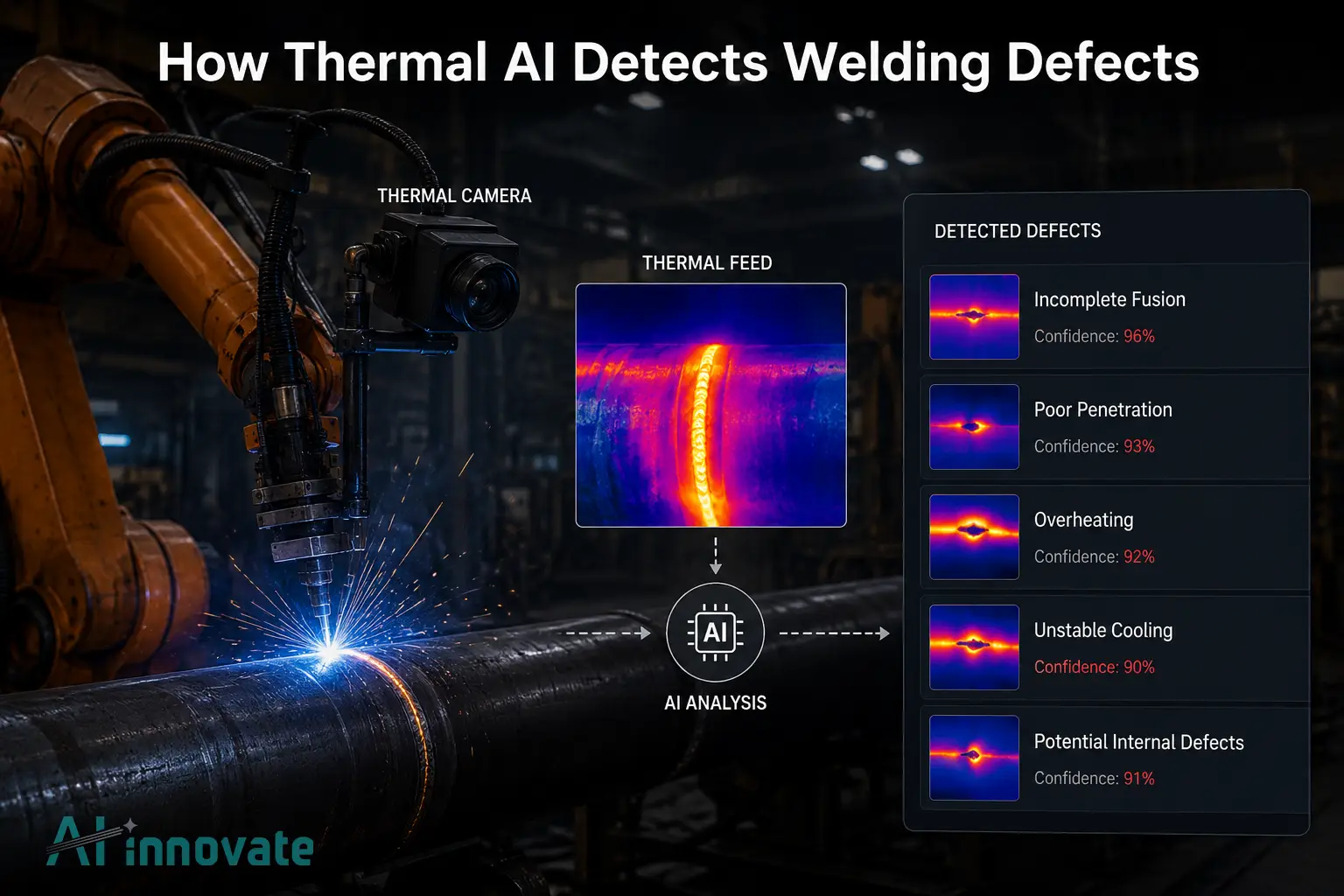
How Thermal AI Detects Welding Defects
Every weld creates a thermal pattern. When the weld process becomes unstable, that pattern changes too.
Thermal inspection systems use infrared imaging to track how heat moves through the weld during and after welding. AI models learn what a healthy weld profile looks like and flag the ones that drift outside normal behavior.
This works especially well for defects connected to heat inconsistency, including:
- incomplete fusion
- poor penetration
- overheating
- unstable cooling
- potential internal defects
On robotic welding lines, this becomes useful very quickly. If a welding parameter drifts slightly out of spec, defects can repeat across large batches before operators notice anything visually.
We’ve seen this matter most in automotive and pipeline manufacturing, where a small process issue can affect thousands of welds before final inspection catches it.
How Machine Vision AI Improves Weld Seam Inspection
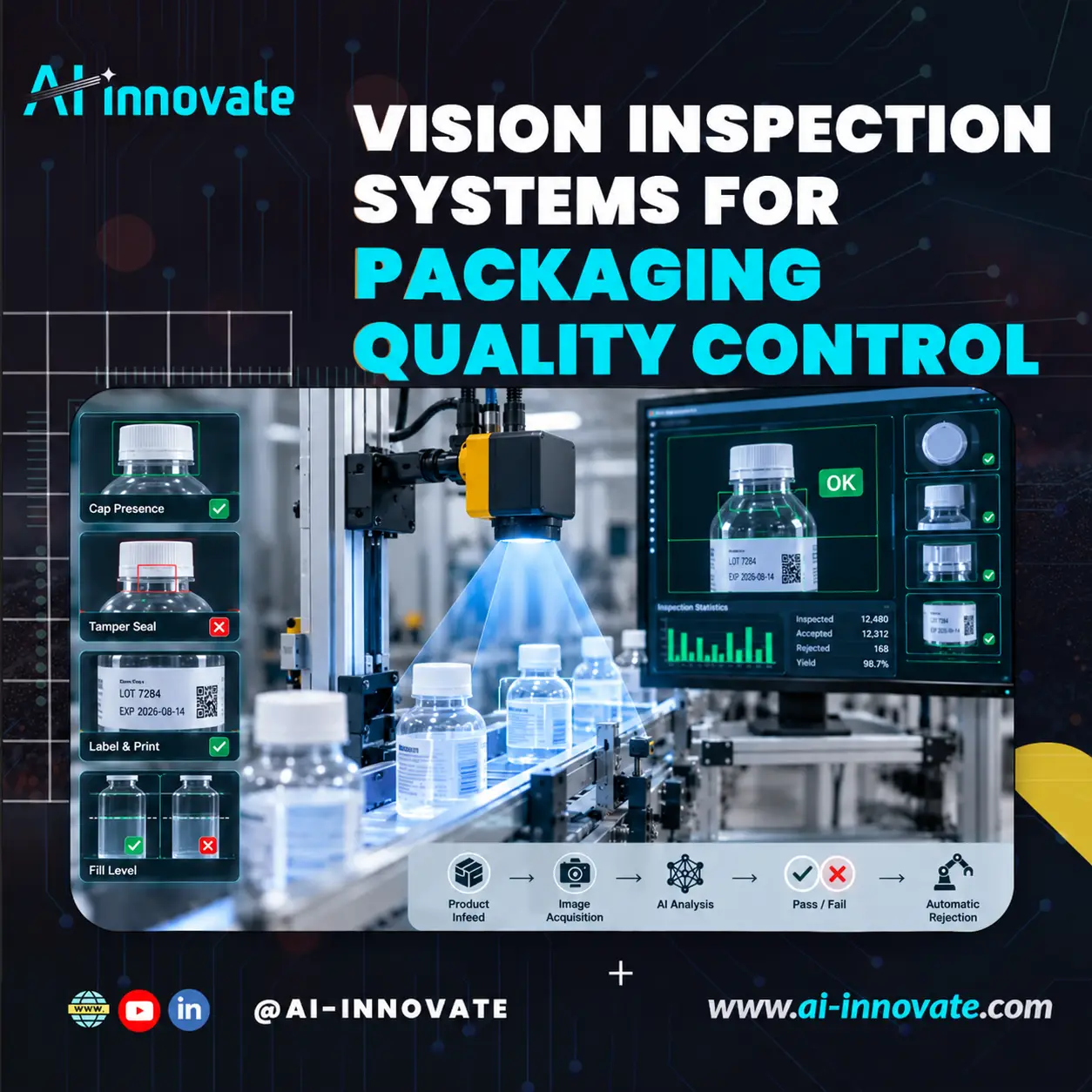
Industrial cameras capture images of the weld seam while software analyzes bead shape, edge consistency, contour depth, texture variation, and surface abnormalities.
The system compares those patterns against trained defect examples instead of relying entirely on rigid pass/fail rules. Instead of looking for one perfect-looking weld, the system learns the difference between normal variation and actual defects.
However, false-call fatigue can become a real issue on production floors. If operators spend all day clearing unnecessary inspection alerts, trust in the system disappears pretty quickly.
Machine vision weld inspection is commonly used for:
- robotic welding cells
- automotive structural welding
- pressure vessel manufacturing
- heavy fabrication
- structural steel production
This Topic might also interest you :
How Acoustic Emission AI Identifies Hidden Weld Defects
Not every weld problem shows up clearly on the surface, and that’s where acoustic monitoring is applied.
During welding, the arc, cooling process, and material interaction all create sound patterns. When something changes, instability, cracking, inconsistent penetration, the sound changes too.
Acoustic emission systems help identify welding conditions associated with:
- unstable weld pools
- arc interruptions
- lack of penetration
- process inconsistency
- potential internal cracking
On its own, acoustic monitoring usually isn’t enough to run a full inspection process. But when it’s layered together with machine vision and thermal monitoring, it gives manufacturers another way to catch defects that optical systems might miss.
The strongest inspection systems usually combine multiple inspection methods instead of relying on only one.
What Welding Defects Can AI Detect?
The exact defects matter because each one creates different structural risks and different downstream problems. Most weld defects fall into a handful of major categories.
Porosity and Gas Pocket Detection
Porosity happens when gas gets trapped inside the weld, leaving cavities behind.
A little porosity might not matter much depending on the application. Too much of it weakens the weld and reduces long-term durability. The challenge is that porosity doesn’t always look obvious from the surface.
Inspection systems usually detect it through:
- texture irregularities
- seam inconsistencies
- thermal cooling variation
This matters most in industries where welds face repeated stress over time, especially aerospace, automotive, and pipeline manufacturing.
Crack Detection in Welded Joints
Cracks are one of the highest-risk weld defects because they tend to spread instead of staying contained.
Inspection systems may need to identify:
- longitudinal cracks
- transverse cracks
- crater cracks
- heat-affected zone cracking
Some cracks are easy to spot. Others are microscopic and only become visible under the right lighting or thermal conditions. This is one of the areas where automated inspection often performs better than manual inspection in high-throughput environments.
Incomplete Fusion and Penetration Detection
Incomplete fusion means the weld never bonded properly to the base material, and incomplete penetration means the weld didn’t fully extend through the joint.
Both defects weaken the structure significantly. The problem is that these defects are often difficult to confirm visually, especially on fast-moving production lines.
Thermal monitoring helps because inconsistent penetration changes the weld’s heat profile. Machine vision systems also identify seam irregularities connected to poor bonding conditions.
Weld Spatter and Surface Contamination Detection
Spatter isn’t always structurally dangerous, but it creates problems quickly in high-precision manufacturing environments.
Excessive spatter can affect:
- coating adhesion
- robotic fit-up
- downstream assembly
- cosmetic quality
- sensor positioning
Inspection systems also look for oxidation marks, contamination residue, and inconsistent bead shape. This matters most in industries where appearance and structural quality both matter, particularly automotive and aerospace manufacturing.
This Topic might also interest you :
Undercut and Overlap Detection
Undercut happens when excess heat removes material along the weld edge, creating a groove that weakens the joint. Overlap is the opposite problem: weld material spills beyond the joint without bonding correctly underneath.
Both defects usually point to unstable welding parameters. Machine vision systems identify them by analyzing:
- contour depth
- seam continuity
- edge geometry
- bead consistency
One advantage of automated inspection here is consistency. The system checks every weld the same way, whether it’s the first weld of the day or the ten-thousandth.
Manual vs AI Weld Inspection Systems
Experienced inspectors are often better at handling unusual edge cases or defects that don’t follow predictable patterns. But repetitive inspection at production speed is where automated systems start pulling ahead.
| Inspection Method | Consistency | Real-Time Detection | Fatigue Impact | Scalability |
|---|---|---|---|---|
| Manual Inspection | Variable | Limited | High | Limited |
| Traditional Vision Systems | Moderate | Partial | None | Moderate |
| AI Weld Inspection | High | Yes | None | High |
Comparison of manual, traditional, and AI-powered weld inspection methods across consistency, real-time detection, operator fatigue, and scalability.
The more repetitive the inspection becomes, the harder it gets to maintain consistency manually. Although, that doesn’t mean manufacturers are removing people from inspection completely.
Most strong inspection setups split the work like this:
- automated systems handle continuous inspection
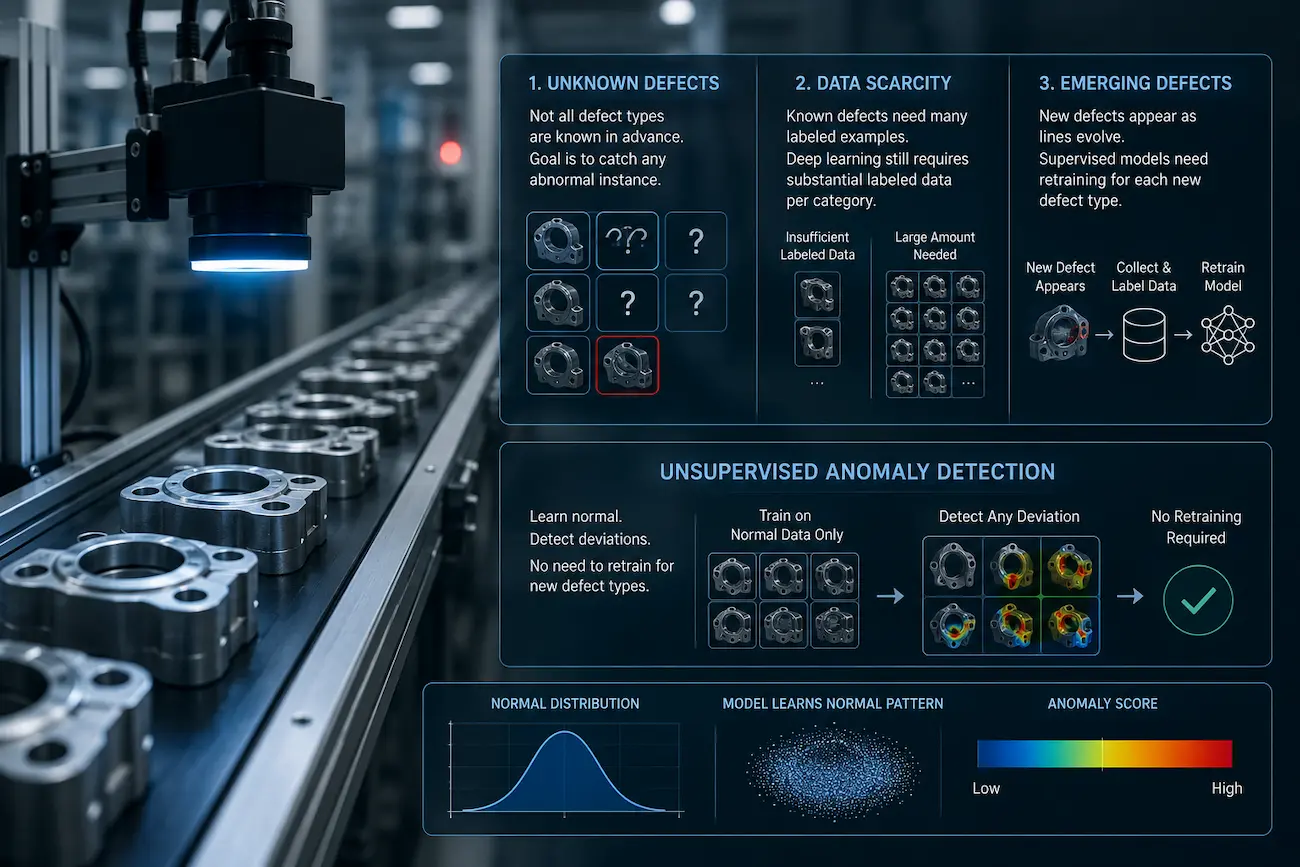
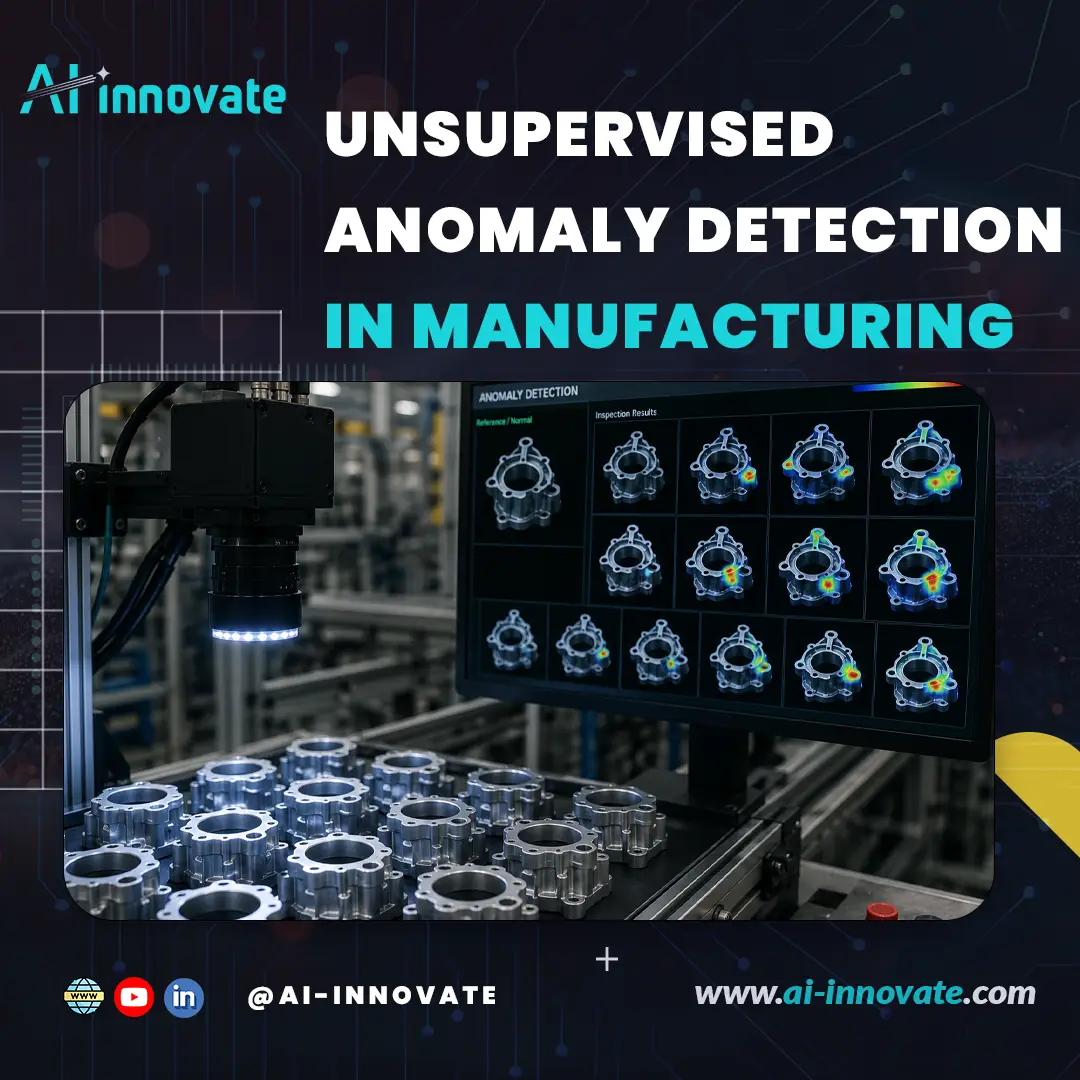
- software handles classification and anomaly detection
- operators review uncertain or high-risk calls
That’s the same hybrid model becoming common across manufacturing quality control more broadly.
Where Automated Weld Inspection Delivers the Highest ROI
Not every welding environment benefits equally from automation. The strongest ROI usually appears where throughput, defect risk, and inspection volume all collide.
Automotive Weld Inspection
Automotive manufacturing is one of the clearest use cases for automated weld inspection.
Modern vehicle production involves thousands of welds moving through robotic cells at high speed. If a welding parameter drifts slightly out of spec, defects can repeat across huge production batches before manual inspection catches the problem.
Manufacturers use automated weld inspection to improve:
- chassis weld consistency
- EV battery enclosure quality
- robotic welding traceability
- throughput stability
- warranty reduction
Pressure Vessel and Pipeline Weld Inspection
Pressure vessel and pipeline welds carry much higher structural risk than most manufacturing welds.
Failures here can mean:
- shutdowns
- environmental damage
- compliance failures
- expensive repairs
- serious safety incidents
That’s why inspection standards are stricter and defect tolerance is lower.
Thermal monitoring and acoustic analysis become especially useful in these environments because internal defects don’t always appear clearly from the surface. In many safety-critical industries, automated visual inspection supports existing NDT workflows rather than replacing certified inspection methods entirely.
Shipbuilding and Heavy Fabrication Weld Inspection
Heavy fabrication creates a different challenge: scale.
Large structures involve huge weld volumes, inconsistent environments, and expensive downstream rework when defects are discovered late.
That’s why real-time inspection matters here. Catching a problem immediately is far cheaper than grinding, cutting, and reworking major assemblies later.
Aerospace and Defence Weld Quality Control
Aerospace manufacturing runs on tight tolerances because even small structural defects can create long-term reliability problems. This is one of the industries where even small improvements in inspection reliability can carry enormous operational value.
Inspection systems help manufacturers maintain:
- repeatable inspection quality
- traceable inspection records
- compliance documentation
- weld consistency across production runs
How AI-innovate Supports Weld Defect Detection
We help manufacturers bring AI into weld inspection without forcing them to replace existing welding systems, robotics, or inspection workflows. The goal is practical defect detection with fewer missed weld failures and fewer false positives, not experimental AI disconnected from production reality.
At AI-innovate, we support automated weld quality control with:
- AIxEye for real-time weld defect detection and process optimization, identifying cracks, porosity, undercut, incomplete fusion, overlap, and surface contamination across high-speed welding environments
- AIxCore, an industrial AI edge computer powered by NVIDIA Jetson Orin AGX, delivering real-time image processing and low-latency machine vision performance for weld seam inspection directly on the production floor
- AIxCam, advanced simulation tools for camera testing and synthetic data generation, helping manufacturers train inspection models on difficult or low-frequency weld defects that are challenging to capture consistently in live production
- AIxAM, which detects surface defects and geometry flaws on welded assemblies and fabricated metal components by analyzing multi-view images and depth data in real time.
Whether you’re improving robotic weld inspection on a single production cell or scaling automated weld quality control across multiple facilities, the foundation stays the same: reliable inspection data, explainable AI, and industrial-grade deployment. Book a demo and we’ll help scope the system around your weld processes, materials, and defect risks.
Final Thoughts
Weld inspection is moving in the same direction as the rest of manufacturing quality control: faster inspection, more automation, and fewer decisions based entirely on manual checks. That doesn’t mean experienced inspectors stop mattering. Human judgement is still critical, especially for unusual defects and edge cases that don’t follow predictable patterns.
The manufacturers getting the strongest results usually aren’t replacing inspection fundamentals. They’re layering smarter inspection on top of systems that already work.
Confused About Where to Start with AI?
Our specialists help you identify the right AI approach based on your process, data, and goals.
Sources
Ai-Innovate uses only high-quality sources, including peer-reviewed studies, to support the facts within our articles.
- Therness. (2025). AI Weld Defect Detection: Thermal vs Vision vs Acoustic. Compares different AI-powered weld inspection methods used in industrial quality assurance. Retrieved from https://www.therness.com/blog/ai-weld-defect-detection-thermal-vs-vision-vs-acoustic/
- iFactory AI. (2025). AI Vision Weld Inspection for Manufacturing Quality Control. Explores AI vision systems for automated weld inspection and defect detection in production environments. Retrieved from https://ifactoryapp.com/ai-vision-camera/ai-vision-weld-inspection-quality-manufacturing
- Machine Tool News. (2025). AI Detects Welding Defects in Modern Manufacturing. Covers how AI technologies improve welding inspection accuracy and reduce manual quality control limitations. Retrieved from https://machinetoolnews.ai/ai-detects-welding-defects/
- Oxmaint. (2025). AI Weld Inspection for Automated Quality Manufacturing. Discusses automated weld inspection workflows, predictive quality monitoring, and AI-driven manufacturing systems. Retrieved from https://oxmaint.com/industries/manufacturing-plant/ai-weld-inspection-automated-quality-manufacturing
Frequently Asked Questions
What is weld defect detection?
Weld defect detection is the process of identifying structural or surface abnormalities in welded joints before products move further through production or into service.
How does automated weld inspection work?
Automated weld inspection uses cameras, thermal sensors, acoustic monitoring, and machine learning models to analyze weld seams and classify defects in real time.
Can automated systems detect internal weld defects?
Yes. Thermal analysis and acoustic monitoring can help identify conditions associated with hidden problems like incomplete penetration, unstable weld pools, and internal cracking.
What industries use automated weld quality control?
Automotive, aerospace, shipbuilding, heavy fabrication, pressure vessels, and pipeline manufacturing are some of the biggest users of automated weld inspection.
Is automated weld inspection replacing manual inspection?
Not completely. Most manufacturers use hybrid systems where automated inspection handles repetitive checks while operators review uncertain or high-risk defects.
What defects can machine vision systems detect?
Machine vision inspection systems can detect cracks, porosity, spatter, undercut, overlap, contour irregularities, and surface contamination.
Why is real-time weld inspection important?
The earlier defects are detected, the cheaper they are to fix. Real-time inspection helps manufacturers stop defects before they spread across larger production batches.
What are the biggest challenges in automated weld inspection?
Reflective surfaces, inconsistent lighting, poor training data, and production variability are some of the biggest challenges affecting inspection accuracy.