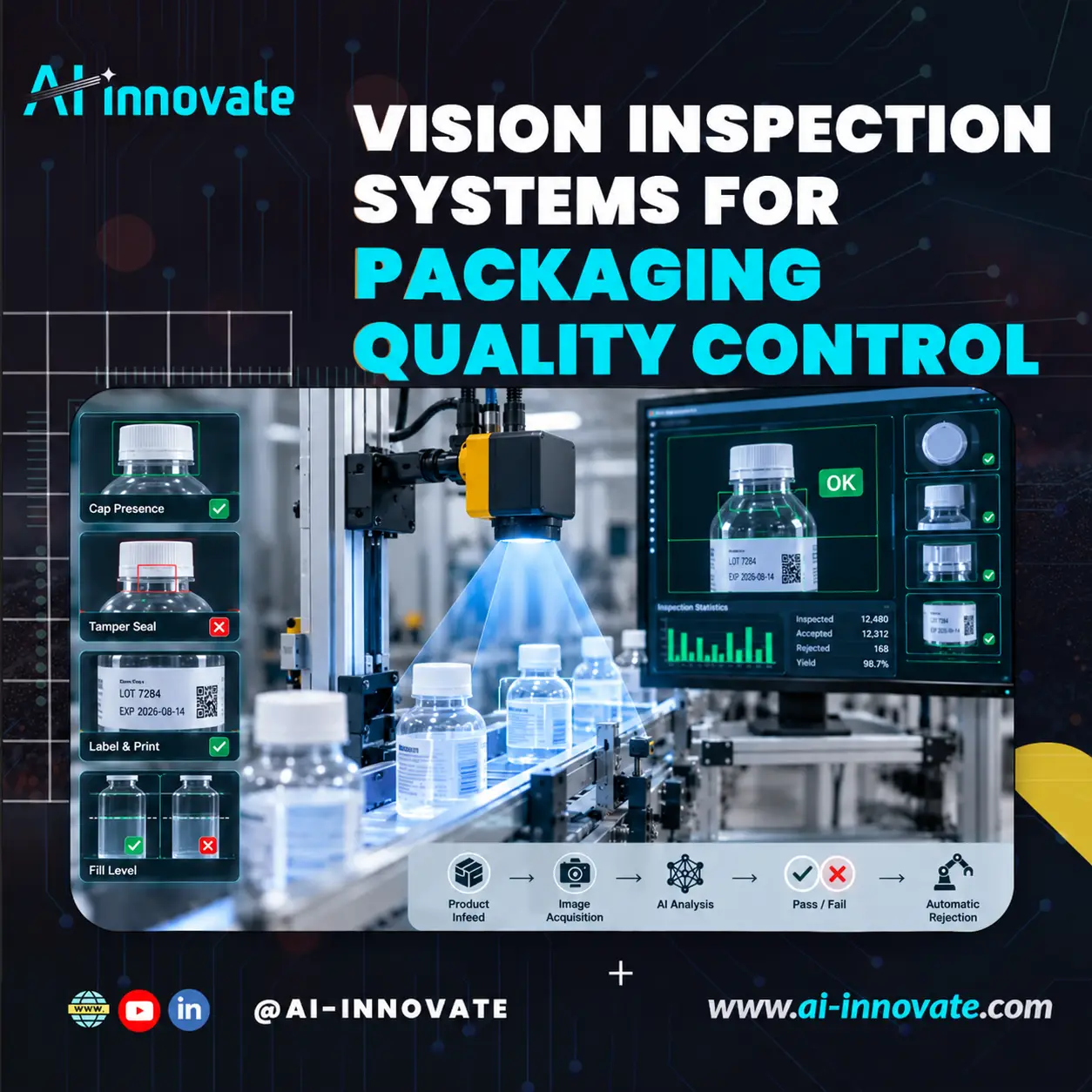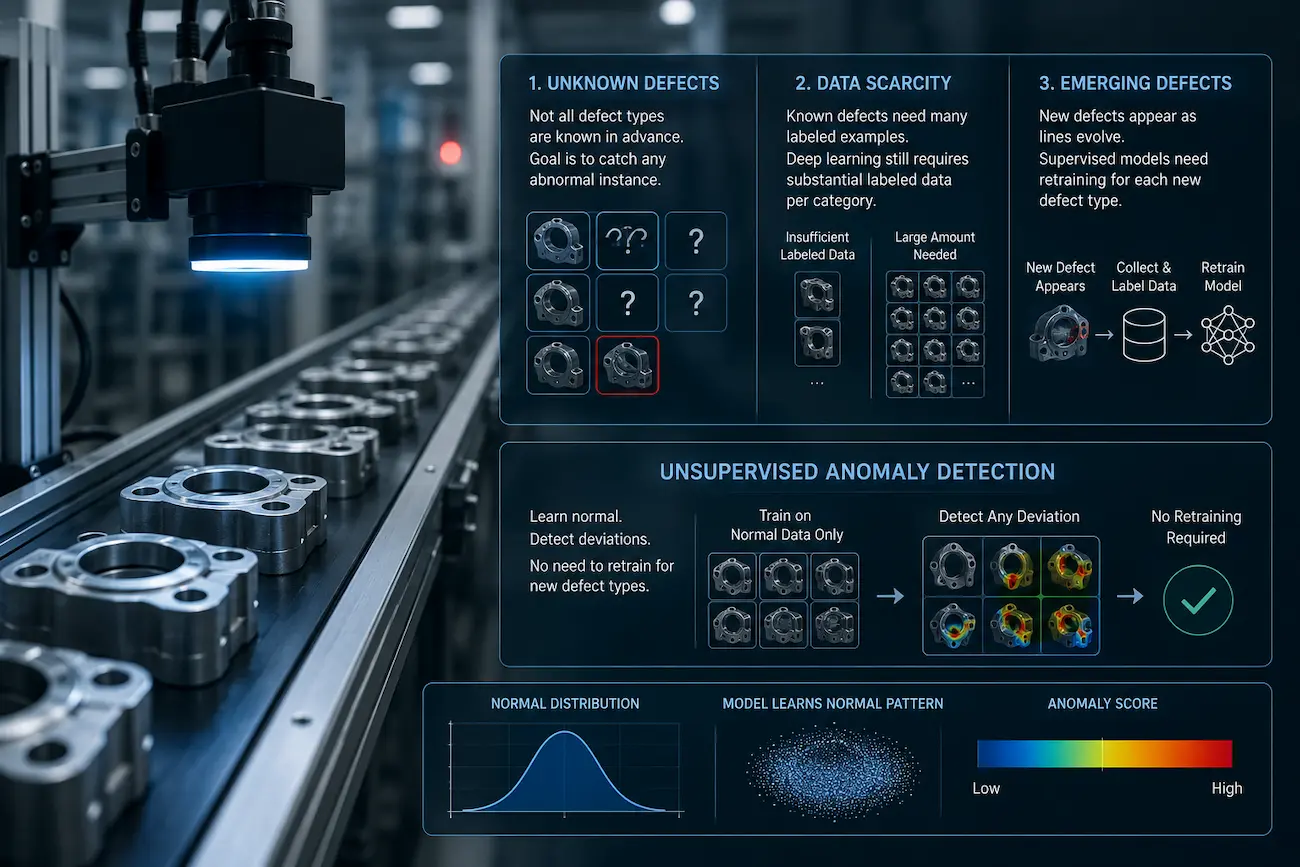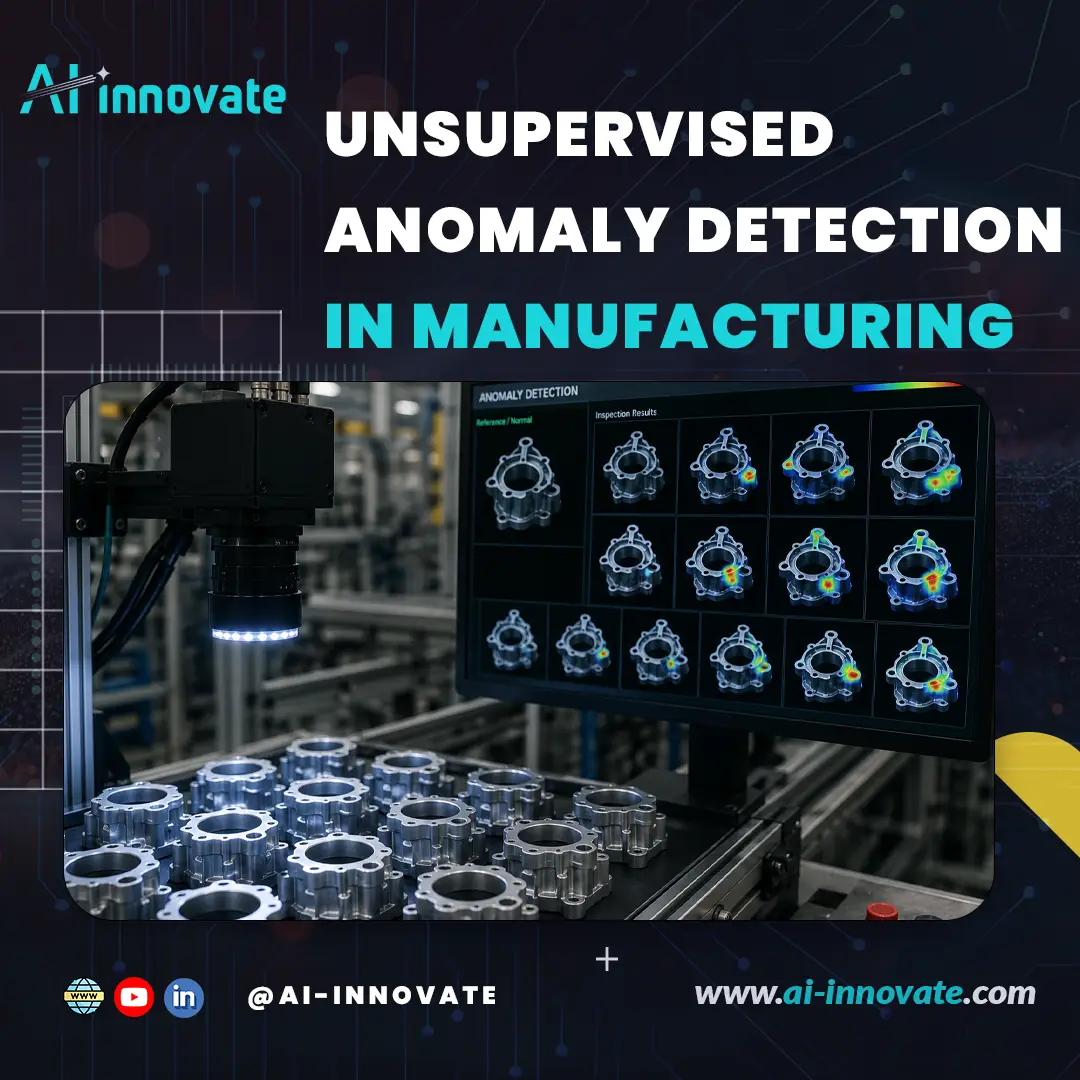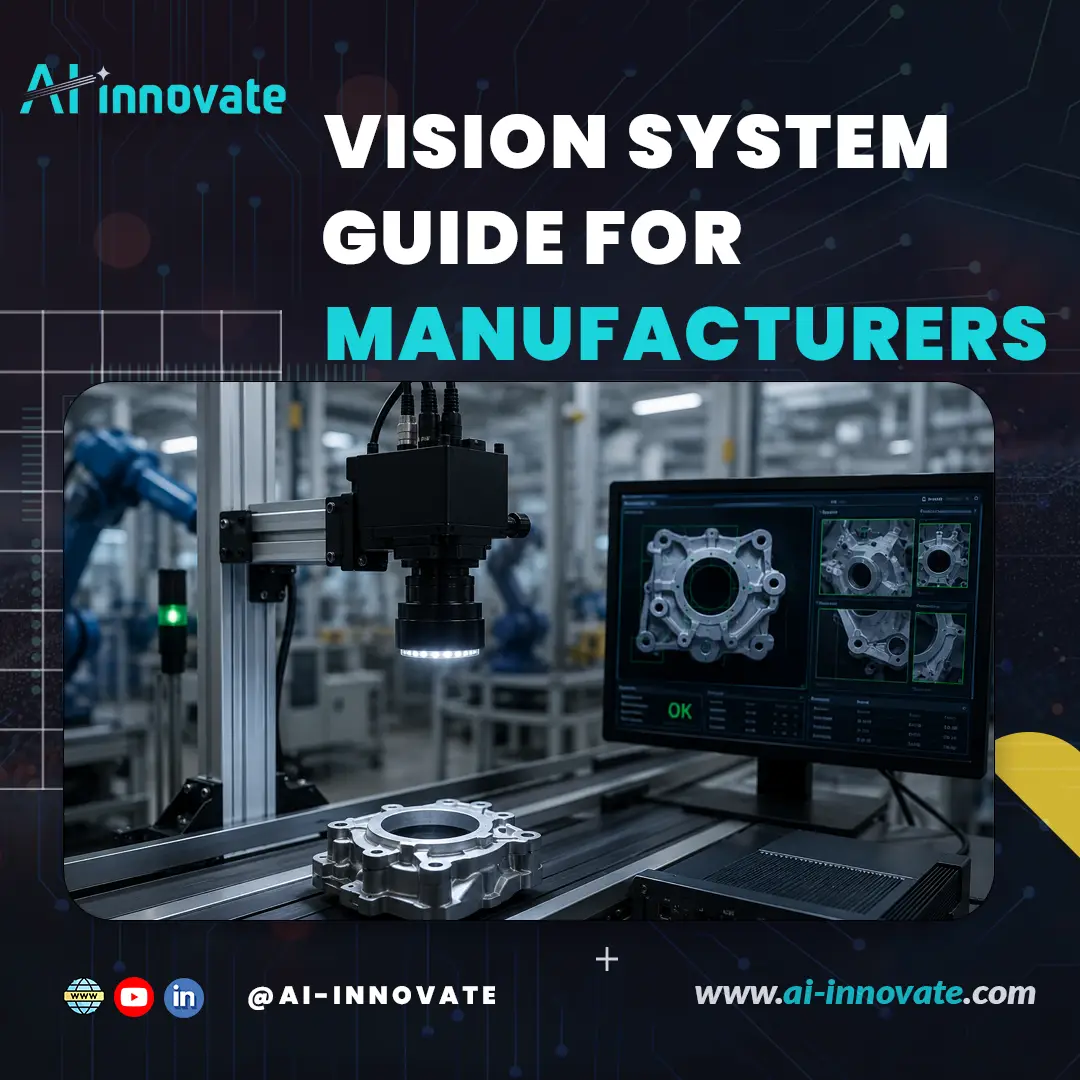





Artificial intelligence has transformed modern vision systems from simple image-processing tools into intelligent platforms capable of understanding visual information, identifying patterns, detecting anomalies, and supporting real-time decision-making.
At the center of this transformation is deep learning, a subset of AI that enables machines to learn directly from visual data rather than relying on manually programmed rules. Today, deep learning powers everything from autonomous vehicles and medical imaging to industrial automation and quality control.
In manufacturing environments, deep learning enables vision systems to detect defects, classify products, analyze complex scenes, and automate inspections with a level of accuracy that was previously difficult to achieve using traditional machine vision approaches.
This guide explores how deep learning works in AI vision systems, the technologies behind it, its most common applications, and why it has become one of the most important technologies driving modern computer vision.
Transform Industrial Inspection With Deep Learning and AI Vision
From automated visual inspection to real-time defect detection, learn how AI vision systems help manufacturers improve accuracy, scalability, and operational efficiency.

What Is Deep Learning in AI Vision Systems?
Deep learning in AI vision systems is a branch of artificial intelligence that uses neural networks to analyze images and video, identify patterns, classify objects, detect defects, and generate insights from visual data.
Unlike traditional machine vision systems that rely on predefined rules, deep learning models learn directly from examples. By training on large datasets, these systems can recognize complex visual features and adapt to variations in lighting, positioning, textures, backgrounds, and environmental conditions.
As a result, deep learning allows vision systems to perform tasks that were previously difficult or impossible to automate reliably.
Common applications include:
- Automated inspection
- Defect detection
- Object recognition
- OCR (Optical Character Recognition)
- Medical imaging
- Robotics
- Autonomous vehicles
- Industrial quality control
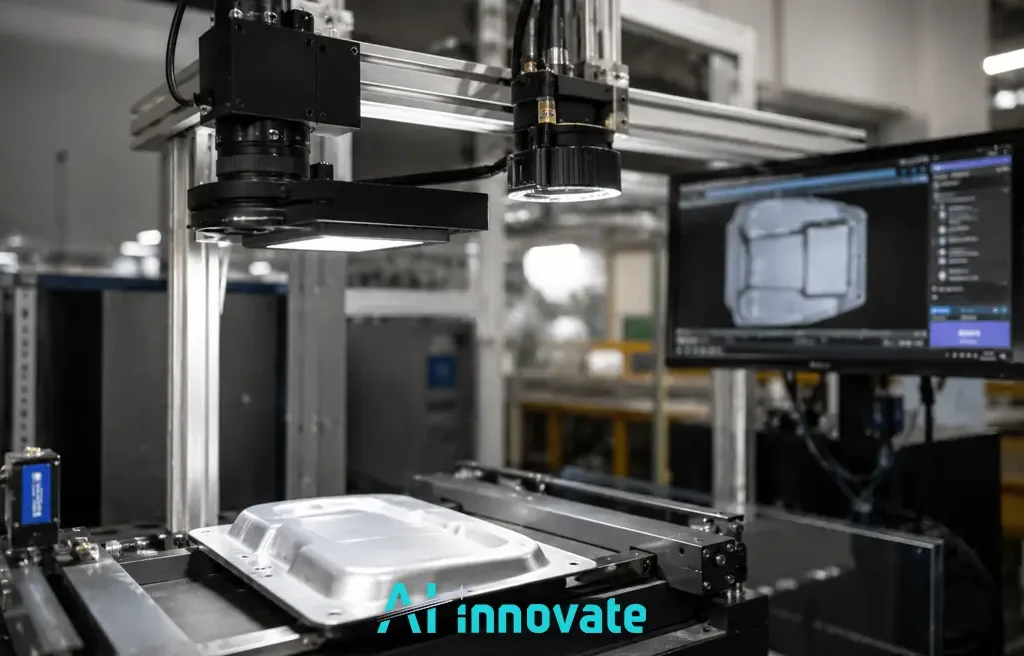
Why Deep Learning Is Transforming Computer Vision
Traditional machine vision systems perform best in highly controlled environments where inspection criteria remain consistent. However, real-world applications often involve unpredictable variables that are difficult to capture using rule-based programming.
Deep learning addresses these limitations by enabling systems to learn directly from data.
Key advantages include:
- Higher inspection accuracy
- Better adaptability to visual variations
- Reduced reliance on manual programming
- Improved scalability
- Faster deployment across new applications
- Continuous performance improvement through retraining
Because of these benefits, deep learning has become a foundational technology in modern computer vision systems.
Deep Learning vs Traditional Machine Vision
| Feature | Traditional Machine Vision | Deep Learning Vision Systems |
|---|---|---|
| Rule-Based Logic | Yes | No |
| Learns From Data | No | Yes |
| Adaptability | Limited | High |
| Handles Visual Variations | Limited | Excellent |
| Defect Detection Accuracy | Moderate | High |
| Scalability | Moderate | High |
| Maintenance Requirements | Higher | Lower |
| Real-World Performance | Moderate | Excellent |
Comparison of traditional machine vision and deep learning vision systems across adaptability, inspection accuracy, scalability, and real-world manufacturing performance.
For applications involving complex products, changing conditions, or subtle defects, deep learning often delivers significantly better results than traditional machine vision methods.
Core Deep Learning Techniques Used in AI Vision Systems
Different deep learning architectures are designed for different computer vision tasks. Selecting the right approach depends on the application’s requirements, available data, and performance goals.
Convolutional Neural Networks (CNNs)
Convolutional Neural Networks (CNNs) are among the most widely used deep learning architectures in computer vision.
CNNs automatically learn visual features such as:
- Edges
- Shapes
- Textures
- Patterns
- Surface characteristics
Because they excel at extracting information from images, CNNs are commonly used for:
- Image classification
- Defect detection
- OCR
- Medical imaging
- Product inspection
- Visual quality control
In manufacturing environments, CNNs frequently power automated visual inspection systems that inspect products at production-line speeds while maintaining high accuracy.
Object Detection and Localization
Object detection goes beyond image classification by identifying both the object and its location within an image.
These systems place bounding boxes around detected objects and classify them simultaneously.
Object detection is widely used in:
- Product inspection
- Warehouse automation
- Robotics
- Autonomous vehicles
- Security monitoring
- Inventory management
For industrial applications, object detection allows manufacturers to identify missing components, assembly errors, and product defects in real time.
Semantic and Instance Segmentation
Segmentation enables a computer vision system to understand an image at the pixel level.
Semantic Segmentation
For example, an image may be divided into:
- Metal surface
- Weld seam
- Background
- Product component
Instance Segmentation
Instance segmentation takes this process further by distinguishing between individual objects, even when they belong to the same category.
For example, multiple bottles on a production line can be identified separately rather than collectively.
Segmentation models are particularly valuable for surface defect detection applications where understanding the precise size and shape of a defect is critical.
Vision Transformers (ViTs)
Vision Transformers are a newer deep learning architecture inspired by transformer models originally developed for natural language processing.
Instead of analyzing images using convolution operations, Vision Transformers process images as collections of smaller patches and learn relationships across the entire image.
Benefits include:
- Strong contextual understanding
- Improved scalability
- Excellent performance on large datasets
- Compatibility with multimodal AI systems
Vision Transformers are increasingly used in advanced image classification, segmentation, and detection applications.
The Building Blocks of a Deep Learning Vision System
Successful AI vision systems rely on several interconnected components.
Image Acquisition
Every vision system begins with image capture.
Common imaging technologies include:
- Industrial cameras
- Line-scan cameras
- Thermal imaging systems
- 3D cameras
- Hyperspectral imaging systems
High-quality image acquisition is essential because model performance can never exceed the quality of the data being captured.
Data Preprocessing
Before images are analyzed, they are often preprocessed to improve consistency and model performance.
Typical preprocessing techniques include:
- Resizing
- Noise reduction
- Normalization
- Contrast enhancement
- Data formatting
These steps help ensure that visual information is presented consistently during both training and deployment.
Inference Engine
The inference engine is responsible for executing trained models and generating predictions.
Outputs may include:
- Classifications
- Bounding boxes
- Segmentation masks
- OCR results
- Defect alerts
In industrial applications, inference engines must often operate in real time to keep pace with production requirements.
Hardware Acceleration
Deep learning models require significant computational resources.
To support real-time performance, organizations commonly deploy:
- GPUs
- AI accelerators
- Edge AI devices
- Industrial computing platforms
These technologies enable high-speed visual analysis without compromising accuracy.
Where Deep Learning Creates the Most Value in Manufacturing
Manufacturing has become one of the largest adopters of AI-powered vision technology.
Modern vision systems help manufacturers improve quality, reduce waste, increase throughput, and automate complex inspection processes.
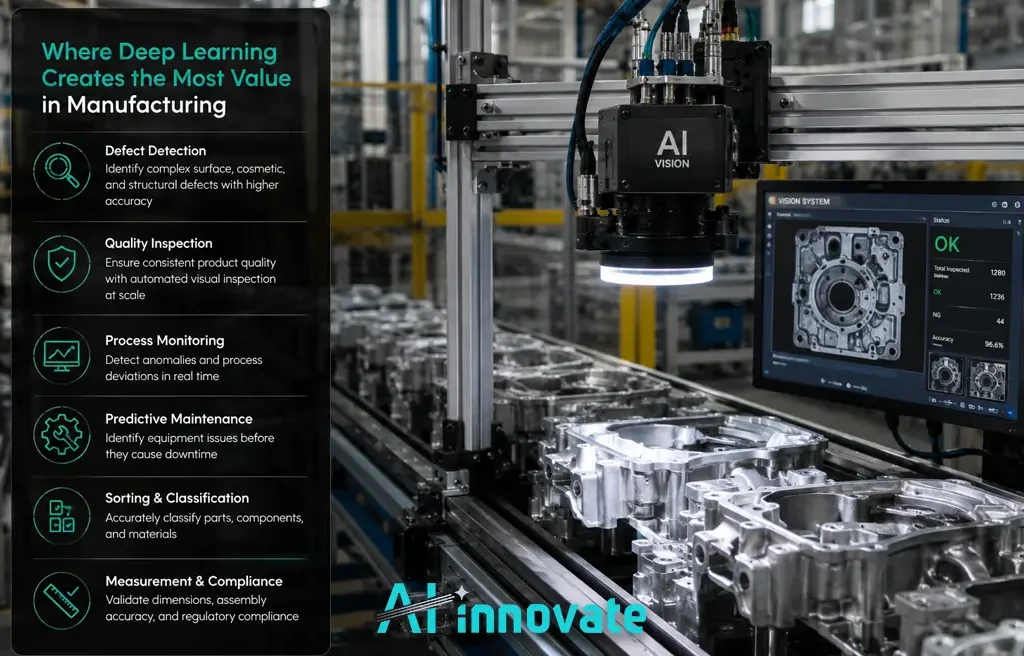
AI Defect Detection
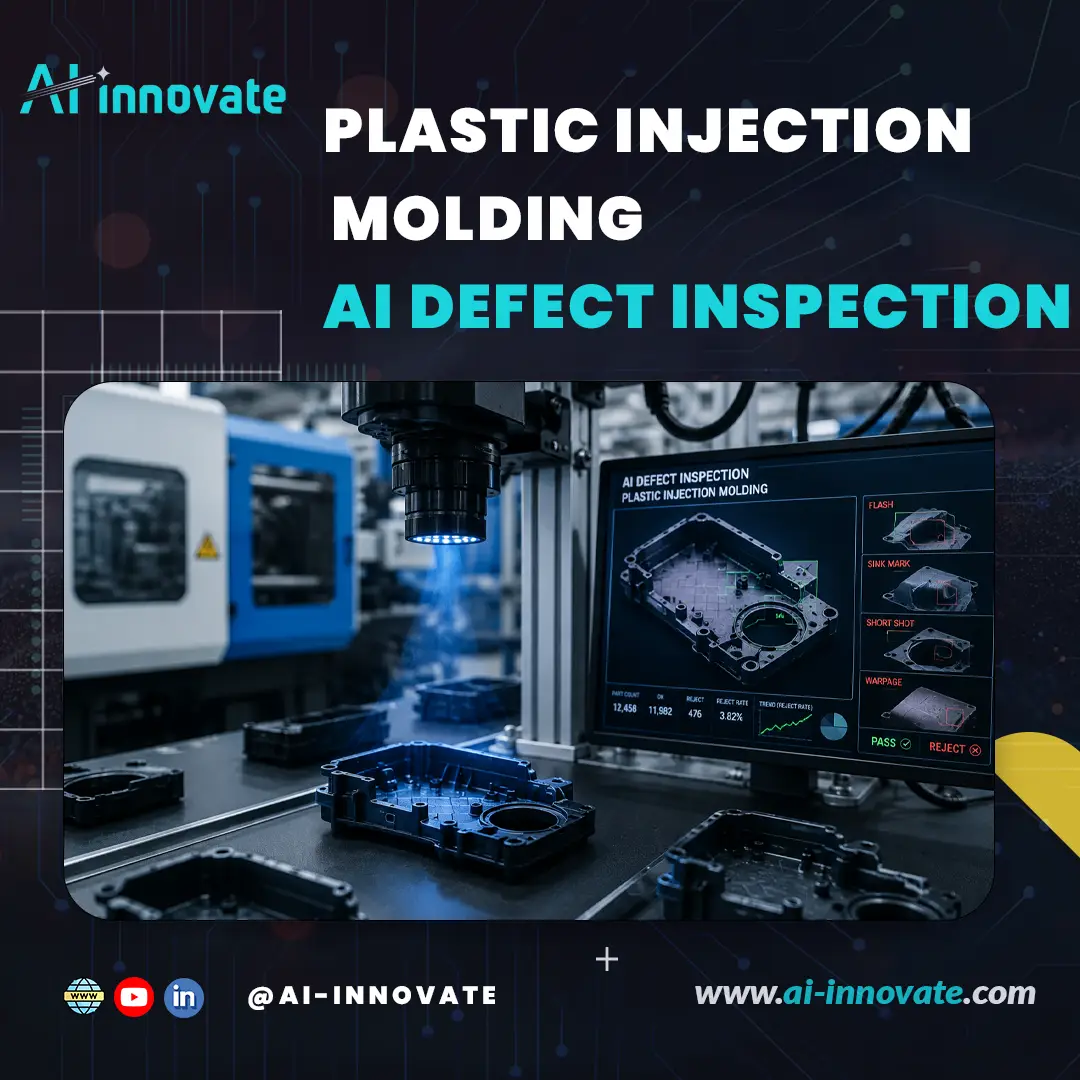
One of the most common applications of deep learning is AI defect detection.
Deep learning models can identify subtle defects that may be difficult for traditional rule-based systems or human inspectors to detect consistently.
Examples include:
- Scratches
- Cracks
- Porosity
- Surface contamination
- Missing components
- Assembly errors
- Structural anomalies
This capability allows manufacturers to improve product quality while reducing costly rework and scrap.
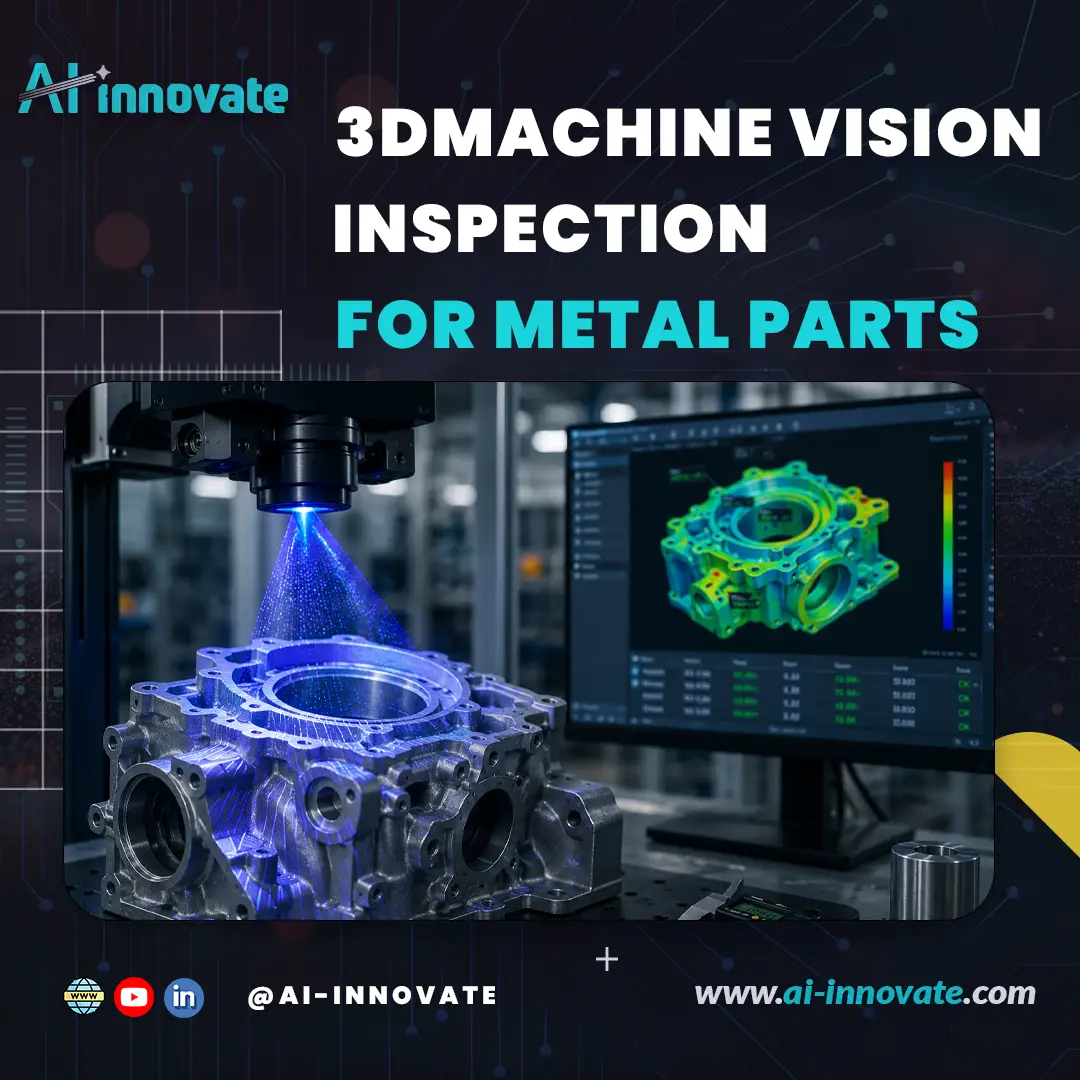
Surface Defect Detection
Surface quality is critical in many industries, including automotive, electronics, metal processing, and consumer goods manufacturing.
Deep learning systems can identify:
- Scratches
- Dents
- Cracks
- Discoloration
- Surface contamination
- Coating defects
Because these systems learn from examples, they can often detect subtle irregularities that are difficult to define using traditional inspection rules.
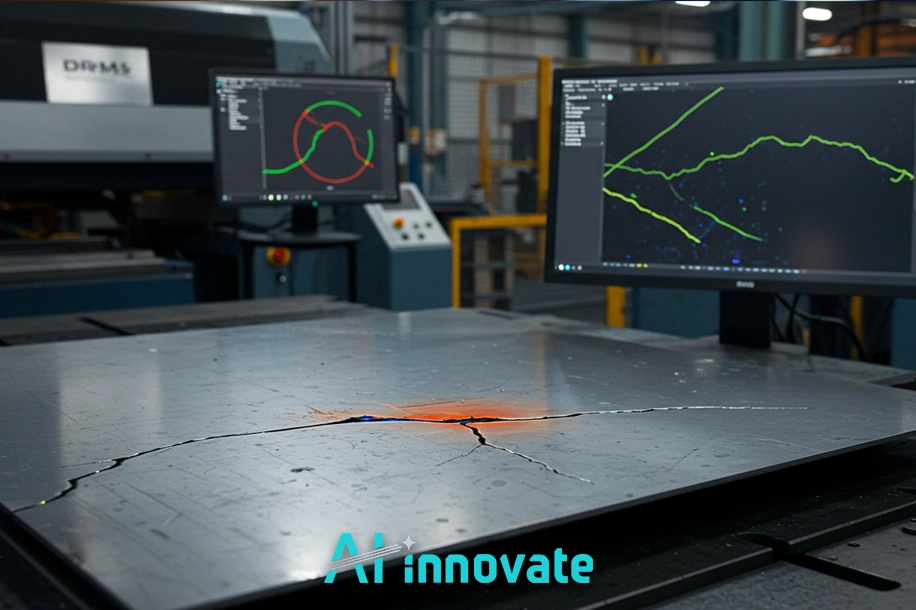
Weld Inspection
AI-powered vision systems are increasingly used for weld inspection and quality assurance.
Common weld defects that can be detected include:
- Porosity
- Cracks
- Undercut
- Incomplete fusion
- Penetration issues
By identifying defects earlier in the production process, manufacturers can reduce quality risks and improve compliance with industry standards.
PCB Inspection
In electronics manufacturing, deep learning helps identify:
- Missing components
- Solder defects
- Alignment issues
- Surface damage
- Manufacturing inconsistencies
These systems enable faster and more reliable quality control compared to manual inspection methods.
How AI-innovate Helps Manufacturers Deploy AI Vision Systems
Successfully implementing AI vision systems requires more than selecting the right neural network architecture.
Organizations must also address challenges related to data collection, model training, deployment, integration, scalability, and ongoing optimization.
At AI-innovate, we specialize in industrial AI vision solutions designed specifically for manufacturing environments where accuracy, reliability, and real-time performance are essential.
Our solutions support:
Automated visual inspection
AI-powered defect detection
Surface defect detection
Weld inspection
Production monitoring
Quality assurance automation
By combining deep learning expertise with practical manufacturing knowledge, we help organizations accelerate digital transformation initiatives while improving operational efficiency and product quality.
From Data Collection to Deployment: How AI Vision Systems Are Built
1. Data Acquisition
Collect representative images that reflect real production conditions.
2. Annotation
Label images using classifications, bounding boxes, segmentation masks, or OCR annotations.
3. Model Training
Train deep learning models using labeled datasets to learn meaningful visual patterns.
4. Evaluation
Measure performance using metrics such as:
- Accuracy
- Precision
- Recall
- F1 Score
- False Positive Rate
5. Deployment
Deploy trained models to edge devices, industrial computers, embedded systems, or cloud environments.
Conclusion
Deep learning has fundamentally changed how AI vision systems understand and analyze visual information. By enabling machines to learn directly from data, organizations can achieve higher inspection accuracy, greater flexibility, and more scalable automation than traditional machine vision approaches.
As computer vision technology continues to evolve, deep learning will remain one of the core technologies driving smarter inspection systems, intelligent automation, and next-generation industrial innovation.
Confused About Where to Start with AI?
Our specialists help you identify the right AI approach based on your process, data, and goals.
Sources
Ai-Innovate uses only high-quality sources, including peer-reviewed studies, to support the facts within our articles.
- Stanford CS231n. Convolutional Neural Networks (CNNs / ConvNets). Course notes from Stanford’s deep learning for vision class covering CNN layers, architecture, and core concepts behind modern image recognition. Retrieved from cs231n.github.io
- arXiv. (2015). Faster R-CNN: Towards Real-Time Object Detection with Region Proposal Networks. Introduces the Region Proposal Network (RPN) that made end-to-end object detection practical and near real-time. Retrieved from arxiv.org
- arXiv. (2014). Fully Convolutional Networks for Semantic Segmentation. Foundational paper showing how to adapt classification CNNs into pixel-wise prediction networks for semantic segmentation. Retrieved from arxiv.org
- arXiv. (2015). U-Net: Convolutional Networks for Biomedical Image Segmentation. Presents the encoder–decoder U-Net architecture with skip connections, now a standard for medical imaging and many segmentation tasks. Retrieved from arxiv.org
- arXiv. (2017). Mask R-CNN. Extends Faster R-CNN with a parallel mask-prediction branch, enabling accurate instance segmentation alongside detection. Retrieved from arxiv.org
- arXiv. (2020). An Image is Worth 16×16 Words: Transformers for Image Recognition at Scale. Introduces the Vision Transformer (ViT), applying pure transformer architectures directly to image patches and rivaling CNNs at scale. Retrieved from arxiv.org
Frequently Asked Questions
What is deep learning in computer vision?
Deep learning in computer vision uses neural networks to analyze images and video, enabling systems to recognize patterns, classify objects, detect defects, and automate visual decision-making.
What is the difference between deep learning and traditional machine vision?
Traditional machine vision relies on predefined rules, while deep learning learns patterns directly from data, making it more adaptable to complex real-world conditions.
Can deep learning detect manufacturing defects?
Yes. Deep learning models are widely used to identify scratches, cracks, porosity, contamination, assembly errors, and other quality issues in manufacturing environments.
What industries use AI vision systems?
Common industries include manufacturing, healthcare, automotive, logistics, electronics, agriculture, security, and robotics.
Are CNNs still relevant in 2026?
Yes. CNNs remain one of the most widely used architectures for industrial inspection, defect detection, and image classification tasks.
What are Vision Transformers?
Vision Transformers are deep learning models that analyze images using transformer-based architectures, enabling strong contextual understanding and high performance on large datasets.
Can deep learning models run on edge devices?
Yes. Many modern AI vision systems deploy optimized models on edge devices to enable real-time processing without relying on cloud connectivity.
How much data is needed to train a vision model?
The required amount varies by application. While large datasets are beneficial, transfer learning often reduces the amount of custom training data needed.