Find Quality
Problems Earlier on
Your Production
Line

Textile quality problems do not always become visible where they begin.

An irregularity in yarn can appear later in woven or knitted material. A weaving defect can become easier to see after dyeing or finishing. A print or surface issue can be identified only after more time and processing have already been added to the product.

AI-Innovate starts from the production problem.

Before selecting technology, we define:

  • what you manufacture,
  • what needs to be detected,
  • where the issue becomes visible,
  • how the material moves,
  • and what equipment is already in place.

Whether you work with yarn, woven or knitted fabrics, dyeing and finishing, textile printing, silk, delicate materials or specialty textiles, the first question is not:

Which AI product should we install?

IT IS:

What are you trying to inspect, and can it be observed reliably under real production conditions?

You do not need to choose a camera, AI model or AI-Innovate product before contacting us. Start with the material, the quality problem and the production stage.

Find Defects at the Right Point in
Production

01 / TIMING

When Defects Become Visible Too Late

A quality issue can originate in one stage and become visible only later. By that point, additional processing may already have been applied to the material. A useful inspection system should identify where the issue can be observed reliably and where detection can still support a useful production decision.

02 / ATTENTION

The Challenge of Continuous Inspection

Experienced operators remain essential to textile quality control. But continuously monitoring a moving surface for small, repetitive or low-contrast defects is different from making complex quality decisions. Automated inspection supports operators by continuously monitoring the material and flagging, recording or routing suspicious conditions for review.

03 / VARIATION

Inspection Across Changing Products and Materials

Textile manufacturers often work across different products and runs. A system designed around one highly consistent product does not represent a high-mix production environment. The inspection approach needs to be designed around the actual variation in your production.

Colours • textures • patterns • materials • batches • production runs
04 / IMAGING

Defects Depend on the Right Imaging Conditions

A hole is straightforward to see. A subtle texture change, a defect on a reflective textile, a transparent silk material or a small shade difference is not. Before AI can classify a defect, the imaging system first needs to reveal it consistently.

Lighting • optics • background • imaging geometry
05 / EXISTING SYSTEM

Use the Inspection Equipment You Already Have

Existing cameras, PLCs, machines or inspection components do not need to be replaced by default. The right engineering approach is to identify what limits inspection and improve that part first.

Lighting • imaging • processing • detection logic • sensing • integration
06 / MEASUREMENT

Not Every Quality Problem Is Visual

Some textile quality characteristics are not primarily visual. Strength, moisture and certain material properties require dedicated measurement or sensing methods. If the condition cannot be observed reliably, adding an AI camera does not solve the underlying problem. The first engineering question is:

What actually needs to be observed or measured?

See where inspection fits in
your textile process

Trace where a defect is created, where it becomes visible and where inspection can still trigger a useful decision.

Yarn

Irregularity created

Weaving / Knitting

Structure reveals variation

Dyeing

Shade and surface change

Printing

Pattern alignment inspected

Finishing

Final surface checkpoint

Defect created
Defect revealed
Inspection checkpoint

How Inspection Problems Affect Quality and Operations

What This Means for Quality Leaders

The impact of a textile defect does not stop at the defect itself. When inspection is inconsistent or a problem is detected late, quality teams lose confidence in inspection results, traceability becomes harder, and corrective action starts with less reliable evidence. In one production study of woven polyester/cotton fabrics, weaving and surface defects accounted for 78.57% of all recorded defects in one fabric group and 69.09% in the other. The same study reported second-quality output of 4.9% and 2.75%, respectively. These are case-specific results, not universal textile benchmarks, but they show how surface defects can translate into downgraded output and weaker quality consistency when they are not controlled early. For Quality Leaders, the priority is consistent inspection, fewer quality escapes, stronger traceability, reliable operator review, and evidence that supports corrective action.

→ Explore how AI-Innovate supports Quality Leaders

Source note: Kalkan, M. (2020), "Investigation of surface defects and apparel manufacturing efficiency of fabrics woven from recycled cotton and blends," Industria Textila, 71(3), 266–274. DOI: 10.35530/IT.071.03.1639.

What This Means for Operations Leaders

For operations teams, the same quality problems appear as lost yield, rework, scrap, additional inspection effort, missed production targets, and pressure on margin. In a textile-manufacturing cost-of-quality case study covering weaving, dyeing, printing and stitching, the total cost of quality was measured at 6.8% of sales. The study identified production loss from missed targets as a major driver of internal failure cost; after lean and sustainable improvement initiatives, total cost of quality was reduced to 4.5% of sales. These figures belong to one manufacturer and are not an industry-wide benchmark, but they show why quality problems are also an operations problem: capacity and labour are consumed by failure, rework and recovery instead of acceptable production. For Operations Leaders, the focus is throughput, yield, scrap, rework, inspection labour, downtime and margin.

→ Explore the AI-Innovate approach for Operations Leaders

Source note: Yasin, M. R., Bashir, M. N., & Zaidi, S. A. A. (2019), "A case study in the textile industry for the reduction of cost of quality," Journal of Advances in Technology and Engineering Research, 5(6), 219–230. DOI: 10.20474/jater-5.6.1.

How AI-Innovate Addresses These Textile
Inspection Challenges

Once the production and business impact is clear, the next step is to choose the inspection path around the actual

constraint—not to start from a product. AI-Innovate connects each textile inspection problem to the appropriate

Solution first, then introduces the Products that enable that Solution.

Build the Inspection Around the Production Problem

01 / AUTOMATE

Automate AI Visual Inspection

Use this path when the quality issue is visually observable, inspection is largely manual and continuous monitoring is required.

→ Explore Automated Visual Inspection
02 / UPGRADE

Upgrade Existing Inspection Systems

Use this path when cameras, PLCs or inspection infrastructure already exist and the limitation is in lighting, imaging, processing, detection or integration.

→ Assess Your Existing Inspection System
03 / MONITOR

Monitor & Manage Quality Performance

Use this path when inspection data needs to support:

  • trend monitoring
  • batch or shift comparison
  • traceability
  • event review
  • quality reporting
→ Explore Quality Performance Monitoring
04 / CUSTOM

Build a Custom Solution

Use this path for:

  • unusual materials
  • fine defects
  • high product variation
  • complex imaging conditions
  • multi-camera or multi-sensor inspection
  • specialised integration requirements
→ Explore Custom Inspection Engineering

Choose Technology After the Inspection Need Is Clear

2D AUTOMATED VISUAL INSPECTION

AIxEye

AIxEye is used for:

  • visible surface defects
  • continuous web inspection
  • woven and knitted fabric inspection
  • print and pattern inspection
  • sorting
  • inspection traceability
→ Explore 2D Visual Inspection with AIxEye
ENGINEERED MACHINE VISION LIGHTING

AIxLight

AIxLight is used where defect visibility and contrast are limited by the imaging environment. It supports:

  • low-contrast defects
  • reflective materials
  • variable textures
  • difficult illumination conditions
→ See How Engineered Lighting Supports Defect Visibility
INDUSTRIAL EDGE AI PROCESSING

AIxCore

AIxCore provides on-site AI processing and connectivity to cameras, sensors, PLCs, MES and automation infrastructure. It is used where inspection results need to connect directly to production systems.

→ Explore Industrial Edge Processing with AIxCore
QUALITY INTELLIGENCE

AIxInsight

AIxInsight turns inspection records into:

  • quality monitoring and trends
  • configurable dashboards and alerts
  • operator review
  • line, shift, SKU and batch comparisons
  • reporting and traceability
→ Explore Quality Trend Monitoring with AIxInsight
DEFECT INVESTIGATION

AIxCause

INVESTIGATION CONTEXT

Connect recurring defects to production context

AIxCause combines inspection data with machine, process, material, environmental and production context to support investigation of recurring defects.

Important: Correlation does not prove root cause. Engineering or human validation is required.
→ Explore Defect Investigation with AIxCause

Where Does the Problem Appear in Your Process?

Inspection Changes Across Textile Processes. The requirement for yarn is different from woven fabric, printing or finishing. Each stage needs the imaging, sensing and decision architecture that matches the actual quality problem.

Yarn and thread textile production

Yarn & Thread

Inspection requirements include: foreign fibres and visible contamination • visible irregularities • thick or thin areas • neps • hairiness • diameter variation

For yarn, the first task is to define whether the requirement is:

optical inspection - dedicated measurement - specialised sensing

Inspection approach: Application Assessment → Define the required sensing and imaging method

→ Discuss a Yarn Inspection Application
Woven fabric textile inspection

Woven Fabrics

Inspection targets include: broken ends • missing or broken picks • holes • floats • stains • visible weave irregularities

Visible 2D woven defects are inspected through controlled imaging and automated visual inspection. Inspection approach:

AIxEye + Engineered Imaging

AIxLight is added where visibility and contrast limit reliable capture.

→ Explore 2D Visual Inspection with AIxEye
Knitted fabric textile inspection

Knitted Fabrics

Inspection targets include: holes • dropped stitches • missing yarn • needle lines • visible slubs • contamination • barré

Visible knitted defects are handled through automated visual inspection. Where the quality issue repeats across batches, machines or production conditions, inspection data is carried into monitoring and investigation. Inspection approach:

Automated Inspection → Quality Monitoring → Investigation
→ Explore Automated Visual Inspection
Textile dyeing and finishing inspection

Dyeing & Finishing

Inspection targets include: shade inconsistency • streaks • bands • spots • stains • visible finishing variation

Colour and appearance inspection requires:

• controlled lighting - calibration - a defined acceptance condition - repeatable imaging.

The system is designed around those controls before any decision logic is applied. Inspection approach: Controlled Optical Inspection + Defined Acceptance Criteria

→ Discuss a Custom Inspection Application
Textile printing inspection

Textile Printing

Inspection targets include: print misregistration • missing colour • missing print areas • pattern distortion • banding • spots • print inconsistency

Print and pattern inspection starts with controlled image capture, stable alignment and defect definition. Inspection approach:

AIxEye + Application-Specific Imaging
→ Explore Automated Visual Inspection
Silk and delicate fabric inspection

Silk & Delicate Fabrics

The process begins with: representative samples • controlled lighting • background selection • optics • defect visibility testing

Inspection requirements for transparent, reflective, fine or low-contrast textiles are defined by imaging conditions first. Only after the defect is consistently visible is the system defined. Inspection approach:

Sample-Based Imaging Assessment → System Design
→ Start Smart Demo
Technical and specialty textile inspection

Technical & Specialty Textiles

Inspection targets include: local surface anomalies • web uniformity • distribution irregularities • repeating visible defects

The first step is to define whether the requirement is visual inspection or another measurement method. Inspection approach:

Application-Specific Inspection Assessment
→ Discuss Your Inspection Requirement

What Quality Problem Are You Inspecting?

Start with the Quality Problem, Not the Technology

Surface defects

Surface defects

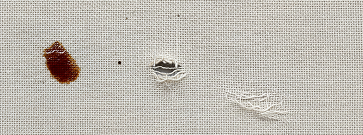
Holes, stains, missing threads and visible surface irregularities.

Print and pattern defects

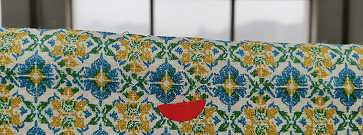
Print & pattern defects

Misregistration, missing regions, distortion and pattern inconsistency.

Visible contamination

Visible contamination

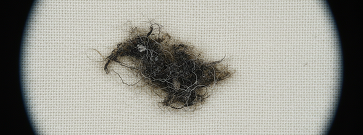
Foreign fibres or material visually distinct from the expected product.

Colour and appearance variation

Colour & appearance variation

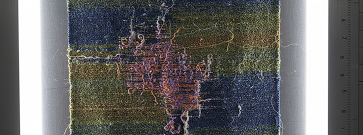
Visible shade, streak and finishing differences under controlled imaging conditions.

Difficult-to-see defects

Difficult-to-see defects

Low-contrast conditions on reflective, transparent, textured or visually complex materials.

Non-visual quality characteristics

Non-visual quality characteristics

Strength, moisture, chemistry and material properties that require dedicated measurement or sensing.

Can This Inspection Be Automated?

Five Questions That Define Inspection Feasibility

1. Can the condition actually be observed?

If a laboratory or physical test is required to identify the problem, conventional imaging is not the correct measurement method.

2. When does the problem become visible?

During: yarn production - weaving - knitting - dyeing - printing - or finishing? The best inspection point is the stage where the issue becomes observable and actionable.

3. How does the material move?

Line speed, web width, defect size and required resolution define the imaging and processing architecture.

4. How much does appearance change between products?

Material, colour, pattern, texture, reflectivity and transparency need to be included in the inspection design.

5. What equipment already exists?

Existing cameras, PLCs, machines and automation infrastructure are assessed before replacement is considered.

Start with Representative Product Images

Smart Demo provides an initial image-based feasibility screening before a complete inspection project is defined. It is not connected to your production line and does not guarantee production performance.

1. Upload
2. Initial Screening
3. Next Step

Built for Smaller and Existing Production Lines

Improve inspection without rebuilding your entire production line.

The architecture needs to fit existing equipment, installation space, changing products, short production runs, integration requirements and phased implementation.

Industrial inspection system for an existing production line

AI-Innovate starts with three questions:

What can we keep?
What is limiting inspection?
What needs to change?

The result is an inspection architecture based on:

Upgrade
Automate
Custom Engineering

The objective is not to add the maximum amount of technology.
The objective is to build the right inspection architecture for the actual production problem.

Request a System Assessment

Start with the Defect, Not the Equipment

You do not need to define the final system before evaluating the application. Start with the material, the defect, the production stage and representative images. Smart Demo provides the first image-based screening step.

01

Provide representative images

02

Screen the inspection problem

03

Review feasibility

04

Define the next engineering step

Next step: Full Demo • Technical Assessment • Pilot • Technical Consultation

Start Smart Demo

Tell us what you are trying to inspect

You do not need to select a camera, an AI model, or an AI-Innovate product before contacting us.

Start with four things:

What do you manufacture?
What quality issue are you trying to detect?
Where does it occur or become visible?
How do you inspect it today?
We start from there.

Textile inspection, imaging and Smart Demo

01
Can AI inspect every type of textile defect?
No. Visible surface, pattern and appearance defects are evaluated through machine vision. Non-visual quality characteristics require dedicated sensing, measurement or laboratory testing. First define what needs to be observed or measured.
02
Can AI inspection be used for both yarn and fabric?
Yes, but the method is different. For yarn, define whether the requirement is optical inspection, dedicated measurement or specialised sensing. Visible fabric defects use controlled imaging and automated visual inspection.
03
Can one inspection system handle different fabrics, colours and patterns?
The system is designed around the actual range of product variation, including colour, texture, pattern, material, batch and production-run changes.
04
Do we need to replace our existing cameras or inspection equipment?
No. Existing cameras, PLCs, machines and inspection components are assessed first. Replacement is considered only where a current component limits imaging, processing, detection, sensing or integration.
05
Can textile defects be inspected while the material is moving?
Yes, when the defect is visually observable and imaging is designed around line speed, web width, defect size, resolution, lighting and processing requirements.
06
What about silk, transparent or reflective fabrics?
These materials are evaluated with representative samples under controlled imaging conditions. Lighting, background, optics and defect visibility are established before system design.
07
Can AI detect colour or shade variation?
Colour and appearance inspection requires controlled lighting, calibration and a defined acceptance condition before colour-related decisions are automated.
08
Can AI identify the root cause of a recurring textile defect?
AI inspection detects, records and trends defect events. AIxInsight and AIxCause connect inspection data with machine, material, environmental and process information. Correlation is not proof of root cause and requires engineering or human validation.
09
What do we need to start a Smart Demo?
Provide representative product images. Where available, include acceptable examples, examples showing the quality issue, material information, production stage and a short defect description.
10
What happens after Smart Demo?
The next step is selected from Full Demo, Technical Assessment, Pilot or Technical Consultation. Not every project needs every stage.

Shopping Basket