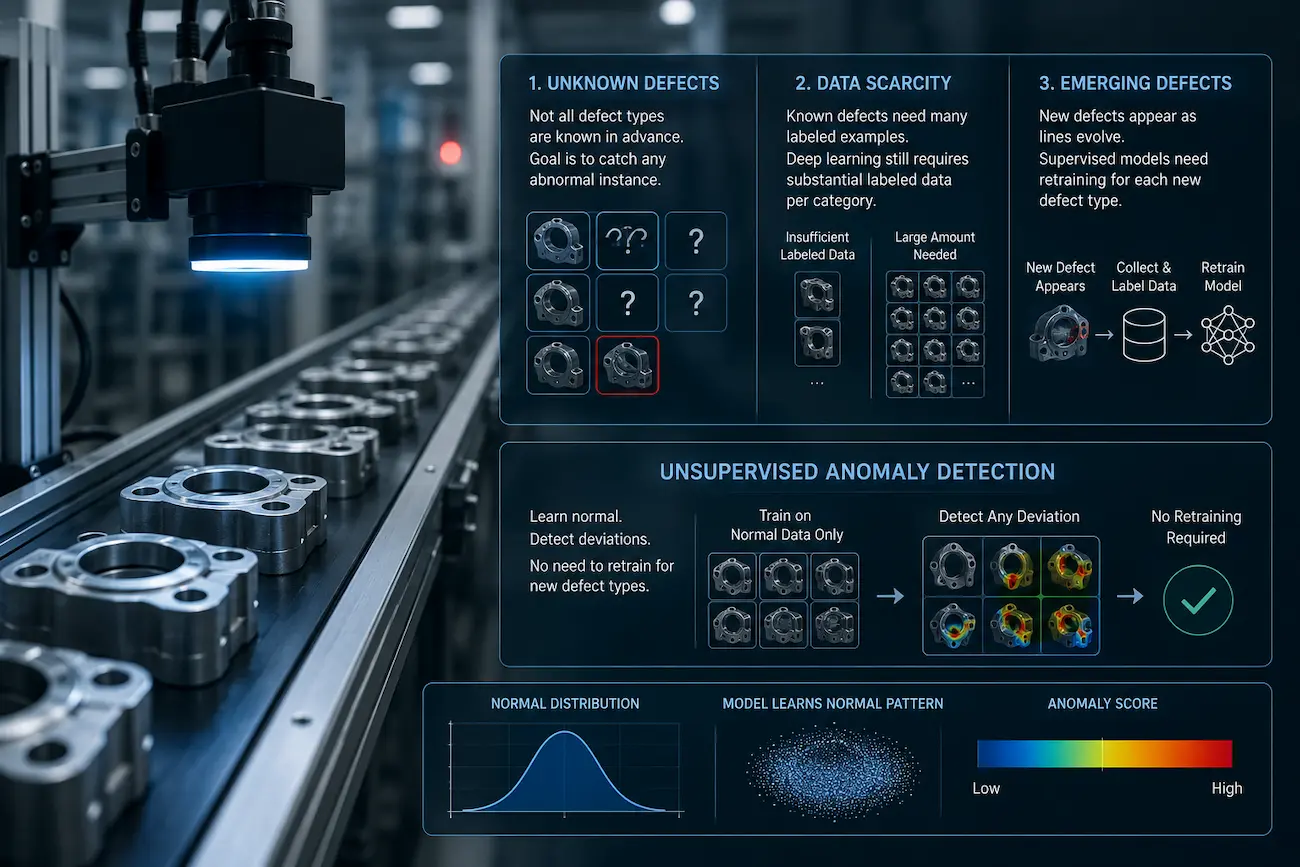





Reflective surfaces are used everywhere in our life if we pay attention. Polished metal panels, coated components, glass, and high-gloss finishes are all possible because of their performance and appearance. However, this reflectiveness causes trouble in defect detection in manufacturing. Detecting defects on reflective materials is far more complex than on matte surfaces, and without the right inspection approach, defects can be missed or misclassified. In this blog, we’ll explore the key challenges of surface defect detection of reflective surfaces and how to overcome them, the common defects, and the role of AI as a solution.
Catch Every Crack , & Deformation
High-speed detection of metal flaws in real-time.

Common Defects Found on Reflective Surfaces
Defects on reflective surfaces are often subtle and inconsistent in appearance. Some of them are harder to notice than others since they might only be visible when light hits the surface at a specific angle, or they might become invisible by blending with reflections. Some defects that commonly appear on reflective surfaces include:
- Scratches and micro-scratches
- Dents and surface distortionStains and residue
- Uneven finishes
- Discoloration
- Bubbles
- Peeling
Key Challenges in Inspection of Reflective Surfaces
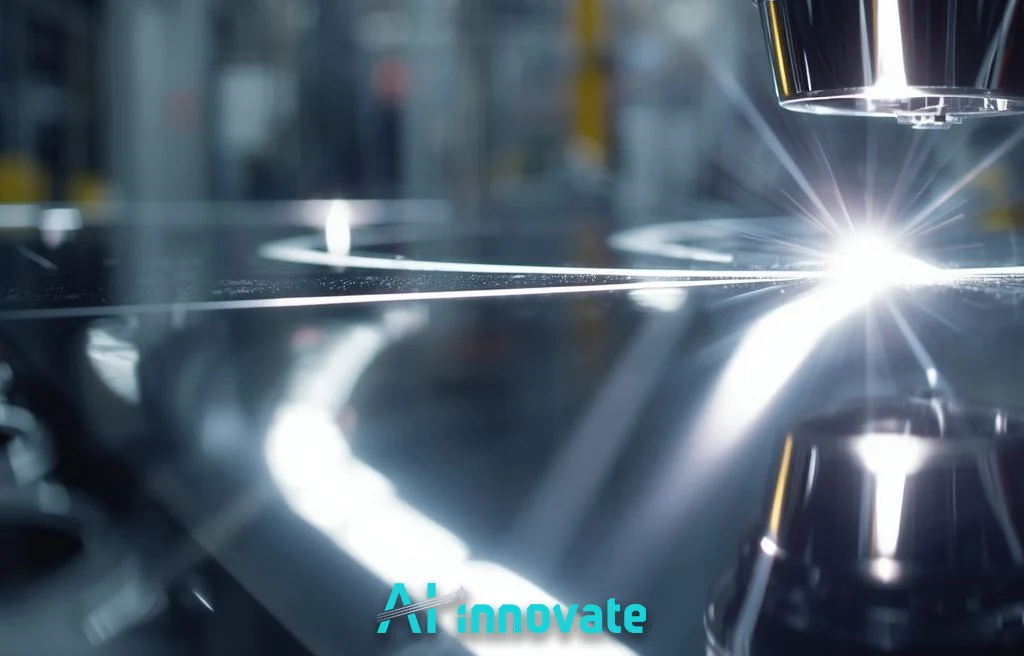
The most central problem in inspecting reflective surfaces and metal defect detection is light. Reflections can hide real defects or create false indications that look like damage. Highly reflective materials tend to bounce light directly back toward cameras or inspectors, creating:
- Glare
- Hotspots
- Mirror-like reflections
Another problem is inconsistency. A defect may be clearly visible from one angle but completely invisible from another. On busy production lines, there’s often not much time to take lots of images or change how things are checked.
The defects are also hard to spot because the defects and the surface around them have a similar colour. This makes it harder for traditional vision systems that use fixed thresholds or rules to spot the problems.
Environmental factors add to the problem. Small changes in lighting, vibration, dust, or temperature can affect inspection accuracy.
Best Solution to Challenges in Detecting Defects on Reflective Surfaces
To deal with these challenges, manufacturers usually start by improving the physical inspection setup. The lighting has been carefully designed to reduce glare and make it easier to see defects. You can use different types of lighting to help control reflections and reveal surface irregularities. These different types of lighting include diffuse, polarised and angled lighting.
Using advanced imaging techniques, like taking pictures from different angles, can make it even more reliable. But hardware alone is rarely enough. This is where AI-based inspection systems are very useful.
AI-driven quality control systems don’t just rely on fixed rules. Instead, they learn from large sets of real production images to understand what acceptable surfaces look like and how defects differ from normal reflections. Over time, these systems get better at spotting real defects and ignoring things that are just part of how the material looks, like how the light hits it or how it’s made. This makes AI especially good at automatically checking reflective materials at high speeds.
In general, the best solutions are:
- AI defect detection and AI-driven quality control
- Optimal setups
- Using different lightings including diffuse, polarised and angled lighting
- Advanced imaging techniques
- Read Also:
Remaining Challenges Even With AI
Even though there have been improvements, AI isn’t a complete solution on its own. It’s very important to have good training data, and it can take a lot of time and be subjective to collect and label defect data on reflective surfaces. New materials, coatings, or finishes may need new models or training to keep things accurate.
Integration is another ongoing challenge. AI inspection systems must be able to work reliably with the production equipment, automation systems and workflows that are already in place. There’s also a balance to maintain between how accurate inspections are and how well they perform in real-time, particularly in environments where a lot of inspections are done quickly and delays aren’t acceptable.
How AI-innovate Supports Defect Detection on Reflective Surfaces
AI-innovate supports manufacturers dealing with reflective materials by providing AI-driven inspection products designed to handle glare, variable reflections, and subtle surface defects. Our product ecosystem helps with:
- AI-based defect detection on reflective and high-gloss surfaces using AI2Eye, which applies deep-learning vision models to distinguish true defects from lighting artifacts and reflections
- Data generation, simulation, and validation through AI2Cam, enabling robust model training when collecting and labeling defect data on reflective surfaces is difficult
- Scalable deployment and system integration powered by AIxCore, allowing AI inspection workflows to integrate with existing cameras, lighting setups, and production equipment
- Real-time inspection feedback and quality monitoring, helping manufacturers maintain accuracy and consistency even at high production speeds
Whether you’re inspecting polished metals, coated components, glass, or other reflective materials, AI-innovate’s products help manufacturers apply AI defect detection with greater reliability, adaptability, and seamless integration into existing quality control processes.
Conclusion
Finding defects on reflective surfaces is still one of the most difficult problems in industrial quality control. It’s hard for human inspectors and traditional vision systems to see because of glare, low contrast and changing surface appearance.
While using AI for inspection has made things more consistent and adaptable, I believe the best results come from a balanced approach that includes proper lighting, good system design and well-trained models.
Sources
Ai-Innovate uses only high-quality sources, including peer-reviewed studies, to support the facts within our articles.
- ScienceDirect / Elsevier. (2025). Highly Reflective Metal Industrial Parts Surface Detection with Polarization Vision and Modified YOLO. Describes a vision system that uses polarization imaging and an enhanced YOLO model to improve defect detection accuracy on shiny, reflective metal parts—overcoming glare challenges common in industrial inspection. Retrieved from https://www.sciencedirect.com/science/article/abs/pii/S105120042500260X (scienceDirect.com)
- MDPI Photonics. (2023). Laser and Photonic Systems for Surface Inspection (Volume 12, Issue 4). Covers advances in optical technologies and photonics used for high-resolution surface inspection, including laser-based systems that can enhance subtle defect visibility in manufacturing contexts. Retrieved from https://www.mdpi.com/2304-6732/12/4/368
- Wiley Online Library. (2020). Real-Time Surface Inspection Using Vision Systems. Explores early foundational work on integrating vision systems in real-time surface inspection, highlighting algorithms that enable rapid detection of surface flaws on industrial products. Retrieved from https://onlinelibrary.wiley.com/doi/10.1155/2020/1837528
- PEKAT VISION. (2025). Defect Detection on Reflective Surfaces. Discusses the challenges of inspecting glossy and reflective materials in industrial settings and shows how patterned illumination combined with AI-driven vision software can significantly improve defect visibility. Retrieved from https://www.pekatvision.com/defect-detection-on-reflective-surfaces (pekatvision.com)
FAQ
Why can’t standard industrial lighting detect defects on shiny parts?
Standard “flood” or uniform lighting reflects directly back into the camera, creating large saturated “white-out” areas (glare) that mask surface details. Because reflective surfaces act like mirrors, they also reflect the factory environment (overhead lights, cables, personnel), which machine vision algorithms may mistake for surface flaws.
Can AI distinguish between a reflection and a real scratch?
Yes. Modern AI models are trained on diverse datasets that include “acceptable variations” like reflections and shadows. In 2025, systems often use multi-angle image fusion, where the AI compares several images of the same part taken from different lighting angles to “cancel out” moving reflections while keeping static defects visible.
How does surface curvature (like a bearing or car door) affect detection?
Curvature is a “major challenge” because it constantly changes the angle of reflection across a single image. This requires sophisticated setups, such as robotic arms that move the camera/light in a synchronized path or dome lighting that provides 360-degree diffused illumination to minimize hot spots on uneven geometries.
Confused About Where to Start with AI?
Our specialists help you identify the right AI approach based on your process, data, and goals.