




What if you could predict a system failure weeks in advance or eliminate an entire class of product defects permanently? These outcomes are no longer theoretical. The limitations of manual inspection have historically capped operational efficiency, but a smarter approach is now available. Strategic implementation of AI to Thermal Quality Inspections directly addresses these challenges by automating oversight and catching anomalies the human eye misses. At AI-innovate, our mission is to deliver these tangible results, boosting your ROI through intelligent, proactive quality assurance.

What human eye can’t see?
The human eye is remarkable, but it is not engineered for industrial quality control. Manual inspection is inherently limited by factors that technology can easily overcome. Inspectors face fatigue, which leads to inconsistent results and subjective judgments.
Most importantly, our eyes can only perceive a fraction of the electromagnetic spectrum. We cannot see the subtle thermal variations that often serve as the earliest indicators of a problem. These limitations lead to critical failures in quality inspection. For instance:
- Microscopic Defects: Cracks or weaknesses in materials may not be visible but often create distinct heat patterns under stress.
- Electrical Faults: Overheating components are a primary sign of malfunction, a phenomenon entirely invisible to the naked eye. Such issues are significant, with electrical failures accounting for roughly 24% of all industrial fires.
- Inconsistent Seals: Improperly sealed packages can have temperature variations that reveal leaks or contamination risks.
It’s time to go thermal
To see these hidden issues, industries must look beyond visible light. This is the role of thermal imaging. Thermal cameras capture infrared radiation, which all objects emit, and convert it into a visual heat map. Suddenly, a component on the verge of failure glows brightly. A faulty seal on a product appears as a cool spot. This technology provides an entirely new layer of information. Switching to thermal inspection is no longer a niche choice but a strategic necessity.
By monitoring these heat signatures, manufacturers can address problems proactively. Systems that apply AI to Thermal Quality Inspections automate this entire process. Instead of having an operator interpret complex thermographic images, intelligent algorithms analyze the data in real-time, identifying anomalies with superhuman speed and precision.
AI enhancing Thermal inspection
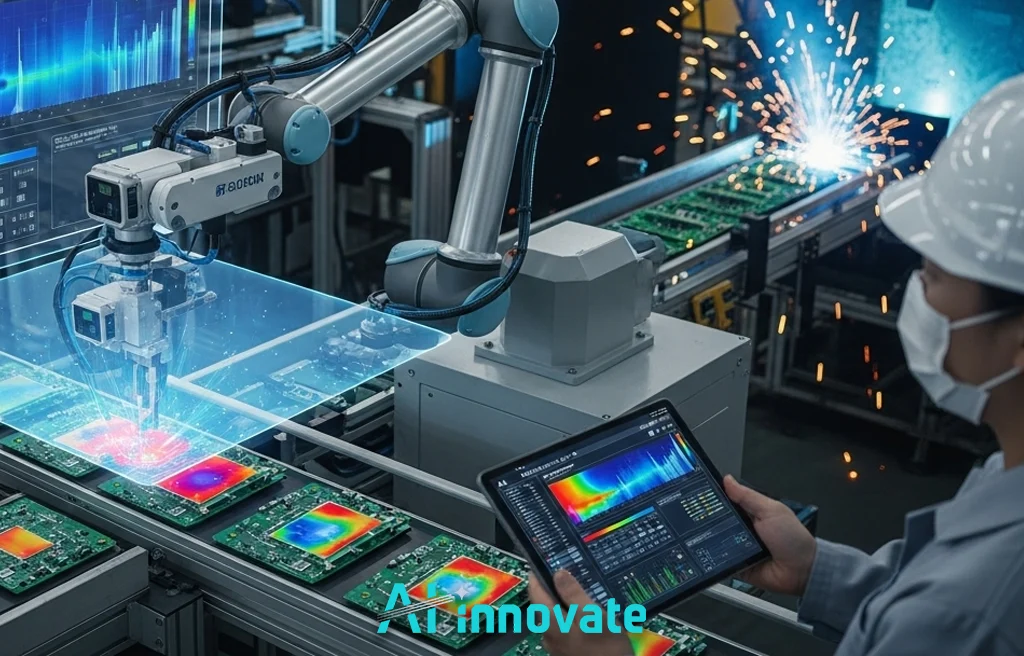
A thermal camera provides raw data; artificial intelligence provides the meaning. AI algorithms are trained on vast datasets of thermal images, learning to distinguish between normal operational heat patterns and the signatures of specific defects. This elevates thermal inspection from a simple monitoring tool to an intelligent diagnostic system. For example, deep learning models can achieve up to 98% accuracy in identifying different materials based solely on their thermal properties.
This is precisely where our AI2Eye system excels. It integrates directly into the production line, acting as an tireless inspector that never loses focus. AI2Eye analyzes every product’s thermal signature, catching surface defects and process inefficiencies that would otherwise go unnoticed. This constant, automated vigilance empowers manufacturers to make smarter, faster, and more efficient operational decisions.
Benefits of thermal inspection
The advantages of integrating AI with thermal imaging are tangible and deliver a clear return on investment. As this technology matures, its applications are creating transformative results across multiple industries. Below, we explore some of the most impactful benefits that our partners and clients experience.
Data-Driven Insights
AI transforms raw temperature readings into actionable business intelligence. It identifies recurring patterns, correlates thermal data with production outcomes, and pinpoints hidden bottlenecks. This allows managers to move from reactive fixes to proactive process optimization based on empirical evidence, not guesswork.
Predictive Maintenance
Predictive maintenance is one of the most powerful applications of this technology. By detecting early signs of mechanical wear or electrical stress, systems can forecast equipment failures before they happen. This approach has been shown to reduce maintenance costs by up to 30% and eliminate as much as 75% of unplanned downtime.
Early Defect Detection
Many defects are invisible until the final stages of production, leading to significant waste. Thermal inspection catches flaws at their source. In complex processes like welding, AI-powered thermographic analysis can identify faulty welds with nearly 99% accuracy, ensuring structural integrity and product safety from the start.
Enhanced Safety
Automated thermal monitoring creates a safer working environment. AI systems can provide 24/7 surveillance of critical infrastructure to prevent fires. Furthermore, specialized models trained on over 21,000 images can now detect thermal threats to workers, such as proximity to hot surfaces, with over 99% precision.
Integrating AI into Thermal Monitoring: From Sensors to Insights
The journey from a sensor to a valuable insight is a seamless process with modern AI tools. First, high-resolution thermal cameras capture data from the production line. This data is fed into an AI model that processes the images in real-time. The model then identifies and flags any deviations from the established quality standards. This is the foundational workflow that enables effective AI to Thermal Quality Inspections.
To accelerate this integration, we developed AI2Cam. This powerful camera emulator allows engineers and R&D specialists to develop and test their machine vision applications without needing physical hardware. Teams can simulate various camera models and conditions, speeding up prototyping and reducing development costs. Explore how your development team can accelerate innovation with our virtual tools.
Conclusion
Moving beyond the limitations of human vision is no longer a futuristic concept but a present-day competitive advantage. By leveraging thermal data, we uncover a world of insights that were previously invisible. When enhanced with artificial intelligence, this information drives unprecedented improvements in efficiency, quality, and safety. The future of industrial excellence is being built with AI to Thermal Quality Inspections, ensuring every product meets the highest possible standard.
Note: Some graphics and visuals in this post were produced using AI-generated content.