




In continuous manufacturing, there is no natural pause to catch a mistake. A batch process can stop between runs, inspect the output, and adjust before the next cycle starts. A continuous line runs 24 hours a day, and a minor disturbance in one unit cascades through every unit downstream before anyone notices, turning a small deviation into hours of off-spec product. Energy alone can represent close to a quarter of a continuous plant’s variable spend, so even a small inefficiency compounds fast across a run that never stops.
That always-on structure is exactly why continuous manufacturing has become one of the strongest use cases for industrial AI. A peer-reviewed systematic review covering more than a decade of research found that AI-driven systems deliver an average 15 percent gain in production efficiency, and early adopters of AI in industrial operations report roughly 14 percent operating-cost improvements once the technology stabilizes variability and captures yield previously lost to manual control limits. These are not marginal numbers in an industry where margins are already thin and volatility, in feedstock prices, energy costs, and logistics, keeps rising.
This guide breaks down where those benefits actually come from, what the technology is doing underneath the results, and where continuous manufacturers should realistically start.
What Makes Continuous Manufacturing Different, and Why AI Fits So Well
Continuous processes, refining, chemicals, cement, pulp and paper, food and beverage lines, run without the stop-and-restart cycles that give batch operations a natural checkpoint. That structure has real advantages for throughput, but it means every unit is coupled to the ones around it. A shift in feedstock quality, a temperature drift, or a small control lag does not stay contained. It propagates. Traditional advanced process control handles this with static, linear models that need manual retuning every time conditions shift, and those models typically manage only a handful of variables at once.
AI-driven control, particularly reinforcement learning models that write optimized setpoints back to the plant’s control system in real time, was built for exactly this kind of problem. Rather than optimizing one unit in isolation, it can evaluate how a change in one part of the plant affects everything downstream, continuously, without needing a human to reprogram it every time a condition drifts.
The Core Benefits of AI in Continuous Manufacturing
AI offers a range of practical advantages in continuous manufacturing, from stabilizing inputs to optimizing resources. The sections below outline the key areas where AI delivers measurable improvements.
Stabilizing Raw Material and Feed Variability
Continuous operations depend on consistent feed quality, but crude oil characteristics, ore grades, and polymer blends rarely stay perfectly constant in practice. When they drift, yields slip and off-spec volume rises. AI models learn the nonlinear relationship between incoming feed properties and downstream performance, then adjust setpoints, reagent dosage, temperature, flow rate, continuously as conditions change, rather than reacting only after output already falls out of spec.
Optimizing Energy Consumption Across Units
Because energy is such a large share of variable cost in continuous operations, even modest efficiency gains translate directly into margin. Rather than tuning individual units separately, AI systems evaluate the entire plant together, calculating how an adjustment in one area, a kiln, a mill, a cooling tower, affects energy demand elsewhere downstream. Reported results in energy-intensive processes like cement production show measurable reductions in heat demand without compromising product quality, often with payback periods measured in months rather than years.
Reducing Waste and By-Product Losses
Off-spec material, purge streams, and flare losses quietly erode profitability because every unit that misses specification still carries the full embedded cost of the feedstock and energy that went into making it. AI systems that track many process variables simultaneously can trace waste back to its actual root cause, often a subtle drift that would be invisible to a human operator, and correct it before losses accumulate. Even a small percentage reduction in waste can translate into a meaningful annual saving at the scale most continuous plants operate.
Predictive Maintenance and Equipment Availability
Unplanned downtime in a continuous plant does not stay isolated to one unit. It ripples through everything connected to it. Machine learning models trained on vibration, temperature, and power signals can detect the early patterns that precede bearing wear, seal leaks, or motor imbalance well before a hard failure forces an emergency shutdown, allowing predictive maintenance to shift repairs into planned service windows instead. Facilities using this approach consistently report steadier production cadence and fewer reactive work orders.
Faster, Cleaner Product Changeovers
Grade and product changeovers create some of the costliest windows in continuous manufacturing, since purge, off-spec material, and energy spikes all tend to concentrate around a transition. AI systems that can simulate many possible ramp scenarios before committing to one help identify the path that balances throughput, quality, and utility use, and because each completed changeover feeds new data back into the model, subsequent transitions tend to start closer to optimal than the last.
Real-Time Quality Control and Defect Detection
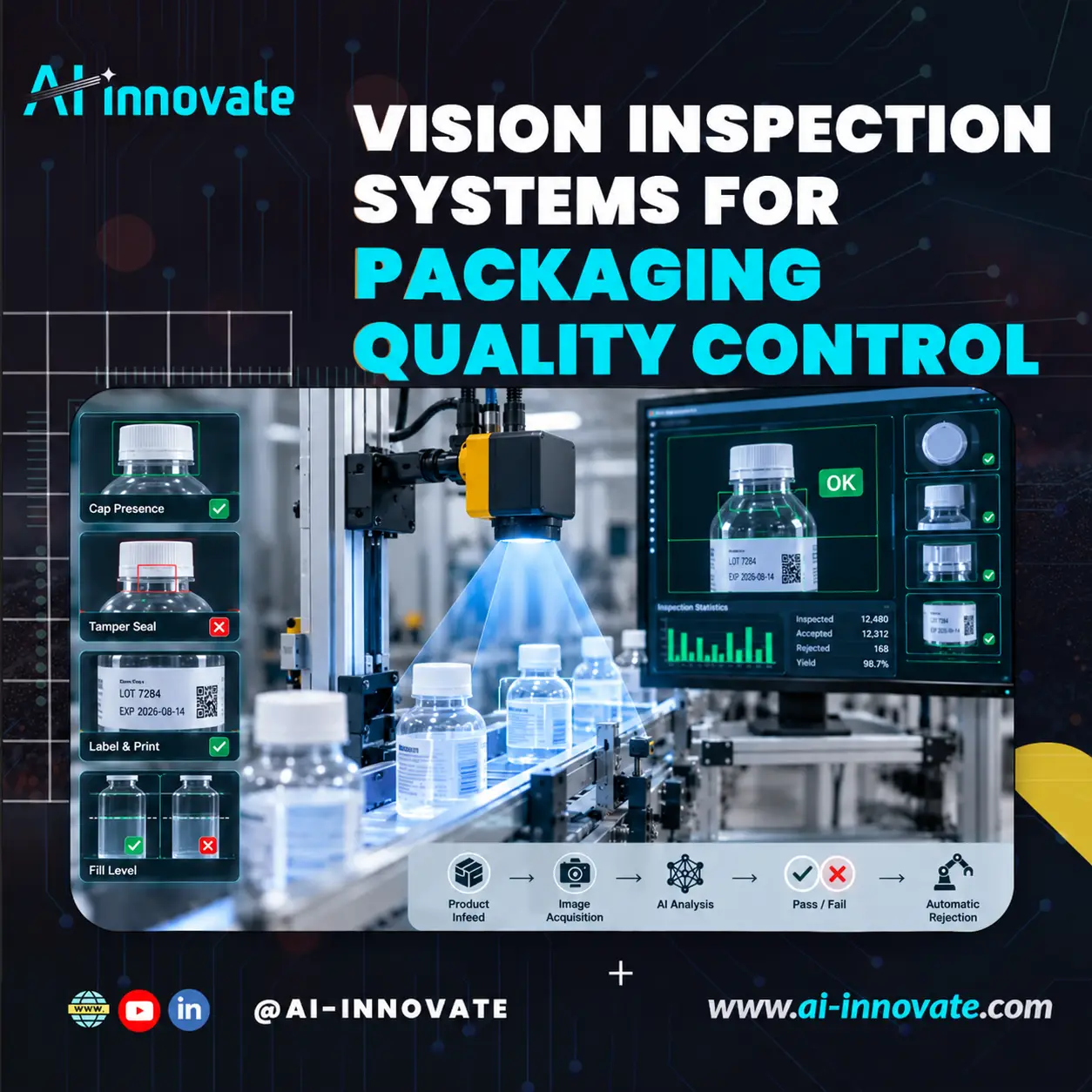
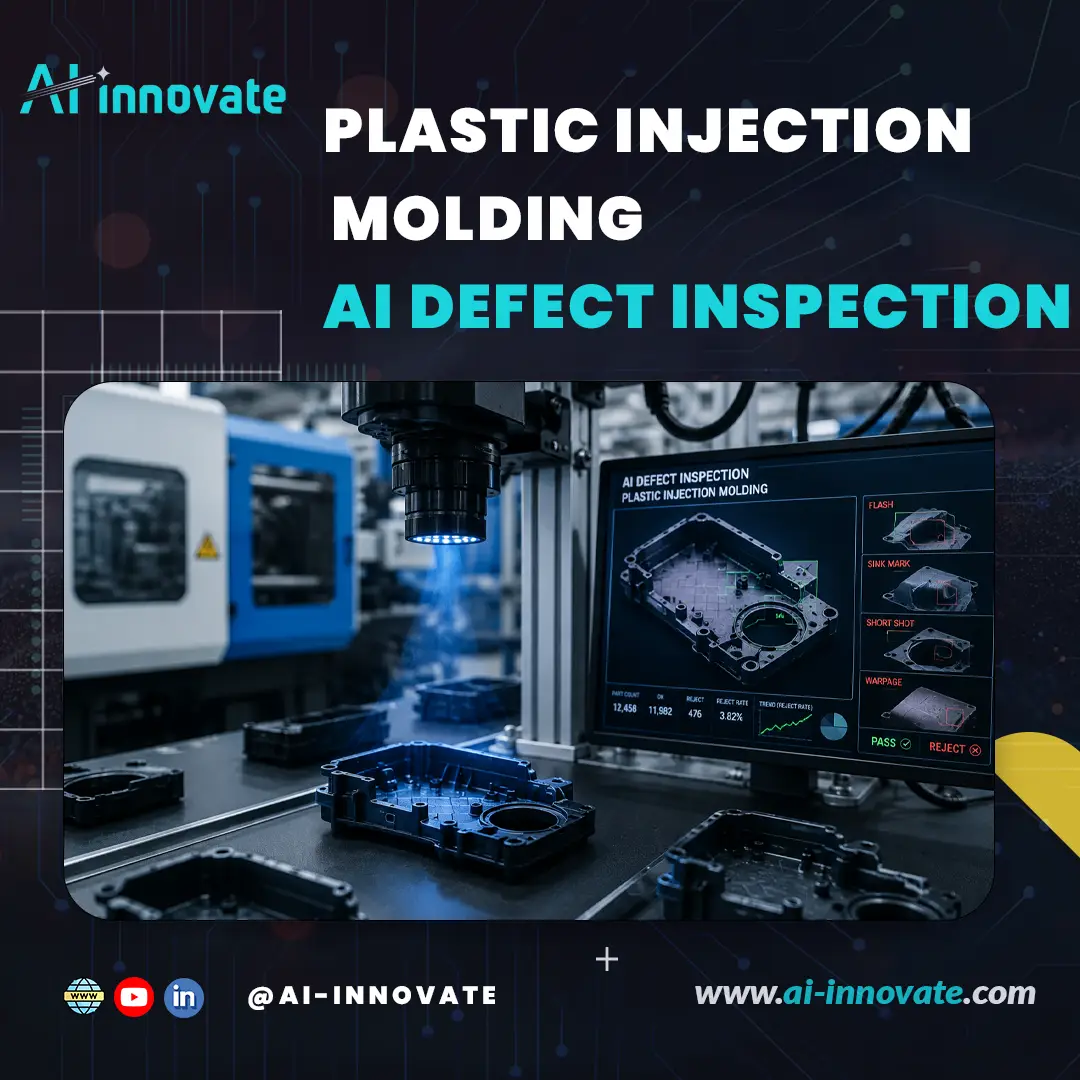
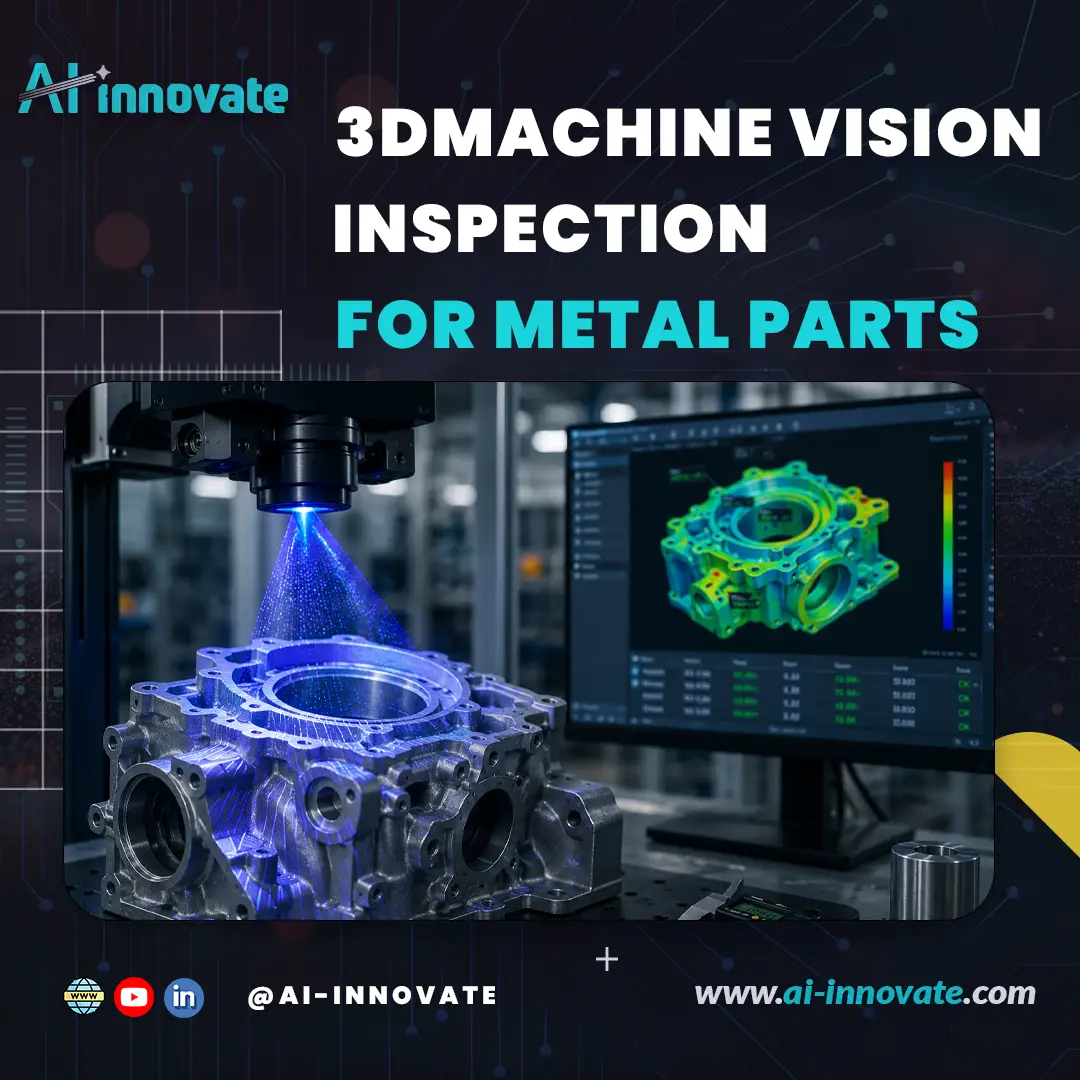
Where continuous processes produce a physical, inspectable output, whether that is sheet material, packaged product, or a molded part, AI-powered visual inspection catches quality issues at the moment they occur rather than after a batch has already accumulated defects. This connects directly to broader machine learning for manufacturing process optimization: stabilizing the process and catching defects early are two sides of the same yield-protection problem, and treating them separately usually means losing ground on one while optimizing the other.
Supporting Sustainability and Compliance
Environmental compliance and profitability are frequently framed as a trade-off, but AI-driven optimization increasingly closes that gap. Platforms trained on historian, sensor, and lab data can calculate the optimal fuel, airflow, and feed blend in real time, keeping a plant within emissions and permit limits even as raw material quality shifts. Lower fuel demand reduces operating expense directly, while steadier emissions performance avoids the fines and reporting burden that come with excursions.
The Numbers Behind the Benefits
The specific figures vary by industry and application, but the pattern across independent sources is consistent.
| Source | Reported Result |
|---|---|
| Peer-reviewed systematic review (automotive manufacturing) | 15% average gain in production efficiency from AI-driven systems |
| Industry survey of early AI adopters | 14% operating-cost improvement once AI stabilizes variability and energy use |
| Documented case study (plastic injection molding) | More than 50% reduction in scrap rate |
| Peer-reviewed case study (hybrid AI and Lean Six Sigma) | 3.15% yield increase and roughly 40 kg of waste saved per batch |
How AI Actually Delivers These Benefits: Closed-Loop Optimization Explained
Most of the results above trace back to the same underlying mechanism: closed-loop AI optimization. Instead of an engineer manually adjusting setpoints based on periodic sampling, a model, often built on reinforcement learning, continuously ingests live sensor and lab data, learns the plant’s specific behavior, and writes updated setpoints directly back to the distributed control system. The loop never stops, which is precisely what a continuous process requires, since manual retuning cycles are always at least one step behind the conditions actually happening on the line.
This is a meaningfully different approach from traditional advanced process control, which relies on static equations that need manual retuning whenever feed quality or ambient conditions change. Closed-loop AI systems update continuously, capturing the nonlinear, cross-unit relationships that fixed linear models were never designed to see.
Where Continuous Manufacturers Should Start
- Identify the highest-cost variability first. Whether that is energy, feedstock, or a specific waste stream, the biggest financial pressure point is usually the clearest place to prove value quickly.
- Confirm data quality before committing to a platform. AI models are only as reliable as the sensor and historian data feeding them; fragmented or noisy data is consistently cited as the biggest barrier to scaling these systems.
- Pilot on one process area, not the whole plant. A single kiln, reactor, or line lets a team validate results and build internal trust before expanding further.
- Pair process optimization with quality inspection. Stabilizing the process and catching defects are complementary, not competing, investments, and doing both tends to compound the yield improvement each delivers alone.
- Plan for continuous model maintenance, not a one-time deployment. Feed changes, new products, and equipment updates all require the model to keep learning, which is very different from a traditional control system that is tuned once and left alone.
How AI-Innovate Supports Continuous Manufacturing Operations
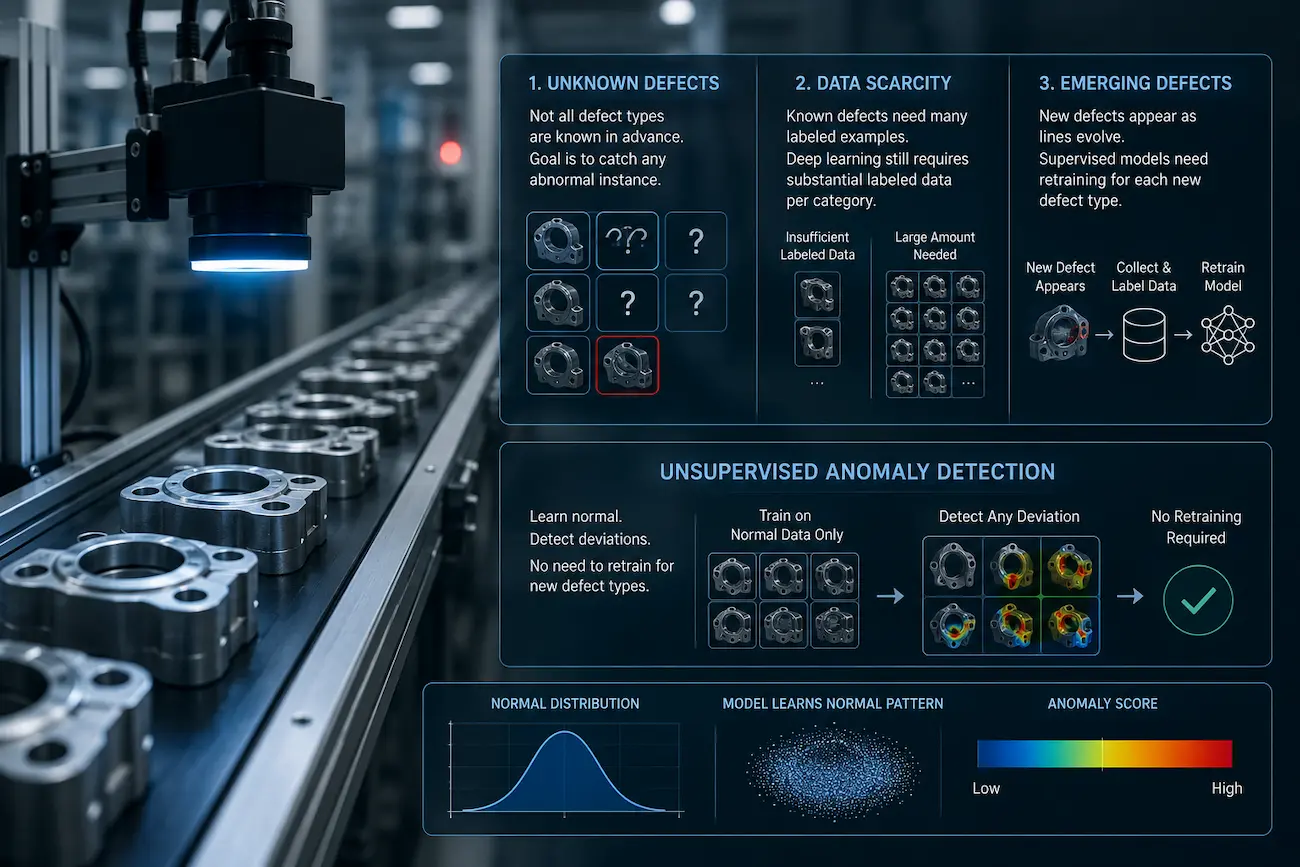
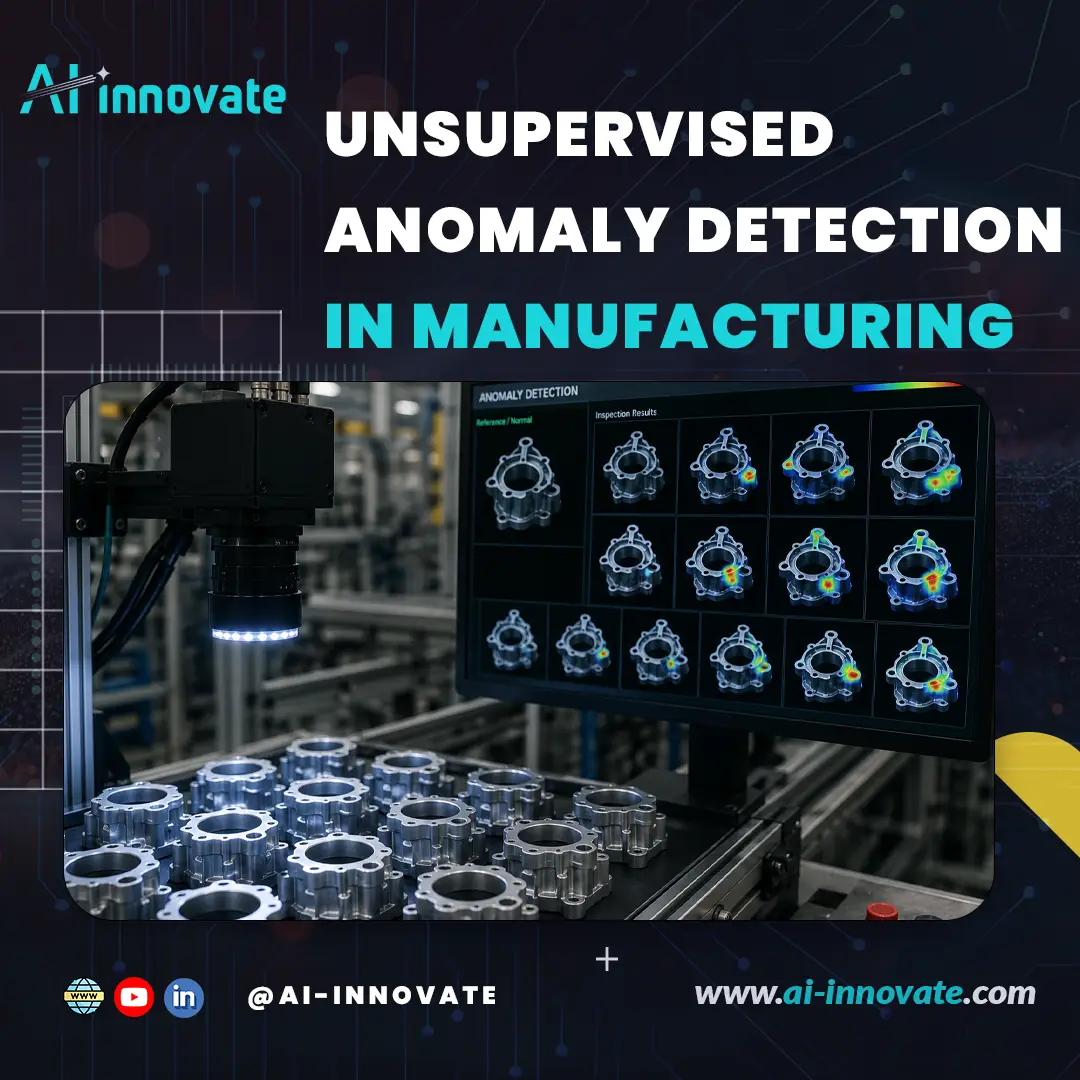
Continuous manufacturing rewards exactly the kind of always-on, adaptive system AI is best suited to provide, and quality inspection is one of the clearest, lowest-risk places to start realizing that value. Where continuous lines produce an inspectable physical output, AIxEye delivers real-time visual defect detection that flags quality issues the moment they appear rather than after a run has already produced hours of off-spec material. AIxCam helps close a specific gap that continuous operations often face: generating synthetic training data for the rare defect types that a plant running the same process for years may only encounter occasionally, but still needs a model trained to catch reliably. AIxCore handles the on-site processing that keeps inspection decisions fast enough to matter on a line that never pauses to wait for a result.
For continuous manufacturers weighing where AI delivers the clearest, most measurable return, pairing process-level optimization with real-time quality inspection addresses both halves of the yield equation: keeping the process itself stable, and catching the defects that slip through even a well-controlled process.
Final Thoughts
AI delivers measurable benefits across continuous manufacturing, from stabilizing feed variability and cutting energy use to catching defects in real time, precisely because continuous operations reward the always-on, adaptive optimization that AI is built to provide and traditional static control systems were never designed to deliver.
The manufacturers seeing the strongest results are not the ones deploying AI everywhere at once. They are the ones starting with a clear, high-cost variability problem, whether that is energy, waste, or quality, proving measurable value on one process area, and expanding from there with the data discipline the technology depends on. In an industry where a continuous line runs whether you are watching it or not, that kind of always-on optimization is not a luxury. It is increasingly the baseline for staying competitive.
Confused About Where to Start with AI?
Our specialists help you identify the right AI approach based on your process, data, and goals.
Frequently Asked Questions
What is the biggest AI trend in manufacturing for 2026?
The shift from AI pilots to agentic AI in production is the most discussed trend, with AI systems moving from surfacing insights to autonomously executing decisions like maintenance scheduling and supply chain adjustments. However, actual scaled deployment still lags the hype, with most organizations further along in planning than execution.
Why do most manufacturing AI pilots fail to scale?
Most pilots stall because they start with production-critical processes that carry too much operational risk, lack human-in-the-loop governance for critical decisions, or focus on conversational AI capability rather than systems that can genuinely query data and take action. Cultural resistance from frontline workers who see AI as surveillance rather than support is also a major, often underestimated factor.
Does AI replace traditional process control systems in continuous manufacturing?
Not entirely. AI-driven closed-loop optimization typically writes setpoints to the same distributed control system that traditional advanced process control uses, but replaces the static, manually retuned models with continuously learning ones that adapt to changing conditions automatically.
How does AI reduce energy costs in continuous manufacturing?
AI evaluates the entire plant together rather than tuning units in isolation, calculating how adjustments in one area affect energy demand elsewhere downstream. This plant-wide view typically captures savings that unit-by-unit manual tuning misses.
What is the biggest barrier to adopting AI in continuous manufacturing?
Data quality and governance are consistently cited as the primary barrier, since AI models depend on clean, reliable sensor and historian data to learn plant-specific behavior accurately. Workforce expertise and integration with legacy control systems are also common challenges.
Can AI improve both process efficiency and product quality at the same time?
Yes, and the strongest implementations treat them as connected rather than separate initiatives. Stabilizing the underlying process reduces the conditions that create defects in the first place, while real-time quality inspection catches what still slips through, and together they protect yield more effectively than either approach alone.
Sources
Ai-Innovate uses only high-quality sources, including peer-reviewed studies, to support the facts within our articles.
- ProcessMiner. (2023). Benefits of AI and Continuous Manufacturing. https://blog.processminer.com/benefits-of-ai-and-continuous-manufacturing
- Imubit. (2026). Continuous Flow Manufacturing AI Deployments That Protect Margins. https://imubit.com/articles/continuous-flow-manufacturing-ai
- Ouled Laghzal, S., & El Ouadi, A. (2025). Integrating Artificial Intelligence into Continuous Improvement for Automotive Manufacturing. International Journal of Advanced Computer Science and Applications, 16(11). https://thesai.org/Downloads/Volume16No11/Paper_87-Integrating_Artificial_Intelligence_into_Continuous_Improvement.pdf