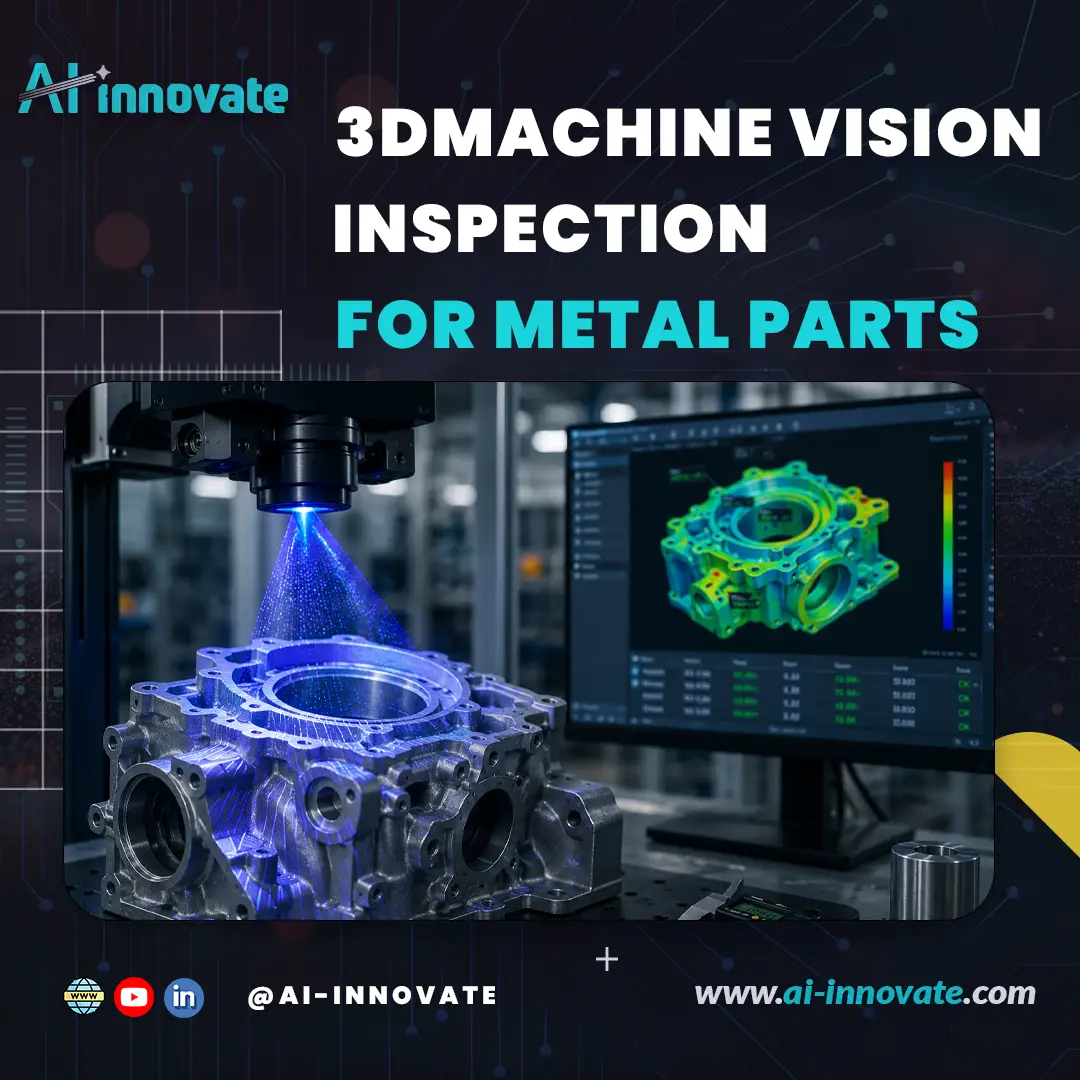






In Part 3, we discussed how industries transition from manual visual inspection to automated machine vision systems in order to eliminate human-related limitations such as fatigue, subjectivity, and poor repeatability.
Imaging System Components in Machine Vision
Why Imaging Becomes Critical After Automation
Once inspection logic becomes automated and decisions are formalized, a new reality emerges:
The performance of an automated inspection system is fundamentally limited by the quality of its visual input.
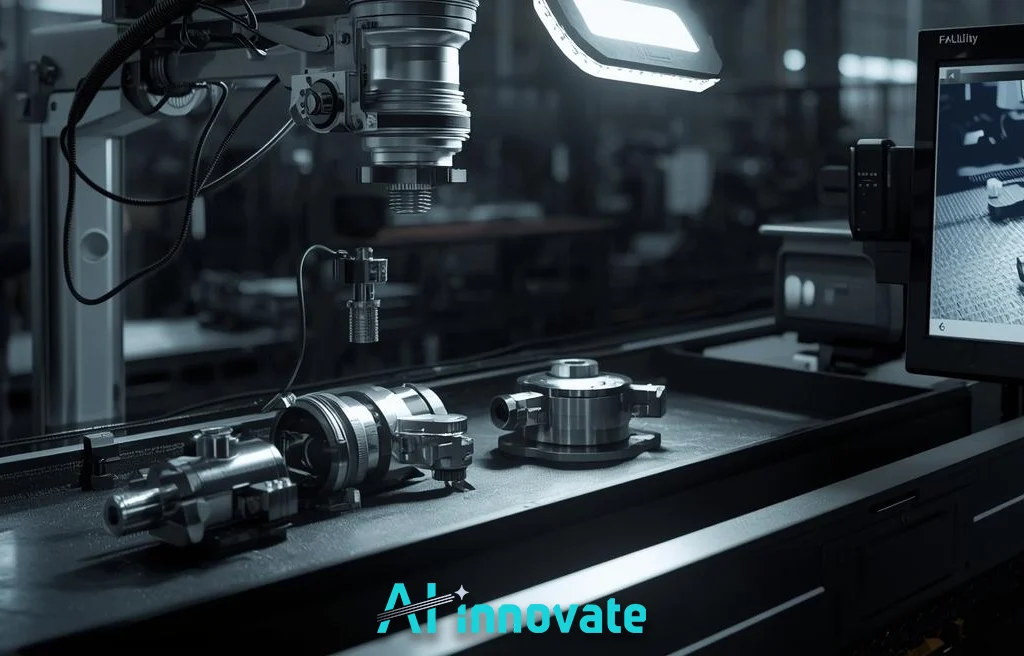
At this stage, inspection accuracy no longer depends on human perception it depends on how well the physical world is translated into digital images. This makes the imaging system comprising cameras, lenses, and lighting the most critical foundation of any machine vision-based defect detection solution.
Automation Needs Vision. Why Imaging Matters More Than Ever.
As manufacturing becomes increasingly automated, advanced imaging systems ensure quality, accuracy, and reliability. Discover why machine vision is essential for detecting defects, validating processes, and maintaining control in fully automated environments.
Imaging as the Foundation of Defect Detection
Before any algorithm can detect defects, those defects must be visually separable from their background. Imaging components are responsible for:
- Capturing sufficient spatial detail
- Preserving contrast and texture
- Making defects consistently visible
In practice, many inspection failures attributed to “algorithm limitations” originate from suboptimal imaging design. For this reason, experienced machine vision engineers treat imaging not as a peripheral detail, but as a primary system design task.
Industrial Cameras: Capturing Visual Information
Industrial cameras act as the eyes of the machine vision system. Unlike consumer cameras, they are optimized for precision, stability, and integration with automation systems.
Area-Scan Cameras
Area-scan cameras capture two-dimensional images in a single exposure. They are the most widely used camera type in machine vision.
Typical applications include
- Inspection of discrete parts on conveyors
- Assembly verification
- Surface defect detection on stationary or indexed objects
Advantages
- Simple system integration
- Suitable for most general-purpose inspections
- Flexible field of view
Example
Inspecting molded plastic parts for surface scratches or missing features as they pause briefly under the camera.
Line-Scan Cameras
Line-scan cameras capture images one line of pixels at a time. A complete image is built as the object moves relative to the camera.
Typical applications include
- Continuous materials such as paper, textiles, metal sheets
- High-speed production lines
- Cylindrical or rotating objects
Advantages
- Extremely high resolution in one dimension
- Ideal for detecting fine, continuous defects
- Excellent for uniform motion environments
Example
Detecting coating defects on steel strips or scratches on glass sheets moving at high speed.
The Role of Resolution and Sensor Choice
Regardless of camera type, defect detectability depends on:
- Sensor resolution
- Pixel size
- Signal-to-noise ratio
A common design rule is that critical defects should span multiple pixels to ensure reliable detection. Over-specifying resolution increases cost and data load, while under-specifying risks missed defects.
Lenses: Shaping the Image
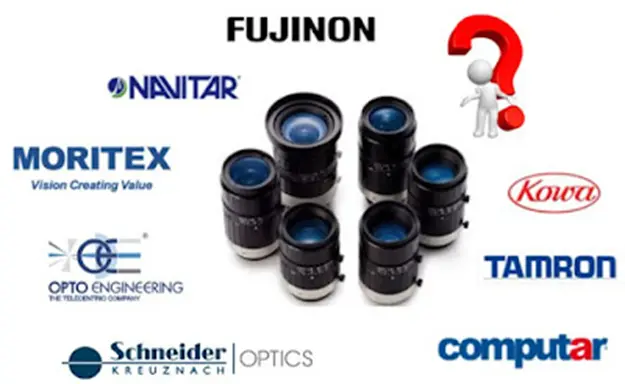
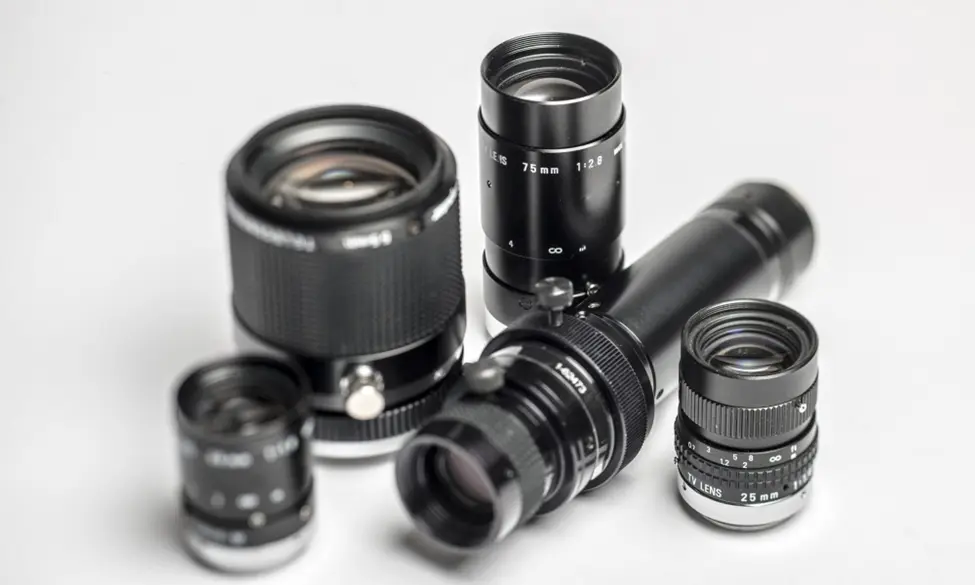
While cameras capture images, lenses determine how the scene is projected onto the sensor. Lens selection directly affects defect visibility and measurement accuracy.
Standard (Entocentric) Lenses
These lenses resemble conventional camera lenses and are used in most general-purpose applications.
Applications
- Surface inspection
- Presence/absence checks
- Basic dimensional measurements
Limitations
- Perspective distortion
- Apparent size changes with object distance
Hypercentric Lensesf
Hypercentric lenses are a specialized class of machine vision optics designed to capture features that are not visible with conventional lenses, particularly surfaces and geometries that face away from the camera.
Unlike standard (entocentric) or telecentric lenses, hypercentric lenses have a virtual viewpoint located inside the object, which creates a unique imaging geometry where distant features appear larger than closer ones. This allows the camera to simultaneously observe:
- The top surface of an object
- Side walls
- Underside edges
all within a single image.
Typical Applications of Hypercentric Lenses
Hypercentric optics are especially useful in inspection tasks where side or bottom features are critical, but physical access or multi-camera setups are impractical.
Common applications include:
- Inspection of bottle necks, threads, and rims
- Detection of defects on the inner walls of cylindrical parts
- Verification of container sealing surfaces
- Inspection of molded plastic caps and closures
Example
Inspecting the integrity of threads and sealing lips inside a bottle cap using a single top-mounted camera, without rotating the part or adding side cameras.
Macro and Specialized Lenses
For small objects or micro-defects, macro lenses or specialized optics are used to achieve high magnification and resolution.
Example
Inspecting solder joints or micro-cracks on electronic components.
Lighting: Making Defects Visible
Among all imaging components, lighting has the greatest influence on inspection performance. Defects are rarely objects themselves; they are variations in how a surface interacts with light.
Bright-Field Lighting
In bright-field illumination, light is directed toward the object and reflected back into the camera.
Best suited for
- General surface inspection
- Color and texture evaluation
- Printing and labeling checks
Example
Inspecting printed labels for missing or blurred text.
Dark-Field Lighting
In dark-field illumination, light strikes the surface at a shallow angle. Only scattered light from surface irregularities reaches the camera.
Best suited for
- Scratches and dents
- Cracks and edge defects
- Subtle surface anomalies
Example
Detecting fine scratches on polished metal or glass surfaces that are invisible under bright-field lighting.
Choosing the Right Lighting Strategy
Lighting is not selected based on brightness alone, but on how it interacts with defect geometry. Often, changing lighting geometry yields more improvement than changing cameras or algorithms.
Key considerations include:
- Surface reflectivity challenges
- Defect orientation
- Environmental light control
In practice, successful systems often combine multiple lighting techniques to highlight different defect characteristics.
Imaging Stability and Repeatability
A core advantage of automated inspection over manual inspection is repeatability. Imaging systems must therefore be designed to:
- Maintain stable illumination over time
- Minimize sensitivity to ambient light
- Ensure consistent object positioning
Without stability, even the best algorithms will struggle to produce reliable results.
Imaging as the Performance Ceiling
Once inspection decisions are automated, imaging quality defines the upper limit of what can be detected. If a defect is not visually separable in the image, no algorithm classical or AI-based can detect it reliably.
This is why imaging design precedes algorithm selection in professional machine vision projects.
Bridging to the Next Stage: From Images to Algorithms
Imaging systems convert physical reality into digital representations. The next question is how these images should be interpreted computationally.
In the next part of this series, we will explore:
- Classical image processing methods for defect detection
- Learning-based and AI-driven approaches
- Their strengths, limitations, and appropriate use cases
Only once imaging is properly engineered does it make sense to ask how machines should learn to see defects.