




Over 20% of production losses in global manufacturing stem from inefficiencies that could be prevented through intelligent automation. Traditional process control systems, while valuable, are limited by reactive monitoring and rigid rule-based operations. They detect issues after they occur rather than preventing them.
Machine learning (ML) changes this reality. By turning real-time factory data into predictive insights, ML enables manufacturers to improve efficiency, reduce waste, and maintain consistency at every production stage.
This article explores how machine learning transforms manufacturing process optimization and how AI-innovate’s solutions, including AIxEye and AIxCam, empower companies to achieve zero-defect, data-driven performance.
What Is Machine Learning for Manufacturing Process Optimization?
Machine learning for manufacturing process optimization refers to the use of AI-powered algorithms to analyze large datasets from factory operations. These algorithms identify patterns, predict potential issues, and automatically adjust process parameters to enhance performance.
By using data from sensors, cameras, and ERP systems, ML continuously improves efficiency, quality, and resource management. It goes beyond automation to enable adaptive decision-making, minimizing downtime and improving overall equipment effectiveness (OEE). The result is a smarter, more resilient production environment that consistently meets high-precision standards.
Key Machine Learning Algorithms for Manufacturing Process Optimization
The success of machine learning in production depends on two factors: data quality and selecting the right algorithm for the task. Different algorithms solve different challenges, from defect detection to predictive maintenance. Below are five commonly used methods and how they drive process optimization.
Supervised Learning (Regression & Classification)
Models like linear regression, decision trees, and random forests are used to predict product quality, classify defective items, and estimate machine failure. For example, random forests can sort parts by defect type using sensor data, while regression models forecast production yields.
Convolutional Neural Networks (CNNs)
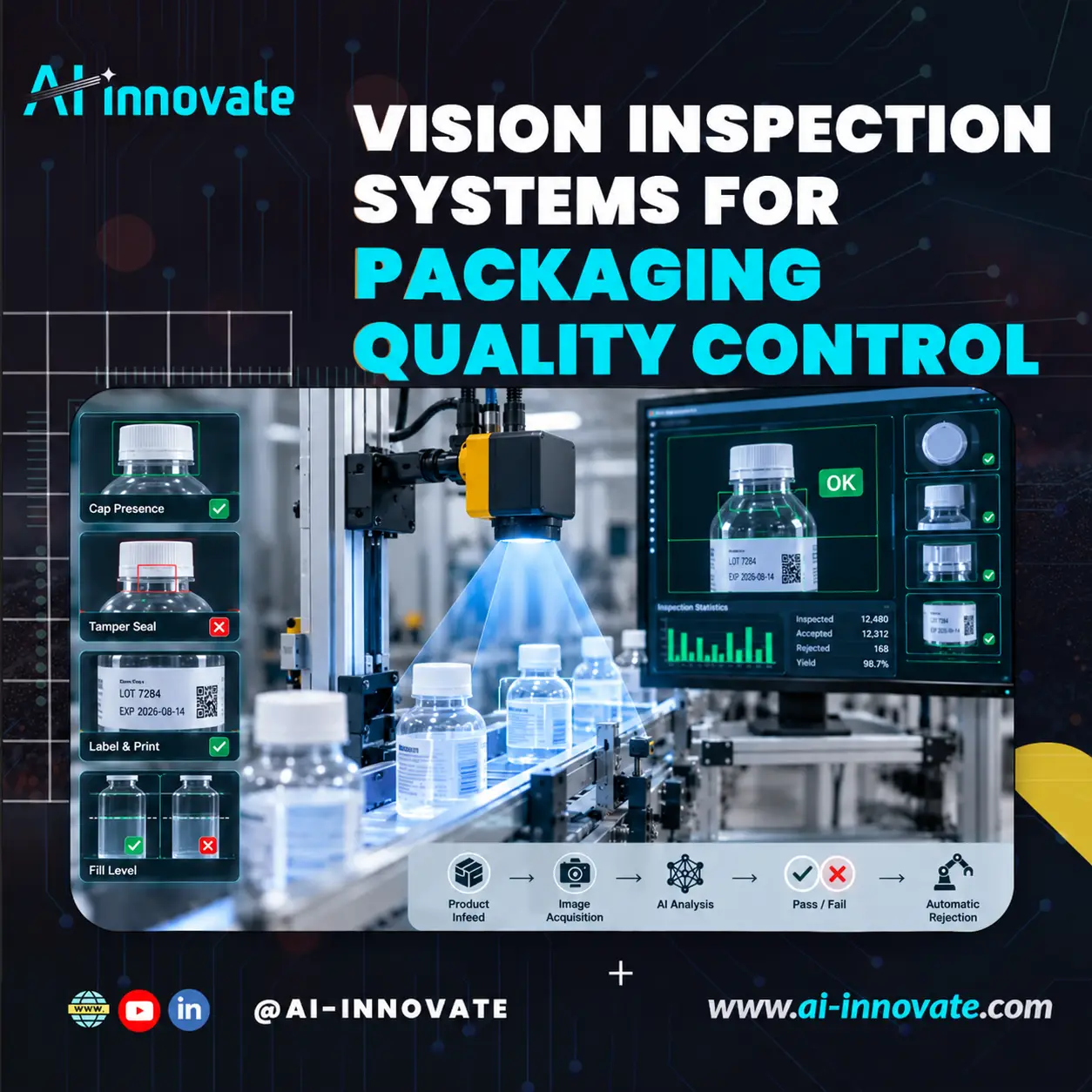
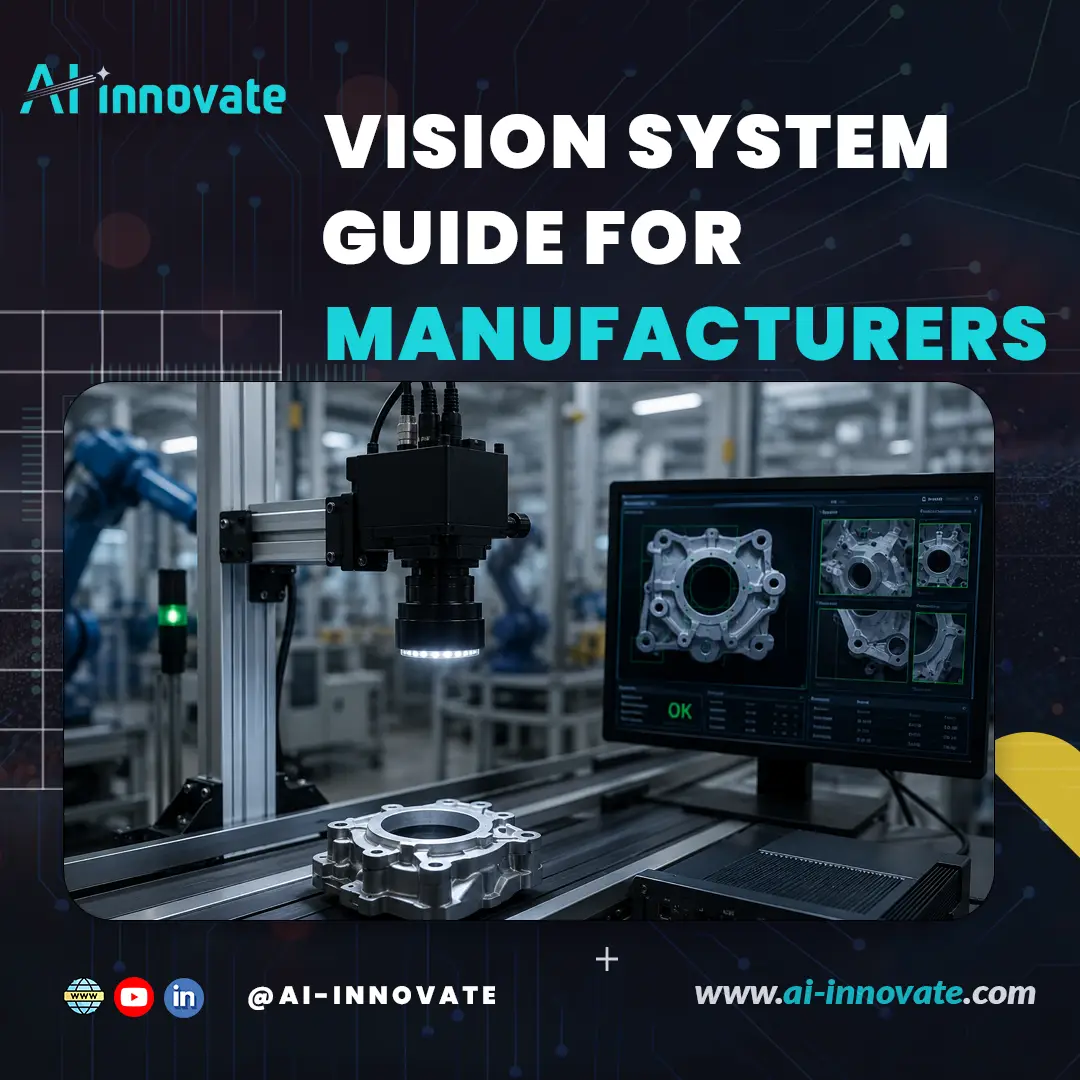
CNNs power visual inspection systems that detect surface flaws, verify assembly, or inspect wafers. They process large volumes of image and video data from cameras with high accuracy, making them central to modern quality control.
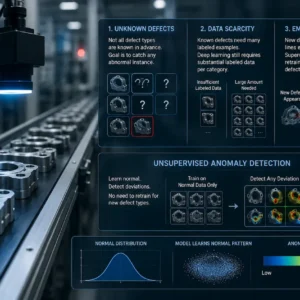
Unsupervised Learning (Clustering & Anomaly Detection)
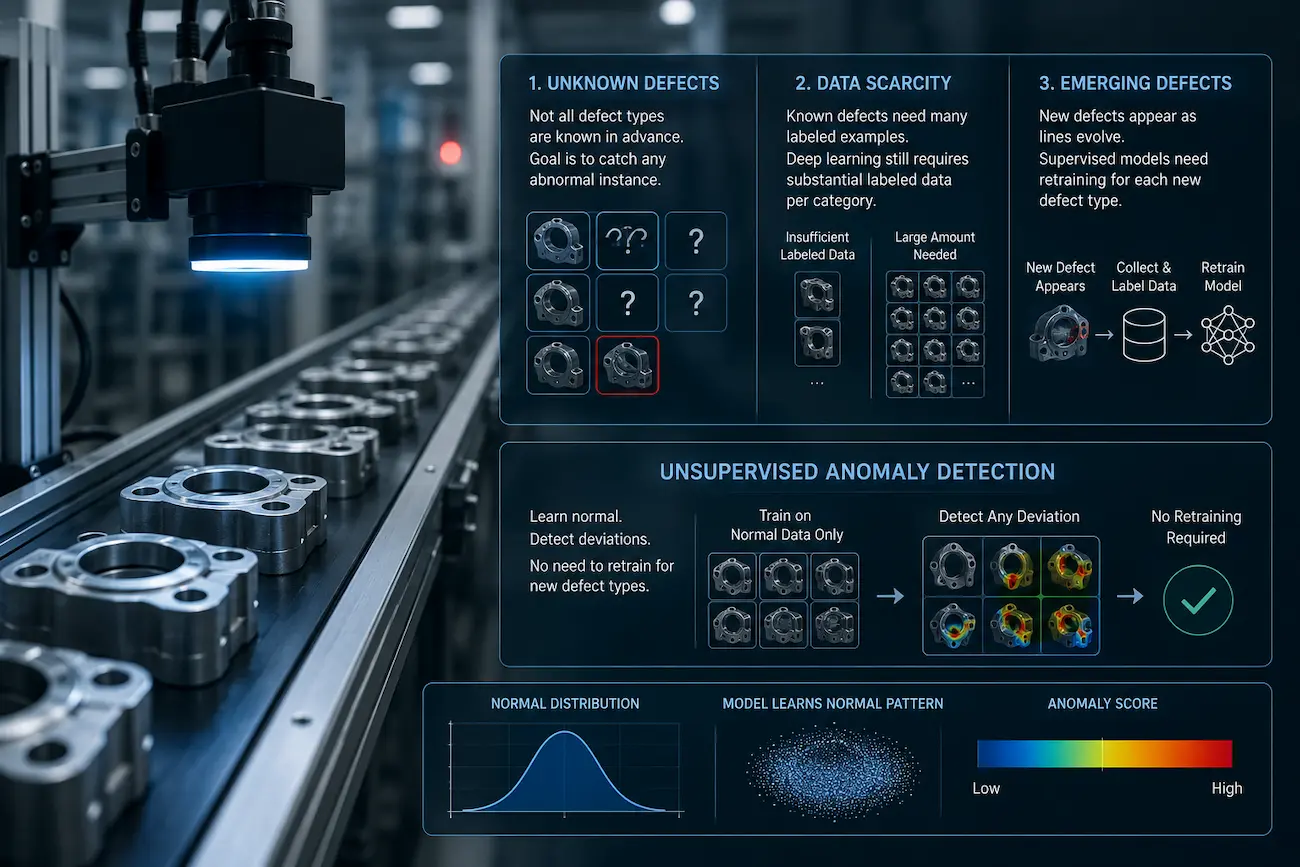
Methods like K-means, DBSCAN, and Isolation Forest group production patterns and flag irregularities. For instance, anomaly detection can highlight abnormal vibration signals that suggest early equipment failure.
Time-Series Forecasting Models
ARIMA and LSTM networks are applied to predictive maintenance, demand forecasting, and energy optimization. An LSTM, for example, can predict machine breakdowns by analyzing vibration trends, while ARIMA forecasts production loads or energy spikes.
Reinforcement Learning (RL)
RL is used for adaptive scheduling, process control, and robotics. A reinforcement learning controller might adjust production line speed in real time or optimize robotic movement paths to improve throughput.
Read Also : Machine Learning in Quality Control – Smarter Inspections

Real-World Examples of Machine Learning in Manufacturing
Machine learning is reshaping the manufacturing landscape. Several global leaders have already demonstrated how intelligent systems deliver measurable improvements in quality, cost, and efficiency.
General Motors (GM)
By integrating IoT sensors and AI to monitor robotic systems, GM detected early signs of equipment wear, reducing unplanned downtime by 15% and saving nearly $20 million annually.
BMW
Under its “Quality Next” initiative, BMW employs deep learning and high-resolution imaging to identify paint defects and assembly misalignments, improving inspection speed and consistency across its production plants.
Bosch
The company applies ML models to optimize production parameters such as temperature, pressure, and feed rate. These models determine the most efficient settings for each part, minimizing energy use and improving product quality.
Siemens
Using its MindSphere industrial platform, Siemens helped manufacturers improve thermal efficiency and cut energy costs by over 50%, showing how ML supports sustainable process optimization.
Benefits and Challenges of Using Machine Learning for Process Optimization
Benefits
Process optimization can improve manufacturing operations and make processes much more efficient. Applying optimization to the manufacturing process has many benefits. Here are some of them:
- Enhances equipment functionality and performance consistency.
- Reduces production delays and unscheduled downtime.
- Lowers machinery breakdown rates through predictive maintenance.
- Improves product quality and yield with real-time feedback.
- Supports continuous performance monitoring and adjustment.
- Helps identify waste patterns and optimize material usage.
Challenges
There are many challenges related to manufacturing processes. Here are some examples:
- High computational and implementation costs.
- Complexity in model interpretation and transparency.
- Risk of bias or overfitting in training datasets.
- Integration difficulties with older factory systems.
- Need for ongoing retraining and model maintenance to stay accurate.
How to Get Started with Machine Learning for Manufacturing
Adopting machine learning for manufacturing process optimization begins with a clear strategy and the right tools.
Step-by-step roadmap:
- Define measurable quality and efficiency goals.
- Gather and label operational and sensor data.
- Simulate camera data and inspection environments using AIxCam.
- Deploy AIxEye for real-time monitoring and visual analytics.
- Establish data feedback loops for ongoing retraining and accuracy improvement.
- Collaborate with AI-innovate for scalable integration across production systems.
Transform your factory operations with intelligent, machine learning-powered optimization. Explore how AIxEye and AI2Cam can help you achieve high-efficiency, data-driven production. Visit ai-innovate.com to learn more.

Conclusion
Implementing machine learning for manufacturing process optimization allows factories to achieve higher precision, improved product quality, and greater reliability. By simulating different production scenarios and adjusting control parameters in real time, machine learning helps manufacturers cut waste, reduce costs, and maintain consistent output. It transforms production from a reactive approach into a proactive, intelligent system that continuously learns and adapts.
At AI-innovate, we develop customized AI solutions that enhance efficiency, minimize downtime, and deliver measurable business impact. If you are ready to modernize your manufacturing operations, contact us and let us turn your data into a competitive advantage.
Note: Some graphics and visuals in this post were produced using AI-generated content.