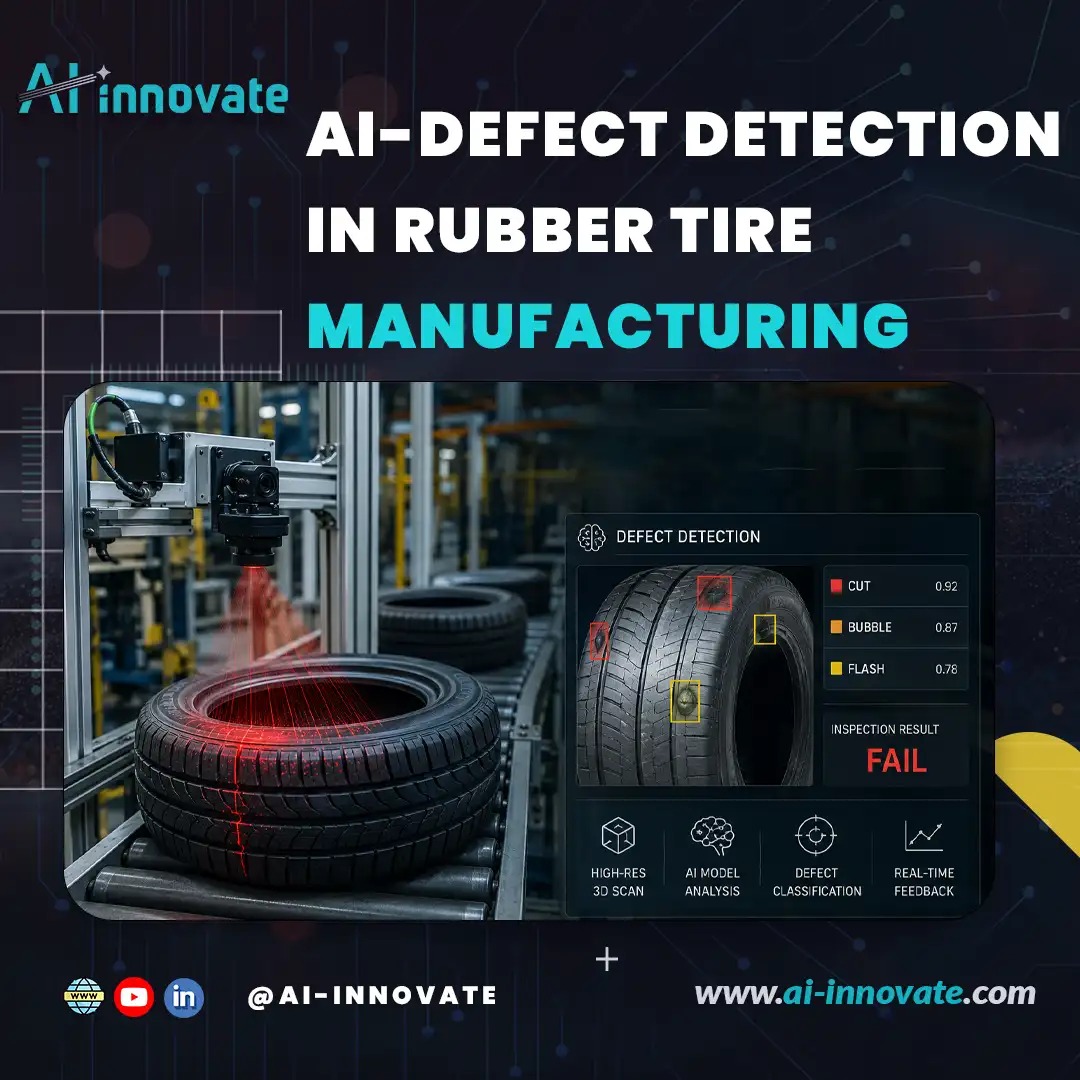





Manufacturing has never been simple, but today it feels more complex than ever. Companies are expected to produce faster, maintain flawless quality, control costs, manage supply chain uncertainty, and adapt to shifting customer demands. At the same time, skilled labor shortages and rising operational expenses are putting additional pressure on production teams.
Improving productivity is no longer just about adding more workers or buying faster machines, but rather using data intelligently. Modern production lines generate enormous amounts of information every second, from machine sensors and quality inspections to energy usage and workflow timing. The challenge is turning that data into action.
This is where AI is making a real difference. AI doesn’t replace human expertise. Instead, it strengthens decision-making, identifies patterns humans might miss, and helps teams respond faster. If your goal is to improve productivity in manufacturing in a sustainable way, these six AI-driven strategies offer practical and measurable impact.
Boost Manufacturing Productivity Smarter Processes Better Results
Learn how AI, automation, and data-driven optimization can transform manufacturing productivity. From reducing downtime to improving quality and workflow efficiency, discover proven strategies to maximize output without increasing operational costs.

1. Reduce Downtime with Predictive Maintenance
Few things hurt productivity more than unexpected equipment failure. When a critical machine breaks down, production stops. Orders get delayed. Teams scramble to troubleshoot. Costs quickly rise.
Traditional maintenance strategies fall into two categories: reactive and preventive. Reactive maintenance waits until something fails. Preventive maintenance follows fixed schedules whether the machine actually needs servicing or not. Both approaches have limitations.
AI-powered predictive maintenance takes a smarter route. It uses:
Real-time sensor data such as vibration, temperature, and pressure
- Historical maintenance record
- Performance trends over time
- Environmental operating conditions
Machine learning models analyze these data points to identify early warning signs of failure. Instead of guessing, the system predicts when a component is likely to degrade.
The benefits are significant:
- Fewer unplanned shutdowns
- Lower emergency repair costs
- Better spare parts planning
- Longer equipment lifespan
2.Improve First-Pass Yield with AI Quality Inspection
Quality issues directly reduce productivity. Every defective product requires rework, scrap, or replacement. That means wasted materials, wasted labor, and wasted time.
Manual inspection has limitations. Even skilled inspectors can miss micro-defects, especially when production volumes are high or parts are complex. Fatigue and inconsistency add further risk.
AI-powered computer vision systems solve this challenge by inspecting products in real time. High-resolution cameras capture images during production. Deep learning models then analyze those images to detect:
- Surface scratches and cracks
- Dimensional inconsistencies
- Misalignments
- Missing components
- Packaging errors
Because these systems operate continuously and consistently, they catch defects earlier and more reliably.
The result is:
- Higher first-pass yield
- Lower scrap rates
- Reduced rework
- Faster production cycles
Quality issues directly reduce productivity. Every defective product requires rework, scrap, or replacement. That means wasted materials, wasted labor, and wasted time.
Manual inspection has limitations. Even skilled inspectors can miss micro-defects, especially when production volumes are high or parts are complex. Fatigue and inconsistency add further risk.
AI-powered computer vision systems solve this challenge by inspecting products in real time. High-resolution cameras capture images during production. Deep learning models then analyze those images to detect:
- Surface scratches and cracks
- Dimensional inconsistencies
- Misalignments
- Missing components
- Packaging errors
Because these systems operate continuously and consistently, they catch defects earlier and more reliably.
The result is:
- Higher first-pass yield
- Lower scrap rates
- Reduced rework
- Faster production cycles
3.Optimize Production Scheduling in Real Time
Production scheduling is often more complicated than it appears. Managers must balance machine availability, labor shifts, maintenance windows, order priorities, and material supply. One disruption can cause a ripple effect across the entire plant.
Traditional scheduling systems rely on fixed rules and manual adjustments. They struggle to adapt when conditions change unexpectedly.
AI-based scheduling platforms analyze multiple variables simultaneously, including:
- Current order backlog
- Machine status and capacity
- Workforce availability
- Inventory levels
- Delivery deadlines
When a disruption occurs, such as a delayed shipment or machine slowdown, the system recalculates the optimal production sequence in real time.
This dynamic adjustment reduces:
- Idle machine time
- Production bottlenecks
- Late deliveries
- Overtime costs
4.Use Data Analytics to Fine-Tune Processes
Some costs aren’t immediately noticeable when evaluating automated visual inspection ROI, but they still matter. Here are some common hidden or ongoing costs:
- Periodic model updates as products or defect patterns change
- Maintenance of cameras and lighting to preserve image quality
- Software updates and cybersecurity management
- System monitoring and performance validation
During the early stages, manufacturers may also do manual inspection as well as an automated one. This temporary overlap can increase short-term costs, but is often necessary to build confidence in the system. While these costs shouldn’t be ignored, they’re usually easy to predict and manage if you plan well.
5.Enhance Efficiency with Intelligent Robotics
Modern factories are filled with sensors and monitoring systems. Yet many manufacturers still use only a fraction of the data they collect.
AI-driven analytics platforms turn raw data into meaningful insights. These systems analyze patterns in:
- Cycle times
- Equipment performance
- Energy usage
- Material waste
- Process variability
By identifying inefficiencies, AI can recommend specific adjustments. For example, slight changes in temperature settings, machine speed, or pressure levels may significantly improve output without compromising quality.
Over time, these small improvements compound. Manufacturers experience:
- Increased throughput
- Reduced variability
- Lower energy consumption
- More predictable production results
Rather than relying on trial and error, teams can make decisions backed by data.
6. Strengthen Supply Chain and Inventory Management
Even the most efficient production line cannot operate without the right materials at the right time. Supply chain disruptions and poor inventory planning are major productivity barriers. AI helps manufacturers anticipate and respond to these challenges. By analyzing historical demand patterns, supplier performance data, and market trends, AI systems can:
- Forecast demand more accurately
- Predict supply shortages
- Recommend optimal inventory levels
- Automate reordering decisions
This prevents both overstocking and stockouts. Excess inventory ties up capital and warehouse space. Material shortages halt production entirely. A stable supply chain directly supports consistent productivity.
How AI-innovate Helps Manufacturers Turn AI Strategy into Measurable Productivity Gains
Improving productivity requires more than ideas. It requires reliable deployment, scalable infrastructure, and inspection systems that operate in real time without disrupting production. AI-innovate supports manufacturers in implementing practical, high-impact AI solutions by helping with:
- AI-powered visual inspection and defect detection using AIxEye, enabling real-time quality control that improves first-pass yield, reduces rework, and prevents costly downstream failures
- Synthetic data generation and validation through AIxCam, allowing teams to train robust AI models faster while reducing dependence on rare defect samples and minimizing development time
- Edge AI deployment and real-time industrial integration powered by AIxCore, an industrial AI edge compute unit built on NVIDIA Jetson Orin AGX, delivering high-performance processing for machine vision, robotics coordination, predictive maintenance, and production analytics directly on the factory floor
Whether manufacturers are starting with predictive maintenance, quality inspection, intelligent robotics, or data-driven optimization, AI-innovate provides the tools to convert AI from a concept into measurable improvements in uptime, yield, efficiency, and long-term operational performance.
Turning AI Into Practical Results
Adopting AI doesn’t require transforming your entire factory overnight. The most successful manufacturers begin with targeted implementations. They identify high-impact areas such as downtime reduction or quality improvement and deploy AI solutions strategically.
We believe manufacturers who embrace these six AI-driven strategies position themselves to operate more efficiently, respond faster to market changes, and remain competitive in an increasingly technology-driven world.
Sources
Ai-Innovate uses only high-quality sources, including peer-reviewed studies, to support the facts within our articles.
- NeuroSYS Blog. (2024). How to Improve Productivity in Manufacturing: 6 AI Strategies.
A practical guide outlining key AI applications—such as predictive maintenance, computer vision, and automation—that help manufacturers reduce downtime and enhance operational efficiency.
Retrieved from https://neurosys.com/blog/how-to-improve-productivity-ai-strategies - Yourco Blog. (2025). 10 AI Strategies to Boost Manufacturing Productivity.
A detailed breakdown of proven ways AI is being used in manufacturing, covering predictive models, real-time quality control, resource optimization, and workforce augmentation.
Retrieved from https://www.yourco.io/blog/ai-strategies-boost-manufacturing-productivity - MIT Sloan Management Review. (2023). How Generative AI Can Boost Highly Skilled Workers’ Productivity.
Insights from research on how generative AI tools can significantly enhance the performance of highly skilled employees when integrated thoughtfully into workflows.
Retrieved from https://mitsloan.mit.edu/ideas-made-to-matter/how-generative-ai-can-boost-highly-skilled-workers-productivity - NeuroSYS Blog. (2024). Generative AI in Manufacturing: How to Drive ROI and Manage Risks.
An exploration of generative AI’s potential to improve manufacturing productivity, with considerations for implementation challenges, risk management, and achieving measurable business value.
Retrieved from https://neurosys.com/blog/generative-ai-in-manufacturing
FAQ
How can AI be applied to improve productivity in manufacturing industries?
By analyzing performance and real-time sensor data from the factory floor, AI technologies can identify areas for improvement in existing manufacturing processes and equipment layouts. This allows companies to:
– identify bottlenecks and inefficiencies; and
– receive recommendations for improvement.
Which AI strategy should I implement first?
The best starting point is where your “loss tree” is largest. If machine downtime is your biggest expense, start with Predictive Maintenance; if scrap and rework are eroding margins, prioritize Automated Quality Control. For service-level issues like late deliveries, Intelligent Production Scheduling is the most effective first step.
How does AI affect the manufacturing workforce?
AI is primarily used for Workforce Augmentation rather than replacement. It automates repetitive tasks—like generating reports or basic inspections—allowing employees to focus on complex problem-solving. Successful firms prioritize upskilling, teaching employees to collaborate with AI and maintain a “healthy skepticism” of machine-generated outputs.