




Using AI for quality control on one production line is often the easiest step. The real challenge begins when manufacturers try to use AI inspection on more than one line, shift, product, or facility. Things that work well in a pilot environment can quickly become unreliable when they are used in real production.
Problems with lighting, line speed, materials, and how processes work put pressure on AI systems that weren’t designed to work in more general situations. When scaling is approached as simple replication, quality teams often find that they get more false positives, miss defects, and that automated inspection is not as reliable.
To successfully scale AI driven quality control, you need a deliberate strategy. It depends on clear goals, solid data, and systems that work well in real-world conditions. This article explains how manufacturers can make AI QC systems more effective on production lines without losing accuracy, stability, or reliability.
Scale AI Quality Control From Pilot to Plant
Learn how to expand AI-powered quality control from a single pilot line to full-scale deployment. Discover proven strategies for integration, performance optimization, and governance that ensure consistent, reliable inspection across every production line.

The Foundations of Scalable AI Quality Control
Making sure that AI is working well means having the same way of making decisions in different places where things are being made. It’s not about putting more cameras in place or taking ideas from one place and using them in another.
You can only achieve true scale when Automated visual inspection becomes a standard part of quality assurance operations. The definitions of defects stay the same, you can measure performance across lines, and AI outputs can be used directly in the QA workflows you already have. When this level of maturity is reached, AI quality control supports continuous inspection without making things more complicated.
Why Scaling AI QC Systems Is Challenging in Production Lines
Production lines are always changing. Even small differences in equipment condition, material batches, or environmental factors can affect how well the inspection works.
Common challenges include:
- Things to consider are lighting, speed and how the part is presented.
- There are differences in the materials and how they are finished.
- The equipment gets worn out and the process changes over time.
- The definitions of defects are not the same for different teams or facilities.
If these issues are not dealt with early, AI systems may not work as well as they should, which could make people less confident about using them.
Creating an AI Scaling Strategy for Quality Control
To make sure that AI is working well, we need a plan that makes sure technology and goals are in line. If they’re not aligned, AI systems often remain isolated tools rather than being able to be used widely.
To create an effective AI scaling strategy, you first need to know where AI adds the most value. This may include inspection processes that require a lot of work, processes where defects are easy to find, or areas where it is hard to keep up with manual inspection. Before expanding, it is important to clearly define success metrics, such as reducing scrap or identifying defects earlier.
The strategy should also explain how AI systems will be governed as they become more widespread. This includes owning the model, updating it, and training. It also includes rules for handling problems. By treating AI quality control as a long-term capability rather than a one-time deployment, manufacturers create a foundation for sustainable scaling.
This Topic might also interest you :
Core Requirements for Scaling AI Quality Control
Production-Representative Data
AI models must be trained and checked on data that reflects real operating conditions, including variation and drift.
Standardized Inspection Definitions
Defect types, acceptance thresholds, and quality criteria must be consistent across lines and facilities.
Integration With Production Workflows
AI outputs should feed directly into quality systems, operator dashboards, or automated responses, not isolated tools.
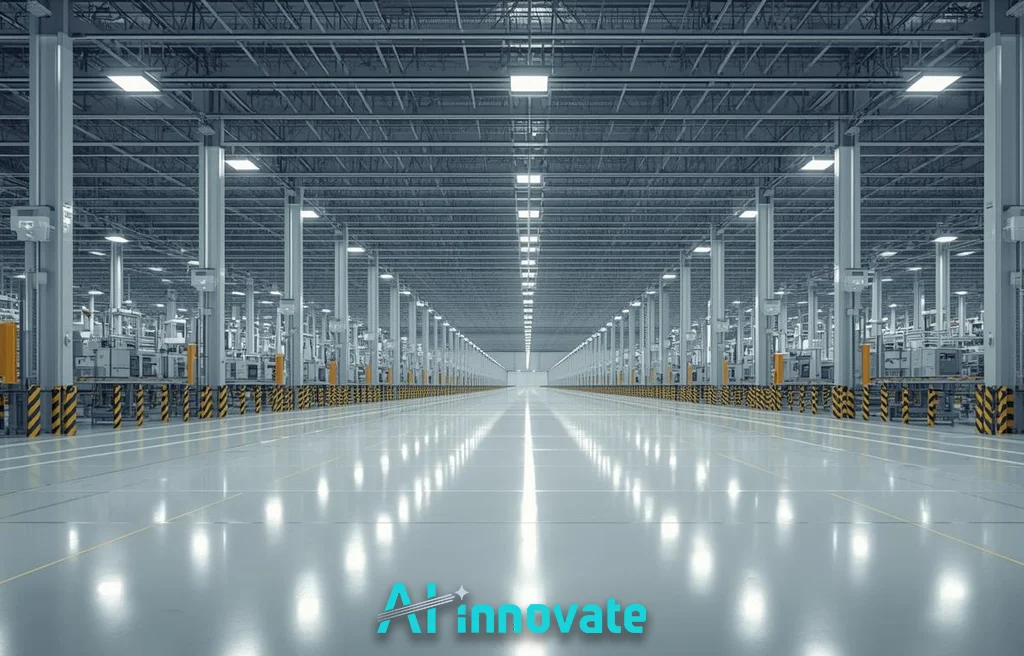
Scaling From One Production Line to Many
To improve the quality control of AI from a single line to multiple lines, we need to find a balance between reusing the same processes and adapting them to different situations. The logic behind how the core is inspected can often be shared, but the camera’s position, lighting, and sensitivity might need to be adjusted.
To successfully scale something, it’s important to design it in a modular way and have processes in place that can be repeated. Having one group in charge and another group checking the work (validation) lets manufacturers improve AI quality control while keeping flexibility at the line level.
Measuring Success in Scaled AI Quality Control
To measure the success of AI quality control, we should focus on how well it works, not just how accurate it is.
Here are some important things to look for:
- There’s less waste and less need to redo work.
- Finding out about problems earlier.
- The process is more stable.
- It can find the cause of a problem more quickly.
- Teams that are known for their quality will be trusted more and adopted more often.
These metrics show if AI inspection is making quality control better in production.
How AI Innovate Supports Scalable AI Quality Control
AI Innovate helps manufacturers scale AI quality control systems with tools designed specifically for production environments.
- AI2Cam supports scalable development by simulating cameras, lighting, and defect scenarios, helping teams validate inspection robustness before expanding across lines.
- AI2Eye delivers real-time, inline AI inspection that maintains consistent performance at production speed.
- AIXCore connects inspection results with process and time-based context at the edge, supporting monitoring, governance, and root cause analysis at scale.
Together, these solutions help manufacturers move from isolated AI QC pilots to production-ready, scalable quality control systems.
Final Note
Scaling AI quality control on production lines is a strategic quality initiative, not a technical duplication exercise. To perform well when used by a lot of people, a system needs a clear plan for growth, a solid data system, and systems designed to work well in real-world conditions.
From experience, manufacturers that succeed treat AI quality control as part of their core QA system, not as a standalone technology. When used the right way, AI QC systems can make things more consistent, cheaper, and can show more clearly how quality problems develop in a production setting.
Sources
Ai-Innovate uses only high-quality sources, including peer-reviewed studies, to support the facts within our articles.
- IBM Think. (2024). AI in Manufacturing: From Quality Control to Scalable Production
Explores how manufacturers scale AI systems across production lines, with a focus on quality control, data infrastructure, and operational integration.
Retrieved from https://www.ibm.com/think/topics/ai-in-manufacturing McKinsey & Company. (2023). Scaling AI in Manufacturing Operations
Provides strategic insights into scaling AI from pilots to enterprise-wide deployment, including data readiness, governance, and operational impact.
Retrieved from https://www.mckinsey.com/capabilities/operations/our-insightsMIT Sloan Management Review. (2024). Why Scaling AI in Operations Is Harder Than It Looks
Discusses the organizational, data, and infrastructure challenges that limit AI scalability in production and quality-driven environments.
Retrieved from https://sloanreview.mit.edu
FAQ
Why does AI inspection performance change when scaled across production lines?
Because variability increases. Differences in materials, lighting, and process behavior introduce data shifts that must be managed deliberately.
Is a separate AI model required for every production line?
Not always. Core models can often be reused, but local validation and tuning are usually required.
What role does data infrastructure play in scaling AI QC?
A strong data foundation ensures consistency, traceability, and long-term reliability as AI systems expand.