




Picking the wrong vision system does not fail quietly. It fails on the line, in the form of missed defects a 2D camera was never built to see, or in wasted budget on 3D hardware a simple label-check never needed. Machine vision has become the default way manufacturers catch defects, verify assembly, and guide robots, but the technology splits into two fundamentally different approaches, and choosing between them is not a matter of picking the “better” one. It is a matter of matching the system to what your inspection actually needs to measure.
That distinction trips up more manufacturing teams than it should. A 2D system that excels at reading a barcode will never catch a warped panel, no matter how good its camera is, because it was never designed to see depth in the first place. A 3D system brought in to catch a printed label defect is often solving a problem a much cheaper 2D setup could have handled just as well. Getting this choice right affects your budget, your inspection speed, and ultimately how many real defects make it past your line.
This guide breaks down what 2D and 3D vision systems actually are, where each one genuinely excels, how they compare side by side, and how manufacturers across industries decide which one, or both, belongs on their production line.
What Is a 2D Vision System?
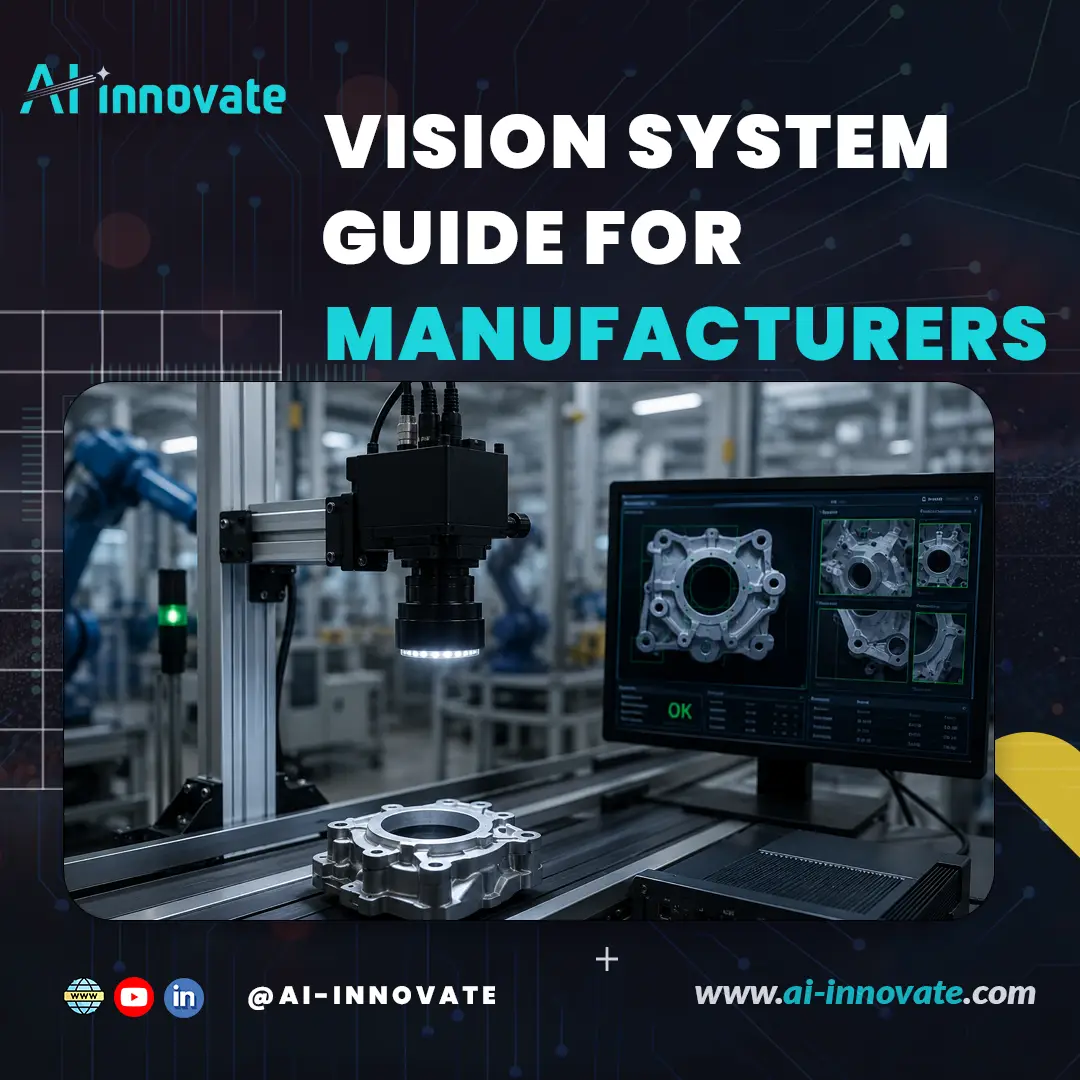
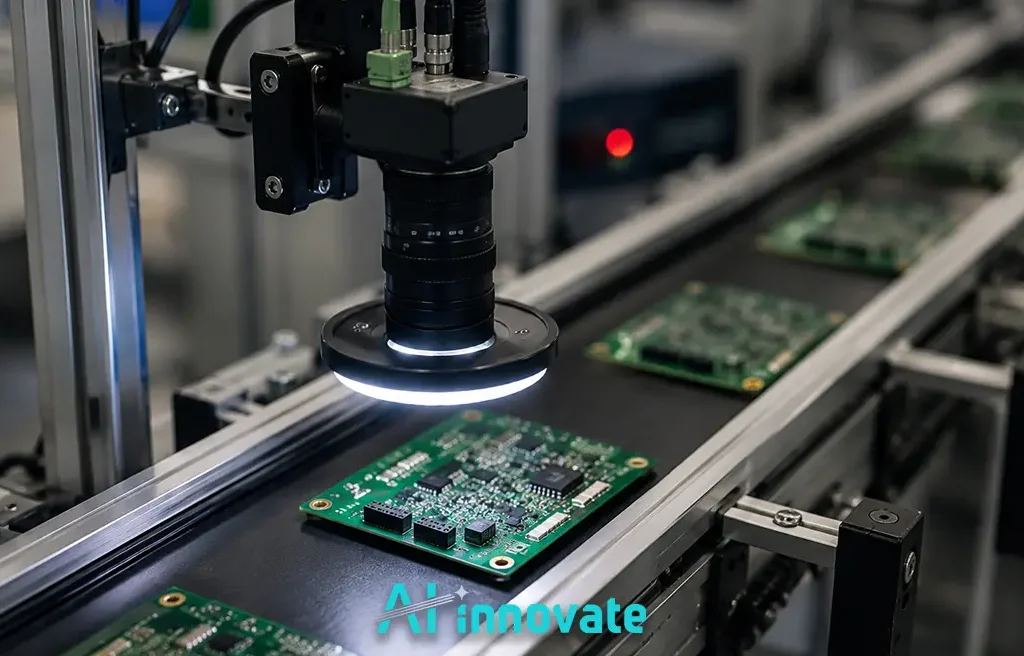
A 2D vision system captures and analyzes flat images across two axes, width and height, using standard area scan or line scan cameras paired with controlled lighting. It evaluates contrast, color, edges, and pattern to identify surface-level features and defects. Because it processes a comparatively small amount of data per image, a 2D system captures and analyzes frames quickly, which is exactly why it remains the standard choice for high-speed inspection lines.
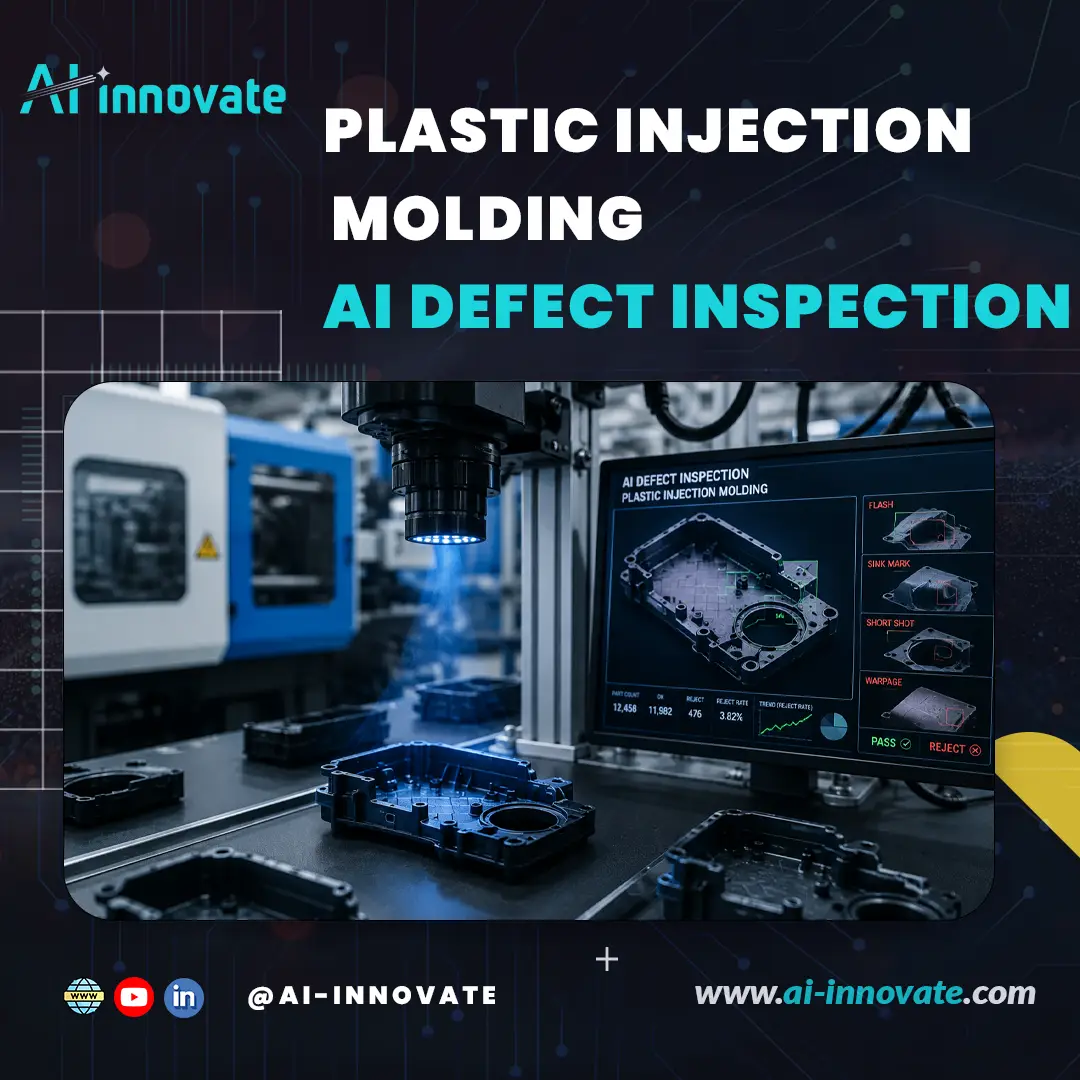
What 2D vision cannot do is see depth. It has no way to measure height, volume, or the third dimension of an object’s shape, which means it is fundamentally blind to defects that only show up as a change in surface elevation rather than a change in surface appearance. It is also more sensitive to lighting conditions than 3D systems, since shadows and reflections can distort a flat image in ways that a depth-based system simply is not affected by.
What Is a 3D Vision System?
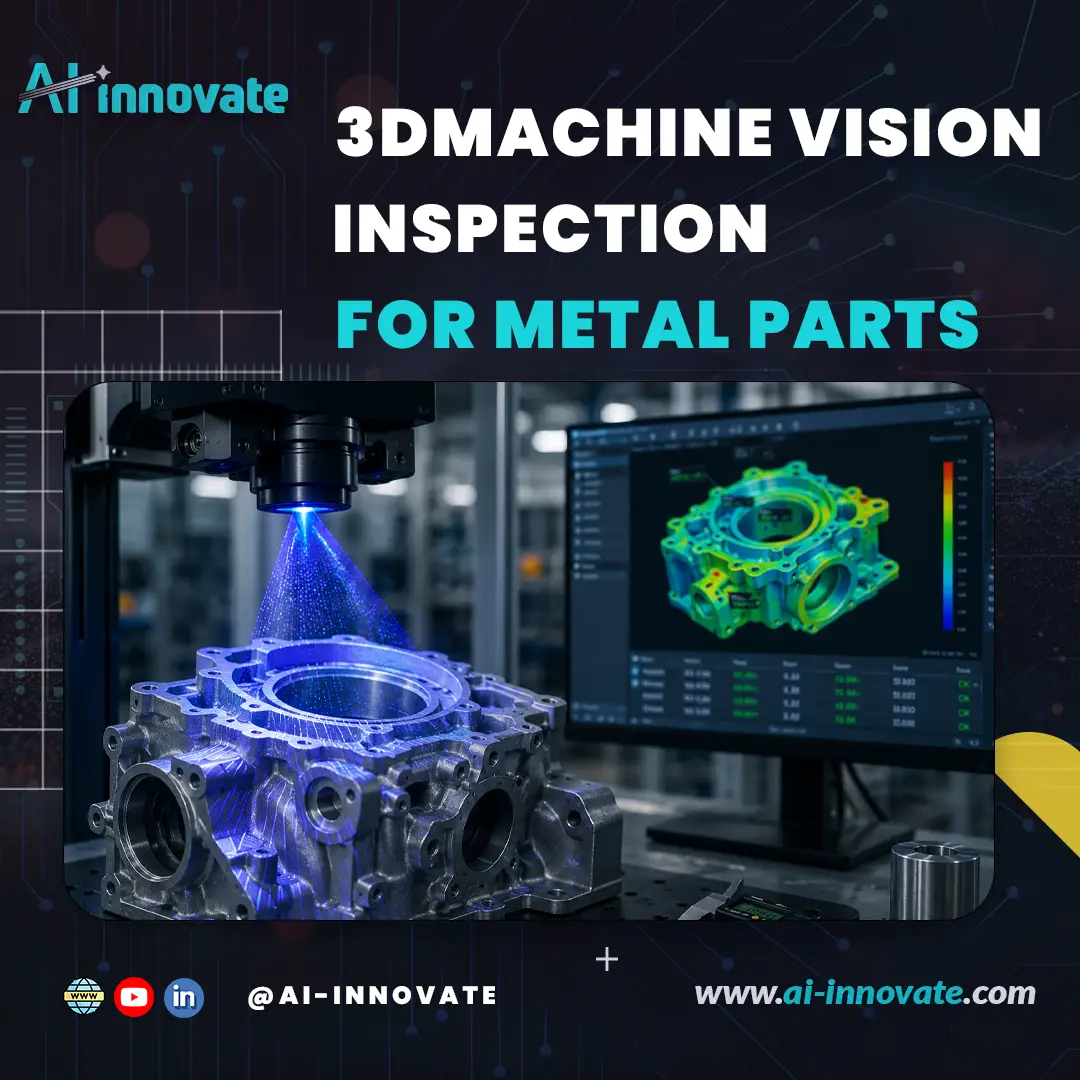
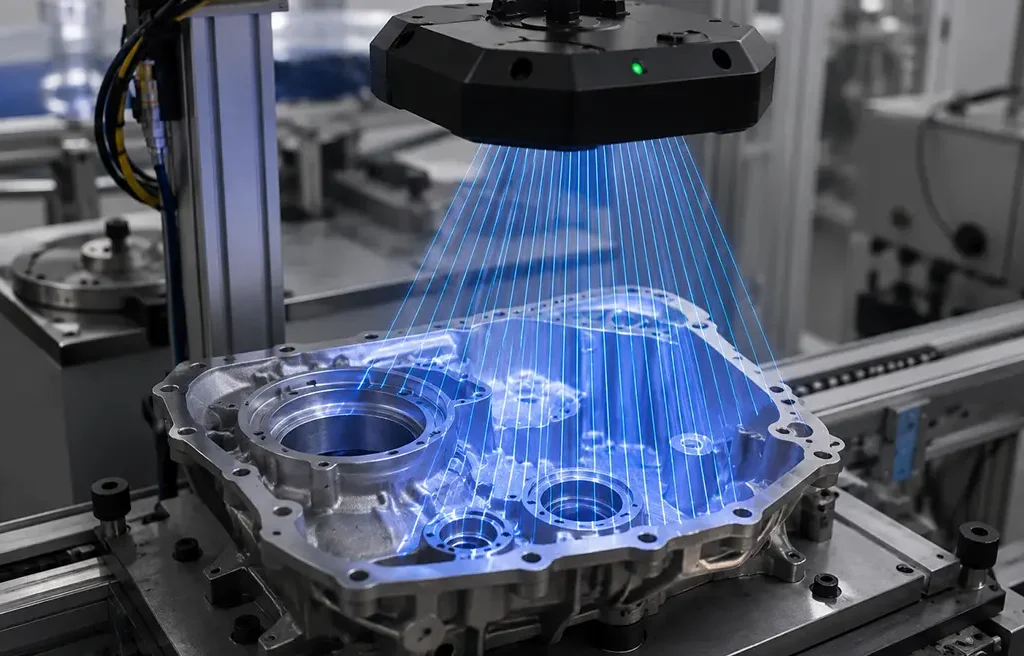
A 3D vision system adds a third axis, depth, to the inspection, using technologies like structured light, laser triangulation, stereo vision, or time-of-flight sensors to build a volumetric model of the object being inspected. Rather than producing a flat image, it outputs a point cloud or height map that captures the object’s actual shape and dimensions in space.
This depth capability is what makes 3D vision essential for tasks a 2D camera cannot perform at all: measuring weld bead height, verifying that a component sits flush within a tolerance of a fraction of a millimeter, checking fill level in a sealed container, or guiding a robot to pick a part out of a bin where every item sits at a different height and angle. The tradeoff is real. 3D systems process significantly more data per capture, require more careful calibration and vibration control, and typically carry a meaningfully higher upfront cost than an equivalent 2D setup.
How 2D and 3D Vision Systems Actually Compare
| Factor | 2D Vision | 3D Vision |
|---|---|---|
| Dimensions Captured | Width and height (X, Y) | Width, height, and depth (X, Y, Z) |
| Typical Sensors | Area scan or line scan cameras | Structured light, laser triangulation, stereo vision, time-of-flight sensors |
| Data Output | Flat pixel-based image | Point cloud or height map |
| Processing Speed | Fast, lower data volume | Slower, higher data volume |
| Lighting Sensitivity | High; shadows and reflections can distort results | Lower; less dependent on controlled lighting |
| Typical Cost | Lower, often 50–70% less than comparable 3D systems | Higher upfront investment |
| Best Suited For | Labels, barcodes, presence checks, OCR, flat surface defects | Height measurement, volume analysis, warping detection, complex geometry inspection, robotic guidance |
The table captures the core tradeoff well: 2D wins on speed and cost for anything that can be judged from a flat image, while 3D wins wherever depth, shape, or spatial position is the actual thing being measured.
When to Use a 2D Vision System
- Reading labels, barcodes, or printed text. OCR and code verification depend on contrast and pattern recognition, exactly what 2D vision is built for.
- Inspecting flat surfaces at high speed. Scratches, discoloration, and print quality on a fast-moving line are well within 2D’s core strength.
- Verifying presence or absence of a component. Confirming a screw, label, or part is in the correct location does not require depth data.
- Working in a well-controlled, well-lit environment. 2D performs best when lighting and camera position stay consistent.
When to Use a 3D Vision System
- Measuring height, volume, or flatness. Weld bead thickness, fill level, and coplanarity checks all require true Z-axis data.
- Inspecting complex or irregular geometry. Molded and machined parts with tight tolerances need a full spatial model to verify against specification.
- Guiding robots in unstructured environments. Bin picking, where parts sit at random heights and orientations, is a task 2D vision cannot do at all.
- Working with reflective or variable-lighting conditions. 3D systems are generally more robust to the shadows and glare that disrupt 2D imaging.
2D and 3D Vision in Action Across Industries
Different industries rely on 2D and 3D vision systems differently, depending on the inspection task at hand. 2D vision is ideal for fast, surface-level inspections, while 3D vision is essential for applications requiring accurate depth and dimensional measurements.
Automotive Manufacturing
Modern vehicles involve more than 30,000 individual parts, so manual inspection is impractical at production speed.
- 2D Vision: Confirms that the correct parts are present at each stage of assembly.
- 3D Vision: Verifies weld quality, panel gap tolerances, and other depth-dependent measurements.
Electronics Manufacturing
The production of electronics relies on these two technologies to inspect increasingly complex assemblies.
- 2D Vision: It confirms component placement and reads text on printed circuit boards (PCBs).
- 3D Vision: It measures solder paste height and connector coplanarity, defects that are functionally invisible to a flat image.
Pharmaceutical and Food Packaging
Depending on the task, packaging lines use different vision technologies.
- 2D Vision: Handles label compliance and print verification.
- 3D Vision: Measures blister pack seal integrity and container fill levels.
Many of these inspections are related to surface defect detection. In this process, manufacturers identify scratches, dents, seal defects, contamination, and other imperfections on packaged goods before they leave the production line.
Choosing Between 2D and 3D for Your Inspection Line
The right choice depends on more than just camera technology. Consider the following factors when selecting a 2D or 3D vision system for your inspection line:
- Identify what you are actually measuring. If the defect or check is visible in a flat image, a 2D system likely handles it. If it requires height, volume, or shape data, only 3D will work.
- Assess your production speed. High-throughput lines with simple checks favor 2D’s faster capture and processing. Moderate-speed or stop-and-inspect stations can absorb the additional processing time 3D requires.
- Evaluate your lighting environment. Inconsistent or difficult lighting conditions push the decision toward 3D, which is inherently less sensitive to shadows and reflections.
- Factor in total cost, not just hardware price. A 2D system costs less upfront, but if it cannot catch the defects that matter most, the downstream cost of missed defects and rework can outweigh the initial savings.
- 5. Consider a hybrid setup. Many production lines run both, using machine vision for defect detection at multiple stages, 2D for fast surface-level screening and 3D for the depth-dependent checks that follow.
Why Many Production Lines Use Both
The most common real-world setup is not “2D or 3D” but “2D and 3D,” each covering the inspection tasks the other cannot. A 2D camera might confirm a label is present and correctly printed, while a 3D sensor downstream verifies that the same container is filled to the correct height, a distinction our earlier look at machine vision systems for automated inspection covers in more depth.
The same layered logic applies to component-level checks: just as object detection for industrial machine vision identifies and classifies parts within a 2D image, 3D systems take over the moment a task requires confirming that a part’s physical geometry, not just its visual appearance, meets specification. This layered approach mirrors the same principle behind aircraft surface and component inspection: no single vision technology covers every defect type, and the strongest inspection programs combine methods rather than forcing one system to do a job it was never designed for.
Bringing the Right Vision System to Your Production Line
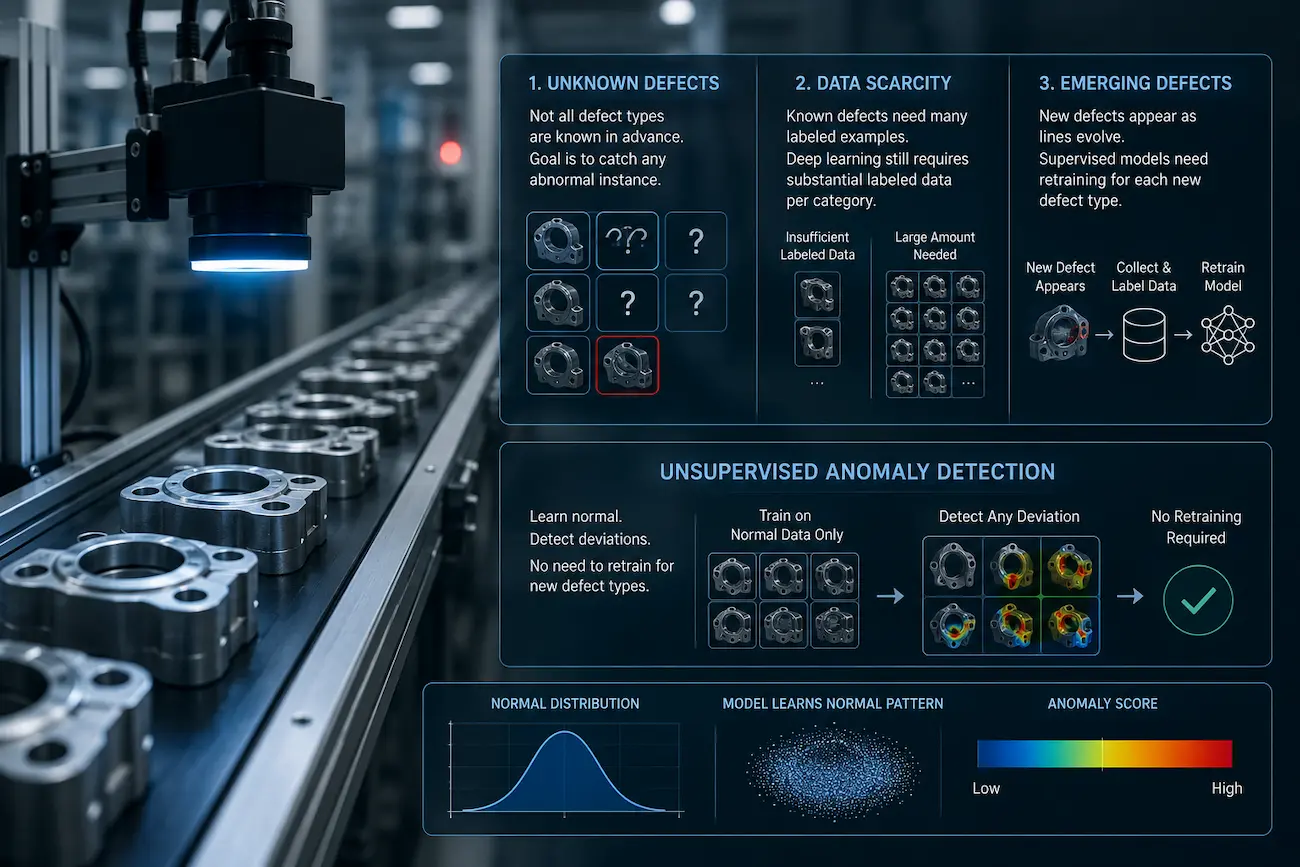
Choosing between 2D and 3D vision isn’t about selecting the most advanced technology, it’s about selecting the right tool for the inspection task. Successful machine vision projects begin by identifying exactly what needs to be measured, whether that’s a surface defect, a dimensional variation, or a combination of both. Matching the inspection objective to the appropriate vision technology helps manufacturers improve detection accuracy while avoiding unnecessary hardware costs.
At AI-innovate, we’ve developed our vision inspection solutions with this flexibility in mind. Rather than treating 2D and 3D vision as competing technologies, we design systems that use the most suitable data for each application.
- AIxEye performs AI-powered defect detection on both surface appearance and dimensional inspection tasks, allowing manufacturers to inspect products using either 2D images, 3D data, or a combination of both.
- AIxCam streamlines the collection and annotation of training data, helping manufacturers build reliable AI models for new defect types across both image-based and depth-based inspections.
- AIxCore delivers real-time edge AI processing, enabling both high-speed 2D inspections and data-intensive 3D analysis without introducing delays to the production line.
Final Thoughts
2D vision systems win on speed, simplicity, and cost for any inspection task that can be judged from a flat image, while 3D vision systems are the only option once height, volume, or complex geometry becomes part of what needs to be measured.
In practice, the manufacturers who get the most value from machine vision are rarely the ones who pick a single technology and standardize on it everywhere. They are the ones who map each inspection task to the system actually built for it, often running 2D and 3D side by side on the same line, and treat the decision as an ongoing fit exercise rather than a one-time hardware purchase.
Confused About Where to Start with AI?
Our specialists help you identify the right AI approach based on your process, data, and goals.
Frequently Asked Questions
What is the main difference between 2D and 3D vision systems?
The main difference is depth. 2D vision systems capture flat images across width and height only, while 3D vision systems add a third axis to measure depth, volume, and complex geometry that a flat image cannot represent.
Is 3D vision always more accurate than 2D vision?
Not necessarily. 3D vision is more accurate for anything involving depth, height, or shape, but 2D vision is equally or more accurate for surface-level tasks like label reading, barcode scanning, and contrast-based defect detection, since it is purpose-built for exactly that.
How much more expensive is a 3D vision system compared to 2D?
3D vision systems typically cost significantly more upfront than 2D systems, with industry estimates placing 2D systems at roughly 50 to 70 percent lower cost. The gap narrows when factoring in the cost of defects a 2D system would miss entirely.
Can 2D and 3D vision systems work together on the same production line?
Yes, and this is increasingly the standard approach. Many manufacturers use 2D vision for fast surface-level checks like label verification and 3D vision for depth-dependent measurements like weld height or fill level, combining both on a single line to cover the full range of defect types.
What industries rely most heavily on 3D vision systems?
Automotive, aerospace, and electronics manufacturing rely heavily on 3D vision for tasks like weld profiling, gap measurement, and solder height verification, where tolerances are tight enough that depth data is not optional.
Does 3D vision eliminate the lighting problems that affect 2D vision?
3D vision is generally more robust to lighting variation and shadows than 2D vision, but it is not immune to every environmental challenge, particularly with highly reflective or perfectly uniform surfaces, which can still require specific calibration or technique adjustments.
Sources
Ai-Innovate uses only high-quality sources, including peer-reviewed studies, to support the facts within our articles.
- KEYENCE Corporation. Key Differences Between 2D and 3D Vision Systems. https://www.keyence.com/products/vision/resources/vision-resources/key-differences-between-2d-and-3d-vision-systems.jsp
- Averroes. (2026). 2D Vision vs 3D Vision Systems for Inspection. https://averroes.ai/blog/2d-vision-vs-3d-vison-systems
- Photoneo. (2025). 2D vs 3D Vision System: Finding a Perfect Fit For Your Application. https://www.photoneo.com/2d-vs-3d-vision-system/