




A chemical reactor drifts 0.3 degrees above the optimal temperature. This minor deviation is invisible to the naked eye and goes unnoticed, yet over the next six hours, it will result in thousands of dollars in wasted energy and off-spec product. Traditional control systems only detect the problem after quality parameters fail. By then, an entire batch will require rework or disposal. This scenario plays out daily in manufacturing facilities around the world. Traditional process control systems only react to problems. AI-powered systems prevent them.
For manufacturers, rising energy costs, skilled labor shortages, and intensifying global competition are big challenges. AI process control offers more than just efficiency gains. It provides the knowledge needed to keep up with the competition in an industry where profits are decreasing and expectations are increasing.
👉This article explains how AI is changing industrial process control, the technologies behind this change, and how AI-innovate‘s platform helps manufacturers use intelligent control systems that get real results.

What Is AI for Industrial Process Control?
AI-driven industrial process control uses machine learning algorithms and advanced analytics to manage critical manufacturing variables, such as temperature, pressure, chemical concentrations or quality parameters. Unlike rule-based systems, which follow fixed instructions, These systems can adapt to shifting conditions and learn from new data. They analyze real-time sensor and equipment data, identify complex patterns across operational parameters, and autonomously adjust to maintain optimal production conditions. This helps operators maintain stability and efficiency across complex, dynamic processes.
 In a nutshell, AI driven process control learns from real time data, adapts to changing conditions, and automatically adjusts key variables to keep production stable, efficient, and consistent.
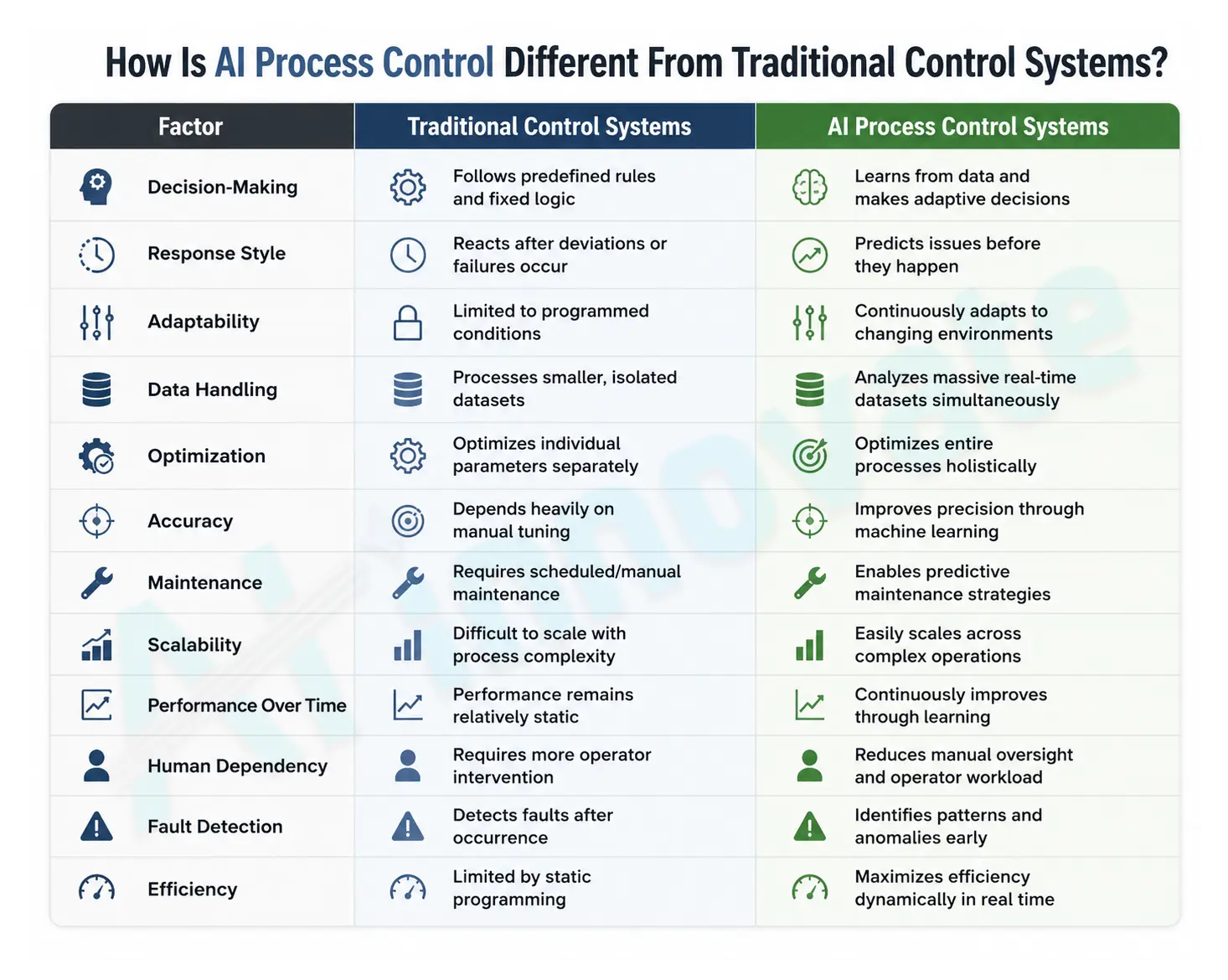
How Is AI Process Control Different From Traditional Control Systems?
The core difference is timing: traditional control systems react to problems after a parameter has already failed, while AI process control predicts and prevents them before they occur. Conventional systems like PID controllers and rule-based PLCs follow fixed instructions and hold variables to preset limits, but they cannot adapt when conditions shift or learn from new data. AI-driven quality control analyzes real-time sensor and visual data, recognizes complex patterns across thousands of variables at once, and adjusts automatically to keep the process optimal.
How AI Powered Industrial Process Control Works
Equipment Data Collection
- Process: The continuous collection of data from sensors, instruments, cameras, PLCs, and IIoT devices that track temperature, pressure, flow rates, and equipment conditions.
- Purpose: To provide a real time view of every critical process variable and capture subtle shifts before they escalate.
- Key benefit: Ensures complete process visibility and creates a reliable foundation for predictive insights.
Data Processing
- Process: Cleaning, filtering, and organizing raw industrial data so AI models can recognize meaningful patterns across thousands of operational parameters.
- Purpose: To turn noisy and inconsistent data into structured inputs that support accurate prediction and control.
- Key benefit: Improves model performance and reduces false alarms, even in complex or variable production environments.
AI Model Training and Predictive Analysis
- Process: Machine learning models, ranging from neural networks to digital twins, are used to identify relationships between variables and replicate how the system behaves under different conditions.
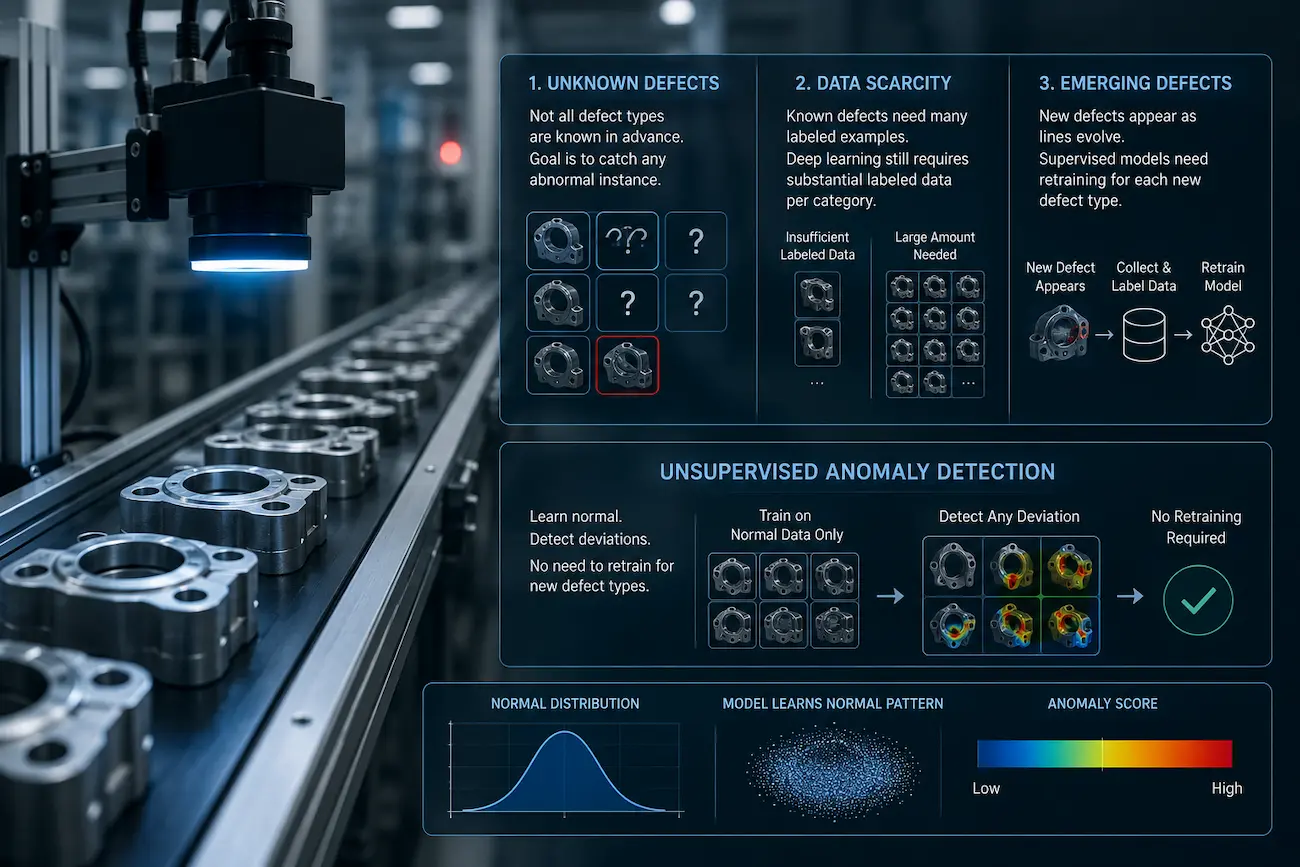
- Purpose: The goal is to detect anomalies, predict equipment issues, and identify optimal control strategies that surpass manual, rule-based approaches.
- Key benefit: It creates a system that can anticipate production disturbances and execute corrective actions before the disturbances occur.
Actionable Insights for Strategic Decision Making
- Process: Clear, data backed recommendations generated by the AI system that highlight root causes with varied defect analysis techniques , efficiency opportunities, risk areas, and improvement actions.
- Purpose: To guide leaders and engineering teams in making informed operational decisions that enhance stability, reduce costs, and support long term process improvements.
- Key benefit: Transforms raw process data into strategic intelligence, giving executives the clarity they need to improve performance, reliability, and profitability.

Where Is AI Used in Industrial Process Control?
AI is revolutionizing industrial operations by replacing rigid, rule-based systems with adaptive, data-driven intelligence that learns and improves continuously.
- Chemical and Petrochemical: Companies like Shell and ExxonMobil rely on AI and digital twin technology to simulate complex reactions, optimize reactor conditions, and predict equipment failures before they happen. These systems boost product yield, cut emissions, and reduce downtime while analyzing real-time production for possible defects and market data to refine feedstock usage and ensure environmental compliance automatically.
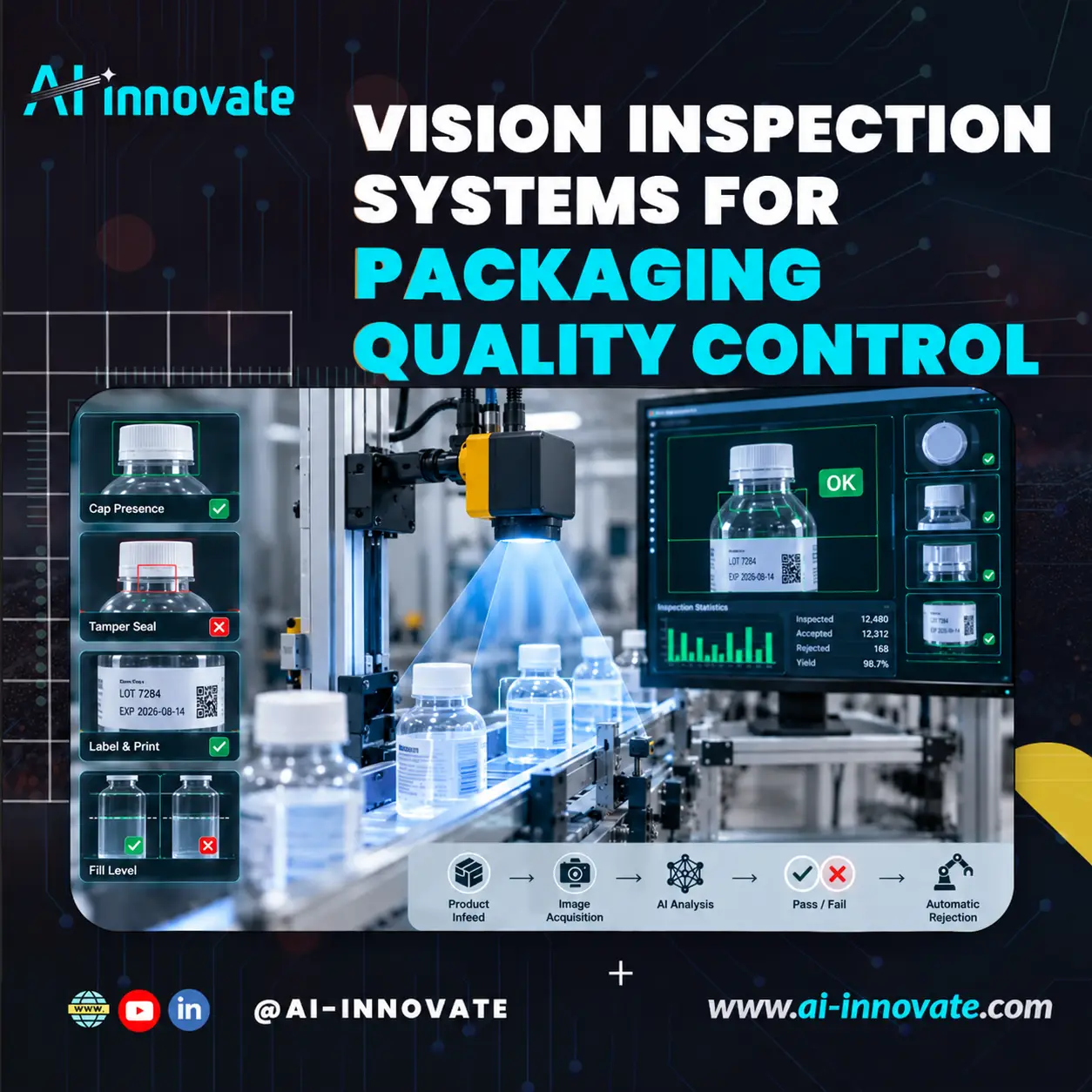
- Manufacturing: Automotive manufacturers like BMW use AI-powered vision systems for automated quality inspection, catching microscopic defects that manual checks miss. General Electric and Procter & Gamble deploy machine learning for predictive maintenance, forecasting equipment failures to eliminate unplanned downtime and slash maintenance costs. Collaborative robots enhance precision and workplace safety across assembly lines.
- Energy and Utilities: AI drives smart grid management by continuously analyzing sensor data to balance electricity supply and demand. It optimizes renewable energy integration by forecasting solar and wind output, reducing waste and stabilizing grid performance. Real-time energy management systems identify inefficiencies across operations, cutting costs while improving reliability.
- Metals and Mining: Mining operations use autonomous AI-guided machinery to navigate dangerous environments safely. AI optimizes processing plants to maximize mineral recovery while minimizing energy consumption. Computer vision automates ore sorting, and machine learning monitors environmental impacts in real-time, ensuring compliance and reducing ecological footprint.
Challenges and How to Address Them
AI enabled process control offers strong operational gains, but teams must address a few core challenges to achieve reliable results.
Inconsistent or Limited Data
- Challenge: False predictions can result from missing values, sensor noise, and limited data ranges.
- Solution: Improve data quality through better sensor calibration and broader data collection during model training.
Integration with Legacy Control Systems
- Challenge: Older PLCs and SCADA platforms may not support high frequency data exchange or AI driven adjustments.
- Solution: Introduce an edge integration layer that bridges modern analytics with existing equipment, allowing modernization without major system replacements.
Operator Trust and Model Transparency
- Challenge: Engineers hesitate to rely on AI if they cannot see how decisions are made.
- Solution: Use explainable AI outputs that highlight key variables, confidence levels, and reasons behind recommendations to support informed human oversight.
Scaling Across Lines or Facilities
- Challenge: Differences in equipment, materials, and workflows make it difficult to replicate pilot results at larger scale.
- Solution: Standardize deployment frameworks and validation steps so models remain consistent while still allowing tuning for local conditions.