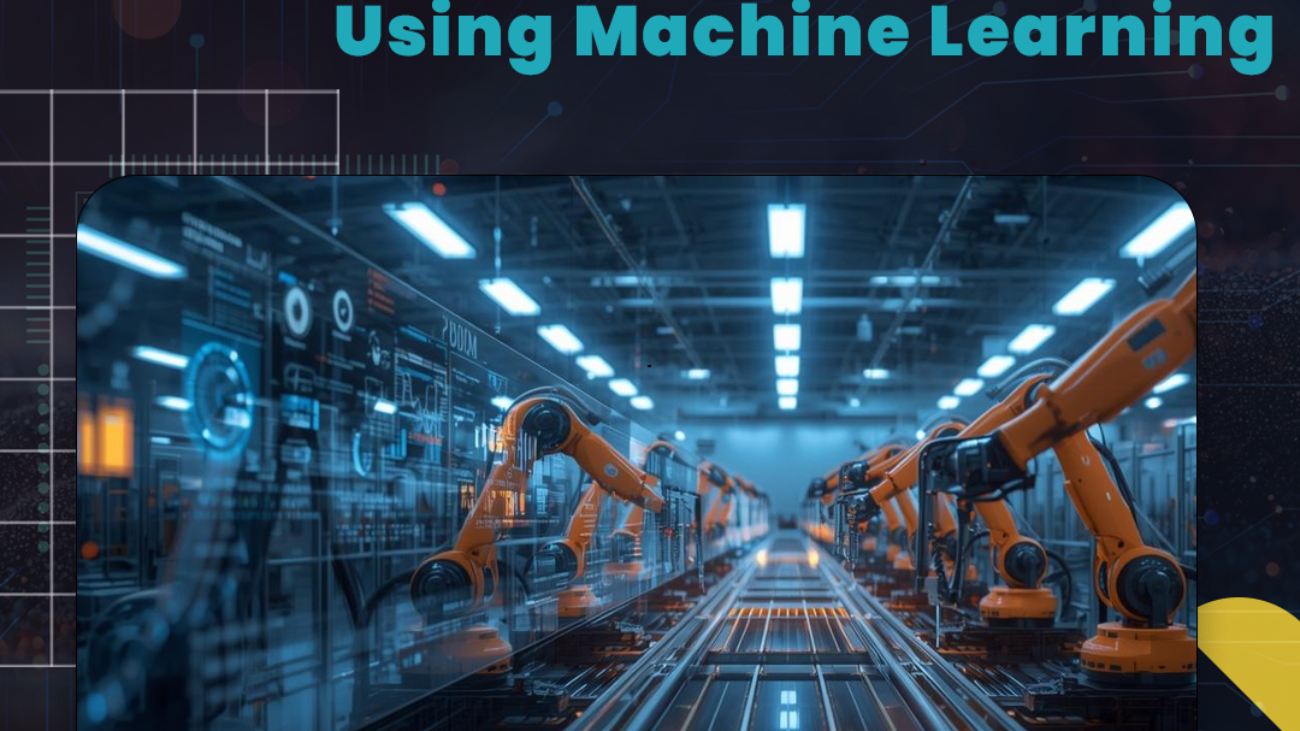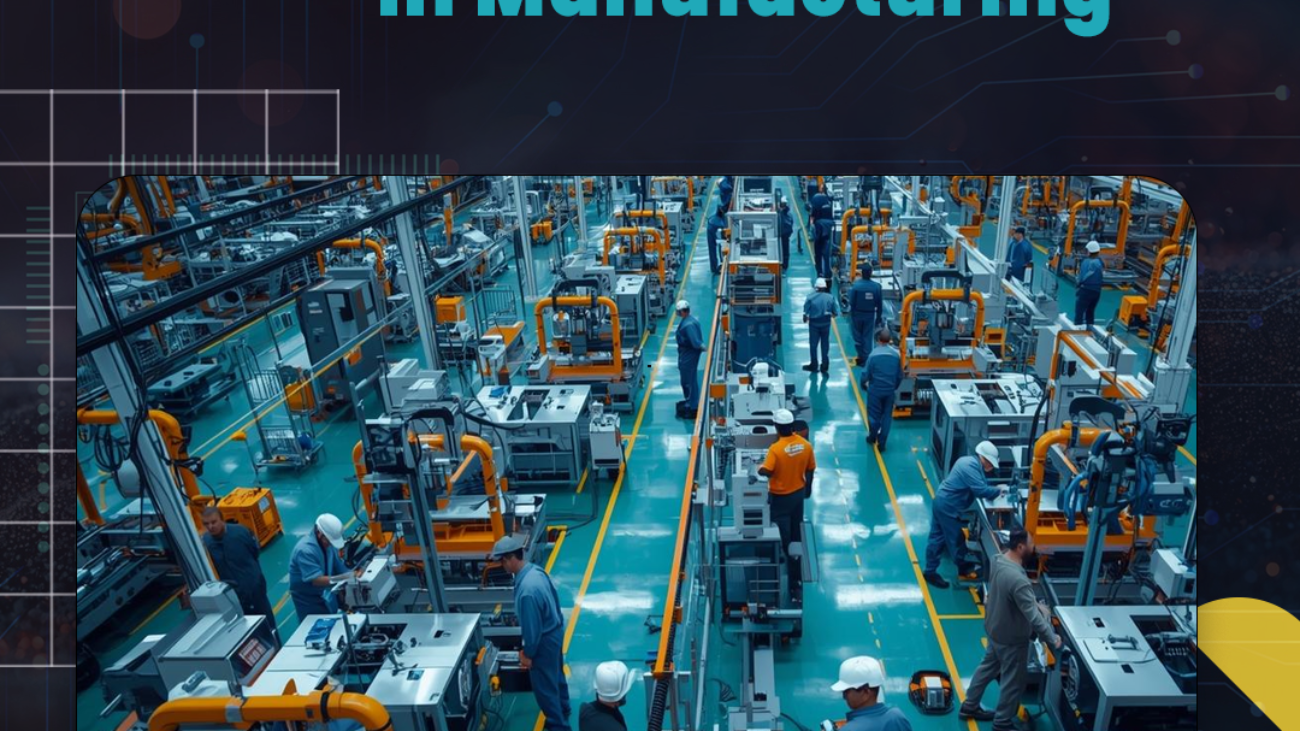
AI Trends in Manufacturing 2026

AI Trends in Manufacturing 2026: The Technologies Transforming Smart Factories

Most manufacturers do not have an AI shortage in 2026. They have a scaling problem. A widely cited MIT study found that only about 5 percent of generative AI projects, agentic initiatives included, actually reach production scale across industries. The rest sit in what one industry analysis calls “pilot purgatory,” technically impressive, strategically stalled. Meanwhile, Deloitte projects agentic AI adoption in manufacturing to roughly quadruple this year, from around 6 percent to 24 percent of manufacturers, and Gartner expects more than 40 percent of current agentic AI projects to be cancelled by the end of 2027 due to unclear business value or inadequate governance.

That gap between adoption headlines and actual production results is the real story of manufacturing AI in 2026. The technology is not the bottleneck anymore. Execution is. Three forces are making that execution gap harder to ignore: a volatile global trade environment demanding real-time supply chain agility, a structural workforce shortage as experienced workers retire, and AI itself shifting from a passive assistant that answers questions to an active agent that executes decisions.

This guide walks through the specific trends reshaping manufacturing this year, why so many AI initiatives stall before delivering value, and where the clearest, most defensible ROI is actually showing up on the factory floor.

The Manufacturing AI Trends Shaping 2026

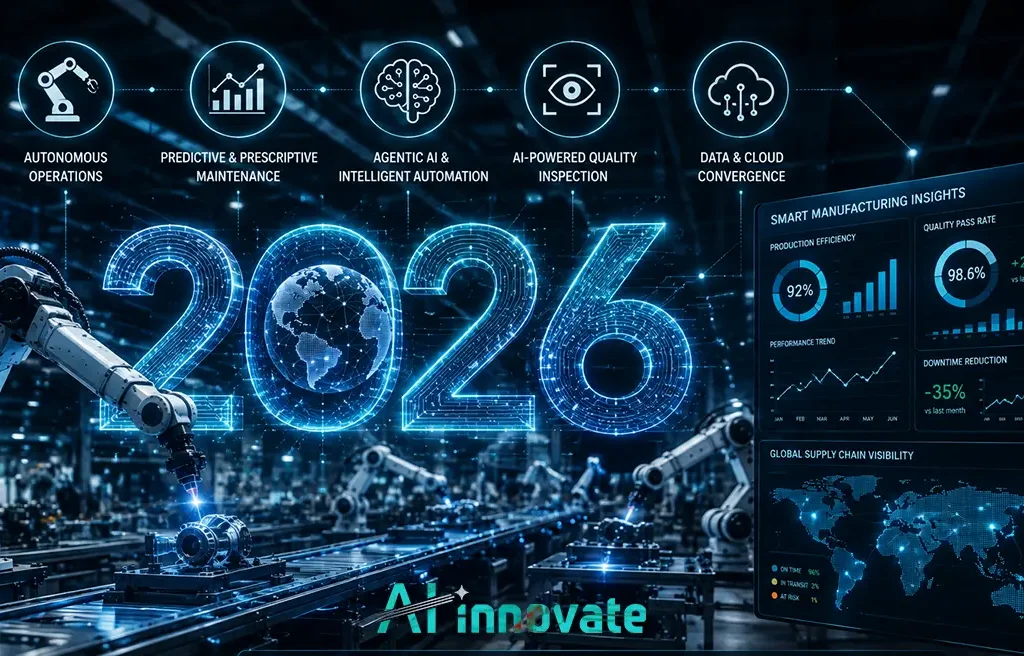
Manufacturing AI in 2026 is defined less by breakthrough technologies and more by successful execution. Organizations moving beyond experimentation are investing in AI applications that deliver measurable operational improvements, strengthen resilience, and create a scalable foundation for future automation. The trends below highlight the technologies and strategies shaping the next generation of smart manufacturing.
The Manufacturing AI Trends Shaping 2026

Agentic AI Moving From Pilots to Production

The defining shift of the year is from AI that surfaces insights to AI that executes decisions autonomously. On the factory floor, this looks less like a dashboard and more like an agent that ingests equipment data, sensor readings, and maintenance history to draft an actual repair plan for a technician to review, rather than simply flagging that a machine might fail.

The same shift is playing out in procurement and supply chain functions, where agents are increasingly trusted to renegotiate supplier terms in real time as trade conditions shift. Most organizations are earlier in this journey than their public roadmaps suggest, which is exactly why understanding the gap between adoption headlines and production reality matters.

AI-Powered Quality Inspection at the Core of Operations

Vision-based defect detection remains one of the clearest, most measurable AI wins available to manufacturers this year. It catches issues at the point of production, before they reach assembly or ship to a customer, rather than after the cost of a defect has already compounded into rework or a warranty claim. Because it operates at a well-defined checkpoint, does this unit meet specification or not, it continues to be one of the easier AI investments to justify and measure, which is covered in more depth further in this guide.

This Topic might also interest you :

Predictive and Prescriptive Maintenance

Maintenance AI is moving past simple alerts toward systems that draft an actual response. Rather than flagging “this bearing may fail,” a prescriptive system ingests sensor data, historical repair records, and current production schedules to propose a specific maintenance window and parts list for a technician to approve. This shift from prediction to action is a meaningful jump in practical value, since a prediction nobody acts on is just another unread notification.

Data Infrastructure as a Strategic Asset

Every other trend on this list depends on this one. Advanced analytics and AI agents only deliver value when the underlying data is unified and trustworthy, which is why manufacturers are investing heavily this year in breaking down the silos between CRM, ERP, and IoT systems rather than layering more AI tools on top of fragmented data. Organizations moving fastest are treating this as foundational infrastructure work, not a side project to revisit later.

IoT and OT Convergence

Translating raw, binary sensor data from plant equipment into usable operational intelligence remains the unglamorous but essential foundation everything else depends on. Time-series data from machines only becomes valuable once it is converted into a form that analytics and AI models can actually reason about. Without that conversion layer, even the most sophisticated AI model has nothing reliable to learn from, which is why this convergence work tends to precede, not follow, more visible AI initiatives.

Workforce Transformation Through AI-Augmented Expertise

As experienced workers retire, AI is increasingly used to capture the knowledge they take with them rather than simply trying to hire replacements fast enough. This means feeding maintenance logs, shift reports, and technical manuals into systems that let a newer technician query what a retiring expert would have known instantly, compressing years of informal apprenticeship into a much shorter, AI-guided ramp-up. This trend carries enough weight on its own that it gets a fuller treatment later in this guide.

Service-Centric Business Models

Manufacturers are increasingly shifting revenue away from one-time equipment sales toward guaranteeing uptime through Equipment-as-a-Service style models, where the manufacturer retains responsibility for how well the equipment actually performs. This shift is not cosmetic: providers accelerating toward service-first models report profit margins more than twice as high as traditional hardware sales, because the model depends on continuous field data and a direct incentive to prevent failures rather than simply sell replacement parts after one occurs. That data dependency is exactly why this trend is inseparable from the data infrastructure and IoT convergence trends above.

Supply Chain Resilience Through Automation

Ongoing global trade volatility has made reactive supply chain management a genuine liability. The manufacturers responding best are building supply chains that anticipate disruption, diversifying suppliers and adjusting sourcing decisions before a shortage actually hits, rather than scrambling once it does. AI plays a growing role here because the sourcing and logistics decisions involved are often too complex and time-sensitive for manual teams to manage in real time, particularly when trade conditions shift on short notice.

Why So Many AI Pilots Stall Before Reaching Scale

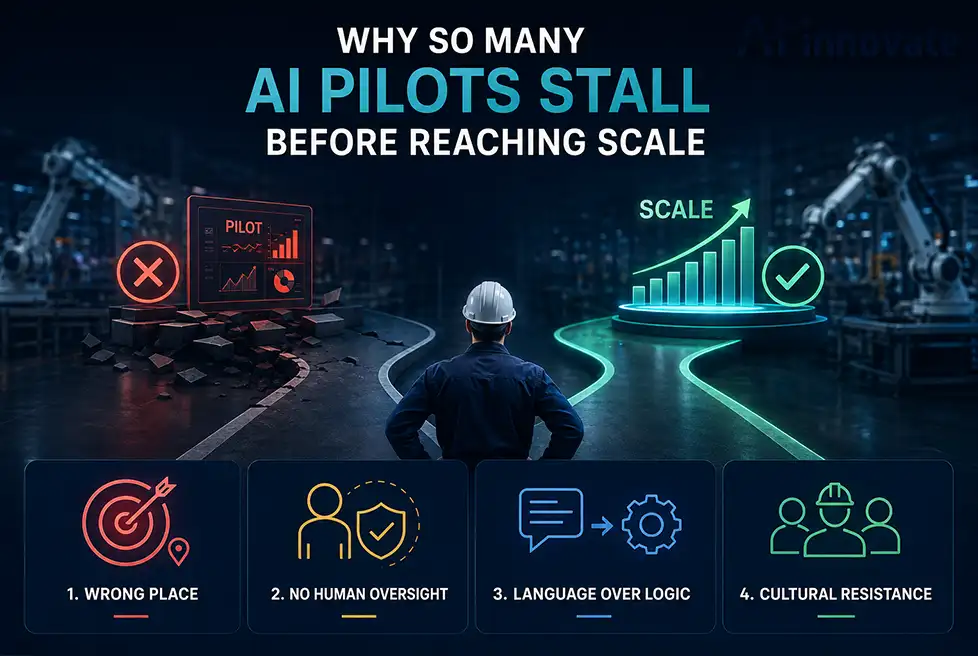
Understanding why most AI initiatives fail to scale matters as much as understanding the trends themselves, since it is the difference between a strategy that delivers results and one that generates an impressive pilot deck.

  1. They start in the wrong place. The organizations that scale successfully tend to start with high-value, non-production-critical processes, root cause analysis for quality issues, spare parts procurement, rather than attempting to automate core production decisions on day one.
  2. They skip human-in-the-loop governance. AI agents executing financial or safety-critical actions without a human validation step are exactly the kind of deployment that erodes trust the first time something goes wrong, and trust, once lost, is hard to rebuild internally.
  3. They optimize for language instead of logic. A chatbot that can discuss your production data is not the same as an agent that can query your systems and take action within them. Platforms built for genuine logic and system integration outperform those built primarily for conversation.
  4.  They underestimate the cultural resistance. If frontline workers experience AI as a surveillance tool rather than a co-pilot, adoption stalls regardless of how technically sound the deployment is. This is consistently underestimated in AI rollout planning.
Why So Many AI Pilots Stall Before Reaching Scale

AI-Powered Quality Inspection: Where the ROI Is Clearest

Of every AI use case on a factory floor, vision-based quality inspection remains one of the least ambiguous in terms of return on investment, and it is a natural starting point precisely because it fits the “high-value, non-production-critical” profile that successful AI programs prioritize. Unlike agentic supply chain orchestration or autonomous scheduling, which touch core production decisions and carry real operational risk if something goes wrong, AI for quality assurance operates at a well-defined checkpoint: does this unit meet specification, yes or no. That clarity is exactly why it scales more reliably than more ambitious agentic initiatives.

This is also where AI automation in manufacturing tends to deliver its most immediate, measurable wins, catching defects before they compound into rework, warranty claims, or a recall, rather than after the cost has already been locked in. As the broader industry works through the harder problem of scaling agentic AI into core operations, quality inspection remains the department where manufacturers can point to concrete, defensible numbers today.

The Workforce Angle: AI as Co-Pilot, Not Replacement

The manufacturing workforce shortage is not a future risk. The industry faces a structural gap of nearly four million jobs as experienced workers retire and take decades of undocumented operational knowledge with them. The manufacturers responding most effectively are not trying to replace that expertise with AI outright. They are using AI to capture it, feeding maintenance logs, shift reports, and technical manuals into systems that let a newer technician query what a retiring expert would have known instantly.
The framing matters as much as the technology here. Positioning AI as the tool that removes tedious, repetitive work and preserves institutional knowledge tends to drive real adoption. Positioning it as a surveillance or replacement tool tends to kill adoption regardless of how capable the underlying system actually is, which is a cultural challenge, not a technical one, and one that gets underestimated constantly.

What This Means for Manufacturers Planning 2026

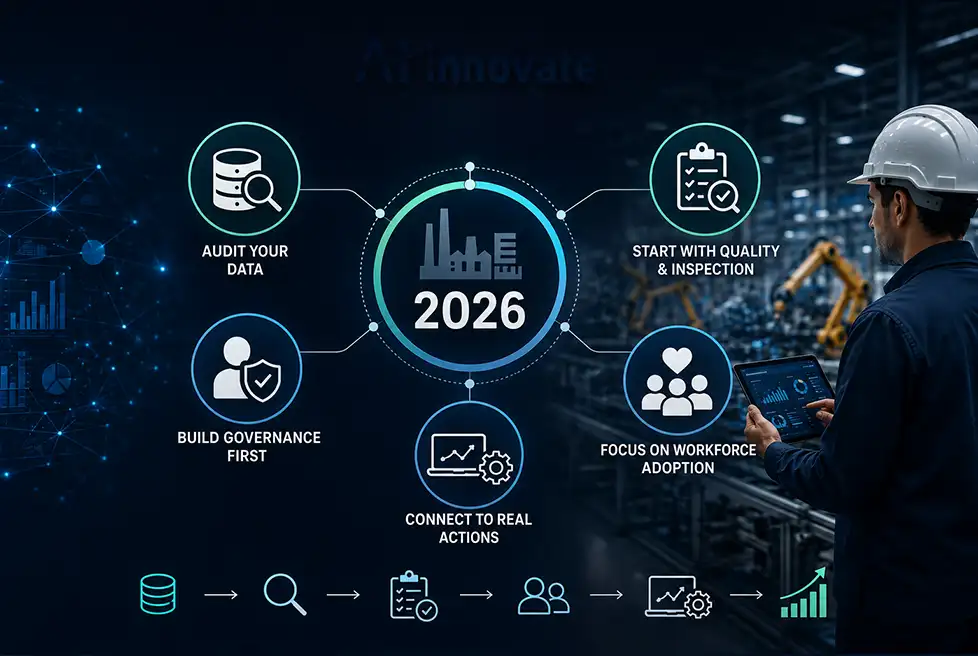
  • Audit where your data actually lives. Most manufacturers still have production, quality, and maintenance data sitting in disconnected systems. Unifying it is unglamorous work, but it is the prerequisite for every trend on this list, not a separate initiative.
  • Start with quality and inspection, not core production control. It carries lower operational risk, delivers measurable results faster, and builds the internal credibility needed to fund more ambitious smart factory solutions later.
  • Build governance before you scale, not after. Human-in-the-loop review for anything safety- or finance-critical should be a design requirement from the first deployment, not a patch added after an incident.
  • Treat workforce adoption as a change management problem. The best AI system in the world fails if the people running the line do not trust it, and that trust has to be earned deliberately.
  • Connect predictive maintenance to real scheduling and procurement workflows. A prediction that does not trigger an action is just another dashboard nobody checks.
What This Means for Manufacturers Planning 2026

How AI-innovate Supports Modern Manufacturing

The biggest lesson from today’s manufacturing AI landscape is that success isn’t about adopting every new AI technology. It’s about solving the right problems first. Manufacturers that begin with measurable, lower-risk applications such as quality inspection build the data foundation, operational confidence, and internal support needed to scale AI across the business.

AI-innovate helps manufacturers accelerate that journey with purpose-built AI solutions:

  • AIxEye : AI-Powered Visual Inspection Detects surface defects and quality issues in real time, reducing scrap, rework, warranty claims, and production waste while improving product consistency.
  • AIxCam : Synthetic Data Generation Creates high-quality synthetic images of rare defects, enabling AI models to achieve higher accuracy without waiting months to collect enough real production data.
  • AIxCore : Edge AI Processing Runs AI inspection directly on the production line for ultra-fast, low-latency decision-making without relying on constant cloud connectivity.

Together, these solutions help manufacturers improve Ai-driven quality control, increase production efficiency, and build a scalable AI foundation that supports future initiatives such as predictive maintenance, intelligent automation, and smart factory operations.

Confused About Where to Start with AI?

Our specialists help you identify the right AI approach based on your process, data, and goals.

Final Thoughts

The manufacturing AI story in 2026 is less about new capability and more about execution discipline: agentic AI, predictive maintenance, and workforce-augmenting tools are all technically available, but the manufacturers pulling ahead are the ones deploying them where risk is manageable and value is measurable, not the ones chasing the most ambitious use case first.

Quality inspection continues to be the clearest example of that discipline in practice. It is contained, well-defined, and delivers results fast enough to build the internal trust and budget needed to tackle harder, higher-risk AI initiatives later. Manufacturers who treat 2026 as the year to get that foundation right, rather than the year to chase every agentic headline, will be the ones with something real to show for it by 2027.

Frequently Asked Questions

What is the biggest benefit of AI in continuous manufacturing?

Most pilots stall because they start with production-critical processes that carry too much operational risk, lack human-in-the-loop governance for critical decisions, or focus on conversational AI capability rather than systems that can genuinely query data and take action. Cultural resistance from frontline workers who see AI as surveillance rather than support is also a major, often underestimated factor.

Reported results vary by application, but a peer-reviewed systematic review found AI-driven systems deliver an average 15 percent gain in production efficiency, while industry surveys of early adopters report around 14 percent operating-cost improvements once the system stabilizes variability and energy use.

Yes, and arguably more relevant than ever. Quality inspection remains one of the clearest, most measurable AI use cases precisely because it is well-defined and lower-risk, making it a strong starting point that builds the credibility and data infrastructure needed for more ambitious agentic initiatives.

Rather than replacing workers, AI is increasingly used to capture the institutional knowledge of retiring experts and deliver it to newer technicians through guided, AI-assisted workflows, compressing years of on-the-job learning into a much shorter ramp-up period.

Data infrastructure and quality inspection are the two most commonly recommended starting points, since unified data is a prerequisite for every other AI initiative, and quality inspection delivers measurable ROI with comparatively low operational risk.

Not broadly in 2026. Gartner projects a significant share of current agentic AI projects will be cancelled by 2027 due to unclear value or weak governance, and most successful deployments still keep humans in the loop for safety- and finance-critical decisions rather than removing them entirely.

Ai-Innovate uses only high-quality sources, including peer-reviewed studies, to support the facts within our articles.

  1. Implementation. (2026). Manufacturing AI News: Top AI Trends in Manufacturing 2026. Retrieved from https://www.implementation.com/manufacturing-ai-news-top-ai-trends-in-manufacturing-2026/
  2. The Trask. (2026). AI Trends in Manufacturing 2026: AI Pilots Are No Longer Enough—Now Execution Decides. Retrieved from https://www.thetrask.com/blog/ai-trends-in-manufacturing-2026-ai-pilots-are-no-longer-enough-now-execution-decides
  3. Slalom. (2026). Manufacturing Outlook 2026. Retrieved from https://www.slalom.com/us/en/insights/manufacturing-outlook-2026
  4. IFS. (2026). 2026 Manufacturing Industry Trends and Predictions. Retrieved from https://blog.ifs.com/2026-manufacturing-industry-trends-and-predictions/
  5. Research and Markets. (2026). AI in Manufacturing Market Report. Retrieved from https://www.researchandmarkets.com/reports/5866001/ai-in-manufacturing-market-report
  6. BizTech Magazine. (2025). Tech Trends 2026: How AI, Data and Security Are Reshaping Manufacturing. Retrieved from https://biztechmagazine.com/article/2025/12/tech-trends-2026-how-ai-data-and-security-are-reshaping-manufacturing
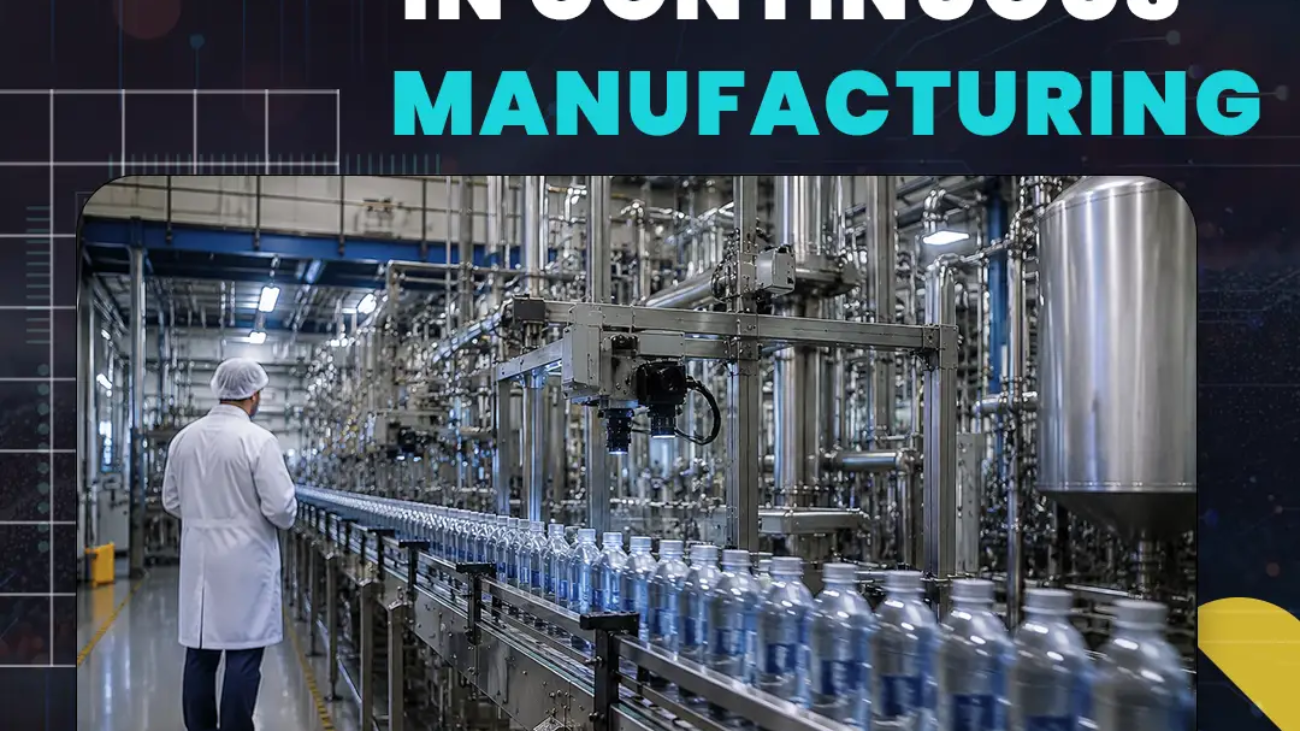
Benefits of AI in Continuous Manufacturingwebp

Benefits of AI in Continuous Manufacturing

In continuous manufacturing, there is no natural pause to catch a mistake. A batch process can stop between runs, inspect the output, and adjust before the next cycle starts. A continuous line runs 24 hours a day, and a minor disturbance in one unit cascades through every unit downstream before anyone notices, turning a small deviation into hours of off-spec product. Energy alone can represent close to a quarter of a continuous plant’s variable spend, so even a small inefficiency compounds fast across a run that never stops.

That always-on structure is exactly why continuous manufacturing has become one of the strongest use cases for industrial AI. A peer-reviewed systematic review covering more than a decade of research found that AI-driven systems deliver an average 15 percent gain in production efficiency, and early adopters of AI in industrial operations report roughly 14 percent operating-cost improvements once the technology stabilizes variability and captures yield previously lost to manual control limits. These are not marginal numbers in an industry where margins are already thin and volatility, in feedstock prices, energy costs, and logistics, keeps rising.

This guide breaks down where those benefits actually come from, what the technology is doing underneath the results, and where continuous manufacturers should realistically start.

What Makes Continuous Manufacturing Different, and Why AI Fits So Well

Continuous processes, refining, chemicals, cement, pulp and paper, food and beverage lines, run without the stop-and-restart cycles that give batch operations a natural checkpoint. That structure has real advantages for throughput, but it means every unit is coupled to the ones around it. A shift in feedstock quality, a temperature drift, or a small control lag does not stay contained. It propagates. Traditional advanced process control handles this with static, linear models that need manual retuning every time conditions shift, and those models typically manage only a handful of variables at once.

AI-driven control, particularly reinforcement learning models that write optimized setpoints back to the plant’s control system in real time, was built for exactly this kind of problem. Rather than optimizing one unit in isolation, it can evaluate how a change in one part of the plant affects everything downstream, continuously, without needing a human to reprogram it every time a condition drifts.

What Makes Continuous Manufacturing Different, and Why AI Fits So Well

The Core Benefits of AI in Continuous Manufacturing

AI offers a range of practical advantages in continuous manufacturing, from stabilizing inputs to optimizing resources. The sections below outline the key areas where AI delivers measurable improvements.

Stabilizing Raw Material and Feed Variability

Continuous operations depend on consistent feed quality, but crude oil characteristics, ore grades, and polymer blends rarely stay perfectly constant in practice. When they drift, yields slip and off-spec volume rises. AI models learn the nonlinear relationship between incoming feed properties and downstream performance, then adjust setpoints, reagent dosage, temperature, flow rate, continuously as conditions change, rather than reacting only after output already falls out of spec.

Optimizing Energy Consumption Across Units

Because energy is such a large share of variable cost in continuous operations, even modest efficiency gains translate directly into margin. Rather than tuning individual units separately, AI systems evaluate the entire plant together, calculating how an adjustment in one area, a kiln, a mill, a cooling tower, affects energy demand elsewhere downstream. Reported results in energy-intensive processes like cement production show measurable reductions in heat demand without compromising product quality, often with payback periods measured in months rather than years.

Reducing Waste and By-Product Losses

Off-spec material, purge streams, and flare losses quietly erode profitability because every unit that misses specification still carries the full embedded cost of the feedstock and energy that went into making it. AI systems that track many process variables simultaneously can trace waste back to its actual root cause, often a subtle drift that would be invisible to a human operator, and correct it before losses accumulate. Even a small percentage reduction in waste can translate into a meaningful annual saving at the scale most continuous plants operate.

Predictive Maintenance and Equipment Availability

Unplanned downtime in a continuous plant does not stay isolated to one unit. It ripples through everything connected to it. Machine learning models trained on vibration, temperature, and power signals can detect the early patterns that precede bearing wear, seal leaks, or motor imbalance well before a hard failure forces an emergency shutdown, allowing predictive maintenance to shift repairs into planned service windows instead. Facilities using this approach consistently report steadier production cadence and fewer reactive work orders.

Faster, Cleaner Product Changeovers

Grade and product changeovers create some of the costliest windows in continuous manufacturing, since purge, off-spec material, and energy spikes all tend to concentrate around a transition. AI systems that can simulate many possible ramp scenarios before committing to one help identify the path that balances throughput, quality, and utility use, and because each completed changeover feeds new data back into the model, subsequent transitions tend to start closer to optimal than the last.

Real-Time Quality Control and Defect Detection

Where continuous processes produce a physical, inspectable output, whether that is sheet material, packaged product, or a molded part, AI-powered visual inspection catches quality issues at the moment they occur rather than after a batch has already accumulated defects. This connects directly to broader machine learning for manufacturing process optimization: stabilizing the process and catching defects early are two sides of the same yield-protection problem, and treating them separately usually means losing ground on one while optimizing the other.

Supporting Sustainability and Compliance

Environmental compliance and profitability are frequently framed as a trade-off, but AI-driven optimization increasingly closes that gap. Platforms trained on historian, sensor, and lab data can calculate the optimal fuel, airflow, and feed blend in real time, keeping a plant within emissions and permit limits even as raw material quality shifts. Lower fuel demand reduces operating expense directly, while steadier emissions performance avoids the fines and reporting burden that come with excursions.

The Numbers Behind the Benefits

The specific figures vary by industry and application, but the pattern across independent sources is consistent.

Source Reported Result
Peer-reviewed systematic review (automotive manufacturing) 15% average gain in production efficiency from AI-driven systems
Industry survey of early AI adopters 14% operating-cost improvement once AI stabilizes variability and energy use
Documented case study (plastic injection molding) More than 50% reduction in scrap rate
Peer-reviewed case study (hybrid AI and Lean Six Sigma) 3.15% yield increase and roughly 40 kg of waste saved per batch

How AI Actually Delivers These Benefits: Closed-Loop Optimization Explained

Most of the results above trace back to the same underlying mechanism: closed-loop AI optimization. Instead of an engineer manually adjusting setpoints based on periodic sampling, a model, often built on reinforcement learning, continuously ingests live sensor and lab data, learns the plant’s specific behavior, and writes updated setpoints directly back to the distributed control system. The loop never stops, which is precisely what a continuous process requires, since manual retuning cycles are always at least one step behind the conditions actually happening on the line.

This is a meaningfully different approach from traditional advanced process control, which relies on static equations that need manual retuning whenever feed quality or ambient conditions change. Closed-loop AI systems update continuously, capturing the nonlinear, cross-unit relationships that fixed linear models were never designed to see.

Where Continuous Manufacturers Should Start

  1.   Identify the highest-cost variability first. Whether that is energy, feedstock, or a specific waste stream, the biggest financial pressure point is usually the clearest place to prove value quickly.
  2.   Confirm data quality before committing to a platform. AI models are only as reliable as the sensor and historian data feeding them; fragmented or noisy data is consistently cited as the biggest barrier to scaling these systems.
  3.   Pilot on one process area, not the whole plant. A single kiln, reactor, or line lets a team validate results and build internal trust before expanding further.
  4.   Pair process optimization with quality inspection. Stabilizing the process and catching defects are complementary, not competing, investments, and doing both tends to compound the yield improvement each delivers alone.
  5.   Plan for continuous model maintenance, not a one-time deployment. Feed changes, new products, and equipment updates all require the model to keep learning, which is very different from a traditional control system that is tuned once and left alone.
Where Continuous Manufacturers Should Start

How AI-Innovate Supports Continuous Manufacturing Operations

Continuous manufacturing rewards exactly the kind of always-on, adaptive system AI is best suited to provide, and quality inspection is one of the clearest, lowest-risk places to start realizing that value. Where continuous lines produce an inspectable physical output, AIxEye delivers real-time visual defect detection that flags quality issues the moment they appear rather than after a run has already produced hours of off-spec material. AIxCam helps close a specific gap that continuous operations often face: generating synthetic training data for the rare defect types that a plant running the same process for years may only encounter occasionally, but still needs a model trained to catch reliably. AIxCore handles the on-site processing that keeps inspection decisions fast enough to matter on a line that never pauses to wait for a result.

For continuous manufacturers weighing where AI delivers the clearest, most measurable return, pairing process-level optimization with real-time quality inspection addresses both halves of the yield equation: keeping the process itself stable, and catching the defects that slip through even a well-controlled process.

Final Thoughts

AI delivers measurable benefits across continuous manufacturing, from stabilizing feed variability and cutting energy use to catching defects in real time, precisely because continuous operations reward the always-on, adaptive optimization that AI is built to provide and traditional static control systems were never designed to deliver.

The manufacturers seeing the strongest results are not the ones deploying AI everywhere at once. They are the ones starting with a clear, high-cost variability problem, whether that is energy, waste, or quality, proving measurable value on one process area, and expanding from there with the data discipline the technology depends on. In an industry where a continuous line runs whether you are watching it or not, that kind of always-on optimization is not a luxury. It is increasingly the baseline for staying competitive.

Confused About Where to Start with AI?

Our specialists help you identify the right AI approach based on your process, data, and goals.

Frequently Asked Questions

What is the biggest AI trend in manufacturing for 2026?

The shift from AI pilots to agentic AI in production is the most discussed trend, with AI systems moving from surfacing insights to autonomously executing decisions like maintenance scheduling and supply chain adjustments. However, actual scaled deployment still lags the hype, with most organizations further along in planning than execution.

Most pilots stall because they start with production-critical processes that carry too much operational risk, lack human-in-the-loop governance for critical decisions, or focus on conversational AI capability rather than systems that can genuinely query data and take action. Cultural resistance from frontline workers who see AI as surveillance rather than support is also a major, often underestimated factor.

Not entirely. AI-driven closed-loop optimization typically writes setpoints to the same distributed control system that traditional advanced process control uses, but replaces the static, manually retuned models with continuously learning ones that adapt to changing conditions automatically.

AI evaluates the entire plant together rather than tuning units in isolation, calculating how adjustments in one area affect energy demand elsewhere downstream. This plant-wide view typically captures savings that unit-by-unit manual tuning misses.

Data quality and governance are consistently cited as the primary barrier, since AI models depend on clean, reliable sensor and historian data to learn plant-specific behavior accurately. Workforce expertise and integration with legacy control systems are also common challenges.

Yes, and the strongest implementations treat them as connected rather than separate initiatives. Stabilizing the underlying process reduces the conditions that create defects in the first place, while real-time quality inspection catches what still slips through, and together they protect yield more effectively than either approach alone.

Ai-Innovate uses only high-quality sources, including peer-reviewed studies, to support the facts within our articles.

  1. ProcessMiner. (2023). Benefits of AI and Continuous Manufacturing. https://blog.processminer.com/benefits-of-ai-and-continuous-manufacturing
  2. Imubit. (2026). Continuous Flow Manufacturing AI Deployments That Protect Margins. https://imubit.com/articles/continuous-flow-manufacturing-ai
  3. Ouled Laghzal, S., & El Ouadi, A. (2025). Integrating Artificial Intelligence into Continuous Improvement for Automotive Manufacturing. International Journal of Advanced Computer Science and Applications, 16(11). https://thesai.org/Downloads/Volume16No11/Paper_87-Integrating_Artificial_Intelligence_into_Continuous_Improvement.pdf
AI in Polymer Manufacturing

AI in Polymer Manufacturing

Polymer manufacturing has traditionally relied on chemistry expertise, testing, and numerous trial and errors. While that approach is still significant, AI is beginning to change the industry. Instead of running long cycles of speculations, manufacturers can now use data-driven models to predict polymer properties, narrow down material options, improve production settings, and catch quality issues earlier. 

In polymer science, this broader shift is often called polymer informatics: using AI and machine learning to connect polymer structure, processing, and performance more efficiently than conventional methods alone.

In this blog, we’ll discuss what AI brings to the polymer industry, the techniques behind it and what can be seen on the horizon of AI in polymer manufacturing.

Smarter Polymer Manufacturing, with AI

Optimize production, reduce defects, improve quality with AI.

What AI Actually Does in Polymer Manufacturing

AI is used across the full polymer workflow. It helps at the material-discovery stage, during molecular design, while optimizing manufacturing conditions, and even later when manufacturers want to improve sustainability or recycling outcomes.

Material discovery

One of the biggest challenges in polymer development is the sheer size of the chemical search space. There are too many possible structures, formulations, and processing combinations to test one by one. AI helps by screening candidates much faster than a purely experimental approach.

Molecular design

Traditionally, researchers often started with known chemistries and then test whether they meet the target. With AI, the workflow moves in the other direction: starting with the desired properties, then searching for structures likely to produce them.

Process optimization

Even a strong polymer formula can underperform if the manufacturing process is off. Reaction temperature, mixing time, curing conditions, cooling rate, and many other variables affect the final result. Machine learning analyzes experimental and process data to identify better operating windows, reduce wasted trials, and improve consistency. 

Predictive modeling

Predictive models are one of AI’s best strengths in polymer manufacturing. These models learn from past data and estimate properties such as strength, thermal stability, dielectric performance, degradability, or processing behavior before the material is fully tested in the lab. 

In polymer informatics, these are often called surrogate models because they provide fast estimates that help guide which options are worth pursuing next.

Sustainability enhancement

AI is also becoming important in the push toward more sustainable polymers. Researchers are using data-driven tools to help design biodegradable and recyclable materials, predict environmental performance, and improve recycling strategies.

Polymer Manufacturing

The Tools and Capabilities Behind AI in Polymer Manufacturing

The phrase “AI in manufacturing” can sound vague, so to break it down in greater detail, we have taken a look at what AI works with in the manufacturing, and more specifically, polymer manufacturing process.

Predictive modeling and simulation

AI models, especially machine learning systems, can learn relationships between polymer chemistry and performance. That means a model can look at a polymer’s structure or composition and estimate likely properties without waiting for full experimental testing every time.

Inverse design for tailored properties

Inverse design turns the usual direction around. Instead of asking, “What properties will this polymer have?” researchers ask, “What polymer should I make if I want these properties?” In polymer manufacturing, that can result in designing materials for a specific balance of stiffness, flexibility, durability, dielectric strength, or degradability.

Process optimization and automation

AI can learn from large process datasets and identify conditions that improve yield, quality, or energy efficiency, and also support automation by adjusting process parameters in response to new data rather than relying only on fixed settings.

Quality control and defect detection

Quality assurance is another area where AI leaves a direct industrial impact. Image-based systems and advanced analytics can be trained to detect surface defects, coating problems, or process anomalies faster and more consistently than manual inspection alone. This is especially relevant in polymer processing and additive manufacturing, where visual features often relate closely to final performance.

Sustainable polymer development

By linking composition, process and end-of-life behaviour, machine learning can support the rational design of biodegradable materials and improve decision-making focused on recycling. Replacement is only part of the story in polymer development. It’s also about designing for performance, manufacturability and environmental impact simultaneously.

The Machine Learning Models Powering Polymer Development

Different machine learning approaches are used for different kinds of problems, and polymer manufacturing uses more than one.

1. Supervised learning (SL)

In simple terms, the model learns from examples where both the input and the answer are already known. In polymer manufacturing, this is often used for classification and regression. 

For classification, a model might learn to sort polymers into categories such as biodegradable vs. non-biodegradable, pass vs. fail, or defect-free vs. defective. 

For regression, it might predict a numerical outcome such as tensile strength, glass transition temperature, or degradation rate. 

2. Unsupervised learning (UL)

Unsupervised learning works differently because instead of relying on labeled answers, it looks for patterns inside raw data on its own. Simply put, rather than being told what each polymer is, the model groups similar polymers together based on observation.

This is useful in polymer science because labeled datasets are often limited. Unsupervised learning can help with clustering similar materials, spotting hidden relationships, and simplifying very complex datasets through dimensionality reduction. 

3. Reinforcement learning (RL)

Reinforcement learning is different from both supervised and unsupervised learning. In RL, an AI agent learns by trying actions, seeing the outcome, and improving over time based on rewards or penalties. 

In manufacturing, RL is especially promising for online optimization and adaptive control, where process settings may need to change in real time.

What’s Next for AI in Polymer Manufacturing

Having looked at the contributions of AI in polymer manufacturing as of today, it’s not far-fetched to say the role of AI will become even more important in the near future.

  • Autonomous laboratories: Self-driving or autonomous laboratories combine AI with robotics, instrumentation, and experimental planning. Instead of a human deciding every next experiment manually, the system can propose, run, and learn from experiments in a loop. 

These labs can serve as a growing platform for chemistry and materials science, with the potential to speed up development and reduce material usage. Polymer-specific examples can already be seen, including self-optimizing platforms for polymer nanoparticles and electronic polymer films.

  • Personalized polymers: As AI gets better at matching structure to performance, it becomes more realistic to design polymers for very specific uses rather than relying on broad, one-size-fits-all material classes. 

This can achieve packaging with targeted degradation behavior, biomedical materials tuned for a particular function, or high-performance industrial polymers designed around exact electrical or mechanical targets. 

  • Collaborative AI models: Another major opportunity is the rise of more general AI systems that can work across different data types and research tasks. Foundation models, multimodal systems, and AI agents can serve as promising tools for combining text, structure, simulation, and experimental data in one workflow. 

In polymer manufacturing, that could eventually support more collaborative AI models that connect chemists, process engineers, and quality teams instead of serving only one narrow function at a time.

Turn AI in Polymer Manufacturing into Practical, Measurable Results

AI in polymer manufacturing creates the most value when it moves beyond isolated experiments and becomes part of a scalable, data-driven workflow. Advancing from research-stage exploration to real manufacturing impact requires strong data foundations, predictive modeling, process integration, and AI systems that support faster decisions across development, production, and ai-driven quality control.

At AI-innovate, we help polymer manufacturers bridge the gap between material science complexity and industrial execution by providing:

  • AI-powered visual inspection with AIxEye to detect surface defects, coating inconsistencies, and production anomalies earlier and more consistently
  • Edge AI infrastructure with AIxCore (powered by NVIDIA Jetson Orin AGX) to support real-time process monitoring, sensor fusion, and on-site analytics across manufacturing environments
  • Synthetic data generation through AIxCam to strengthen machine learning models when labeled defect data, experimental results, or rare failure cases are limited

Whether you are optimizing polymer formulations, improving production parameters, or scaling AI and quality assurance and sustainability initiatives, success depends on combining reliable data capture, explainable models, and industrial-grade deployment built for real-world manufacturing.

Conclusion

AI isn’t replacing expertise in polymer manufacturing. Rather, it’s making that expertise more focused. AI is helping manufacturers move towards more informed decision-making, from material discovery and molecular design to process control, quality assurance, and sustainability. 

The greatest value lies not just in automation for its own sake. It lies in the ability to better understand complex polymer systems, test fewer dead ends and develop materials that are more tailored to real-world needs. We believe as data quality improves and tools such as autonomous laboratories and foundation models continue to evolve, AI is likely to become an increasingly central part of polymer design and manufacture.

Ai-Innovate uses only high-quality sources, including peer-reviewed studies, to support the facts within our articles.

    1. ResolveMass Laboratories Inc. (2025). How AI Is Revolutionizing Custom Polymer Synthesis — An industry overview of how AI supports polymer discovery, synthesis optimization, catalyst screening, quality control, and sustainable material design. Retrieved from https://resolvemass.ca/how-ai-is-revolutionizing-custom-polymer-synthesis/ (ResolveMass)
    2. MDPI Polymers. (2025). Recent Progress of Artificial Intelligence Application in Polymer Materials — A review of how AI is reshaping polymer research, including design, property prediction, process optimization, and the broader shift toward data-driven materials science. Retrieved from https://www.mdpi.com/2073-4360/17/12/1667 (MDPI)
    3. Polymer Chemistry (Royal Society of Chemistry). (2025). Basic Concepts and Tools of Artificial Intelligence in Polymer Science — A practical introduction to AI in polymer science, covering core machine learning methods, accessible tools, and real-world research applications. Retrieved from https://pubs.rsc.org/en/content/articlehtml/2025/py/d5py00148j (RSC Publishing)
    4. UL Prospector Knowledge Center. AI in Polymer Manufacturing — A trade-publication resource focused on how AI is being applied in polymer manufacturing workflows and materials development. Retrieved from https://www.ulprospector.com/knowledge/20885/pe-part-1-ai-in-polymer-manufacturing/ (Prospector Knowledge Center)
    Makevale. (2025). How AI Drives Innovation in Polymer Development and Manufacturing — A manufacturing-focused article on how AI helps accelerate polymer design, improve processing decisions, and support applications such as sustainable polymers and energy-storage materials. Retrieved from https://blog.makevale.com/blogs/post/how-ai-drives-innovation-in-polymer-development-and-manufacturing2 (blog.makevale.com)

FAQ

How does AI help in discovering new polymers?

AI uses machine learning to search through billions of possible chemical combinations. It predicts properties like melting point or elasticity before any physical lab work begins. This “virtual screening” saves years of traditional trial-and-error research.

Yes. AI identifies the molecular makeup of recycled feedstocks, which are often inconsistent. It then calculates the exact amount of additives or virgin material needed to ensure the final product meets industrial safety and performance standards.

AI models typically require two types of data:

  • Experimental Data: Chemical structures, viscosity, and thermal properties from lab logs.
  • Operational Data: Real-time sensor feeds (temperature, pressure, flow rate) from the factory floor.
How to Implement Predictive Maintenance Using Machine Learning

How to Implement Predictive Maintenance Using Machine Learning

A machine fails, production stops, and teams rush to fix the issue. Maintenance used to be as such, a reactive process that would often end in great costs with each breakdown. With predictive maintenance, and most importantly with the addition of AI and machine learning models, organizations now use real-time data and advanced algorithms to anticipate issues before they disrupt operations. The result is fewer unplanned shutdowns, lower maintenance costs, and longer asset lifespans.

In this guide, we will walk through the practical first steps toward adopting predictive maintenance, explore common integration challenges, and outline actionable solutions that help ensure long-term success.

Predictive Maintenance with Machine Learning Protect Productivity.

Discover how to implement machine learning–powered predictive maintenance to monitor equipment health, forecast failures, and optimize maintenance schedules. Reduce unplanned downtime, lower costs, and extend asset life with data-driven maintenance strategies.

Where to Start: First Steps Towards Predictive Maintenance Adoption

Implementing predictive maintenance goes beyond a simple addition and requires an organizational shift. The following steps create a strong foundation for sustainable adoption.

  • Evaluate Organizational Readiness: It’s essential to be in tune with your organization. Consider the following:
    • Do leadership teams support data-driven decision-making?
    • Is there alignment between operations, maintenance, and IT teams?
    • Are maintenance processes standardized and documented?
    • Is there a culture open to technological change?
  • Build a Strong Change Management Framework: Introducing machine learning into maintenance workflows can create uncertainty among staff. Technicians may worry about job displacement or distrust automated recommendations. Predictive maintenance should be positioned as a support tool that enhances expertise, not replaces it. When employees understand how AI strengthens their work, adoption becomes smoother.
  • Assess Your Existing Data Infrastructure: Machine learning is dependent on high-quality data. Without reliable and structured data, predictive models won’t be able to perform effectively. Evaluate your current infrastructure by asking:
    • Are critical assets equipped with sensors?
    • Is data collected consistently and stored securely?
    • Are historical maintenance records digitized?
    • Can systems integrate with existing ERP or CMMS platforms?

Many organizations discover gaps at this stage. You may need to install IoT sensors to capture vibration, temperature, pressure, or acoustic data. Data cleaning and standardization are also essential to ensure accurate model training.

  • Identify the Right Technology Stack: Choosing the appropriate technology stack is a strategic decision. The goal isn’t to select the tools available that fit your operational needs.

A typical predictive maintenance stack includes:

    • IoT sensors for real-time monitoring
    • Edge or cloud data processing platforms
    • Machine learning frameworks for model development
    • Data visualization dashboards
    • Integration with maintenance management systems
  • Develop and Pilot Predictive Models: Instead of deploying predictive maintenance across all assets at once, begin with a pilot project focused on high-value or failure-prone equipment. Common machine learning techniques used are namely regression models, anomaly detection algorithms, and neural networks for time-series analysis. Once the pilot demonstrates measurable improvements such as lower downtime or maintenance cost savings, scaling gets easier and becomes more justified.


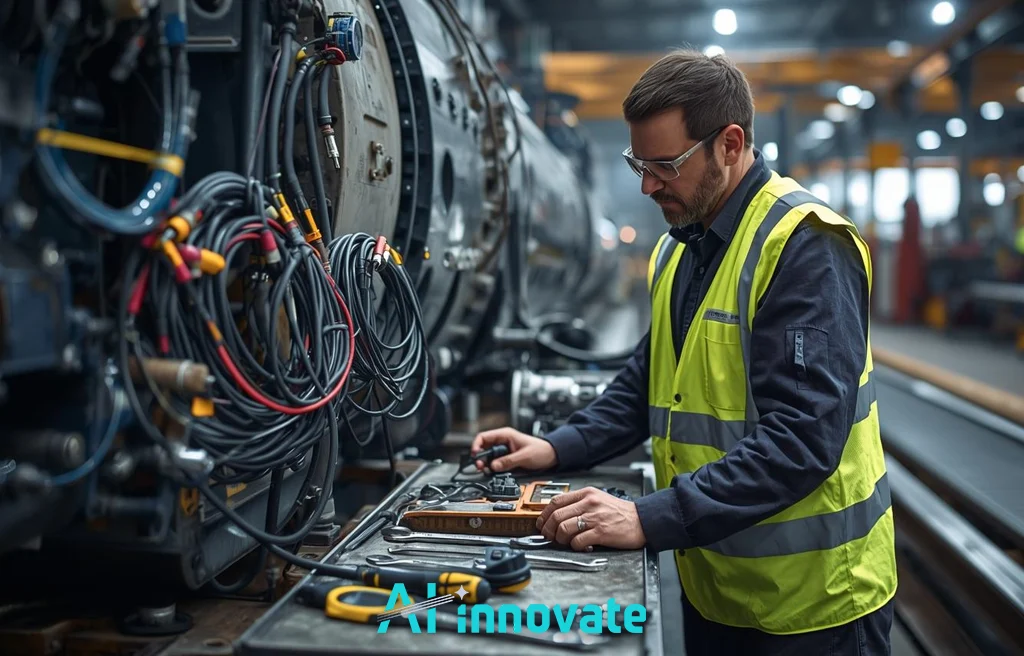
Maintenance technician wearing safety glasses and a high-visibility vest inspecting industrial machinery wiring and testing equipment on a factory floor, with tools and cables arranged on a workbench.

Predictive Maintenance Integration Challenges

Obstacles are inevitable when it comes to integrating predictive maintenance using machine learning into live operations. Common challenges include:

  • Poor data quality or inconsistent sensor readings
  • Limited historical failure data for training models
  • Resistance from maintenance personnel
  • Integration issues with legacy systems
  • High upfront investment costs
  • Overly complex models that are difficult to interpret

In some cases, predictive systems generate too many false positives. This can undermine trust in the technology and overwhelm maintenance teams with unnecessary alerts.

Another common issue is siloed data. Building accurate predictive models becomes more difficult when production data, maintenance logs, and operational metrics are stored in separate systems.

Practical Solutions to Predictive Maintenance Challenges

While these challenges are unavoidable, they’re manageable with structured strategies.

Improve Data Quality and Governance

Clean, consistent data dramatically improves model accuracy. You need to:

  • Standardize data collection processes
  • Calibrate sensors regularly
  • Implement centralized data storage
  • Establish data governance policies

Start with Semi-Supervised or Anomaly Detection Models

When failure data is limited, unsupervised or semi-supervised learning approaches can help. These models learn normal operating patterns and flag deviations without requiring extensive labeled failure examples.

Reduced Scrap and Rework

One of the most immediate sources of ROI is reduced scrap. When defects are detected early, faulty products don’t move further down the line where additional value has already been added. Early detection leads to:

  • Lower material waste
  • Fewer rework operations
  • Reduced disposal and handling costs

Prioritize System Integration Early

Work closely with IT teams for guaranteed compatibility between predictive platforms and existing ERP, MES, or CMMS systems. APIs and middleware solutions can help bridge gaps between legacy and modern systems.

Focus on Model Interpretability


Choose models that provide explainable outputs. Maintenance teams need to understand why a prediction is made. Clear visualizations and root-cause indicators increase trust and usability.


Demonstrate Quick Wins

Early measurable improvements build confidence. Track key performance indicators such as:

  • Reduction in unplanned downtime
  • Decrease in maintenance costs
  • Improvement in mean time between failures
  • Increased equipment availability

Turn Predictive Maintenance into Measurable Operational Gains

Predictive maintenance only delivers value when it’s deployed with the right infrastructure, integration strategy, and AI capabilities. Moving from pilot projects to plant-wide reliability requires scalable edge processing, reliable data pipelines, and models that operate in real time, not just in dashboards.

At AI-innovate, we help manufacturers bridge the gap between machine learning theory and operational execution by providing:

  • Edge AI infrastructure with AIxCore (powered by NVIDIA Jetson Orin AGX) for real-time vibration analysis, thermal monitoring, and multi-sensor data processing directly on the shop floor
  • Intelligent visual inspection with AIxEye, enabling early detection of wear, surface degradation, and structural irregularities before they escalate into failures
  • Synthetic data capabilities through AIxCam, helping teams strengthen predictive models when historical failure data is limited

Whether you’re starting with a single high-value asset or scaling predictive maintenance across multiple facilities, the key is combining robust data capture, explainable AI models, and industrial-grade deployment.

Conclusion

Implementing predictive maintenance using machine learning is more than just a technical project. Rather, it represents a fundamental shift in how organisations approach asset reliability. Proactively addressing integration challenges ensures smoother adoption and long-term sustainability.

When executed thoughtfully, we believe predictive maintenance shifts operations from reactive repairs to proactive optimisation. The result is greater equipment reliability, improved productivity and a manufacturing environment that is more resilient and ready to compete in an increasingly data-driven world.

Ai-Innovate uses only high-quality sources, including peer-reviewed studies, to support the facts within our articles.

  1. MDPI Electronics. (2023). AI-Driven Anomaly Detection in Industrial Systems.
    A peer-reviewed study outlining advanced AI methods for detecting anomalies in industrial environments, including performance evaluation and implementation considerations.
    Retrieved from https://www.mdpi.com/2079-9292/12/18/3971
  2. Groundlight AI Blog. (2025). Using AI Anomaly Detection in Industrial Manufacturing.
    A practical discussion of how anomaly detection powered by AI enhances manufacturing quality control, reduces defects, and supports predictive maintenance.
    Retrieved from https://www.groundlight.ai/blog/using-ai-anomaly-detection-in-industrial-manufacturing
  3. arXiv Preprint. (2025). Foundations and Advances in Industrial Anomaly Detection.
    A research preprint exploring state-of-the-art approaches for anomaly detection in industrial systems, including novel architectures and benchmark results.
    Retrieved from https://arxiv.org/abs/2501.11310
  4. Quix Glossary. (2025). Anomaly Detection in Industrial Systems.
    An introductory resource explaining key concepts, algorithms, and typical use cases for anomaly detection in industrial and IoT applications.
    Retrieved from https://quix.io/glossary/anomaly-detection-in-industrial-systems
  5.  

FAQ

How does machine learning work with predictive maintenance?

Machine learning analyzes historical and real-time data (e.g., vibration, temperature) to identify patterns that signal degradation or failure, enabling forecasts of equipment issues before they happen.

Industries with high-value machines and critical uptime requirements — manufacturing, energy, transportation, oil & gas, and utilities — see significant advantages from ML-based predictive maintenance. This is because missed failures in these sectors are costly and disruptive.

Predictive maintenance is a strategy that uses sensor and operational data to monitor equipment condition and detect anomalies, so maintenance can be planned before failures occur.

How To Improve Productivity in Manufacturing

How To Improve Productivity in Manufacturing? Top 6 Strategies You Must Know

Manufacturing has never been simple, but today it feels more complex than ever. Companies are expected to produce faster, maintain flawless quality, control costs, manage supply chain uncertainty, and adapt to shifting customer demands. At the same time, skilled labor shortages and rising operational expenses are putting additional pressure on production teams.

Improving productivity is no longer just about adding more workers or buying faster machines, but rather using data intelligently. Modern production lines generate enormous amounts of information every second, from machine sensors and quality inspections to energy usage and workflow timing. The challenge is turning that data into action.

This is where AI is making a real difference. AI doesn’t replace human expertise. Instead, it strengthens decision-making, identifies patterns humans might miss, and helps teams respond faster. If your goal is to improve productivity in manufacturing in a sustainable way, these six AI-driven strategies offer practical and measurable impact.

Boost Manufacturing Productivity Smarter Processes Better Results

Learn how AI, automation, and data-driven optimization can transform manufacturing productivity. From reducing downtime to improving quality and workflow efficiency, discover proven strategies to maximize output without increasing operational costs.

1. Reduce Downtime with Predictive Maintenance

Few things hurt productivity more than unexpected equipment failure. When a critical machine breaks down, production stops. Orders get delayed. Teams scramble to troubleshoot. Costs quickly rise.

Traditional maintenance strategies fall into two categories: reactive and preventive. Reactive maintenance waits until something fails. Preventive maintenance follows fixed schedules whether the machine actually needs servicing or not. Both approaches have limitations.

AI-powered predictive maintenance takes a smarter route. It uses:

Real-time sensor data such as vibration, temperature, and pressure

  • Historical maintenance record
  • Performance trends over time
  • Environmental operating conditions

Machine learning models analyze these data points to identify early warning signs of failure. Instead of guessing, the system predicts when a component is likely to degrade.

The benefits are significant:

  • Fewer unplanned shutdowns
  • Lower emergency repair costs
  • Better spare parts planning
  • Longer equipment lifespan

2.Improve First-Pass Yield with AI Quality Inspection

Quality issues directly reduce productivity. Every defective product requires rework, scrap, or replacement. That means wasted materials, wasted labor, and wasted time.

Manual inspection has limitations. Even skilled inspectors can miss micro-defects, especially when production volumes are high or parts are complex. Fatigue and inconsistency add further risk.

AI-powered computer vision systems solve this challenge by inspecting products in real time. High-resolution cameras capture images during production. Deep learning models then analyze those images to detect:

  • Surface scratches and cracks
  • Dimensional inconsistencies
  • Misalignments
  • Missing components
  • Packaging errors

Because these systems operate continuously and consistently, they catch defects earlier and more reliably.

The result is:

  • Higher first-pass yield
  • Lower scrap rates
  • Reduced rework
  • Faster production cycles


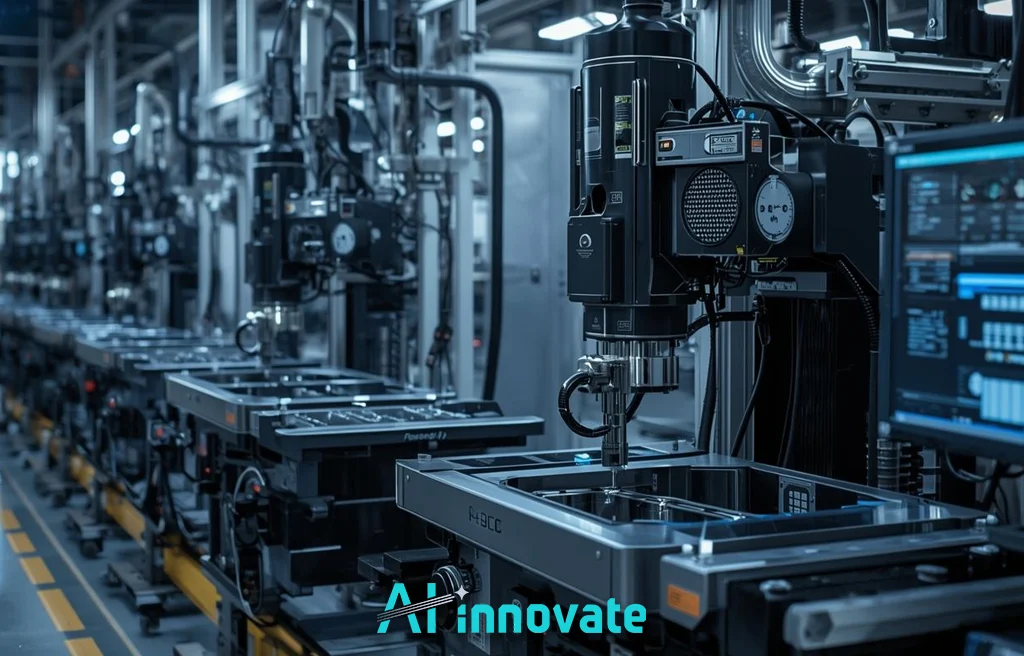
Automated CNC machining stations operating along a smart factory production line, with precision drilling equipment, integrated sensors, and a digital monitoring screen displaying real-time manufacturing data.

3.Optimize Production Scheduling in Real Time

Production scheduling is often more complicated than it appears. Managers must balance machine availability, labor shifts, maintenance windows, order priorities, and material supply. One disruption can cause a ripple effect across the entire plant.

Traditional scheduling systems rely on fixed rules and manual adjustments. They struggle to adapt when conditions change unexpectedly.

AI-based scheduling platforms analyze multiple variables simultaneously, including:

  • Current order backlog
  • Machine status and capacity
  • Workforce availability
  • Inventory levels
  • Delivery deadlines

When a disruption occurs, such as a delayed shipment or machine slowdown, the system recalculates the optimal production sequence in real time.

This dynamic adjustment reduces:

  • Idle machine time
  • Production bottlenecks
  • Late deliveries
  • Overtime costs

4.Use Data Analytics to Fine-Tune Processes

Some costs aren’t immediately noticeable when evaluating automated visual inspection ROI, but they still matter. Here are some common hidden or ongoing costs:

  • Periodic model updates as products or defect patterns change
  • Maintenance of cameras and lighting to preserve image quality
  • Software updates and cybersecurity management
  • System monitoring and performance validation

During the early stages, manufacturers may also do manual inspection as well as an automated one. This temporary overlap can increase short-term costs, but is often necessary to build confidence in the system. While these costs shouldn’t be ignored, they’re usually easy to predict and manage if you plan well.

5.Enhance Efficiency with Intelligent Robotics

Modern factories are filled with sensors and monitoring systems. Yet many manufacturers still use only a fraction of the data they collect.

AI-driven analytics platforms turn raw data into meaningful insights. These systems analyze patterns in:

  • Cycle times
  • Equipment performance
  • Energy usage
  • Material waste
  • Process variability

By identifying inefficiencies, AI can recommend specific adjustments. For example, slight changes in temperature settings, machine speed, or pressure levels may significantly improve output without compromising quality.

Over time, these small improvements compound. Manufacturers experience:

  • Increased throughput
  • Reduced variability
  • Lower energy consumption
  • More predictable production results

Rather than relying on trial and error, teams can make decisions backed by data.

6. Strengthen Supply Chain and Inventory Management

Even the most efficient production line cannot operate without the right materials at the right time. Supply chain disruptions and poor inventory planning are major productivity barriers. AI helps manufacturers anticipate and respond to these challenges. By analyzing historical demand patterns, supplier performance data, and market trends, AI systems can:

  • Forecast demand more accurately
  • Predict supply shortages
  • Recommend optimal inventory levels
  • Automate reordering decisions

This prevents both overstocking and stockouts. Excess inventory ties up capital and warehouse space. Material shortages halt production entirely. A stable supply chain directly supports consistent productivity.

How AI-innovate Helps Manufacturers Turn AI Strategy into Measurable Productivity Gains

Improving productivity requires more than ideas. It requires reliable deployment, scalable infrastructure, and inspection systems that operate in real time without disrupting production. AI-innovate supports manufacturers in implementing practical, high-impact AI solutions by helping with:

  • AI-powered visual inspection and defect detection using AIxEye, enabling real-time quality control that improves first-pass yield, reduces rework, and prevents costly downstream failures
  • Synthetic data generation and validation through AIxCam, allowing teams to train robust AI models faster while reducing dependence on rare defect samples and minimizing development time
  • Edge AI deployment and real-time industrial integration powered by AIxCore, an industrial AI edge compute unit built on NVIDIA Jetson Orin AGX, delivering high-performance processing for machine vision, robotics coordination, predictive maintenance, and production analytics directly on the factory floor

Whether manufacturers are starting with predictive maintenance, quality inspection, intelligent robotics, or data-driven optimization, AI-innovate provides the tools to convert AI from a concept into measurable improvements in uptime, yield, efficiency, and long-term operational performance.

Turning AI Into Practical Results

Adopting AI doesn’t require transforming your entire factory overnight. The most successful manufacturers begin with targeted implementations. They identify high-impact areas such as downtime reduction or quality improvement and deploy AI solutions strategically.

We believe manufacturers who embrace these six AI-driven strategies position themselves to operate more efficiently, respond faster to market changes, and remain competitive in an increasingly technology-driven world.

Ai-Innovate uses only high-quality sources, including peer-reviewed studies, to support the facts within our articles.

  1. NeuroSYS Blog. (2024). How to Improve Productivity in Manufacturing: 6 AI Strategies.
    A practical guide outlining key AI applications—such as predictive maintenance, computer vision, and automation—that help manufacturers reduce downtime and enhance operational efficiency.
    Retrieved from https://neurosys.com/blog/how-to-improve-productivity-ai-strategies
  2. Yourco Blog. (2025). 10 AI Strategies to Boost Manufacturing Productivity.
    A detailed breakdown of proven ways AI is being used in manufacturing, covering predictive models, real-time quality control, resource optimization, and workforce augmentation.
    Retrieved from https://www.yourco.io/blog/ai-strategies-boost-manufacturing-productivity
  3. MIT Sloan Management Review. (2023). How Generative AI Can Boost Highly Skilled Workers’ Productivity.
    Insights from research on how generative AI tools can significantly enhance the performance of highly skilled employees when integrated thoughtfully into workflows.
    Retrieved from https://mitsloan.mit.edu/ideas-made-to-matter/how-generative-ai-can-boost-highly-skilled-workers-productivity
  4. NeuroSYS Blog. (2024). Generative AI in Manufacturing: How to Drive ROI and Manage Risks.
    An exploration of generative AI’s potential to improve manufacturing productivity, with considerations for implementation challenges, risk management, and achieving measurable business value.
    Retrieved from https://neurosys.com/blog/generative-ai-in-manufacturing
  5.  

FAQ

How can AI be applied to improve productivity in manufacturing industries?

By analyzing performance and real-time sensor data from the factory floor, AI technologies can identify areas for improvement in existing manufacturing processes and equipment layouts. This allows companies to:
– identify bottlenecks and inefficiencies; and
– receive recommendations for improvement.


The best starting point is where your “loss tree” is largest. If machine downtime is your biggest expense, start with Predictive Maintenance; if scrap and rework are eroding margins, prioritize Automated Quality Control. For service-level issues like late deliveries, Intelligent Production Scheduling is the most effective first step.

AI is primarily used for Workforce Augmentation rather than replacement. It automates repetitive tasks—like generating reports or basic inspections—allowing employees to focus on complex problem-solving. Successful firms prioritize upskilling, teaching employees to collaborate with AI and maintain a “healthy skepticism” of machine-generated outputs.

AI Data Quality in 2026 - Challenges & Best Practices

AI Data Quality in 2026: Challenges & Best Practices

AI systems do not make a noise when the data quality is poor. They fail quietly. Predictions become less and less accurate, and decisions become less reliable long before obvious errors appear. By 2026, as AI becomes a key part of manufacturing, automation, and quality control, data quality will be one of the most important and least visible risk factors.

Many organisations focus a lot on choosing models and performance measurements, thinking that data problems can be fixed later. In practice, poor-quality data affects AI systems at every stage, from training and validation to deployment and long-term operation. The more independent and adaptable AI systems become, the more sensitive they are to differences in the quality of the data.

This is important because AI is used more and more to help make decisions that affect how much things cost, safety, and how well things work. When the quality of data gets worse, AI does not just become less accurate. It becomes less trustworthy.

This article looks at the main problems with the quality of data for AI systems in 2026 and gives some useful tips for building, looking after, and managing data pipelines that make sure that AI works well.

AI Data Quality Clean Data in 2026 Smarter Decisions.

High-quality data is the foundation of successful AI systems. Explore the key challenges facing manufacturers in 2026 and learn best practices for data governance, validation, and monitoring to ensure reliable, scalable AI performance.

What AI Data Quality Really Means

The quality of AI data is about more than just whether it is correct or complete. It refers to how well data represents real operating conditions, how consistently it is collected, and how reliably it supports learning over time.

High-quality AI data is:

  • This shows how things can be different in the real world.
  • It has been caught and labelled several times.
  • Linked to time, the process, or the system’s current state.
  • Kept up to date as things change.

At first, poor data quality might seem OK, but it will show its weaknesses when the system is used more or the environment changes.

Why Data Quality Is Becoming More Critical in 2026

By 2026, AI systems will be more adaptable, more independent, and more closely linked to how operations are done. This means they have to get used to working with data that is always changing, instead of data that doesn’t change.

There are several reasons why data quality is important:

  • More and more people are using real-time and edge AI.
  • More and more people are relying on AI to help them make decisions and control things.
  • More complicated production environments where things are more inconsistent.
  • The lives of AI systems are getting longer, which means they need to keep learning.

This means that making sure the data is good is something you have to think about every time you train a model. It is a responsibility that is still in place.

Long aisle inside a modern data center with rows of black server racks on both sides, bright overhead lighting, reflective flooring, and a secure door visible at the far end.

Common AI Data Quality Challenges

Common AI Data Quality Challenges

Many AI systems are trained on data that reflects ideal or limited operating conditions. Rare events, edge cases, and failure scenarios are often underrepresented, leading to blind spots in real-world deployment.

Inconsistent Data Collection

In supervised learning, unclear definitions of what constitutes a defect, anomaly, or acceptable variation lead to inconsistent labels. Over time, this reduces model reliability and confidence.

Labeling Errors and Ambiguity

In supervised learning, unclear definitions of what constitutes a defect, anomaly, or acceptable variation lead to inconsistent labels. Over time, this reduces model reliability and confidence.

Data Drift Over Time

Processes evolve, materials change, and equipment ages. When data pipelines do not account for these shifts, AI models gradually lose relevance without obvious failure signals.

The Hidden Cost of Poor AI Data Quality

Bad data can end up costing more than you might think.

Models need to be retrained more often. If a system detects something that isn’t there (a false positive) or doesn’t detect something that is there (a missed detection), this can create more operational noise. People start to trust the results of AI less and less, and this leads to teams bypassing or overriding the systems. In regulated environments, poor data quality can also create compliance and traceability risks.

The most important thing to know is that poor data quality stops AI from working well.

Establishing Trustworthy AI Data Foundations in 2026

Design Data Pipelines With AI in Mind

Data collection systems should be designed to support AI from the start. This includes things like making sure the system is stable, keeping track of different versions of software, and having clear rules about who owns the data.

Standardize Labeling and Review Processes

Clear labelling guidelines, regular audits, and team reviews reduce ambiguity and keep things consistent as teams and conditions change.

Maintain Strong Contextual Linkage

Connecting data to information about how things are done, the time it happened, the equipment’s state, and the outside conditions can make it easier to understand and find the reason for problems.

Treat Data Quality as a Shared Responsibility

The quality of AI data is not just a concern for data scientists. It needs the efforts of operations, quality, engineering, and IT to keep working well over time.

How AI Innovate Helps Manufacturers Build Reliable AI Data Pipelines

High-quality AI outcomes depend on more than accurate models. They depend on data that is consistent, representative, and continuously aligned with real production conditions. AI Innovate supports manufacturers by helping them establish data pipelines that remain reliable as processes, materials, and environments evolve.

  • AI2Cam helps teams generate and validate high-quality visual data by simulating cameras, lighting conditions, and defect scenarios, reducing data gaps before AI models are deployed.
  • AI2Eye captures consistent, real-time inspection data directly from production lines, ensuring that AI systems are trained and updated using data that reflects true operating conditions.
  • AIxCore – AI-innovate enables edge-level data processing and contextualization, linking inspection data with time, process parameters, and system state to support traceability, drift detection, and long-term data governance.

Together, these tools help manufacturers move from fragmented datasets to reliable, production-aligned data foundations that support trustworthy AI decision-making.

Conclusion

The quality of data from AI is now a top concern. It is very important for deciding whether AI systems will be useful or not. In 2026, the most successful AI projects are those that use data pipelines that are representative, consistent, and actively managed.

From experience, we know that organisations that invest early in data quality practices see more reliable models, faster iteration, and greater trust in AI-driven decisions. As AI becomes more independent and a bigger part of operations, the quality of the data will become more important in deciding whether intelligence is effective and avoids risk.

Ai-Innovate uses only high-quality sources, including peer-reviewed studies, to support the facts within our articles.

  1. IBM Think. (2024). Data Quality for AI: Why It Matters More Than Ever
    Explains how data quality directly impacts AI reliability, trust, and long-term performance across industrial and enterprise applications.
    Retrieved from https://www.ibm.com/think/topics/data-quality

  2. Innovation, Science and Economic Development Canada. (2023). Artificial Intelligence and Data Governance
    Discusses data governance, quality, and trust considerations for AI systems deployed in industrial and operational environments.
    Retrieved from https://ised-isde.canada.ca

  3. National Research Council Canada. (2023). Trusted AI and Data Foundations for Industrial Systems
    Covers applied research on data quality, traceability, and reliability for AI-driven manufacturing and automation.
    Retrieved from https://nrc.canada.ca

  4.  

FAQ

What is the typical timeframe to see a return on investment (ROI) for automated inspection?

There is no fixed amount. Smaller datasets that accurately represent real variation and edge cases are often more valuable than large volumes of poorly contextualized data.

The biggest risk is silent degradation. When data quality issues go unnoticed, AI systems may continue operating while gradually producing less reliable outputs.

Data pipelines should be reviewed continuously through monitoring and formally evaluated whenever processes, materials, or operating conditions change.

AI in Automotive Manufacturing

AI in Automotive Manufacturing

The scale with which manufacturing operates today was nothing short of a dream around a decade ago. The key factor that played a central role in this achievement was automation. Automation technology continues to evolve, and its most recent addition is AI.

When industries like automotive vehicles become more complex and customer expectations continue to rise, manufacturers are under constant pressure to improve quality while controlling costs. This is where AI is playing an increasingly important role with introducing AI-driven quality control and inspection.

In this blog, we’ll explore the evolution of AI in the automotive manufacturing world.

AI in Automotive Manufacturing Driving Smarter Production.

From quality inspection to predictive maintenance, AI is transforming automotive manufacturing. Improve efficiency, ensure consistent quality, and accelerate innovation across every stage of vehicle production.

The Important Role of AI in Car Manufacturing

Automotive manufacturing is complicated in many ways. There are thousands of components that need metal defect detection, multiple production stages, and extremely tight tolerances.

The major role that AI plays in the manufacturing process itself is by continuously analyzing production data to detect patterns, anomalies, and inefficiencies through machine learning, computer vision, and advanced analytics.

Traditional automation methods faced difficulties because of the level of perception needed. AI has been a revolution in the industry. Key areas where AI is now central include:

  • AI-driven quality control across stamping, welding, painting, and final assembly, metal defect detection on body panels, frames, castings, and machined parts.
  • Enhancing safety with features like automatic emergency braking, lane-keeping assist, and adaptive cruise control.
  • Autonomous driving is mainly driven by AI, using machine learning and deep learning models to analyse live data from sensors and cameras.

Unlike traditional systems, AI adapts over time. The more data is collected, the more accurate the models become and the better they are at dealing with differences in materials, lighting and how the processes are carried out. This adaptability is especially important in car factories that make different models on the same production line.

Automotive assembly line with unfinished cars moving through production, showcasing large-scale vehicle manufacturing and industrial automation

Beyond the Factory Floor: AI in the Vehicle

What might be noticeable the most to the drivers is the AI features added to vehicles beyond the manufacturing part:

  • Autonomous Driving: AI is the technology that makes self-driving cars work. It uses different types of sensors (cameras, LiDAR, radar) and learns how to understand the environment and plan the car’s route.
  • Advanced Driver-Assistance Systems (ADAS): AI is used in important safety features like automatic emergency braking, lane-keeping assist, and adaptive cruise control. These features help drivers avoid accidents and make driving safer.
  • Personalized In-Car Experience: AI-driven systems learn what drivers like and don’t like, so they can automatically change seat positions, climate control and infotainment settings to make driving easier and more comfortable.
  • Predictive Diagnostics: AI checks the health of vehicles as they drive, telling drivers when something might be wrong and helping them fix the vehicle quickly and save money.

How AI Is Changing the Automotive Industry

AI is reshaping the automotive industry beyond isolated inspection tasks. It’s driving a shift toward smarter factories with AI for industrial process control, more resilient operations, and data-driven decision-making across manufacturing, logistics, and retail.

Smart Factories and Production Lines

AI is a key part of making smart factories. Robots and automation systems driven by AI can make production faster and reduce human error on assembly lines. These systems can adapt to changes in models, components, or the amount of production.

Quality Control and Inspection

AI-driven quality control has seen one of the biggest changes. Computer vision systems that use AI can find very small defects that are hard or even impossible for a person to spot. By spotting problems on the surface, problems with how things are lined up, and differences in the materials early on, AI can make vehicles better overall and reduce the need for extra work and waste.

Predictive Maintenance

AI is also changing how equipment is maintained. Instead of relying on fixed maintenance schedules, AI models analyse machine data to predict failures before they happen.

This approach to maintenance means you won’t have any unexpected downtime, your equipment will last longer, and you’ll avoid costly production interruptions.

Generative Design and Engineering

In design and engineering, AI supports generative design by evaluating thousands of design variations based on safety, performance and efficiency requirements.

This helps car manufacturers make cars that are lighter, safer, and more efficient that take less time to make.

AI in Operations and Retail

In supply chains, AI keeps track of parts as they are being sent out, predicts how many will be needed, and spots problems before they cause delays.

This makes sure that customers get their orders more often, and it also means that the company doesn’t have to spend as much money on storing goods or on delivering them.

Car manufacturing plant interior with workers assembling vehicles on a production line, highlighting modern automotive production and quality control.

The Role of AI in the Automotive Industry: Trends, Benefits, and Use Cases in 2026

In 2026, AI is expected to be a core part of how cars are designed, built, and supported. Instead of being used only for inspection or automation, AI will connect engineering, manufacturing, and operations across the entire industry.

Key Trends to Watch

AI is becoming especially important in electric vehicles and advanced manufacturing. Some new trends include:

  • Predictive thermal control, which can manage heat in EV batteries and propulsion systems, improving performance and extending component life.
  • Battery design is sped up by AI-enabled platforms by running simulations that would normally take months.
  • AI-powered digital twins and generative simulations allow companies to test designs and production changes virtually before making physical adjustments.


How Companies Leverage AI in Automotive Manufacturing

When it comes to a good demonstration of how AI fits into automotive manufacturing, BMW and Toyota show how AI supports zero-defect manufacturing in real factories very well.

  • BMW uses AI-based visual inspection to spot surface and assembly defects early, which improves consistency and reduces manual checks.
  • Toyota applies AI for monitoring production processes, using machine learning to detect small deviations before they turn into larger quality issues.

Notice that in both cases, AI supports engineers and operators rather than replacing them.


Benefits of AI in Automotive Manufacturing

AI helps manufacturers work smarter at every stage, from design to production to maintenance.

Applications Table

How AI-innovate Supports AI in Automotive Manufacturing

AI-innovate supports automotive manufacturers across inspection, production, and quality control by providing AI-driven products designed for complex, high-volume manufacturing environments. Our product ecosystem helps with:

  • AI-powered visual inspection and defect detection using AI2Eye, enabling consistent quality control across stamping, welding, painting, and final assembly lines
  • Synthetic data generation, simulation, and validation through AI2Cam, supporting robust model training when real defect data is limited or production conditions vary
  • Scalable deployment and integration of AI workflows powered by AIxCore, allowing AI systems to connect with existing cameras, sensors, robotics, and production software
  • Real-time inspection feedback and process monitoring, helping automotive teams reduce rework, prevent downstream defects, and maintain stable production at scale

Whether manufacturers are managing multiple vehicle models on shared production lines, working toward zero-defect goals, or preparing for advanced EV and smart factory initiatives, AI-innovate’s products help apply AI in automotive manufacturing with flexibility, reliability, and seamless integration into existing operations.

Conclusion

Today, AI is a key part of modern automotive manufacturing. With AI driven quality control and metal defect detection, and real-time monitoring, its impact is already transforming how vehicles are built and inspected.

I believe as the industry moves, AI will play an even greater role in making manufacturing processes more efficient, helping to create smarter factories and more resilient production systems. In practice, the most successful ones combine advanced technology with strong process knowledge and human judgment.

Confused About Where to Start with AI?

Our specialists help you identify the right AI approach based on your process, data, and goals.

Ai-Innovate uses only high-quality sources, including peer-reviewed studies, to support the facts within our articles.

  1. AdvancedTech. (n.d.). AI in Automotive Manufacturing. Explores how artificial intelligence is being applied to streamline automotive production processes, improve quality control, and boost overall efficiency on the assembly line. Retrieved from https://www.advancedtech.com/blog/ai-in-automotive-manufacturing/
  2. Salesforce. (n.d.). AI in the Automotive Industry: Use Cases and Trends. Highlights key ways AI is reshaping automotive manufacturing, supply chain management, customer experience, and connected car technologies. Retrieved from https://www.salesforce.com/in/automotive/artificial-intelligence/guide/ (Salesforce)
  3. NeuralConcept. (2025). Artificial Intelligence in Car Manufacturing. Covers practical applications of AI across automotive design, production optimization, robotic automation, and defect detection. Retrieved from https://www.neuralconcept.com/post/artificial-intelligence-in-car-manufacturing (Neural Concept)
  4. IBM Think. (2025). AI in the Automotive Industry. Discusses how machine learning, computer vision, and generative AI are transforming vehicle design, production, predictive maintenance, and future software-defined vehicles. Retrieved from https://www.ibm.com/think/topics/ai-in-automotive-industry (IBM)
  5. S&P Global Automotive Insights. (2025). AI in the Automotive Industry: Trends, Benefits & Use Cases. Provides an industry perspective on AI adoption across design, manufacturing, autonomous systems, and operational efficiencies. Retrieved from https://www.spglobal.com/automotive-insights/en/blogs/2025/07/ai-in-automotive-industry (spglobal.com)
  6.  

FAQ

What is the primary role of AI in automotive manufacturing today?

AI is used to automate production processes with robotics, enhance quality control, and reduce human error. It shifts manufacturing from simple mechanical automation to cognitive automation, where plants act as self-optimizing ecosystems.

A digital twin is a virtual replica of a physical production line or vehicle. In 2026, these are used to run “what-if” simulations, testing process changes virtually to avoid expensive real-world mistakes.


The leading concerns in 2025 are cybersecurity (vulnerability to hacking) and data privacy regarding the massive amounts of sensor and driver data collected. There are also significant ethical and legal questions regarding accident liability when an autonomous system fails.


Costs vary significantly based on scope. Smaller, localized implementations may start at a few thousand dollars, while large-scale, factory-wide systems can cost millions of dollars.


How Smart Factories Use Edge AI for Faster Decisions

How Smart Factories Make Faster Decisions With Edge AI in Manufacturing

Building a data-driven culture has become something to strive for in the manufacturing world. There’s no doubt that this culture has changed manufacturing for the better, but with the addition of AI-driven quality control and AI defect detection, sometimes the amount of data is overwhelming to deal with. Sending all big data architecture to the cloud isn’t always practical. Machines generate massive amounts of information, and in many cases, decisions need to happen instantly. That’s where edge AI in manufacturing comes in. Keep reading for a better understanding of edge AI, how it’s used in manufacturing, and the tools that enable it, and where it stands regarding cloud AI.

Edge AI in Smart Factories Faster Decisions, Real-Time Control.

Discover how Edge AI enables smart factories to process data instantly at the source. Reduce latency, improve responsiveness, and make faster, data-driven decisions that optimize production, quality, and efficiency.

What Makes Edge AI Special?

You may be wondering how edge AI differs from “normal” AI. The difference lies in how they deal with data:

What Is Cloud AI?

normal” AI usually works like this:

  1. A device collects data (images, video, sensor readings, etc.)
  2. The data is sent over the internet to a cloud server
  3. The AI model processes the data
  4. Results are sent back to the device

This means it relies heavily on internet connectivity and centralized computing power.


What Is Edge AI?

With Edge AI, the AI model runs locally on:

  • Cameras
  • Smartphones
  • Drones
  • IoT sensors
  • Industrial machines
  • Embedded systems (like NVIDIA Jetson, Raspberry Pi, or smart chips)

The data is processed on the device itself, often in real time, without needing to leave the device.

How Edge AI Is Powering Smart Manufacturing

Edge AI is becoming a key part of smart factory solutions because it brings intelligence straight to the production line. Some of the most common applications include:

Real-Time Quality Inspection

Edge AI systems can analyze images or sensor data as products move down the line. Any problems are spotted right away, so faulty items can be taken out before they cause bigger problems.

Predictive Maintenance

By monitoring vibration, temperature, or sound data from machines, edge AI can spot early signs of wear or failure. This means that maintenance teams can fix problems before they happen, which means less downtime.

Process Optimization

Edge AI can adjust machine settings as and when they need to, based on the current situation. This helps make sure the quality stays the same and there’s less waste without human intervention.

Safety Monitoring

Cameras and sensors that use AI can spot dangerous situations. You can set up alerts to trigger instantly, which helps prevent accidents.

Edge AI Platforms and Tools for Smart Manufacturing

Edge AI in manufacturing relies on a combination of hardware and software working together.

The hardware side includes:

  • Industrial PCs
  • Edge gateways
  • Embedded systems
  • AI-enabled cameras.

These devices are designed to operate in harsh environments and handle real-time data processing close to the source.

The software side includes:

  • Model deployment tools
  • Data pipelines
  • Monitoring systems.

These platforms allow AI models to run efficiently on limited hardware while still being updated and managed centrally.

Many modern platforms support a hybrid approach, where models are trained in the cloud and then deployed to edge devices. This setup combines the strengths of both environments and makes edge AI easier to scale across multiple production lines or facilities.

Where edge AI is used and where cloud AI is used in manufacturing

While edge AI and cloud AI may sound similar as concepts, their applications and where they’re leveraged in manufacturing is actually different.

Edge AI handles real-time, on-the-floor decisions where speed and reliability matter most:

  • Visual quality inspection: It enables defect detection for defects such as scratches, misalignments, or missing parts directly on production lines.
  • Robot guidance & control: Edge AI runs close to robots for instant path correction and object detection.
  • Predictive maintenance (local): It can monitor vibration, heat, sound, or pressure sensors to flag anomalies before failure.
  • Safety systems: Detects human presence near machines and triggers emergency stops instantly.
  • Offline operation: Since it doesn’t rely on internet connection to send data, it can keep the line running even if network connectivity drops.

Cloud AI can analyze, optimize and provide long-term intelligence across machines, lines and factories:

  • Model training & improvement: It can train large AI models by using historical production data.
  • Cross-factory optimization: Could AI is able to compare performance across multiple plants.
  • Trend & root-cause analysis: It’s particularly excellent at finding patterns that aren’t visible on a single machine.
  • Production forecasting & planning: Predicts output, downtime, and material needs.
  • Centralized reporting & dashboards: It gives managers and engineers a big-picture view of the overall condition of the processes.

How AI-innovate Supports Edge AI in Smart Manufacturing

AI-innovate supports manufacturers adopting edge AI in manufacturing by providing AI-driven products designed for real-time decision-making on the production floor. Our product ecosystem helps with:

  • Real-time defect analysis and visual inspection at the edge using AI2Eye, enabling fast, low-latency quality control directly on production lines
  • Data generation, simulation, and validation through AI2Cam, supporting reliable model training and testing before deployment to edge devices
  • Deployment and management of scalable edge AI workflows powered by AIxCore, allowing AI models to run on industrial PCs, edge gateways, and embedded systems while remaining centrally managed
  • Hybrid edge–cloud AI architectures, enabling manufacturers to process time-critical data locally while using the cloud for model training, optimization, and long-term analysis

Whether manufacturers are implementing real-time inspection, predictive maintenance, or safety monitoring, AI-innovate’s products help apply edge AI in manufacturing with speed, reliability, and seamless integration into existing smart factory environments.

Conclusion

Edge AI is changing how manufacturers work by making machines and processes more intelligent. By reducing delays and making things more reliable, edge AI in manufacturing helps to make decisions faster, improve quality control and create safer working environments.

I believe while cloud AI is still very important for large-scale analysis and coordination, edge AI is best for situations where speed and responsiveness are key. Together, these elements form the foundation of truly smart manufacturing systems that are built for efficiency, resilience, and real-world performance.

Confused About Where to Start with AI?

Our specialists help you identify the right AI approach based on your process, data, and goals.

Ai-Innovate uses only high-quality sources, including peer-reviewed studies, to support the facts within our articles.

  1. InGenerO Blog. (2025). Edge AI in Manufacturing. Explains how deploying AI at the edge (on devices and local controllers) enhances real-time decision-making, reduces latency, and improves quality control on the factory floor. Retrieved from https://ingenero.com/blog/edge-ai-in-manufacturing/
  2. Edge Impulse Blog. (2025). Revolutionizing Smart Manufacturing with Edge AI. Discusses how embedded AI models at the edge are transforming smart manufacturing use cases, including predictive maintenance, anomaly detection, and automated inspection. Retrieved from https://www.edgeimpulse.com/blog/revolutionizing-smart-manufacturing-with/
  3. ScienceDirect / Elsevier. (2023). Industrial Internet of Things and Edge Computing for Quality-Aware Manufacturing. Presents research on combining IIoT, edge computing, and AI to enable quality-aware manufacturing systems with low latency and high reliability. Retrieved from https://www.sciencedirect.com/science/article/pii/S0030399223013166 (scienceDirect.com)
  4. Springer — Cluster Computing. (2024). Optimizing Industrial Systems with Edge Intelligence: Architectures and Applications. Reviews state-of-the-art edge AI architectures in industrial environments, highlighting performance gains and use cases in smart factories. Retrieved from https://link.springer.com/article/10.1007/s10586-024-04686-y

FAQ

Can Edge AI work without an internet connection?

Yes. Once an AI model is deployed to an edge device, it can perform inference (analysis and decision-making) entirely offline. This ensures operational continuity even during network outages.

Yes. Manufacturers typically use middleware or custom interfaces to retrofit legacy machines. Adding external sensors and edge gateways allows older equipment to benefit from AI without a full “rip-and-replace”.

AI and Robotics are Shaping the Future of Industrial Automation

How AI and Robotics are Shaping the Future of Industrial Automation

If you look at manufacturing throughout the past few years, you see that it looks nothing like it did a decade ago. Even in just the last couple of years, many manual, time-consuming tasks have been handed over to AI and robotics for improved efficiency and stronger control over quality.

This raises a lot of questions and speculations about how AI and robotics are shaping the future of industrial automation, and where humans fit into that future. In this blog, we’ll discuss how AI and robots have transformed industrial automation, how to overcome the challenges of implementing them, and the role of human workforce in the future.

Turn Your Factory into a Smart One

Let AI inspect, analyze, and optimize – faster and smarter than ever.

Where AI Is Making the Biggest Impact in Industrial Automation

The main aim with using AI and robotics is to increase efficiency. This effect is seen across many industrial processes, such as:

  • Predictive Maintenance: Predictive maintenance uses AI to check equipment and spot the early signs of wear or failure. By studying data from sensors and machines, AI can spot problems before they stop production. This helps to reduce times when the equipment is not being used, make the equipment last longer, and improve planning for repairs or replacements.
  • Quality Assurance and Inspection: AI is being used more and more to help with quality inspection. Machine vision systems can find surface flaws, geometric defects, or problems with how things are put together. They do this consistently, and quickly. Automated inspection helps manufacturers keep products stable and identify mistakes early in the process, reducing the need for rework or to throw away products that are faulty.
  • Robotic Process Automation (RPA): RPA is used to automate digital tasks, not physical movements. It can do things like generate reports, schedule tasks, update records, or process routine data. This reduces the amount of work that teams have to do by hand and allows them to focus on tasks that require making decisions or using special skills.
  • Supply Chain and Inventory Management: AI predicts demand and keeps an eye on inventory levels as they change. By studying past data, how things were made, and what people wanted to buy, AI can plan and make sure there’s always enough of everything. This helps to make sure that deliveries are more reliable and that production runs more smoothly.

AI-powered robotic arms operating on an automated factory line, illustrating smart manufacturing and industrial automation technology.

How to Overcome the Main Barriers to Automation

Bringing AI and robotics has its ups and downs, but you’ll have a smoother path if you:

  • Adopt a Phased, Incremental Approach: Rather than carrying out a complete overhaul, start by implementing small pilot projects (e.g. predictive maintenance or quality control) to gain experience before rolling them out across the entire operation.
  • Leverage Middleware and APIs: Use software solutions to connect old computer systems to new AI platforms. This means that data and commands can flow between systems without having to make big changes to the old infrastructure.
  • Prioritize Data Readiness: Make sure you have good ways of managing your data, including cleaning it, making it consistent, and changing it so that it is in the right format for the AI models to use.
  • Invest in Workforce Training: Provide full training programms for current staff to give them the skills needed to work with and manage AI-enhanced systems. Being open about whether a job is being done in-house or by an external company can help stop people from being resistant to change.

Can AI and Robots Really Replace Humans?

It’s a common concern nowadays to think that one day, AI is going to steal our jobs and robots will do everything. In reality, AI and robotics only change the way people work rather than replacing them entirely.

While it’s true that AI is strong at analyzing data, detecting patterns, and performing repeatable tasks, and robots excel at handling precise or physically demanding work, human judgement is still very much needed. Even now, jobs that need people to be creative, solve problems, supervise others and do complicated thinking still mostly need people to do them. Most of the time, AI and robots work with people, helping them rather than replacing them.

To harness the full potential of AI in industrial automation, AI-innovate offers solutions like AI2Eye for real-time defect detection and AI2Cam for advanced camera simulation. These tools help manufacturers boost efficiency, improve quality control, and streamline operations, bringing the future of automation within reach today.

Conclusion

AI and robotics are going to shape the future of industrial automation by making operations more efficient, accurate, and predictable. If manufacturers understand what these tools can do and the challenges involved in using them, they can choose how to use them to achieve their goals. I think that if you apply AI and robotics in the right way, they can be a great help with keeping things stable and staying competitive in a manufacturing environment that’s changing all the time. Of course, the power of the human mind shouldn’t be overlooked.

Note: Some graphics and visuals in this post were produced using AI-generated content.

Confused About Where to Start with AI?

Our specialists help you identify the right AI approach based on your process, data, and goals.

Ai-Innovate uses only high-quality sources, including peer-reviewed studies, to support the facts within our articles.

  1. Karnavati University. (2025). Robotics and Automation: Shaping the Future of Industries. Explains how robotics and automation are transforming industrial operations, improving efficiency, safety, and production capability. Retrieved from https://karnavatiuniversity.edu.in/robotics-and-automation-shaping-the-future-of-industries/ (Karnavati University)

  2. Nexdriver — Nexpertise. (2025). The Future of Manufacturing Automation. Covers key trends in industrial automation, including AI-driven production, connected factories, and collaborative robotics shaping modern manufacturing. Retrieved from https://www.nexdriver.com/nexpertise/the-future-of-manufacturing-automation (nexdriver.com)

  3. Autobits Labs. (2025). Artificial Intelligence in Industrial Automation. Discusses how AI is applied in automated systems to enhance quality control, predictive maintenance, and operational efficiency. Retrieved from https://autobitslabs.com/artificial-intelligence-in-industrial-automation/ (Autobits)

  4. MarketsandMarkets Blog. (n.d.). How AI Robots Are Reshaping the Future of Industries. Highlights the integration of AI with robotics, boosting productivity and efficiency across sectors such as manufacturing and logistics. Retrieved from https://www.marketsandmarkets.com/blog/SE/how-ai-robots-are-reshaping-the-future-of-industries (marketsandmarkets.com)

FAQ

What are the main challenges in integrating AI and robotics with existing legacy systems?
  • Technical Incompatibility: Older systems often lack modern APIs and standard communication protocols needed for data exchange.
  • Data Quality and Silos: AI requires high-quality, centralized data, which is often fragmented or inconsistent in legacy databases.
  • High Initial Costs: Significant upfront investment in new hardware, software, and training is often required.
  • Workforce Resistance: Employees may resist new technologies, necessitating effective change management strategies.

Robotics utilizes various AI techniques, including deep neural networks for computer vision, reinforcement learning (learning through trial and error), and planning algorithms for navigation and decision-making.

Traditional automation typically involves pre-programmed machines performing rigid, repetitive tasks in highly structured environments. AI and robotics, in contrast, create intelligent, adaptive systems that can learn from data, make real-time decisions, and adapt to dynamic, unstructured environments, such as varying product types or changing conditions on the factory floor.

Big Data Architecture for Smart Factory Solutions

Big Data Architecture for Smart Factory Solutions: Unlocking Smarter Manufacturing

Smart factories are turning from a vision into a reality. These factories are using smart factory solutions to keep an eye on, study, and improve production processes as they happen, and the backbone of it all is data. Massive amounts of operational data need to be collected and processed, and that’s why we have big data architecture for smart factory solutions.

It’s essential for manufacturers to understand this architecture if they want to stay competitive and make decisions based on solid insights instead of guesswork, so in this blog, we’re covering the importance and core components of big data architectures, and the key functions enabled by them.

Turn Your Factory into a Smart One

Let AI inspect, analyze, and optimize – faster and smarter than ever.

The Critical Role of Big Data Management

Modern manufacturing generates a lot of data from machines, sensors, robotics, and supply chains. If you don’t have the right tools in place, you’ll quickly get buried under a sea of data and struggle to find the gems of useful information. A solid big data architecture makes sure that information is captured right, stored safely, and processed quickly. Good data management lets factories spot patterns, find inefficiencies, and make proactive decisions. For example, analyzing machine performance data can reveal potential breakdowns before they happen, saving time, reducing maintenance costs, and avoiding production delays.

Big data management also helps with compliance and traceability. The rules in industries like cars, planes, and food manufacturing need you to keep track of how things are made and how they’re checked for quality. Having a structured architecture makes sure that all the relevant data is available for audits and quality certifications.

To sum it up, if you can manage big data effectively, you can turn raw information into something valuable.


Digital data architecture visualization over server racks, representing big data processing, analytics pipelines, and AI-driven infrastructure.

Breaking Down the Core Components of a Big Data Architecture

A well-designed big data architecture handles the full lifecycle of data, from collection to storage and processing. The main layers and their roles can be summarized as follows:

LayerPurposeExamples / Notes
Data SourcesCapture operational and production dataIoT sensors, machines, robots, PLCs, production monitoring systems
Data Ingestion LayerCollect and integrate data from multiple sourcesReal-time streaming, batch uploads, APIs, message queues
Data Processing LayerTransform raw data into usable insightsStreaming: real-time anomaly detection Batch: periodic analysis for reports and trends
Data Storage LayerStore processed and raw data for future use

Data Lake: raw or semi-structured data for advanced analytics 

Data Warehouse / Database: structured, aggregated data for reporting and dashboards


What Smart Factories Can Do With Big Data

A solid architecture is key to unlocking some really important smart factory capabilities.

  • Predictive Maintenance: By keeping an eye on machine health all the time, smart factories can predict equipment failures before they happen. For example, vibration or temperature data from motors can indicate wear, allowing technicians to perform maintenance only when needed rather than on a fixed schedule.
  • Quality Control: Big data helps factories detect defections early in the production process. Checking sensor readings or images from quality inspection cameras makes sure that products meet the right specs every time.
  • Process Optimization: Data-driven insights makes workflows, energy consumption, and resource allocation better. By looking at trends on production lines, factories can spot bottlenecks, tweak machine settings, or reorganize processes to boost efficiency.
  • Autonomous Operations: Advanced big data architectures help people make decisions on their own. For example, machines can adjust production speed or reroute workflows automatically based on real-time data.

Take your smart factory to the next level with AI Innovate‘s AI2Cam and AI2Eye. AI2Cam uses AI to find defects as they happen, helping with quality control, while AI2Eye keeps an eye on everything and provides data insights. This helps manufacturers improve their processes, efficiency, and decision-making across the board.

Why Investing in the Right Architecture Matters

A lot of manufacturers are looking for innovative smart factory solutions to adapt to the evolving world of industry. I believe big data architecture for smart factory solutions gives us the framework for this transformation. Without a doubt, by putting in a solid architecture, manufacturers can turn data into a strategic advantage. Smart factories equipped with advanced big data systems don’t just respond to problems, but rather, they anticipate them, learn from data, and continuously improve operations.

Note: Some graphics and visuals in this post were produced using AI-generated content.

Confused About Where to Start with AI?

Our specialists help you identify the right AI approach based on your process, data, and goals.

Ai-Innovate uses only high-quality sources, including peer-reviewed studies, to support the facts within our articles.

  1. Clarify. Digital Factory: Building Smarter, Connected Manufacturing Operations.
    An overview of the digital factory concept, including how data, automation, and connected systems transform modern manufacturing environments.
    Retrieved from https://www.clarify.io/learn/digital-factory
  2. SAP. Smart Manufacturing in the Cloud.
    Explores how cloud-based platforms enable real-time insights, scalable operations, and more agile manufacturing processes.
    Retrieved from https://www.sap.com/uk/resources/smart-manufacturing-in-the-cloud
  3. ITMAGINATION. Big Data Analytics for Smarter Manufacturing: Predictive Maintenance and Process Optimization.
    Examines the role of big data analytics in improving equipment reliability, reducing downtime, and optimizing manufacturing workflows.
    Retrieved from https://www.itmagination.com/blog/big-data-analytics-for-smarter-manufacturing-predictive-maintenance-process-optimization

FAQ

What is a smart factory?

A smart factory is a highly digitized and connected production facility that uses real-time data from IoT sensors, advanced analytics, AI/ML, and automation to optimize operations, improve efficiency, and support continuous improvement.

Manufacturers can achieve significant benefits, including enhanced operational efficiency, reduced downtime through predictive maintenance, improved product quality, and the ability to make more agile, data-driven decisions.

Data is the backbone of a smart factory. It provides visibility into every step of the production process, enabling real-time monitoring, analysis, and the generation of actionable insights that drive automation and optimization.

A typical architecture includes a physical sensing layer, a data collection/edge layer, a data integration layer, a data storage and analytics layer (often a data lake/warehouse combo), and a presentation/application layer.