AI Automation in Manufacturing

AI Automation in Manufacturing – Smarter Production Systems

Industrial leaders rightly demand clear, quantifiable ROI, while their R&D engineers grapple with the technical hurdles of hardware-dependent development cycles. Our work at AI-innovate thrives at the intersection of these two worlds. We create robust solutions that deliver proven financial value while simultaneously empowering technical teams with agile, powerful development tools.

This article serves as a shared language, breaking down AI Automation in Manufacturing into its essential components—from strategic financial impact to tactical development accelerators—to align high-level business objectives with flawless technical execution on the ground.

Automated, Accurate, Always-On

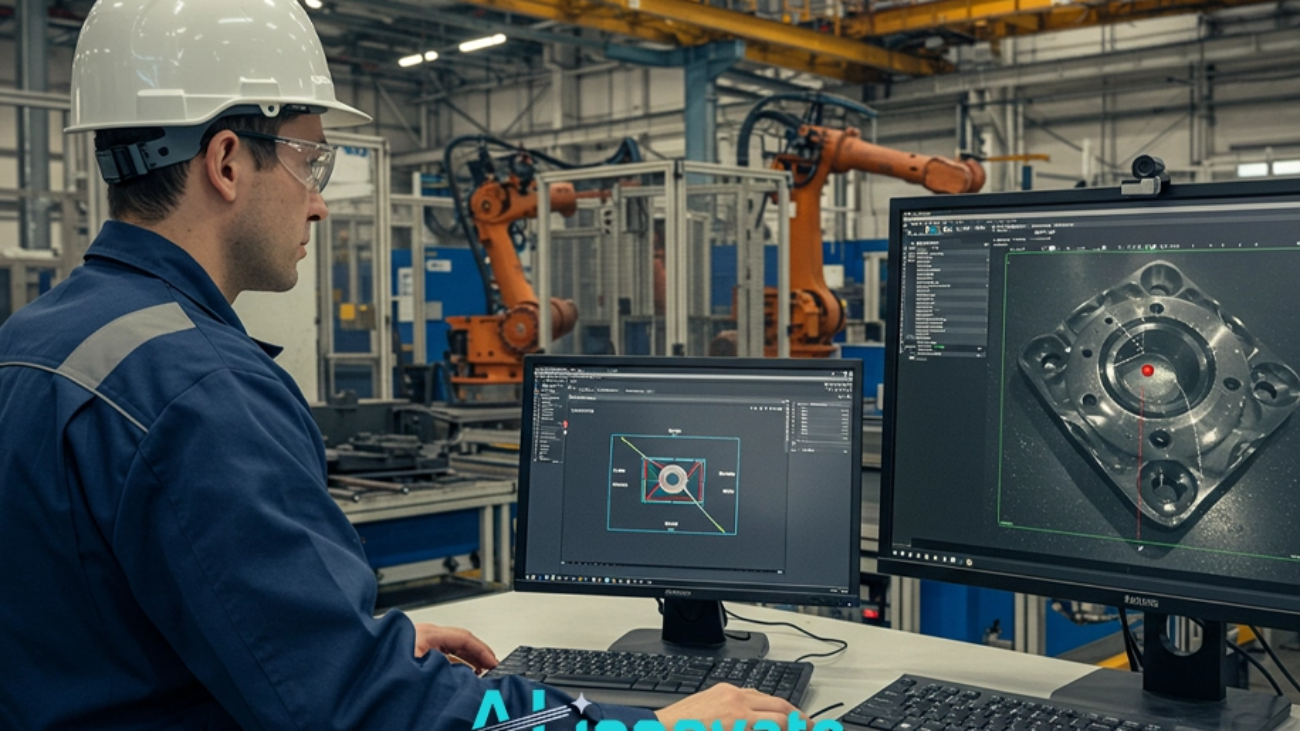
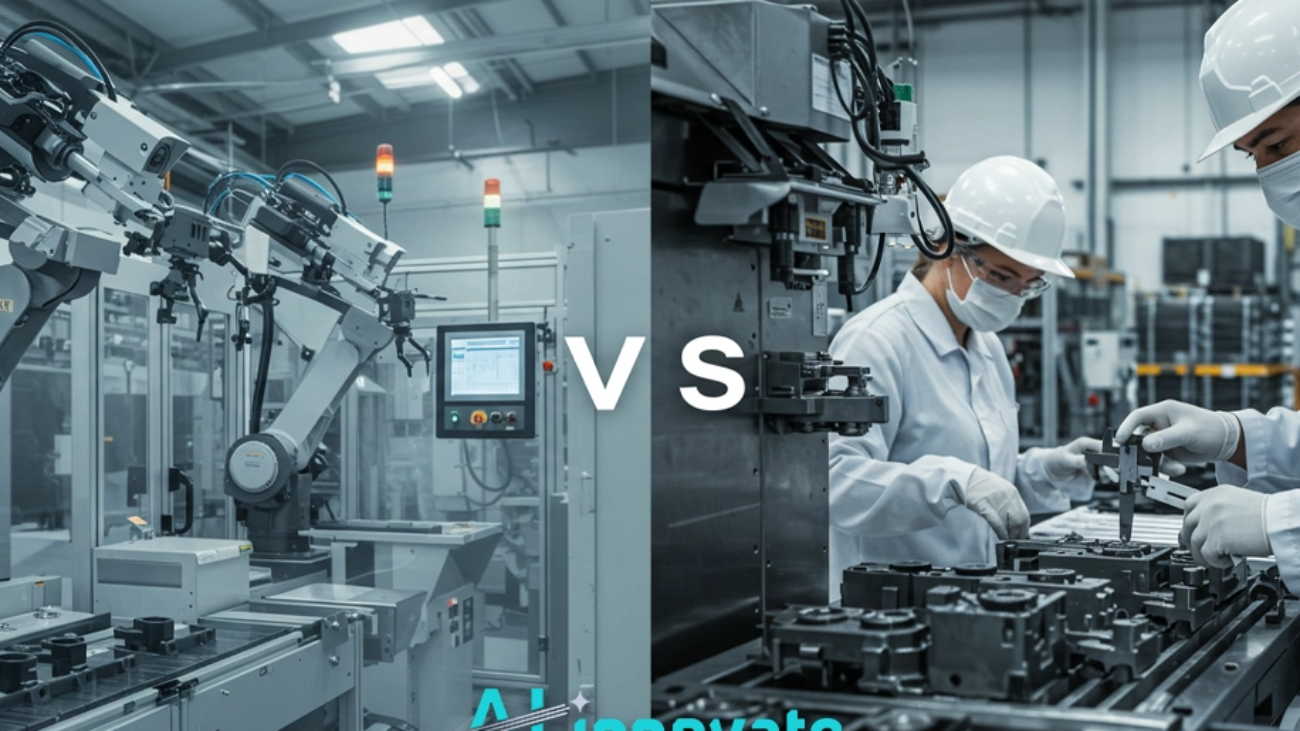
Replace human fatigue with 24/7 AI inspection.

AI-innovate logo

Recalibrating Production Fundamentals

The integration of artificial intelligence into manufacturing is not an exploratory trend; it is a core economic driver with measurable momentum. This foundational shift, central to the Industrie 4.0 vision, is creating a new competitive baseline where factories operate as interconnected, intelligent ecosystems. To grasp the scale of this global transformation, consider these key economic and market indicators:

  • The global AI in manufacturing market is projected to expand at a compound annual growth rate (CAGR) of an astounding 44.5% in the coming years.
  • In China, a manufacturing powerhouse, the market size for “AI + Manufacturing” reached 5.6 billion yuan in 2023 and is on track to hit 14.1 billion yuan by 2025.
  • Across the board, 64% of manufacturers deploying AI have already experienced a positive return on investment, with nearly a third realizing returns of $2 to $5 for every $1 invested.
From Human Eye to Algorithmic Precision

From Human Eye to Algorithmic Precision

For Quality Assurance managers, the pursuit of perfection is a constant battle against human limitation. Traditional manual inspection, while valuable, has a performance ceiling, with human inspectors typically achieving 80% to 90% accuracy under optimal conditions.

This creates a persistent risk of defects reaching the customer, impacting brand reputation and incurring costs. The transition from human subjectivity to algorithmic certainty marks a paradigm shift in quality control.

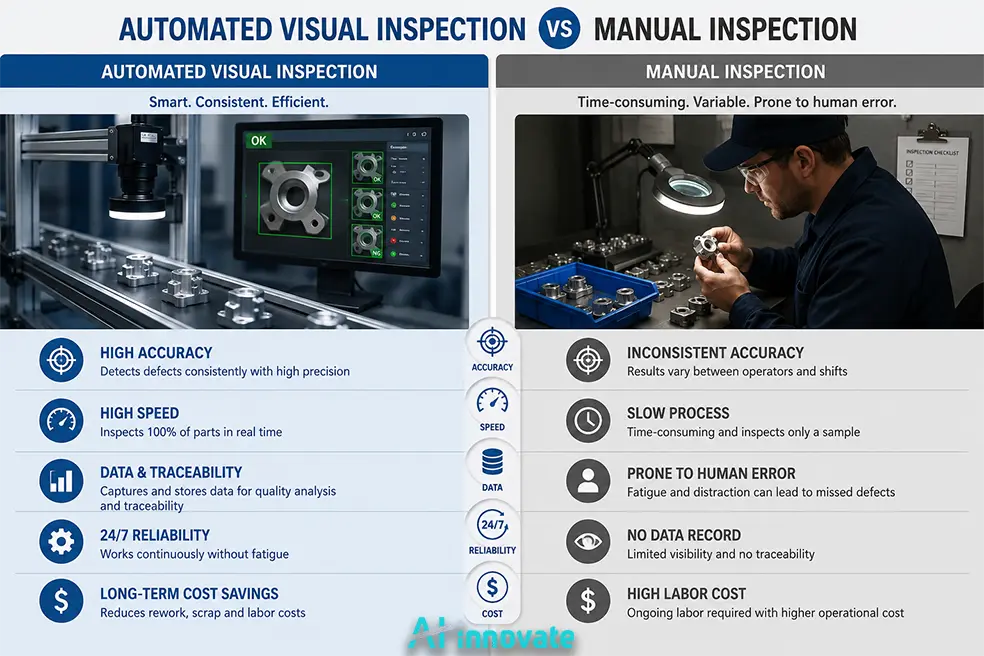
The impact of AI Automation in Manufacturing is most evident when comparing these two approaches directly, as the following points illustrate. The contrast in performance is stark:

  • Human Inspection: Prone to fatigue, inconsistency, and subjective judgment. Accuracy rates fluctuate, and it is ill-suited for high-speed, high-volume production lines.
  • AI-Powered Vision Inspection: Delivers objective, consistent, and tireless analysis. These systems can achieve accuracy rates of up to 99.9%, identifying micro-defects invisible to the human eye in real-time. For instance, BMW successfully reduced its defect rate by 30% in one year by implementing such a system.
Read Also: Defect Detection in Manufacturing – AI-Powered Quality

Operational Foresight Through Data

Beyond quality control, the greatest value unlocked by AI often comes from its ability to provide operational foresight. For Operations Directors, unplanned downtime is a primary driver of inefficiency and lost revenue.

Predictive maintenance flips this script, transforming equipment management from a reactive exercise into a proactive strategy. By analyzing continuous streams of sensor data, algorithms can identify subtle anomalies and predict equipment failures before they occur.

This application of AI Automation in Manufacturing is not theoretical; its return on investment is proven and significant. According to extensive industry data, manufacturers implementing predictive maintenance have reported a reduction in equipment breakdowns by as much as 70% and a corresponding decrease in maintenance costs by 25%.

This foresight allows for scheduled, efficient repairs, minimizing disruption and maximizing the operational lifespan of critical machinery. It is about anticipating failure, not just reacting to it.

Read Also: Anomaly Detection in Manufacturing – Process Insights

Prototyping Beyond Physical Constraints

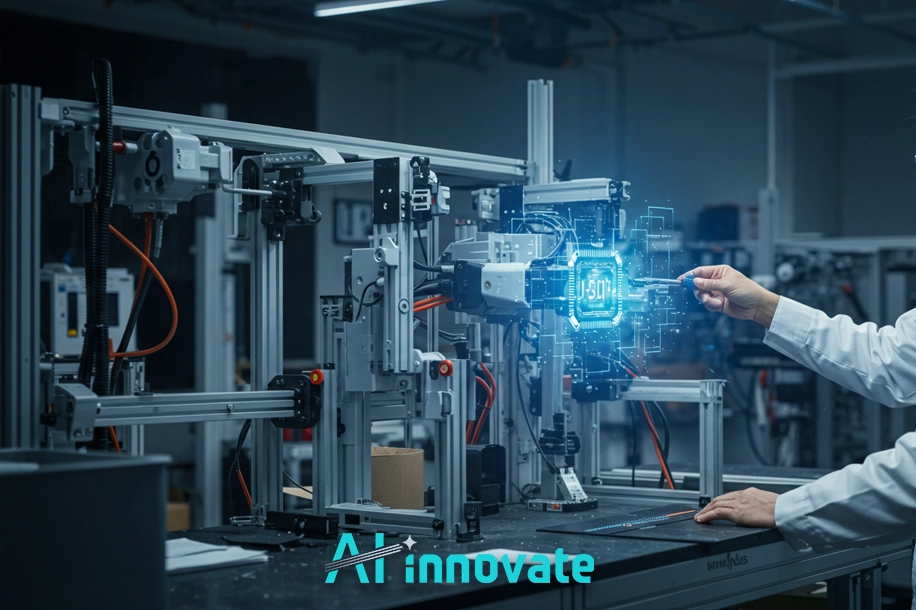
For the technical developers and Machine Learning engineers tasked with creating these intelligent systems, a different kind of bottleneck exists: physical camera dependency. The traditional process of developing machine vision algorithms requires access to specific, often expensive, industrial cameras and hardware.

This creates a linear, slow, and inflexible workflow where software development is tethered to hardware availability. Project timelines are extended, and experimentation is stifled by the logistical challenges of setting up complex physical testbeds.

This is where the concept of virtual camera emulation becomes a strategic enabler. By simulating a wide range of industrial cameras and imaging conditions in a purely software environment, developers can decouple their work from hardware constraints.

This allows for rapid prototyping, parallel development, and the ability to test algorithms against thousands of scenarios without a single piece of physical equipment, dramatically accelerating the innovation lifecycle.
Prototyping Beyond Physical Constraints

Engineer Your Competitive Edge

Translating these advanced concepts into deployable, real-world tools is central to our mission. We build the solutions that bridge the gap between industrial challenges and algorithmic power.

AI2Eye: Real-Time Industrial Inspection

Our AI2Eye system directly addresses the need for superior quality control, delivering the algorithmic precision required to reduce waste and ensure product integrity on the factory floor.

AI2Cam: Accelerated Vision Prototyping

Our AI2Cam virtual camera emulator empowers your development teams to innovate faster, breaking the reliance on physical hardware and reducing R&D costs.

Connect with our specialists to explore how these solutions can be integrated into your workflow.

The Pragmatic Path to Integration

A successful implementation requires a clear-eyed view of the potential hurdles. To build a robust and scalable system, industrial leaders must address several well-documented challenges. Based on industry-wide experiences, here are the most critical factors to consider on the path to integration:

  1. Legacy Systems Integration: Many manufacturing facilities operate on a combination of modern and legacy equipment. Integrating new AI platforms with older, non-digital systems can be complex and requires careful planning and specialized expertise.
  2. Data Quality and Governance: AI algorithms are only as effective as the data they are trained on. Establishing processes for collecting, cleaning, and labeling high-quality data is arguably the most critical and resource-intensive aspect of any AI Automation in Manufacturing project.
  3. Specialized Skill Sets: The demand for data scientists, ML engineers, and AI specialists far outstrips the current supply. Companies must invest in upskilling their existing workforce or partner with external experts to fill this critical talent gap.
  4. Workforce Adoption: The introduction of automation can create anxiety among employees. Research indicates that workers concerned about their jobs being replaced are 27% less likely to remain with their employer, making transparent communication and change management essential.

Conclusion

The adoption of artificial intelligence in manufacturing is not merely an upgrade; it is a redefinition of what is possible in terms of quality, efficiency, and innovation. The evidence shows that AI Automation in Manufacturing delivers a decisive competitive advantage. By partnering with experts and leveraging practical tools, you can successfully navigate the path from concept to full-scale, intelligent production.

Note: Some graphics and visuals in this post were produced using AI-generated content.
FAQ

How can AI be used in manufacturing?

By studying how well machines are working and real-time data from sensors on the factory floor, AI technologies can find ways to improve the manufacturing processes and equipment layout. This allows companies to: Find the things that are stopping things from working efficiently and get ideas for how to make them better.

This advanced approach to production uses a combination of connected technologies, real-time data analytics and AI to create flexible, efficient and highly automated manufacturing systems. AI keeps an eye on how things are being made and changes things when needed, which helps to make the most of what is being produced and reduces waste.

In the past, industrial processes were controlled by hand. Now, industrial automation uses computers and other electronic devices to control machines. There are four main types of industrial automation: fixed automation, programmable automation, flexible automation, and integrated automation.

Computer Vision in Metal Quality Control

Computer Vision in Metal Quality Control – Advanced Inspection

The era of relying solely on manual quality control in metalworking is rapidly drawing to a close. As production lines accelerate and component tolerances tighten, the natural limitations of human perception become a critical industrial liability. The sector is now turning to intelligent automation to achieve a new threshold of speed and reliability.

AI-innovate stands at the forefront of this essential transition, developing the sophisticated software that powers this next generation of industrial inspection. In this analysis, we explore the core mechanics of Computer Vision in Metal Quality Control, detailing the advanced imaging techniques and deep learning models that ensure its success.

Upgrade Your Quality Control with Machine Learning

From data to decisions – let ML handle the complexity.

AI-innovate logo

The Digital Scrutiny of Surfaces

The power of modern automated inspection lies in its ability to perceive and interpret surfaces with superhuman accuracy. Unlike traditional machine vision, which typically checks for a single, predefined flaw, contemporary systems leverage deep learning.

This allows for the simultaneous detection and classification of a wide array of defects—such as cracks, scratches, and pitting—with remarkable granularity. This sophisticated analysis unfolds through a structured, multi-stage process which forms the bedrock of effective Computer Vision in Metal Quality Control. Let’s examine these critical steps.

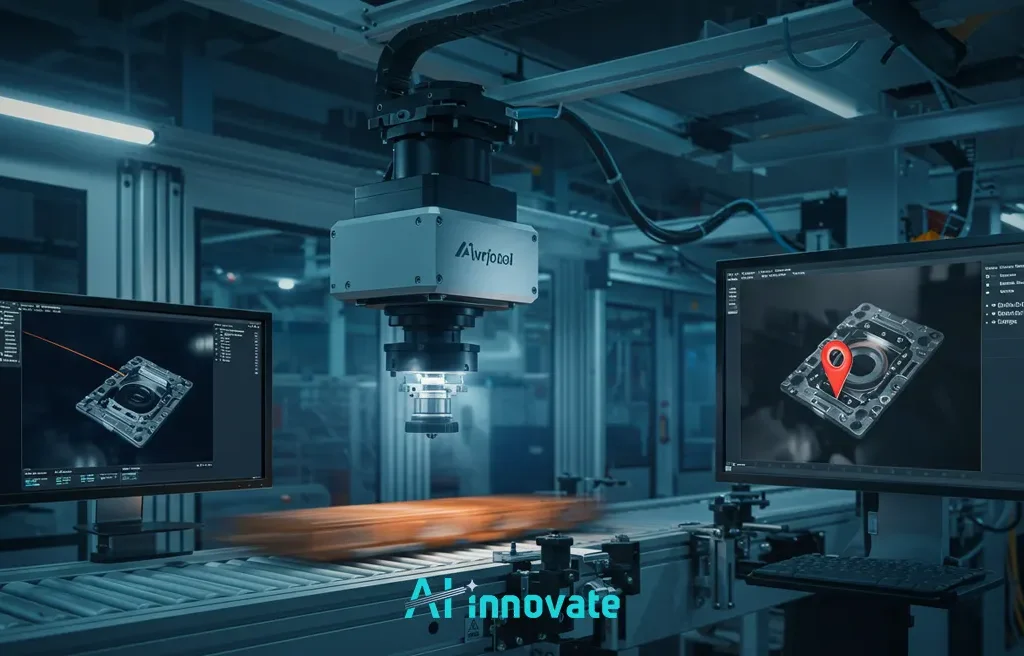
  • Image Acquisition: High-resolution industrial cameras and sensors capture raw visual data from the metal surface under specific lighting conditions to maximize defect visibility.
  • Pre-processing: The raw image is refined. Algorithms work to remove noise, normalize lighting inconsistencies, and enhance the contrast between the flawless surface and potential imperfections. This step is crucial for reliable analysis.
  • Feature Extraction: The system intelligently identifies key visual characteristics (features) that define a defect, learning the unique signatures of different types of flaws.
  • Defect Classification: Finally, a trained AI model classifies the identified features, not only confirming the presence of a defect but also categorizing it by type and severity, providing actionable data for process improvement.
Read Also: Metal Defect Detection – Smart Systems for Zero Defects The Digital Scrutiny of Surfaces

Imaging Techniques for Flaw Detection

A system’s analytical power is only as good as the data it receives. The choice of imaging technology is therefore fundamental to detecting specific types of flaws, especially those invisible to standard cameras.

To achieve a comprehensive inspection, a combination of advanced imaging techniques is often employed. Below, we explore a few of the most impactful methods used today.

Thermographic Imaging

This technique uses thermal cameras to detect minute temperature variations on a metal’s surface. Flaws like subsurface cracks, delamination, or inconsistencies in material density can alter heat distribution. Thermography reveals these thermal anomalies, pointing to structural defects that would otherwise go unnoticed until a potential failure.

3D Laser Scanning

For applications demanding exceptional precision, 3D laser scanners map the exact topography of a metal surface. By creating a detailed three-dimensional point cloud, these systems can identify and measure geometric imperfections like dents, warping, or scratches with micrometer-level accuracy. This is essential for high-tolerance components where even the slightest deviation is unacceptable.

X-Ray Imaging

Certain critical flaws, such as porosity or cracks within welds, are internal to the material. X-ray imaging provides a non-destructive way to see inside the metal part. By passing radiation through the component and capturing the resulting image, inspectors can identify hidden voids and internal structural weaknesses that compromise the product’s integrity.

Operational Gains Through Automation

Adopting automation is not merely a technical upgrade; it is a strategic business decision that delivers quantifiable returns. By replacing manual inspection with intelligent systems, industrial leaders can unlock significant and measurable improvements across the factory floor.

The impact spans from cost reduction to enhanced safety and productivity. The data gathered from early adopters presents a clear picture of these advantages, and the demonstrated ROI for Computer Vision in Metal Quality Control is a compelling driver for adoption.

Our own solutions have demonstrated the ability to improve operational efficiency by up to 30% and reduce production downtime by as much as 40%. The table below summarizes some of the key gains reported across the industry.

Area of Improvement Measured Impact
Inspection Time Reduction Over 60% in aluminum alloy processing
Operational Efficiency Up to 30% improvement
Production Downtime Up to 40% decrease
Worker Safety Enhanced through automated hot-spot detection

Implementation Hurdles and Costs

To build trust, it is essential to be transparent about the challenges of implementation. Adopting an automated inspection system is a significant project that comes with practical considerations. A primary factor is the initial investment. The hardware and software for a robust system can range from $10,000 to $50,000, with a typical implementation timeline of four to six weeks. This initial outlay requires careful planning and budgeting.

A more technical challenge is the acquisition of training data. AI models, particularly those based on deep learning, require a large and diverse dataset of labeled images to learn accurately. For many companies, compiling and annotating thousands of images representing every possible defect is a substantial, time-consuming task. This “data hurdle” is often one of the biggest practical obstacles to overcome when developing a system from the ground up.

A Practical Path to Automated Inspection

While these challenges are real, our solutions are designed to directly overcome them. We provide a practical, streamlined path to adopting advanced quality control, tailored to the distinct needs of both industrial managers and technical developers.

For Industrial Leaders: AI2Eye


AI2Eye turnkey system offers real-time inspection and process optimization without the long development cycle.

  • Detects surface defects on the live production line.
  • Analyzes process data to identify and resolve inefficiencies.
  • Reduces material waste and improves overall product quality.

For Technical Developers: AI2Cam

AI2Cam powerful camera emulator accelerates the development of vision applications by removing hardware dependencies.

  • Simulate any industrial camera to prototype ideas instantly.
  • Eliminate the costs of purchasing and maintaining test hardware.
  • Collaborate remotely with teams without sharing physical equipment.

Frontiers in Quality Control AI

Model Training and Validation Frontiers in Quality Control AI

Staying competitive requires an understanding of where the technology is headed. The landscape of Computer Vision in Metal Quality Control is evolving rapidly, driven by innovations that make the technology more accessible, flexible, and powerful. We are actively engaged with several key frontiers poised to reshape the industry.

  • Cloud-Based AI Platforms: Emerging platforms are democratizing access to powerful AI. Companies can leverage cloud infrastructure for model training and deployment without needing extensive in-house expertise, significantly lowering the barrier to entry.
  • CAD-Driven Inspection: New systems are being developed that use a component’s original CAD design as the baseline for inspection. This groundbreaking approach eliminates the need for training on thousands of defect images, enabling accurate quality control from the very first unit produced.
  • Generative AI for Synthetic Data: To solve the data bottleneck, companies are turning to generative AI. This technology can create vast, realistic datasets of synthetic defect images, enabling the training of highly accurate models without the time and expense of collecting real-world examples.
Read Also: AI-Driven Quality Control – Transforming QC With AI

Conclusion

The evidence is clear: the integration of automated inspection is a strategic imperative. It addresses the core industrial challenges of cost, quality, and efficiency with a level of precision and consistency that is unattainable through manual methods. For leaders in the metal industry, adopting Computer Vision in Metal Quality Control is no longer a distant possibility but a crucial step toward building a resilient, competitive, and intelligent manufacturing future.

Note: Some graphics and visuals in this post were produced using AI-generated content.
FAQ

What is computer vision for quality control in manufacturing?

Computer vision models can be useful for quality control. They allow you to automate repetitive tasks, such as checking the production line. This stops expensive mistakes or missing things at the start or during production.

Machine vision systems use special computer programs (called algorithms) to spot even the smallest problems with products. These systems reduce the chance of human error and speed up inspection times, which means more consistency and efficiency.

Computer vision (CV) is a field of artificial intelligence (AI) that uses machine learning and neural networks to enable computers and systems to understand and interpret the visual world.

Automated Quality Control vs Manual Inspection

Automated Quality Control vs Manual Inspection

The financial and reputational cost of a single defect escaping the factory floor can be catastrophic, leading to recalls, wasted resources, and eroded customer trust. Relying solely on manual inspection introduces a significant, unquantifiable risk into the value chain.

At AI-innovate, we develop sophisticated AI and machine vision solutions engineered to mitigate this exact risk by delivering exceptional accuracy. This article moves past hypotheticals to deliver a frank analysis of Automated Quality Control vs Manual Inspection, focusing on ROI, error rates, and the quantifiable business case for deploying intelligent systems to protect your brand and bottom line.

Next-Level Quality Control Starts Here

Let AI inspect, analyze, and optimize – faster and smarter than ever.

The Human Factor in Inspection

For decades, the human inspector has been the cornerstone of quality assurance. The unmatched flexibility of the human eye, guided by intuition and experience, allows for the identification of novel or highly irregular defects that a rigidly programmed system might miss.

An experienced operator can assess complex surfaces and make nuanced judgments that are difficult to codify. This adaptive expertise is valuable, forming a baseline for what quality means.

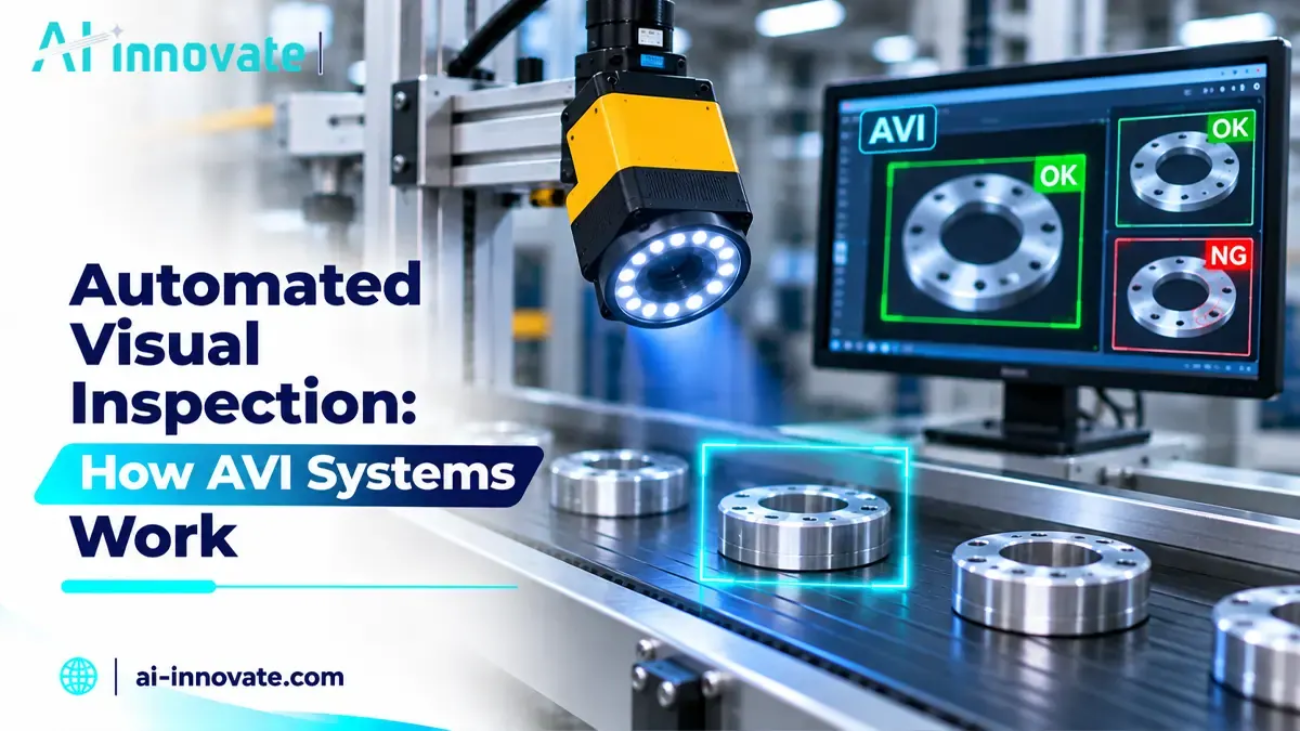
However, this same reliance on human subjectivity is also a source of significant vulnerability, introducing inconsistency and fatigue-driven errors into a process that demands absolute uniformity. For a full guide to how these systems work, see automated visual inspection.

Read Also : Machine Vision vs Human Inspection – Reliability in Industry

Anatomy of a Digital Inspection

Anatomy of a Digital Inspection

A digital inspection transcends simple photography; it is a sophisticated cognitive process executed at machine speed. At its core, the system captures a high-resolution image, converting the physical product into a dense matrix of pixels.

This digital footprint is then instantly analyzed by an AI model, typically a deep learning neural network that has been rigorously trained on a vast dataset of both conforming and non-conforming examples.

Unlike a human, the model does not “interpret” in a subjective sense. Instead, it performs a complex mathematical analysis, comparing the product’s digital signature against its learned model of perfection.

The result is a purely objective, binary verdict—pass or fail—devoid of fatigue, bias, or inconsistency. This methodical conversion of pixels to a definitive verdict is what enables such high levels of accuracy and data generation.

Read Also: AI-Driven Quality Control – Transforming QC With AI

The Threshold of Machine Precision

Automated systems operate on a fundamentally different principle: unwavering, verifiable consistency. By leveraging AI and machine vision, these systems move past the limitations of human biology to deliver a new standard of accuracy.

When we analyze the technical debate of Automated Quality Control vs Manual Inspection, the capabilities of automation become starkly evident. To fully appreciate this shift, consider the core operational advantages these systems bring to the factory floor:

  • Perpetual Operation: Automated systems function continuously without degradation in performance, ensuring that the first and last product of a shift are inspected with the exact same level of scrutiny.
  • Unwavering Consistency: Every inspection is performed according to identical, pre-defined parameters, eliminating the variability in judgment between different human inspectors and achieving a defect detection accuracy that can exceed 99%.
  • High-Speed Throughput: Where a human may require several seconds per piece, automated stations can inspect thousands of units per minute, directly addressing production bottlenecks and scaling seamlessly with demand.
Read Also: Machine Learning in Quality Control – Smarter Inspections

Quantifiable Gaps in Manual Diligence

While the conceptual benefits are clear, the business case becomes compelling when examining the hard data. The differences in performance between the two methods are not minor; they represent a significant gap in operational efficiency, cost, and reliability.

The choice in the Automated Quality Control vs Manual Inspection dilemma directly impacts a company’s bottom line and competitive standing. The following table offers a direct comparison of key performance metrics, compiled from industry data, to illustrate the tangible gaps.

Metric Manual Inspection Automated Inspection
Error Rate 15% – 40% of defects are missed Less than 1% error rate is achievable
Annual Labor Cost Can exceed $89,000 per inspector High initial ROI via reduced labor needs
Data Traceability Manual logging; prone to error and difficult to analyze Comprehensive, real-time data capture for every item

Operational Synergy of Human and AI

The most advanced approach to quality control is not a complete replacement of human operators but a strategic collaboration between human expertise and machine precision. This hybrid model, often termed “assisted inspection,” creates a powerful synergy.

The goal is to elevate the role of the human inspector from repetitive manual labor to complex decision-making and final validation. This operational model transforms the factory floor, as explored in the following processes.

Redirecting Complexity

In this framework, our AI2Eye system handles the high-volume, repetitive task of scanning every single product for known defect types. Its speed and accuracy ensure comprehensive coverage.

However, when the system identifies a novel or ambiguous anomaly that falls outside its defined parameters, it intelligently flags and routes the item to a human expert for final assessment, ensuring that complex issues receive the nuanced judgment they require.

Human-in-the-Loop Validation

This collaborative process does more than just sort products. The feedback from the human inspector on these complex cases is fed back into the AI model. This “human-in-the-loop” validation continuously refines and improves the system’s intelligence over time. It empowers employees, builds trust in the technology, and creates an ever-smarter quality control ecosystem.

Accelerating Development without Hardware

For the technical teams driving innovation, a significant challenge in the field of Automated Quality Control vs Manual Inspection lies not just in deployment, but in development. Machine learning engineers and R&D specialists are often slowed by their dependency on physical camera hardware for prototyping and testing vision applications.

Our approach directly addresses this critical bottleneck. This is precisely the challenge our AI2Cam virtual camera emulator is designed to solve, providing a software-first environment for development. It unchains innovation from physical constraints in several key ways.

Rapid Prototyping Cycles

With AI2Cam, developers can simulate a wide range of industrial cameras and lighting conditions directly on their computer. This enables them to test and iterate on their detection algorithms almost instantly, dramatically accelerating the prototyping lifecycle without waiting for hardware procurement or setup.

Decoupling Software from Hardware

Engineers can develop and refine the core AI software in parallel with the hardware selection process. This decoupling means that by the time the physical cameras are installed on the production line, the software is already mature, tested, and ready for integration, minimizing project delays.

Flexible Scenario Simulation

AI2Cam allows developers to easily create and test for edge cases and rare defect scenarios that would be difficult, costly, or time-consuming to replicate with physical products. This ensures the final system is more robust and reliable when deployed in the real world.

ccelerating Development without Hardware

Activate Your Intelligent Production Line

Moving from traditional inspection to an automated, intelligent system is more than an upgrade—it is a strategic transformation of your production capabilities. It aligns your operations with the demands of modern industry for higher efficiency, reduced waste, and verifiable quality.

This transition begins with a practical assessment of your unique challenges. Contact our experts at AI-innovate to explore how our AI2Eye and AI2Cam solutions can be deployed to activate a smarter, more resilient production line for your business.

Conclusion

Manual inspection, while historically significant, possesses inherent limitations that cannot be overcome through training alone. The evidence strongly indicates that automated systems offer superior accuracy, speed, and data-driven insights. The most powerful path forward lies in a synergistic combination of human and machine. Investing strategically in the transition from Automated Quality Control vs Manual Inspection is no longer an option, but a competitive necessity for any forward-thinking manufacturer.

Note: Some graphics and visuals in this post were produced using AI-generated content.
FAQ

What is the difference between QA manual and QA automation?

QA automation tester: It uses tools and frameworks that automate the process of writing scripts which then run tests automatically. This means that repetitive tasks can be completed more quickly and efficiently. QA manual tester: Tests are done manually. The steps and plans for these tests are written down.

Inspection is all about finding defects, while control is about stopping defects from happening. Inspection happens at the end of the production process, while control is a part of the process as it goes along.

Automation is better for large, ongoing projects, while manual testing is better for smaller projects. Quality and coverage: Automation is great for giving you good quality and consistent results for tasks that you do over and over again. This means better ROI.

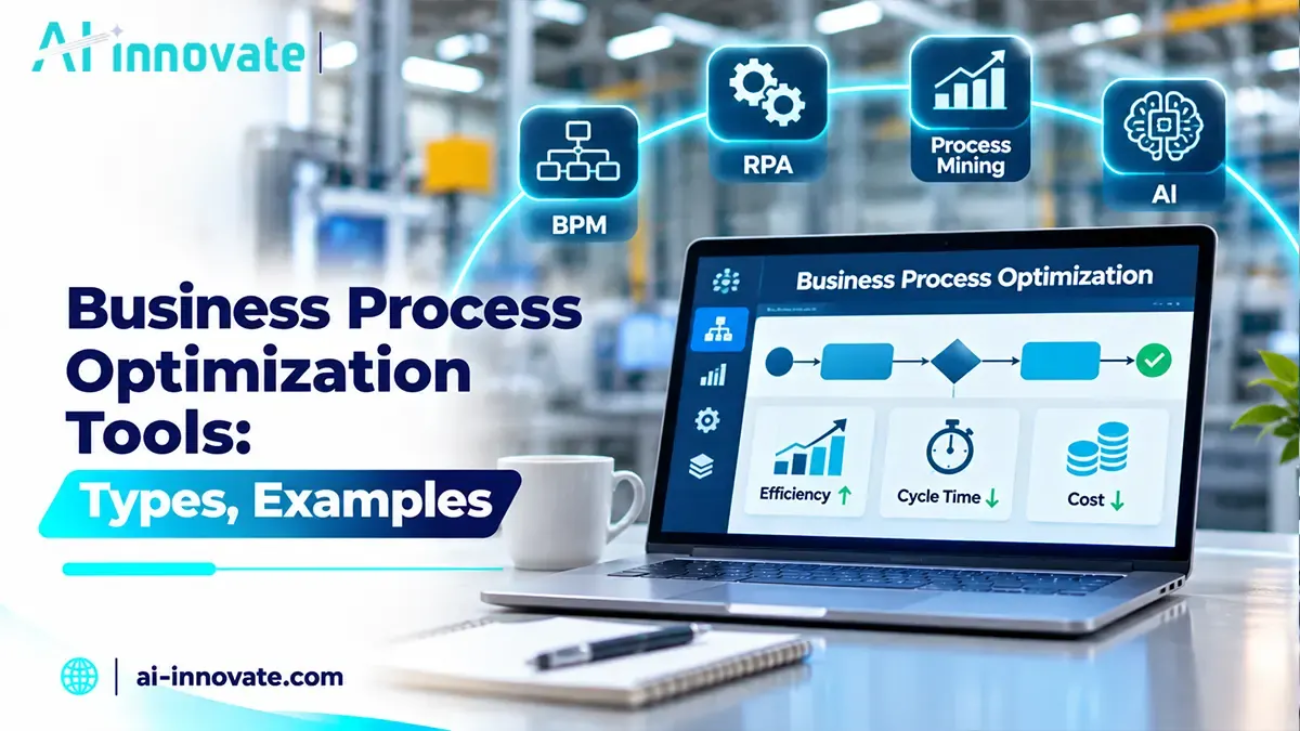
Business process optimization tools: a laptop dashboard with a process flow and efficiency, cycle time and cost metrics, with BPM, RPA, process mining and AI icons

Business Process Optimization Tools: Types, Examples and AI Tools for Manufacturing

Business process optimization tools are software that help organizations map, measure, automate and improve their workflows. The main types are process mapping and BPM tools, process mining, workflow automation and RPA, analytics dashboards, simulation and digital twins, AI and machine learning platforms, and, in manufacturing, MES and AI quality systems.

Traditional process management relies on manual oversight, fragmented data and reactive fixes. Optimization tools replace this with data that shows where time, cost and quality are lost, and with automation that removes repetitive work.

Knowing what each tool type does, with examples, and how AI tools apply to manufacturing makes it easier to choose the right tool for your organization.

Key Takeaways

Business process optimization tools fall into seven main types, from process mapping to AI platforms.

Process mining shows how work really flows, based on system data rather than assumptions.

In manufacturing, MES and AI quality inspection tools optimize the production process itself.

Choose tools by the problem, the data you have and how well they integrate with existing systems.

What Is Business Process Optimization?

Business process optimization (BPO) is the systematic improvement of an organization’s workflows to make them faster, more reliable and better aligned with business goals. It identifies bottlenecks, removes redundant steps and checks that each step adds value to the final outcome, combining analysis, automation and technology to achieve more with fewer resources.

For example, a manufacturing plant with frequent delays caused by manual inspection and inconsistent reporting can introduce automated quality checks and real-time dashboards. Issues are then found earlier, maintenance is scheduled on data, and workloads are balanced, which leads to smoother flow, less waste and more on-time deliveries.

Business process optimization is essential for every aspect of an organization, from production and logistics to finance and customer service. When implemented effectively, it improves efficiency, empowers employees, and establishes the foundation for long-term operational excellence.

In short, business process optimization improves productivity and reliability by streamlining workflows, removing inefficiencies and using data and technology.

Why Business Process Optimization Matters

Optimization is not just about improving efficiency; it’s about creating smarter, more resilient organizations that can thrive in any environment.

Customer-Centered Efficiency

Streamlined operations lead to faster delivery, fewer delays, and more consistent service experiences. Customers benefit from reliability, and businesses build stronger trust and loyalty.

Agility and Competitiveness

In a rapidly changing market, optimized workflows help companies respond faster to new challenges. Better use of data allows teams to make quicker, more informed decisions.

Error Reduction and Waste Control

Automation reduces human error and improves consistency. It also helps uncover resource waste, saving both time and cost across departments.
Together, these advantages position business process optimization as a core driver of competitiveness and long-term growth.

Steps to Optimize Business Processes

The most effective optimization strategies follow a structured, repeatable process:

Identify and Prioritize Processes

Focus on workflows that have measurable inefficiencies or major cost implications.

Map and Analyze Current Workflows

Use process mapping tools and analytics to visualize each step, find bottlenecks, and assess impact.

Design and Test Improvements

Simulate process changes with AI-driven models or digital twins to predict performance outcomes before implementation.

Implement and Monitor

Deploy new workflows supported by automation, then monitor key metrics in real time.

Continuously Improve

Machine learning models analyze feedback and operational data to refine workflows automatically over time.

Core Benefits of Business Process Optimization Tools

Business process optimization tools offer clear benefits, including:

Increased Efficiency and Productivity

Automation eliminates repetitive tasks and redundant steps, allowing workflows to move faster and with fewer delays. Employees can focus on high-value activities such as innovation, strategy, and customer engagement instead of routine administrative work.

Reduced Operational Costs

By streamlining processes and optimizing resource allocation, businesses cut unnecessary expenses and reduce waste. Over time, these savings compound, resulting in leaner operations and stronger profitability.

Improved Quality and Consistency

Standardized workflows help ensure that every product or service meets the same high standard. Errors are minimized, variations are reduced, and quality becomes both predictable and repeatable.

Enhanced Customer Satisfaction

Efficient processes lead to faster response times, more consistent service, and fewer errors. Customers notice the difference, and that reliability builds long-term trust and brand loyalty.

Types of Business Process Optimization Tools with Examples

These are the main types of business process optimization tools, with well-known examples of each:

1. Process Mapping and BPM Tools

Used to draw and document workflows, often in BPMN notation, and to manage them over time (Dumas et al., 2018). Examples include Microsoft Visio, Lucidchart and SAP Signavio.

2. Process Mining Tools

Read event logs from ERP, CRM or MES systems to show how processes really run, including delays, loops and deviations. Examples include Celonis and SAP Signavio Process Intelligence. The method is explained in depth by van der Aalst (2016).

3. Workflow Automation and RPA Tools

Automate repetitive, rule-based tasks such as data entry, approvals and report generation. Examples include Microsoft Power Automate, UiPath and Blue Prism.

4. Analytics and BI Dashboards

Turn operational data into KPIs and trends that teams can act on. Examples include Microsoft Power BI and Tableau.

5. Simulation and Digital Twin Tools

Test changes to a process or production line virtually before applying them, so the impact on throughput and cost is known in advance.

6. AI and Machine Learning Platforms

Predict delays, failures and quality problems from historical data and recommend or trigger improvements.

7. Manufacturing Process Tools (MES and AI Quality Systems)

In manufacturing, manufacturing execution systems (MES) track orders, machines and quality on the shop floor, and AI quality inspection systems such as AIxEye find defects on the line and feed that data back into process improvement.

The table below summarizes when to use each type:

Tool typeBest forTypical data
Process mapping and BPMDocumenting and standardizing workflowsInterviews, procedures
Process miningFinding real bottlenecks and deviationsERP, CRM and MES event logs
Workflow automation and RPARemoving repetitive manual tasksForms, emails, system records
Analytics dashboardsTracking KPIs and trendsOperational databases
Simulation and digital twinsTesting changes before implementationProcess and capacity data
AI and ML platformsPredicting problems and optimizing decisionsHistorical and real-time data
MES and AI quality systemsOptimizing production and qualityMachine, sensor and image data

How to Choose a Business Process Optimization Tool

  • Start with the problem: a slow approval flow needs automation, an unclear process needs mapping or mining, a quality loss needs shop-floor tools.
  • Check your data: process mining and AI need clean event logs or production data.
  • Check integration with ERP, MES and existing systems.
  • Run a pilot on one process and measure the KPI before scaling.
  • Compare total cost, including licenses, integration and training.

Applications of Process Optimization Across Industries

The impact of AI-driven optimization spans multiple sectors:

  • Manufacturing: machine learning for manufacturing process optimization tunes machine settings, IoT sensors reduce downtime, Lean methods remove waste, and AI inspection improves product quality on the line.
  • Healthcare: Streamlines patient registration and billing, reduces wait times, and ensures efficient resource allocation for improved care and operational flow.
  • Finance: Automates invoice approvals and reconciliations, enhances accuracy, and uses analytics to detect fraud while ensuring faster financial reporting and compliance.
  • Logistics: Improves delivery efficiency through route optimization, automates warehouse operations, and applies predictive analytics to manage inventory and meet demand effectively.

Real Example: Quality Data as a Process Optimization Tool

In an AI-innovate project with a continuous textile manufacturer, an AIxEye-based inspection system checked fabric inline with 100% automated coverage and reduced the QC staff requirement by 50%. Linking each defect with suppliers, raw materials and seasonal conditions turned inspection into a process optimization tool that pointed to the sources of recurring losses. Read the textile defect detection case study.

How to Get Started with AI-Driven Process Optimization

Success in business process optimization starts with the right strategy and tools.

  1. Assess Current Performance: Identify inefficiencies, bottlenecks, and high-cost areas.
  2. Collect and Label Data: Build clean, accurate datasets to train AI effectively.
  3. Run a Pilot: test the selected tool on one process or production line and compare the KPI with the baseline.
  4. Deploy and Monitor: roll out the solution, such as AIxEye for real-time quality monitoring on the line, and track the results.
  5. Refine and Scale: Use continuous feedback to retrain AI models and expand optimization across departments.

Conclusion

AI-powered process optimization replaces static management with systems that learn, predict and improve continuously. The right tools cut costs and free teams to focus on innovation and customers. At AI-innovate, we focus on the production side, where quality data from the line is a powerful optimization tool.

The greatest strength of these tools is that they reveal inefficiencies that were invisible before; once those patterns are clear, improvement can be planned and measured. Start with one process, one measurable KPI and the tool type that fits the problem.

Record the baseline before any tool goes live. Without a clear measure of the KPI as it stands today, it is hard to tell whether later gains came from the tool or from other changes in the operation.

Note: Some graphics and visuals in this post were produced using AI-generated content.
This article draws on the following sources:

  1. Dumas, M., La Rosa, M., Mendling, J. and Reijers, H. A. (2018). Fundamentals of Business Process Management (2nd ed.). Springer. doi.org/10.1007/978-3-662-56509-4
  2. van der Aalst, W. (2016). Process Mining: Data Science in Action (2nd ed.). Springer. doi.org/10.1007/978-3-662-49851-4

Confused about where to start with AI? Our specialists help you identify the right AI approach based on your process, data, and goals. Talk to our experts.

Frequently Asked Questions

What is business process optimization (BPO)?

 Business process optimization is the practice of analyzing and improving existing workflows to make them more efficient, cost-effective, and aligned with organizational goals.

Common tools and techniques include process mapping (BPMN), process mining, workflow automation and RPA, analytics dashboards, simulation, AI and machine learning, and continuous improvement methods such as Lean and Six Sigma.

Business Process Optimization (BPO) focuses on improving existing workflows, while Business Process Management (BPM) is a broader discipline that designs, manages, and governs all business processes across the organization.

AI improves optimization by analyzing large volumes of operational data to uncover inefficiencies that are invisible to manual review, then predicting where problems will occur and adapting workflows automatically. This shifts process management from reactive fixes to proactive, continuous improvement.

Business process optimization tools analyze workflow data, task completion times, resource utilization, and process dependencies to identify inefficiencies that slow operations. Many modern platforms also use AI and process mining to detect hidden bottlenecks and recommend improvements that increase productivity and reduce operational costs.

Yes. Most business process optimization tools integrate with Enterprise Resource Planning (ERP), Customer Relationship Management (CRM), Manufacturing Execution Systems (MES), Industrial IoT (IIoT), and Business Intelligence (BI) platforms. This integration enables organizations to automate workflows, centralize operational data, and improve decision-making without replacing existing systems.

Enterprises usually combine a BPM or process mapping tool, a process mining platform to find real bottlenecks, workflow automation or RPA for repetitive tasks and a BI tool for KPIs. Manufacturers add MES and AI quality systems to optimize the production process itself.

Production optimization software uses machine, process and quality data to improve output, cycle time, energy use and yield on the shop floor. It includes MES, advanced analytics and AI tools that recommend or apply better process settings.

Computer Vision Applications in Industry

Computer Vision Applications in Industry – Smarter Output

The new benchmark for operational excellence is being set by factories that can see, analyze, and act with intelligent automation. This capability is rapidly becoming the primary differentiator between market leaders and their competitors.

AI-innovate equips industrial pioneers with the perceptual intelligence required to not just compete, but to dominate their respective sectors. This document provides a forward-looking analysis of the essential computer vision applications shaping the future of manufacturing, offering a blueprint for organizations aiming to build a decisive and lasting competitive advantage through technological leadership.

Unlock the Power of ML in Industry 4.0

Leverage cutting-edge machine learning to automate, optimize, and scale your smart factory today.

From Pixels to Production Insights

The fundamental process of turning raw visual data into strategic industrial intelligence is a structured and elegant workflow. It begins not with complex algorithms, but with the simple capture of an image, which is merely a collection of pixels.

However, it’s the intelligent processing of these pixels that unlocks immense value, allowing systems to understand and react to the physical world with precision. For any industrial leader or technical specialist, grasping this core sequence is the first step toward appreciating its power. The entire journey from a camera lens to a command on the factory floor can be distilled into four key stages:

  1. Image Acquisition: High-resolution industrial cameras and sensors capture visual data from the product or environment. This is the system’s “eyesight.”
  2. Data Pre-processing: The raw image is cleaned, normalized, and optimized. This step removes noise, corrects lighting variations, and enhances features to prepare the data for analysis.
  3. AI Analysis: Deep learning models, primarily Convolutional Neural Networks (CNNs), analyze the prepared data to identify patterns, objects, or anomalies based on their training. This is the cognitive “brain” of the system.
  4. Actionable Decision: Based on the analysis, the system triggers an action—such as diverting a faulty product, alerting an operator, or guiding a robotic arm.

Zero-Defect Manufacturing Vision

Zero-Defect Manufacturing Vision

Perhaps the most impactful application of machine vision lies in the pursuit of zero-defect manufacturing. Human inspection, while valuable, is inherently limited by factors like fatigue, inconsistency, and the sheer speed of modern production lines.

Automated quality control systems overcome these barriers by providing tireless, high-precision inspection, 24/7. This technology is a direct answer to the challenges faced by Quality Assurance Managers, offering a clear and rapid return on investment by drastically reducing scrap rates and preventing flawed products from ever reaching the customer.

An automated vision system is capable of detecting a vast array of imperfections, many of which are impossible to spot with the naked eye. Key examples include:

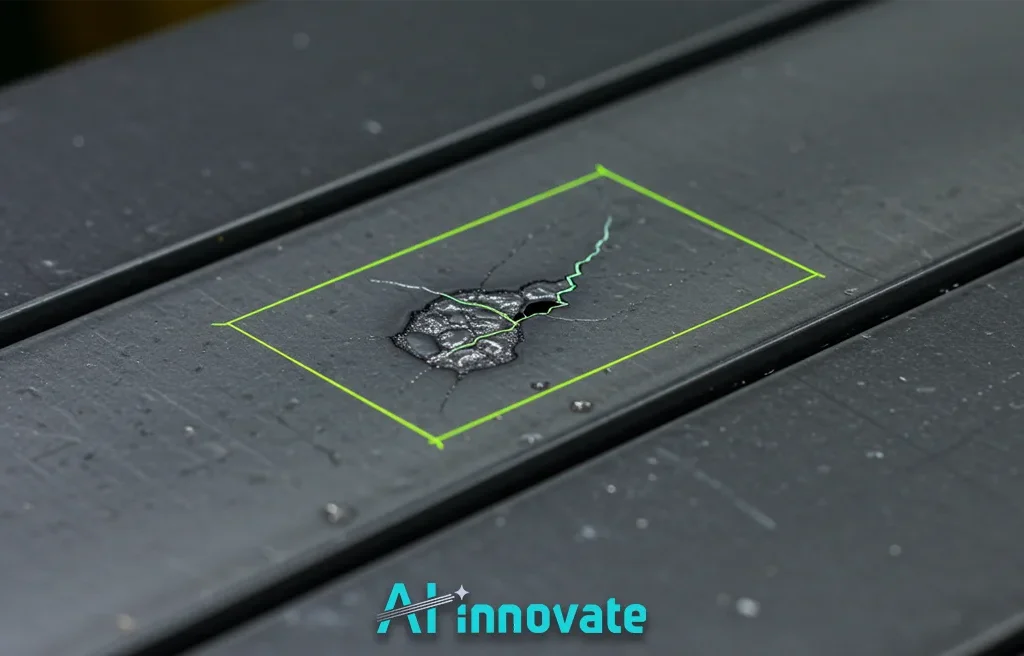
  • Microscopic Surface Flaws: Tiny cracks, scratches, dents, or pinholes in materials like metal, polymer, or glass.
  • Color and Texture Inconsistencies: Subtle variations in color, finish, or material texture that indicate a process error.
  • Assembly and Alignment Errors: Verifying that all components are present, correctly oriented, and assembled within specified tolerances.
  • Printing and Labeling Defects: Ensuring barcodes are readable, text is accurate, and labels are correctly positioned on packaging.

Read Also: Machine Vision for Defect Detection – Boost Product Quality

Automated Robotic Precision

In modern industrial settings, robots are the workforce, but computer vision provides the critical sense of sight that enables true autonomy and precision. Without it, a robot is limited to performing pre-programmed, repetitive motions.

With vision guidance, a robot can adapt to variability in its environment, handling tasks that require precision and flexibility. This synergy between robotics and vision is fundamental to automating complex assembly lines, especially in the automotive and electronics sectors.

For Operations Directors, this integration means higher throughput, improved product quality, and the ability to automate tasks previously deemed too intricate for machines. The value of this technology becomes even clearer when we consider how a machine “sees” and adapts to its work.

Such advancements form a core component of the wider landscape of Computer Vision Applications in Industry. The difference in capability is stark when compared directly:

Feature Traditional Robotics Vision-Guided Robotics
Component Handling Requires fixed part presentation Adapts to varying part locations
Task Flexibility Limited to one repetitive task Can switch between tasks easily
Precision Level High, but only in static setups Extreme precision in dynamic environments
Error Correction Cannot adapt to unexpected events Identifies and adjusts for errors in real-time

Supply Chain Visual Intelligence

The utility of computer vision extends far beyond the four walls of the factory floor, revolutionizing logistics and supply chain management. In massive warehouses and distribution centers, visual intelligence systems provide a level of accuracy and efficiency that manual tracking methods cannot match.

Autonomous drones equipped with cameras can perform rapid inventory cycles, scanning barcodes and QR codes from the air without human intervention. Similarly, vision-guided robots can navigate complex warehouse environments to sort, pick, and transport goods, drastically accelerating order fulfillment times and reducing labor costs.

This application delivers continuous, data-driven insights to operations leaders, optimizing stock levels, minimizing search times, and creating a more transparent and responsive supply chain. The tangible impact of these Computer Vision Applications in Industry is evident in the world’s most advanced logistics operations.

Case Study Snippet: The Amazon Model

In its fulfillment centers, Amazon deploys thousands of autonomous robots and vision systems. These technologies are not just supplemental; they are integral to the operation, enabling the company to process millions of orders daily with unparalleled speed and accuracy. The system tracks every item from arrival to dispatch, optimizing storage and retrieval routes in real time.

Proactive Workplace Safety Systems

Beyond production and efficiency, computer vision serves a vital human-centric role: creating safer industrial environments. These systems act as a vigilant, unblinking observer, capable of identifying and flagging potential hazards before they lead to accidents.

By continuously monitoring the workplace, AI-powered cameras can ensure compliance with critical safety protocols, providing a new layer of protection for employees. This addresses a core responsibility for all industrial leaders, as it reduces the risk of injury, minimizes liability, and fosters a culture of safety.

The proactive nature of these systems allows for immediate intervention when a risk is detected, a significant improvement over reactive post-accident analysis. Common scenarios where these systems are deployed include:

  • Personal Protective Equipment (PPE) Detection: Automatically verifying that all personnel in a designated zone are wearing required gear such as hard hats, safety glasses, or high-visibility vests.
  • Hazardous Zone Monitoring: Triggering an alert if a person or vehicle enters a restricted or dangerous area, such as the operational envelope of a heavy robot.
  • Ergonomic and Fatigue Analysis: Identifying worker postures or movement patterns that could lead to long-term strain injuries or detecting signs of fatigue to prevent accidents.
  • Spill and Obstruction Detection: Recognizing fluid spills or misplaced objects on the floor that pose a slip-and-fall risk.

Proactive Workplace Safety Systems

Bridging Simulation and Reality

For the Technical Developers, ML Engineers, and R&D Specialists driving innovation, one of the most significant bottlenecks is the dependency on physical hardware for development and testing. Acquiring, setting up, and maintaining a diverse range of industrial cameras and lighting conditions is both costly and time-consuming, leading to project delays.

This physical constraint often limits the scope of testing and stifles rapid prototyping. The solution is to decouple software development from physical hardware. This is achieved with sophisticated camera emulators, a type of software that acts as a virtual camera.

These tools allow developers to simulate an entire range of industrial cameras, sensors, and environmental conditions directly from their computers. By working in a virtual environment, development cycles are dramatically accelerated.

To meet this specific need, our powerful software tool, AI2Cam, provides this exact functionality. It offers a virtual camera environment designed to give developers the ultimate flexibility to innovate, enabling:

  • Faster Prototyping: Test code and ideas instantly without waiting for hardware setups.
  • Significant Cost Reduction: Eliminate the expense of purchasing and maintaining physical cameras for testing.
  • Enhanced Flexibility: Simulate countless scenarios—from different lighting to various camera models—that are impractical to create physically.
  • Seamless Remote Collaboration: Allow teams across the globe to work on the same project without shipping equipment.

The Strategic Implementation Roadmap

For industrial leaders, successful adoption of computer vision isn’t about buying technology—it’s about strategic execution. A disciplined roadmap is essential to target the right problems, avoid costly missteps, and ensure a transparent return on investment (ROI).

This approach aligns the solution with core business goals, making the real-world Computer Vision Applications in Industry both effective and accessible. We recommend these four key steps for a successful deployment:

  1. Identify the Core Bottleneck: Analyze your production line to pinpoint the single issue (e.g., defects, speed, inventory) where improvement will deliver the greatest financial impact.
  2. Gather Foundational Data: Collect a robust dataset of images and videos from the target area. This data must include clear examples of both normal operations and the specific problems you aim to solve.
  3. Select the Right Solution: Choose a tool engineered for your specific challenge. For real-time quality control, a purpose-built system like our AI2Eye integrates seamlessly into production lines, offering immediate defect detection and process analytics to deliver a clear ROI.
  4. Measure and Validate Performance: Launch a pilot project and track key metrics (e.g., defect rates, throughput, waste reduction) against your benchmarks. This validates the ROI before you commit to a full-scale deployment.

Conclusion

Computer vision is no longer a technology of the future; it is a present-day industrial reality, creating factories that are smarter, safer, and more efficient. From guaranteeing product quality with superhuman precision to guiding robots and protecting workers, its applications are both diverse and transformative.

For industrial leaders, it offers a direct path to higher quality and lower costs. For technical developers, it opens a new frontier of innovation. By embracing practical, purpose-built tools, companies can effectively implement Computer Vision Applications in Industry. AI-innovate is committed to being your dedicated partner in this journey, transforming industrial challenges into intelligent solutions.

Note: Some graphics and visuals in this post were produced using AI-generated content.
Machine Learning in Industry 4.0

Machine Learning in Industry 4.0 – Transforming Operations

The modern industrial landscape is not defined by its machinery, but by the colossal streams of data flowing from it. This transition from electromechanical operation to data-driven ecosystems marks the true essence of the fourth industrial revolution.

AI-innovate exists at this critical juncture, providing the specialized intelligence to transform that raw data into tangible operational value. This article moves beyond surface-level discussions to dissect the core applications and strategic frameworks of machine learning, offering a clear roadmap for both industrial leaders seeking ROI and technical developers fueling innovation.

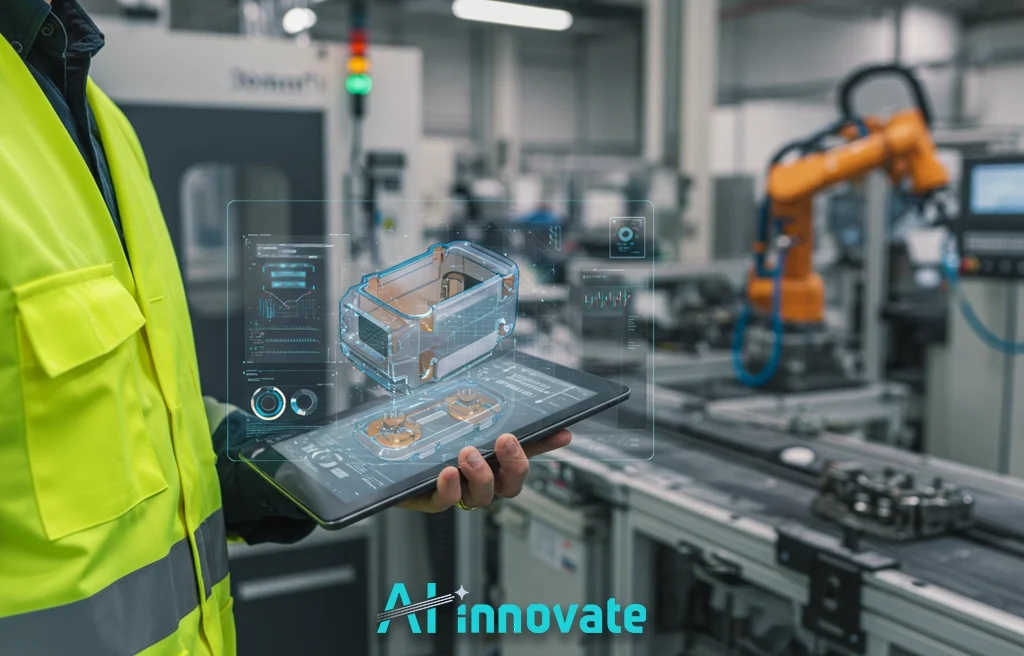
Unlock the Power of ML in Industry 4.0

Leverage cutting-edge machine learning to automate, optimize, and scale your smart factory today.

From Data to Process Intelligence: How Industry 4.0 Transforms Manufacturing Efficiency

In the Industry 4.0 era, manufacturing systems are evolving beyond simple automation; they’re becoming intelligent and adaptive. Every machine, sensor, and production line generates enormous amounts of raw data. However, on its own, this data is meaningless. The real transformation occurs when this data is analyzed and transformed into process intelligence, providing a deep understanding of operational performance, inefficiencies, and improvement strategies.

Manufacturers can detect subtle patterns that human observation would miss by applying machine learning and advanced analytics. This uncovers relationships between material inputs, machine settings, and environmental factors. This shift enables companies to transition from reactive troubleshooting to proactive optimization, allowing them to predict and prevent issues before they occur. Ultimately, process intelligence converts data into a powerful competitive advantage by driving efficiency, reducing costs, and enhancing decision-making across the production ecosystem.

Process Intelligence via Production Data

Automated Scrutiny of Surface Integrity

For Quality Assurance and Operations Directors, the ultimate goal is not just finding defects, but eradicating the conditions that create them. Manual inspection, constrained by human fatigue and subjectivity, presents a bottleneck and a point of failure in high-speed manufacturing.

Modern computer vision systems, powered by deep learning models, offer a solution that is not merely faster, but fundamentally more perceptive. These systems perform an automated, tireless scrutiny of surface integrity, capable of detecting sub-millimeter imperfections in textiles, metals, polymers, and other materials with absolute consistency.

This technological leap delivers a cascade of tangible business advantages that resonate directly on the balance sheet. For instance, advanced visual inspection platforms like AI2Eye are engineered to provide more than just defect detection in manufacturing; they are a tool for process control. Their impact includes:

  • Drastic Reduction in Scrap Material: By identifying flaws in real-time, production runs can be corrected instantly, minimizing material waste and rework costs.
  • Guaranteed Batch Consistency: Automated scrutiny ensures that every product leaving the factory adheres to the exact same quality standard, eliminating variance and strengthening brand promises.
  • Fortified Brand Reputation: Delivering a verifiably zero-defect product builds immense trust with customers and solidifies a company’s position as a high-quality leader in its market.

Read Also: AI for Quality Assurance – Intelligent Manufacturing Insight

Operational Prognostics for Machinery

The financial drain of unplanned downtime remains one of the largest unresolved challenges in manufacturing. The traditional approach to maintenance has always been reactive. A machine fails, production stops, and repairs are made under immense time pressure.

The application of machine learning completely inverts this paradigm through the science of operational prognostics. This discipline focuses on predicting the remaining useful life of industrial assets, shifting maintenance from a reactive chore to a data-driven strategy.

By continuously analyzing data streams from equipment sensors—monitoring subtle changes in vibration, temperature, acoustic signature, and power consumption—ML models can identify the faint signals of impending failure weeks or even months in advance.

To fully appreciate this strategic shift, the operational differences between the traditional model and a modern prognostic framework are stark:

Aspect Reactive Approach (Traditional) Prognostic Approach (ML-Powered)
Trigger Equipment Failure Data-driven Prediction
Focus Rapid Repair Failure Prevention
Outcome Unplanned Downtime, High Costs Scheduled Maintenance, Optimized Asset Lifespan

This evolution makes the entire operation more resilient and cost-effective, cementing the strategic value of Machine Learning in Industry 4.0 for asset management.

Decoupling Innovation from Hardware

For the ML engineers and R&D specialists tasked with creating next-generation industrial solutions, the greatest inhibitor to progress is often not a lack of ideas, but a dependency on physical hardware.

The process of procuring, setting up, and testing with expensive industrial cameras is a significant bottleneck that consumes budgets and timelines. Each new experimental setup can mean weeks of delay, limiting the scope of innovation to only the “safest” bets.

This direct coupling of software development to hardware availability fundamentally constrains the speed of innovation. Freeing development from these physical shackles is the key to rapid, cost-effective, and truly agile R&D.

When developers can simulate any camera model, lighting condition, or production scenario from their own computer, the pace of prototyping accelerates exponentially. For ML engineers and R&D specialists facing these exact constraints, AI-innovate’s AI2Cam offers a powerful camera emulation platform, enabling unlimited testing and validation in a purely virtual environment. This is how you start building faster, today.

Towards the Sentient Production Line

Sentient Production Line

As these technologies mature, the vision extends beyond isolated “smart” tools to the creation of a “sentient production line.” This concept describes a manufacturing environment that is not merely automated but is holistically aware, predictive, and self-optimizing. In this model, individual ML systems for quality, maintenance, and logistics act as the sensory nerves of a larger, centralized intelligence.

This integrated system doesn’t just execute commands; it perceives the state of the entire operation and makes autonomous decisions to improve it. Achieving this requires a seamless flow of high-fidelity data from every corner of the factory.

Real-time visual intelligence is a cornerstone of this architecture, acting as the “eyes” of the sentient line. The integration of robust platforms like AI2Eye provides the critical perceptual data needed to drive the adaptive, closed-loop quality control that defines this next evolutionary step in manufacturing, a testament to the integrated power of Machine Learning in Industry 4.0.

Read Also: Machine Learning in Quality Control – Smarter Inspections

Emergent Frontiers in Applied AI

While the applications discussed here represent the proven and practical state of industrial AI, the field is continuously advancing into new territories. Leaders in this space are not only mastering current technologies but also exploring the emergent frontiers that will define the factories of tomorrow.

These advanced domains are moving from academic research to applied solutions, promising even greater levels of autonomy and intelligence. Keep a close watch on developments in areas such as Digital Twins, which create a dynamic, virtual replica of an entire production line for complex simulation and “what-if” analysis.

Similarly, Federated Learning is gaining traction as a technique to train powerful models across multiple facilities without centralizing sensitive proprietary data. Finally, reinforcement learning is set to redefine robotics, enabling machines to learn optimal physical tasks through trial and error.

The ongoing developments in Machine Learning in Industry 4.0 are constantly pushing the boundaries of what is possible.

Conclusion

Embracing machine learning is no longer a speculative venture; it is a strategic imperative for competitive survival and market leadership in the industrial sector. From ensuring flawless product quality to predicting the health of critical machinery, the applications are tangible, measurable, and transformative. Realizing these benefits depends on choosing not just the right technology, but the right expert partner. AI-innovate provides the specialized, practical tools that empower both industrial leaders and technical developers to turn the immense potential of Machine Learning in Industry 4.0 into their operational reality.

Note: Some graphics and visuals in this post were produced using AI-generated content.
Anomaly Detection in Manufacturing

Anomaly Detection in Manufacturing – Process Insights

Manufacturing processes rarely fail all at once. Most of the time, small changes start without anyone noticing. There’s a slight change in temperature, a very slight vibration change, and a surface irregularity that appears on and off. If these problems are not noticed, they can lead to costly repairs, loss of productivity, or even safety problems.

Traditional monitoring systems rely on predefined thresholds and rule-based alerts. They are good at dealing with known problems, but not so good at dealing with new problems or complicated production environments. As production systems generate more data than ever before, the challenge is no longer collecting information. It is about spotting important changes over time.

AI-powered anomaly detection changes how manufacturers monitor operations. Instead of waiting for predefined limits to be exceeded, anomaly detection models learn what normal behavior looks like and highlight deviations early on. This change means that they can respond more quickly, check the quality of their products better, and make sure their production systems are more stable.

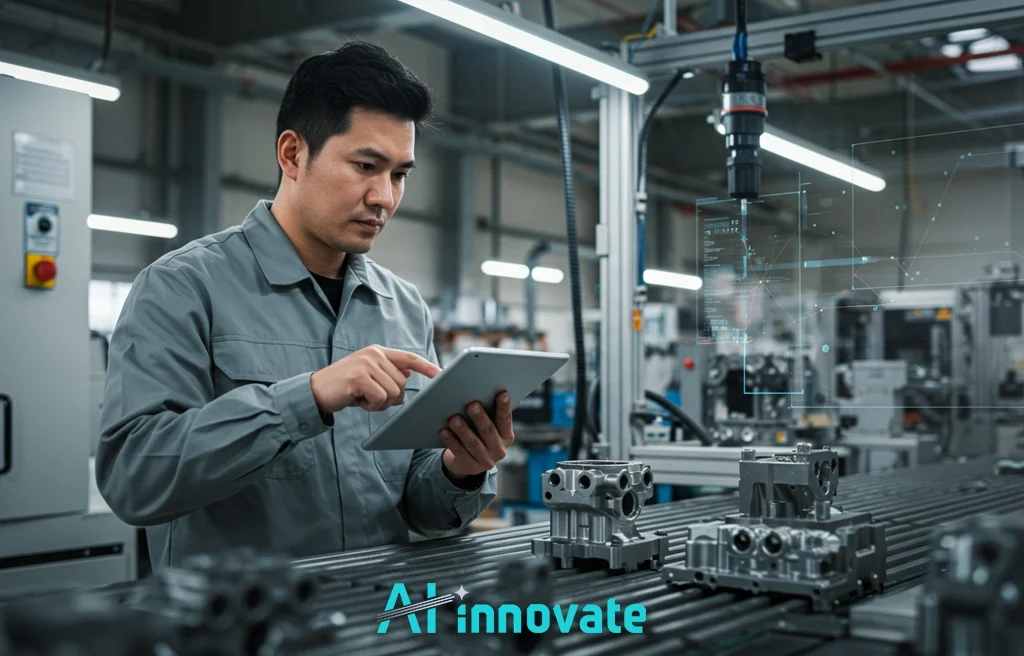
Missed Defects Hidden Costs Lost Profit.

Missed defects quietly drain profitability through rework, scrap, downtime, and customer returns. Discover how early detection and AI-driven quality control protect margins, brand reputation, and long-term operational performance.

What Is Anomaly Detection in Manufacturing?

Anomaly detection is the process of finding data patterns that are very different from normal behavior. In manufacturing, problems may appear in things like visual inspection data, sensor readings, process parameters, equipment signals, or production metrics.

Traditional defect detection looks for known flaws. Anomaly detection looks for unexpected behaviour. This makes it especially useful when:

  • There are hardly any defects and the labels are not clear.
  • New problems are also cropping up.
  • Processes are always changing.
  • Complex systems don’t always behave in a simple way.

By learning the typical patterns, AI models can spot small changes before they become big problems.

Industrial Anomalies

Core Detection Methodologies

Identifying these critical deviations requires a robust set of technical approaches that have evolved significantly. While each serves a distinct purpose, they collectively form a powerful toolkit for engineers and data scientists. Understanding these core methodologies is the first step toward building a resilient production environment. The main categories are:

Supervised & Unsupervised Learning

Supervised methods are highly effective when historical data is well-labeled, allowing the model to be trained on known examples of both normal and anomalous behavior. However, the most dangerous anomalies are often the ones never seen before.

This is where unsupervised learning excels. By learning the intricate patterns of normal operation, these algorithms can flag any deviation from that learned state as a potential anomaly, making them indispensable for discovering novel failure modes.

Semi-Supervised Approaches

This hybrid method offers a practical middle ground, ideal for scenarios where only data from normal operations is abundant and reliable for training. The model builds a strict definition of normalcy and flags anything outside those boundaries.

The Power of Deep Learning

For processing the high-dimensional and complex data streams common in modern factories, such as machine vision feeds or multi-sensor arrays, deep learning models like Autoencoders are transformative. They can learn sophisticated data representations and identify subtle, non-linear patterns that are invisible to traditional statistical methods.

Where Anomaly Detection Adds the Most Value

Anomaly detection is particularly good at spotting problems in situations where things are always changing and it is hard to list all the ways something could go wrong.

Common uses include:

  • Checking the surface of plastics, fabrics and metal defect detection.
  • Predictive maintenance uses vibrations and temperature signals to identify problems.
  • Keeping an eye on the process when making things by molding, pushing materials through a pipe, and putting parts together.
  • Keeping track of how well electronics and pcb manufacturing is working
  • Making the best use of energy and resources

In these situations, if we spot the problem early, we can stop it from getting worse and deal with it quickly.

Automated Visual Quality Control

How AI Models Learn “Normal”

Anomaly detection models are usually trained on data collected during stable production. The idea is not to teach the system every possible problem. It is to define what a healthy operation looks like.

Here are some common approaches:

  • Finding out what the normal distributions of features are in visual data
  • Using something called an ‘autoencoder’ to work out how far off the mark something is
  • Looking at how things change over time
  • Keeping an eye out for differences between learned embeddings

The most important thing is that they represent what they are supposed to. The data we start with has to show how things actually work in real life, not how they would work in an ideal lab. If the model is trained on data that is too clean, it will think that natural differences are unusual.

Deployment Realities and Considerations

Anomaly detection is useful, but it must be used carefully.

If the starting data is unclear, the systems will generate too many false positives. If you don’t include alerts in your workflow, they will be ignored. If you don’t keep an eye on your models, drift can make them less reliable over time.

To make sure that your deployment is effective, you need to:

  • A clear definition of what the system is supposed to do.
  • Checking that the model is working correctly
  • Making sure that the processes for quality and maintenance are in place.
  • Information about what is happening in the background that helps to understand unusual activity

Anomaly detection should help operators make decisions, not confuse them.

From Monitoring to Stability: Where AI Innovate Fits

Anomaly detection becomes most valuable when it is connected directly to production context and decision workflows.

AI Innovate enables this by:

  • Providing real-time visual and process anomaly detection across production lines
  • Linking anomaly events to time, machine state, and production parameters
  • Supporting edge-level intelligence for low-latency decision support
  • Enabling scalable deployment across multiple lines and facilities

When anomaly detection is treated as production intelligence rather than isolated monitoring, it strengthens long-term quality control and operational resilience.

Conclusion

Manufacturing now looks for problems not visible to the human eye, such as instability, which can be identified earlier. By learning how things are usually made and spotting small changes, AI systems can tell manufacturers before there are any problems.

From experience, the real strength of anomaly detection is its ability to reveal process behavior that is otherwise invisible. It helps manufacturers understand how systems change over time, how small changes can build up, and how these changes can spread through production. If you include anomaly detection in your quality assurance and process monitoring, it will become less about alarms and more about stability, planning for the future, and controlled production growth.

Note: Some graphics and visuals in this post were produced using AI-generated content.
Smart Factory Solutions

Smart Factory Solutions: The Future of Intelligent Manufacturing

Think about how much money factories lose every year because things aren’t running smoothly, equipment breaks down, and they can’t see what’s happening on the factory floor. Old-school factories just can’t keep up these days. If manufacturers want to stay in the game, they need to get smart and connect everything.

That’s where smart factory solutions come in. They use data, automation, and AI to make factories that can think for themselves, learn as they go, and react instantly.

In this guide, we’ll go over what a smart factory is all about, the tech that makes it possible, some stories about factories that are doing it right, and how you can start making your own factory smarter.

Turn Your Factory into a Smart One

Let AI inspect, analyze, and optimize – faster and smarter than ever.

What Is a Smart Factory?

A smart factory is a highly connected production environment where machines, sensors, and systems communicate and make decisions based on real-time data. It seamlessly integrates digital technologies such as AI, the Internet of Things (IoT), and cloud computing, creating a cutting-edge, intelligent ecosystem.

Smart factories are essential today because they can instantly adapt to market demands, improve efficiency, and ensure top-tier quality with minimal waste. A modern automotive manufacturer can use AI-powered sensors to detect defects as they occur, automatically adjust machinery, and maintain uninterrupted production.

✅So basically, Smart factories use AI & IoT to create connected production environments. In these environments, machines communicate with each other, make autonomous decisions based on real-time data, adapt instantly to demands, and maintain efficient, defect-free production.

Key Takeaways

Smart factories use AI, IoT, and automation to connect machines, analyze data in real time, and make intelligent decisions without human delay.

By turning data into instant action, they boost efficiency, cut downtime, and maintain flawless quality with minimal waste. Starting small with targeted AI-driven projects like predictive maintenance or automated inspection helps manufacturers quickly prove ROI and scale transformation across operations.

What Is a Smart Factory Solution?

A smart factory solution is a highly digitized and interconnected manufacturing system that uses automation, artificial intelligence, and Internet of Things (IoT) technologies to monitor, control, and optimize production processes in real time.

In a smart factory, machines, systems, and software platforms are continuously connected, enabling real-time data exchange and intelligent decision-making across production environments. This allows manufacturers to improve efficiency, reduce errors, and adapt quickly to operational changes.

The scope of smart factory systems extends beyond production alone and typically integrates:

  • Production planning and execution
  • Supply chain coordination
  • Logistics and distribution
  • Product design and lifecycle management

This creates a unified, data-driven manufacturing ecosystem where every stage of the value chain is interconnected and continuously optimized.

Smart factory solutions are a core component of Industry 4.0, representing the shift from traditional manufacturing systems to intelligent, adaptive, and fully connected industrial environments.

The Key Technologies Driving Smart Factory Solutions

Smart factories depend on interconnected, data-driven systems that learn and improve continuously. The key technologies include:

  • Artificial Intelligence (AI) and Machine Learning (ML): Analyze production data, predict failures, and optimize operations.
  • Industrial Internet of Things (IIoT): Connects machines and sensors to monitor performance and detect anomalies in real time.
  • Big Data and Analytics: Transforms raw data into actionable insights for smarter decision-making.
  • Cloud Computing: Provides scalable storage, real-time access, and collaboration across teams and sites.
  • Robotics and Automation: Increases precision, productivity, and reliability while freeing workers for higher-value tasks.
  • Augmented and Virtual Reality (AR/VR): Enhances training, maintenance, and design visualization for improved efficiency.

The Real Advantages of Smart Factory Solutions

Massively Increased Operational Efficiency

Automation and machine connectivity eliminate bottlenecks, reduce manual intervention, and streamline production. Smart factories optimize workflows through real-time data analysis, ensuring faster and more reliable output. In process plants, the same data supports AI process control that corrects drift before quality fails.

Enhanced Product Quality and Drastically Reduced Defects

AI-powered quality assurance systems detect even the smallest flaws, improving consistency across production runs. Continuous feedback loops ensure that corrective actions happen instantly, minimizing waste and rework.

Significant Cost Reduction

Connected systems and predictive maintenance reduce unplanned downtime, energy waste, and operational overhead. Over time, this leads to measurable cost savings and better equipment utilization.

Greater Agility and Manufacturing Flexibility

Smart factories respond quickly to shifting demand, new designs, or production challenges. Real-time data allows manufacturers to make on-the-fly adjustments without halting the line.

Improved Worker Safety and Ergonomics

Robots and cobots perform high-risk or repetitive tasks, reducing injuries. Augmented reality tools guide workers through complex operations safely and efficiently.

Enhanced Supply Chain Visibility and Resilience

Integrated data across suppliers, logistics, and inventory enables full traceability and rapid response to disruptions. Manufacturers can predict shortages and adjust procurement before problems arise.


Core Technologies Behind Smart Factory Solutions

Smart factory solutions rely on a combination of advanced digital technologies that connect machines, production lines, and business systems into a single, intelligent manufacturing ecosystem. Instead of depending on one technology, modern smart factories integrate artificial intelligence (AI), the Industrial Internet of Things (IIoT), machine vision, robotics, edge computing, cloud platforms, and manufacturing software. These technologies automate operations, improve quality, and enable data-driven decision-making. These technologies provide real-time visibility into production, reduce downtime, optimize resource utilization, and support continuous process improvement. The following table summarizes the core technologies powering today’s smart factories and their primary manufacturing applications.

Technology Primary Function Manufacturing Applications Key Benefits
Artificial Intelligence (AI) Analyzes production data, predicts outcomes, and automates decision-making. Defect detection, predictive maintenance, process optimization, demand forecasting Higher productivity, improved quality, reduced downtime
Machine Vision Uses industrial cameras and AI to inspect products automatically. Surface inspection, dimensional measurement, assembly verification, barcode reading Consistent quality control and faster inspections
Industrial Internet of Things (IIoT) Connects machines, sensors, and equipment for continuous data collection. Equipment monitoring, asset tracking, environmental sensing Real-time visibility and improved operational efficiency
Edge Computing Processes manufacturing data close to production equipment without relying on cloud latency. AI inference, real-time quality inspection, machine monitoring Low latency, increased reliability, enhanced data security
Cloud Computing Provides centralized storage, analytics, and remote access to manufacturing data. Production dashboards, enterprise analytics, multi-site management Scalable infrastructure and centralized reporting
Industrial Robotics Automates repetitive, hazardous, or precision manufacturing tasks. Material handling, assembly, welding, palletizing, packaging Higher throughput, improved consistency, lower labor costs
Digital Twins Creates virtual models of machines, production lines, or entire factories. Process simulation, predictive maintenance, production planning Reduced risks, faster optimization, better decision-making
Manufacturing Execution System (MES) Monitors and manages production activities between the shop floor and enterprise systems. Production scheduling, work order tracking, quality management Greater production visibility and process control
Enterprise Resource Planning (ERP) Integrates manufacturing with finance, inventory, procurement, and supply chain operations. Inventory control, production planning, resource allocation Improved business coordination and operational efficiency
Programmable Logic Controllers (PLCs) Control industrial equipment and automate machine operations in real time. Production lines, conveyors, robotic cells, packaging systems Reliable automation and precise equipment control

Smart Factory Solutions: Real Examples of How They’re Used

Predictive Maintenance

IoT sensors on critical machinery monitor vibration, temperature, and performance in real-time. Machine learning predicts failures weeks before they happen, enabling scheduled maintenance instead of costly emergency repairs. More examples are covered in our guide to machine learning in manufacturing.

GE Aviation:

  • Setup: Sensors on 44,000 jet engines send data to monitoring centers
  • Analysis: Combined with engine models and environmental conditions
  • Impact: Reduced airline maintenance costs and improved safety through early failure detection

AI-Powered Quality Control

Computer vision systems inspect products faster and more accurately than human inspectors, detecting microscopic defects in milliseconds.

Audi Ingolstadt Plant:

  • Technology: Deep learning algorithms detect tiny paint defects
  • Speed: Processes 5,000 car bodies daily
  • Results: Higher detection accuracy than human inspectors, reduced rework costs

Samsung Electronics:

  • Application: AI inspects printed circuit boards (PCBs)
  • Method: Compares images against perfect models to catch misalignments and defects
  • Outcome: Significantly lower defect escape rates, freed quality engineers for root cause analysis

Digital Twins for Process Optimization

Virtual replicas of factories updated with real-time data let engineers test changes risk-free before physical implementation. For quality, see how digital twins support defect detection.

BMW Group:

  • Scale: Digital twins of all 31 production facilities
  • Capability: Engineers virtually walk-through factories, simulate production changes
  • Result: 30% reduction in production planning time

Tata Steel:

  • Purpose: Test process modifications for sustainability
  • Focus: Reduce carbon emissions and optimize energy without risking actual production

Robotic and Cobot Automation

Advanced robots are the best solution for repetitive tasks, while collaborative cobots work safely alongside humans, improving productivity and safety.

Amazon Fulfillment:

  • Technology: Thousands of Autonomous Mobile Robots (AMRs)
  • Function: Robots bring shelving units to stationary human pickers
  • Benefits: Faster fulfillment, reduced worker physical strain, higher order volume

Great Wall Motor (Thailand):

  • Application: Intelligent robots automate welding and assembly
  • Advantage: 24/7 consistent quality, frees engineers for optimization work

Your Factory Transformation Roadmap: A Step-by-Step Plan

Phase 1: Foundation & Goal Setting

Before investing in technology, identify your critical pain points. Where do inefficiencies, quality issues, or downtime cost you most? Set specific, measurable goals like reducing downtime by 25% or boosting OEE by 12 points. Assess your current infrastructure, equipment connectivity, and team capabilities. Build a strategic roadmap prioritizing high-impact initiatives with realistic timelines and budgets.

Phase 2: Test & Validate

Start with one focused pilot project that proves value quickly. Predictive maintenance on chronically failing critical assets often works well as a starting point. Choose technology partners with proven industry experience, scalable solutions, and easy integration through open APIs. Track KPIs closely, document learnings, and iterate based on real results before scaling investment.

Phase 3: Connect & Expand

Roll out successful pilots to similar operations across your facility. Prioritize integration so new solutions share data seamlessly with existing ERP, MES, and CMMS systems. Look for ERP-agnostic platforms with robust APIs. Upgrade network bandwidth, storage capacity, and computing power to handle growing data volumes as you scale.

Phase 4: Refine & Evolve

Deploy advanced analytics, AI-driven optimization, and digital twin simulations using your connected data foundation. For the wider set of software used to improve workflows, see business process optimization tools. Invest in upskilling employees to work confidently with new technologies and interpret insights effectively. Foster a culture where continuous improvement is expected and teams regularly identify new opportunities for innovation.

Challenges in Smart Factory Adoption

The path to smart manufacturing involves real obstacles. Understanding them helps you plan effectively:

  • Initial Investment & ROI: New technology requires significant capital. Build detailed business cases with measurable returns. Start with high-impact pilots that demonstrate value quickly and justify broader investment.
  • Cybersecurity Risks: More connected devices create more vulnerabilities. Build comprehensive security into your architecture from day one, including network segmentation and continuous monitoring.
  • Legacy System Integration: Connecting modern solutions with older equipment can be complex. Choose platforms with flexible APIs that work with diverse machinery.
  • Skills Gap: Invest in upskilling existing employees to operate new technologies and interpret data insights.
  • Change Management: Involve frontline workers early, communicate clearly, and celebrate wins to build organizational buy-in.

Final Thoughts: Start Small, Scale Smart

Smart factories aren’t futuristic concepts. They’re today’s competitive reality. These environments use data, connectivity, and AI to create operations that are more efficient, resilient, and sustainable. While complete transformation seems daunting, success starts with focused solutions addressing your biggest pain points. AI-powered predictive maintenance or quality control systems deliver fast ROI and build momentum for broader change.

After guiding numerous manufacturers through this journey, one truth stands out. Companies that succeed don’t wait for perfect conditions. They choose one costly problem, solve it with targeted technology, and scale what works. The manufacturers acting now will have years of advantage over those still planning. Your move.

Note: Some graphics and visuals in this post were produced using AI-generated content.
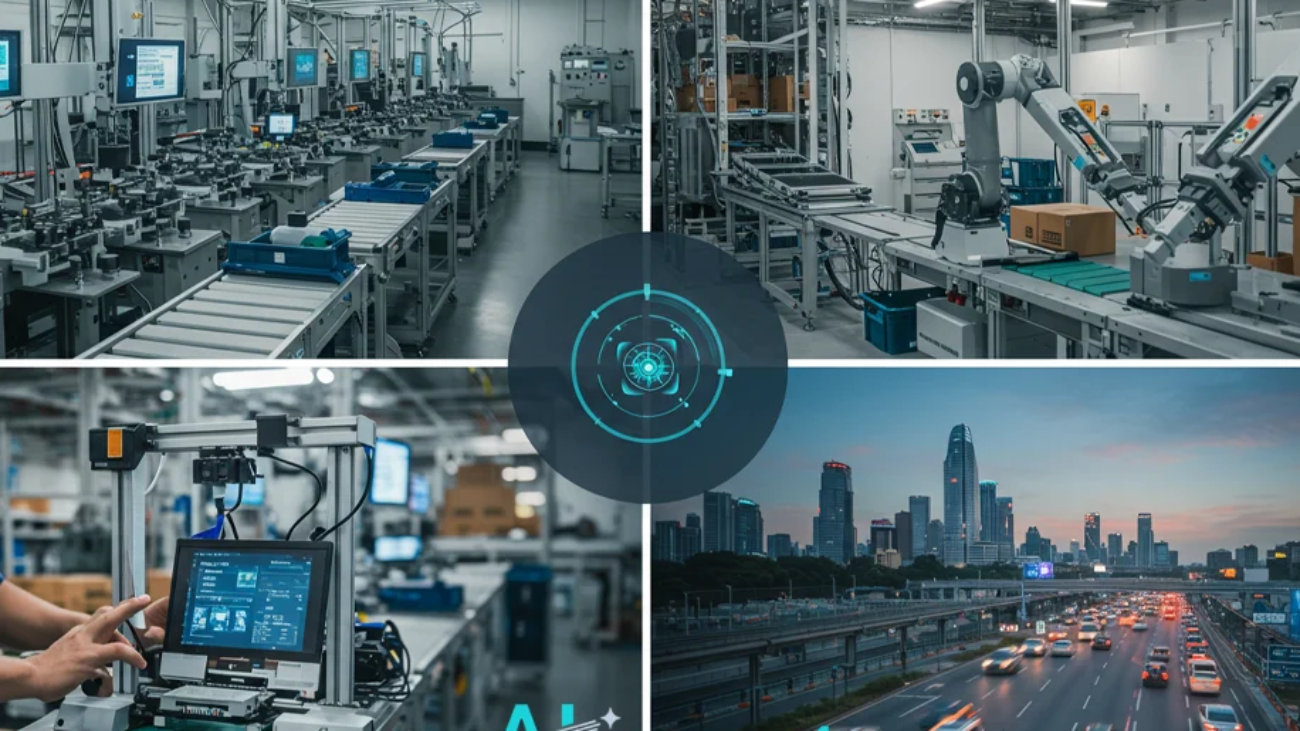
Ai-Innovate uses only high-quality sources, including peer-reviewed studies, to support the facts within our articles.

  1. Oracle. (2025). Smart factory and smart manufacturing solutions. Oracle.
    Retrieved from https://www.oracle.com/industrial-manufacturing/smart-factory-and-smart-manufacturing/
  2. Siemens. (2025). Smart factory: The digital transformation of manufacturing. Siemens.
    Retrieved from https://www.siemens.com/us/en/company/topic-areas/smart-factory.html
  3. ACTIA EMS. (2024). Smart factory: Connecting technology and industrial performance. ACTIA.
    Retrieved from https://ems.actia.com/https-ems-actia-com-en-news-smart-factory/
  4. F7i AI. (2024). Smart factory solutions: The ultimate guide. F7i AI.
    Retrieved from https://f7i.ai/blog/smart-factory-solutions-the-ultimate-guide
  5. Sustainable Manufacturing Expo. (2024). Smart factory solutions: Lessons from industry leaders. Sustainable Manufacturing Expo.
    Retrieved from https://www.sustainablemanufacturingexpo.com/en/articles/smart-factory-solutions-lessons.html
  6. TWI Global. (2025). What is a smart factory? The Welding Institute (TWI).
    Retrieved from https://www.twi-global.com/technical-knowledge/faqs/what-is-a-smart-factory

Confused About Where to Start with AI?

Our specialists help you identify the right AI approach based on your process, data, and goals.

FAQ

What is the role of humans in the factory of the future?

In the factory of the future, humans and intelligent machines will work side by side. Automation handles repetitive tasks, while people focus on analysis, creativity, and oversight,interpreting data, managing exceptions, solving complex problems, and maintaining advanced systems to continuously improve operations.

Smart factory ROI is measured through efficiency and performance metrics. Key indicators include improved equipment effectiveness, reduced downtime, lower operational costs, enhanced quality, and faster time-to-market. Together, these gains reveal how automation and AI translate into measurable financial returns and competitive advantage.

Smart factories deliver strong benefits but require tailored strategies. For small firms, modular solutions like predictive maintenance offer scalable value. Large enterprises gain from full integration but face transition challenges. A clear roadmap, business alignment, and phased adoption ensure successful, high-impact implementation

Connected factory solutions are technologies that connect machines, sensors, production lines, and enterprise systems. This enables real-time data sharing and automated decision-making across a manufacturing facility. These solutions usually combine Industrial IoT (IIoT), artificial intelligence (AI), machine vision, edge computing, manufacturing execution systems (MES), and cloud platforms to improve visibility, optimize production processes, reduce downtime, and enhance product quality. Connected factory solutions are a key part of modern smart factories and Industry 4.0 projects.

Connected factory solutions make manufacturing more efficient by letting you see what is happening in production and using data to improve processes. By regularly checking equipment performance, product quality, energy use, and production metrics, manufacturers can find problems earlier, reduce times when equipment is not working as expected, improve Overall Equipment Effectiveness (OEE), increase production yield, and automate quality control. Integrated AI analytics and Industrial IoT technologies also help manufacturers make faster operational decisions and support continuous improvement across the factory.

Automated visual inspection (AVI) system: a camera with ring light inspecting metal parts on a conveyor and a screen showing OK and NG results

Automated Visual Inspection: How AVI Systems Work, Uses and How to Implement Them

Automated visual inspection (AVI) uses industrial cameras, controlled lighting and software, increasingly AI, to check products for visual defects automatically and decide pass or fail without a person looking at each part. It replaces or supports manual visual inspection, which is limited by fatigue, varying judgment and the time available per product on a fast line. Studies of human visual inspection show that inspection performance drops with fatigue, task complexity and speed (See, 2012).

Knowing how AVI works, how it differs from related terms and how to measure its accuracy makes it easier to decide where it fits on your line and how to implement it.

Key Takeaways

AVI checks every product with the same criteria, instead of samples checked by tired eyes.

AI-based AVI handles variable surfaces and defects that fixed rules cannot describe.

Measure performance with missed defects and false rejects on your own parts.

People stay essential for edge cases, thresholds and process improvement.

What Is Automated Visual Inspection?

Automated visual inspection (AVI) uses computer vision and AI algorithms to examine products for defects and quality inconsistencies without manual checking. High-resolution cameras capture images of products as they move through the process, and the software analyzes visual characteristics in real time to find flaws that are easy to miss by eye.

This matters because modern lines run so fast that checking every product by eye is not practical. When thousands of parts pass a station every hour, an inspector has only a moment for each one. An AVI system inspects every unit at line speed with the same criteria, closing the sampling gaps that let defective products reach customers.

In short, automated visual inspection uses cameras and software, often AI, to detect product defects on the production line automatically and consistently.

AVI vs Machine Vision vs AOI

The three terms overlap. Machine vision is the technology of cameras, optics and image processing. Automated visual inspection is the application of that technology to check products for visual defects. Automated optical inspection (AOI) is the name used mainly in electronics for AVI of circuit boards. For the hardware side, see machine vision inspection systems, and for electronics, how to choose an AOI machine.

How AI-Powered Automated Visual Inspection Works

AI transforms basic image capture into intelligent defect detection through integrated processing stages:

  1. Image capture and Illumination: Industrial cameras with specialized lighting capture high-resolution product images from multiple angles. Controlled illumination eliminates shadows and highlights surface features, creating consistent image quality regardless of ambient conditions.
  2. Image Processing: Raw images undergo normalization, noise reduction, and contrast enhancement. AI algorithms isolate inspection regions, remove background artifacts, and prepare data for analysis, while maintaining visibility of critical defects.
  3. Defect Detection and Analysis: Rule-based tools such as pattern matching and measurement, and machine learning models, compare each image with the learned quality standard and flag deviations as potential defects.
  4. Real-Time Analysis and Classification: During production, trained AI processes live camera feeds in milliseconds. Systems extract visual features, compare against learned quality standards, classify defect types and severity, and make accept/reject decisions instantly as products move through inspection stations.

What Technologies Power Automated Visual Inspection?

Automated visual inspection systems combine specialized hardware and intelligent software to provide reliable quality verification (Golnabi and Asadpour, 2007).

  • Cameras: high-resolution 2D or 3D imaging systems capture surface details and dimensional characteristics. Many systems use a combination of both types of camera for thorough inspection coverage.
  • Lighting systems: Configurable LED arrays provide uniform illumination to eliminate shadows, control reflections and highlight specific features such as textures or edges, which are critical for defect detection.
  • Computer Vision Algorithms: Enable machines to interpret visual information, extract relevant features like edges and textures, and identify patterns showcasing defects across diverse product types.
  • Positioning Systems: Precision mechanisms move products accurately and precisely through inspection zones, ensuring synchronized camera capture at production speed.

Automated Visual Inspection Software

The software is where most of the difference between systems lies. Rule-based AVI software uses tools such as edge detection, pattern matching and blob analysis, which work well for stable, predictable defects. AI-based software uses deep learning models trained on images of good and defective parts, which suits textured surfaces, natural variation and defects that change shape. Many systems combine both. AI models extend inspection to defects that fixed rules struggle to describe (Czimmermann et al., 2020).

Where Is Automated Visual Inspection Used?

Electronics and Semiconductor Manufacturing

  • Bare Board Inspection: Verifies trace width, spacing, shorts, opens, and hole alignment before component assembly begins
  • Solder Paste Inspection: Confirms correct volume, height, and placement of solder paste prior to component positioning
  • Component Placement Verification: Detects missing components, polarity errors, misalignments, and incorrect component types

Automotive Production

  • Component Quality Verification: Inspects dimensional accuracy and surface defects detection in parts before installation
  • Weld Integrity Inspection: Verifies quality and strength of critical welds on chassis and structural components. See how AI weld defect detection works on robotic welding lines.
  • Assembly Completeness: Confirms all clips, fasteners, labels, and required parts are present and correctly positioned

Medical Device Manufacturing

  • Sterile Packaging Integrity: Checks packaging seals for defects that could compromise sterility and detects contamination risks
  • Assembly Verification: Validates correct assembly of complex devices like catheters, syringes, and implantable components
  • Traceability and Compliance: Verifies batch codes, expiration dates, and 2D barcodes for regulatory requirements

Packaging and Consumer Goods

  • Label Inspection: Detects damaged, misaligned, or incorrect labels on bottles, boxes, and consumer products
  • Fill Level Verification: Ensures containers meet specified fill volume requirements
  • Seal Quality Control: Validates packaging seal integrity to prevent leakage and maintain product freshness

Implementing Automated Visual Inspection: A Strategic Roadmap

Successfully deploying automated visual inspection requires methodical planning, proper integration, and continuous optimization. Follow this structured approach to maximize system effectiveness

Phase 1: Planning and System Selection

  • Define quality objectives for your manufacturing stages
  • Analyze production requirements: line speed, product complexity, volume, infrastructure compatibility
  • Establish the budget and estimate ROI from defect reduction, scrap savings and labor savings; see automated visual inspection ROI.

Phase 2: Preparation and Installation

  • Prepare sites with adequate space, power, network connectivity, and stable environmental conditions
  • Integrate systems physically into production lines, synchronizing with conveyors and material handling

Phase 3: Programming and Configuration

  • Create reference standards using known-good products, defect samples or CAD data that define acceptable variation.
  • Tune inspection parameters; lighting, thresholds, tolerances to minimize false positives while maximizing detection
  • Develop specific inspection programs for each unique product.

Phase 4: Training and Deployment

  • Train operators on system operation.
  • Educate maintenance personnel on calibration, cleaning protocols and repair.
  • Prepare quality teams for data analysis.
  • Conduct pilot runs with production batches to validate performance before full deployment

Phase 5: Continuous Optimization

  • Perform routine maintenance: lens cleaning, calibration, software updates, hardware verification
  • Apply continuous improvement using inspection data to refine programs and optimize upstream processes
  • Update configurations regularly as products, defect types, or manufacturing processes evolve

Is AVI Worth It? Benefits and Challenges

Benefits

  • Complete inspection coverage: every product is inspected at line speed, closing the sampling gaps that let defects escape.
  • Consistent accuracy: the same criteria are applied on every shift, without the effect of fatigue, distraction or differences between inspectors.
  • Immediate defect response: quality issues are flagged at once, and real-time defect analysis helps stop them before thousands of units are affected.
  • Objective quality documentation: It creates inspection records with defect images, classification data and production context, providing traceability for root cause analysis and continuous improvement initiatives.

Challenges

  • Lighting sensitivity: Inconsistent lighting can create false positives or obscure genuine defects. Systems require controlled lighting environments and regular calibration to maintain reliable detection across shifts.
  • Product variability handling: Acceptable manufacturing variations can resemble defects, so extensive training data spanning normal production diversity is required to prevent excessive false alarms that disrupt operations.
  • Model maintenance requirements: New product variants, material changes or evolving defect types require model retraining to maintain accuracy. Systems require continuous data collection and periodic updates as manufacturing evolves.

How to Measure AVI Accuracy

Ask for and track two numbers on your own parts: the escape rate (defective parts passed) and the false reject rate (good parts rejected). Test the system on a reference set checked by experienced inspectors, including rare defects, before it makes decisions on the line.

AVI vs Manual Inspection: What’s the Real Difference?

The gap between automated and manual inspection comes down to five things: accuracy, speed, data, reliability and cost. Manual inspection depends on each inspector, slows down at high volume and becomes less reliable as fatigue builds. Automated visual inspection checks every part in real time, applies the same criteria on every shift and records each result for traceability. The comparison below shows where each approach stands.

Comparison of automated visual inspection versus manual inspection across accuracy, speed, data, reliability, and cost.

Does automated visual inspection replace humans entirely?

No, automated visual inspection complements human expertise rather than replacing it. While AVI systems can handle repetitive, high-speed inspection tasks with consistent accuracy, humans are still needed for complex judgment calls, system oversight and continuous improvement. Quality engineers interpret defect trends to identify root causes, validate edge cases flagged by AI for review and make strategic decisions about acceptable quality thresholds. Automated visual inspection does not replace quality personnel; rather, it frees them from repetitive tasks so they can focus on higher-value activities that require experience, creativity and judgment.

Real Example: Automated Visual Inspection on a Textile Line

In an AI-innovate project with a continuous textile manufacturer, an AIxEye-based automated visual inspection system checked textured fabric inline with 100% automated coverage and reduced the QC staff requirement by 50%. Inspection data was also linked to suppliers, raw materials and seasonal conditions to find the sources of recurring defects. Read the textile defect detection case study.

Conclusion

For decades, visual inspection by people served manufacturing well, but today’s speeds and quality expectations have pushed it to its limits. Automated visual inspection checks every product at line speed with consistent criteria and records the evidence, which turns inspection into a source of data for improvement.

The real change is not only finding more defects; it is moving from accepting the limits of sampling to controlling quality on every unit. At AI-innovate, we design AVI systems such as AIxEye around each production problem and its operating conditions.

Before judging a model’s accuracy, look at the images it receives. Glare, shadows or uneven lighting can hide defects from any algorithm, so test the lighting on real parts early in the project.

Note: Some graphics and visuals in this post were produced using AI-generated content.
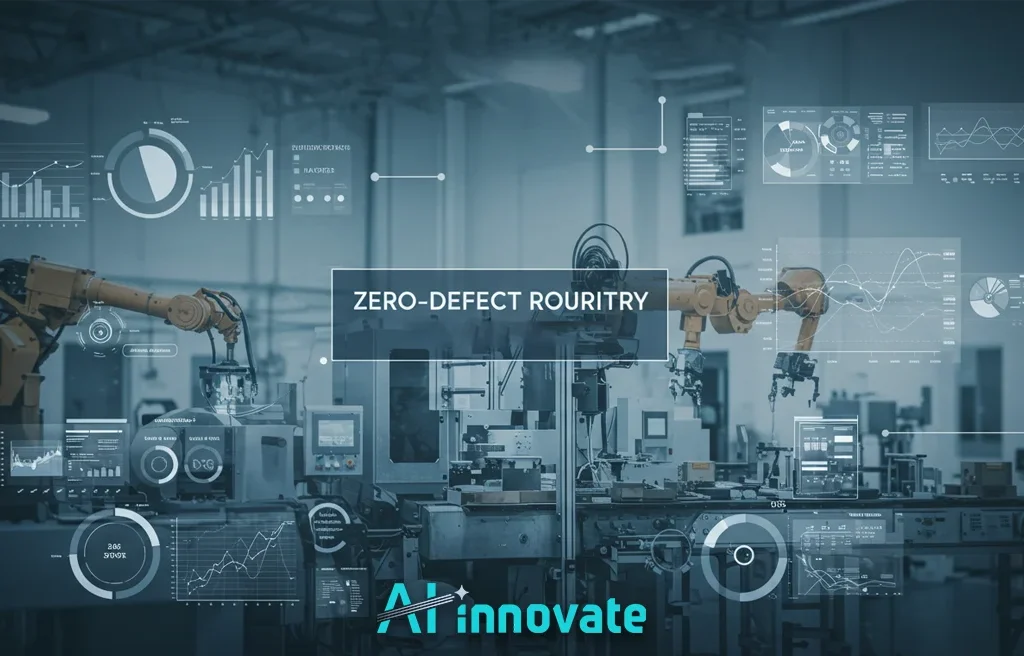
This article draws on the following sources:

  1. See, J. E. (2012). Visual Inspection: A Review of the Literature. Sandia National Laboratories, SAND2012-8590. osti.gov/biblio/1055636
  2. Czimmermann, T. et al. (2020). Visual-Based Defect Detection and Classification Approaches for Industrial Applications: A Survey. Sensors, 20(5), 1459. doi.org/10.3390/s20051459
  3. Golnabi, H. and Asadpour, A. (2007). Design and application of industrial machine vision systems. Robotics and Computer-Integrated Manufacturing, 23(6), 630-637. doi.org/10.1016/j.rcim.2007.02.005

Confused about where to start with AI? Our specialists help you identify the right AI approach based on your process, data, and goals. Talk to our experts.

Frequently Asked Questions

What is automated visual inspection?

Automated visual inspection (AVI) uses cameras and software, often AI, to inspect products for visual defects automatically on the production line. Images are captured as products move, and the system decides pass or fail at line speed.

A well-designed AVI system applies the same criteria to every product and does not tire, while manual inspection varies between inspectors and over a shift. The real accuracy depends on the defects, lighting and training data, so it should be measured on your own parts as escape rate and false reject rate.

AVI works in four stages: industrial cameras capture high-resolution images under controlled lighting, software cleans and prepares those images, AI models compare them against learned quality standards, and the system classifies defects and makes accept or reject decisions in milliseconds. All of this happens live as products move through inspection stations.

The investment covers cameras, lighting, processing hardware, software and integration. Payback depends on the cost of scrap, rework, returns and inspection labor on your line, so the most reliable estimate comes from a pilot on one inspection point.

AI systems generate rich data, including defect statistics, image documentation, and trend analysis. This data provides valuable insights into production process patterns, allowing for predictive maintenance and proactive process improvement to prevent defects from occurring in the first place.

AVI is widely used in electronics and semiconductor manufacturing, automotive production, medical device manufacturing, and packaging and consumer goods. Applications range from solder paste and weld integrity checks to sterile packaging verification and label inspection.

Yes, AVI systems are adaptable. As new defect types appear, you add labeled images to the training dataset and retrain the model to recognize them, which keeps accuracy high as products and processes evolve.

They describe the same idea. Automated optical inspection (AOI) is the common term in electronics for camera-based inspection of circuit boards, while automated visual inspection is the general term used across all industries.

AI Use Cases in Manufacturing

AI Use Cases in Manufacturing – Turn Data into Power

Walk into any modern factory, and you will see machines, sensors, and software working together in ways that were impossible just a decade ago. Yet, many manufacturers still struggle to convert the growing volume of data into meaningful improvements. Equipment failures, inconsistent quality, and inefficient workflows are still common challenges. While traditional automation helps with repetition, it often lacks the intelligence needed to adapt and improve over time.

Artificial intelligence is changing this dynamic by enabling production systems to learn from experience and respond to real-world conditions. By analyzing patterns across operations, AI helps manufacturers transition from reactive management to continuous optimization. This article explores how AI is applied in manufacturing environments, the most valuable use cases, and how companies use intelligent systems to improve quality, productivity, and long-term competitiveness.

From Anomaly to Action

AI Use Cases in Manufacturing

Artificial intelligence is transforming manufacturing from start to finish, optimizing efficiency, reducing waste, and enabling entirely new modes of production. Below are some of the most impactful applications driving this shift.
  • Quality control: AI-powered inspection systems identify defects in real time, ensuring consistent product quality, reducing reliance on manual checks, and minimizing rework costs.
  • Intelligent Automation: Machine learning enables adaptive control of production lines, allowing systems to self-optimize, balance workloads, and respond dynamically to process variations.
  • Generative Design and Customization: AI-driven design tools generate optimal component geometries and customize products for specific customer needs, accelerating innovation and reducing material usage.
Together, these capabilities form the backbone of the modern smart factory, where data, algorithms, and automation converge to deliver precision, scalability, and continuous improvement.

From Anomaly to Action

The traditional approach to quality control, often reliant on manual spot-checks, is a fundamentally reactive process. It catches errors after they have occurred, leading to scrap, rework, and wasted resources.

The shift in modern manufacturing is towards a dynamic model where every anomaly is an immediate call to action. This is powered by machine vision systems trained to identify imperfections with superhuman speed and accuracy. The tangible benefits of this approach are best understood through specific industrial applications:

Automotive Sector

At its Dingolfing plant, automotive giant BMW employs AI-driven visual inspection to analyze painted car bodies. The system is capable of detecting microscopic defects, such as tiny dust particles or minor unevenness in the finish, that are nearly impossible to spot reliably with the human eye. This ensures a uniform standard of quality and significantly reduces the need for manual rework downstream.

Glass Manufacturing

Vitro, a leading global glass producer, has integrated machine vision to automate the inspection of its products. The AI models can identify a wide range of flaws—including internal bubbles, surface scratches, and textural inconsistencies—in real time as the glass moves along the production line.

These real-world AI Use Cases in Manufacturing illustrate a pivotal shift from passive quality assurance to active, intelligent quality control, a domain where a tool like AI2Eye offers immediate value by catching defects the moment they form.

Read Also: Defect Detection in Manufacturing – AI-Powered Quality

Preempting Downtime with Data

Unplanned downtime is one of the most significant sources of financial loss in any production environment. Every minute a line is stopped represents lost output and mounting operational costs.

The most forward-thinking organizations are no longer just reacting to equipment failure; they are using data to prevent it from ever happening. The shift towards predictive models is evident in a number of high-stakes industries, including these key case studies:

Case Study: Pirelli’s Smart Tires

The renowned tire manufacturer Pirelli leverages a network of sensors and AI analytics to monitor the health of its production machinery. By continuously analyzing operational data, the system identifies subtle anomalies and wear patterns that signal a potential future failure. This allows maintenance teams to schedule interventions proactively, servicing equipment during planned shutdowns and avoiding costly, unexpected interruptions.

Case Study: General Electric’s Predix Platform

In the realm of heavy industry, General Electric deploys its Predix platform to monitor high-value assets like gas turbines and jet engines. The AI models analyze vast streams of performance data to forecast the optimal time for component maintenance or replacement. This data-driven approach has proven to dramatically reduce equipment downtime and extend the operational lifespan of critical machinery.

Prototyping Vision without Hardware

For the machine learning engineers and R&D specialists tasked with creating these intelligent systems, the development lifecycle itself presents major roadblocks. Imagine a developer creating a new algorithm to detect defects in textiles.

In a traditional workflow, they would need access to an expensive industrial camera, a physical setup mimicking the production line, and a collection of fabric samples with various flaws.

Scheduling this time is difficult, and testing across different lighting conditions or camera models is a slow, cumbersome, and expensive process. This frustration highlights a critical challenge that opens the door for innovative AI Use Cases in Manufacturing focused on the development lifecycle itself.

This reliance on physical hardware creates a bottleneck that slows down innovation. Now, contrast this with a virtualized approach. The same developer can use a camera emulator to simulate the entire imaging environment from their computer.

They can test their algorithm against thousands of digitally-rendered scenarios, instantly changing camera resolutions, lens distortions, and lighting angles. This accelerates the prototyping and testing cycle from weeks to mere hours, fostering rapid iteration and experimentation.

Prototyping Vision without Hardware

The Applied AI Toolkit

Theoretical knowledge of AI’s potential is valuable, but applied tools are what empower industrial leaders and technical developers to drive meaningful results. Bridging the gap between a problem and its solution requires a specialized, practical toolkit designed for specific industrial challenges. AI-innovate is dedicated to providing these targeted solutions, as seen in our core product offerings:

For Industrial Leaders: Real-Time Quality Assurance with AI2Eye

For QA Managers and Operations Directors grappling with the high costs of manual inspection errors and scrap, AI2Eye offers a direct solution. This real-time inspection system acts as a tireless, hyper-accurate set of eyes on your production line, identifying surface defects and process inefficiencies the moment they happen. It reduces waste, boosts efficiency, and ensures a higher, more consistent standard of product quality.

For Technical Developers: Accelerated Innovation with AI2Cam

For ML Engineers and R&D specialists facing project delays due to hardware dependency, AI2Cam removes critical barriers. This camera emulator allows you to prototype, test, and validate your machine vision applications entirely in software.

By simulating a wide range of industrial cameras and conditions, it accelerates development cycles, slashes hardware costs, and provides the flexibility needed for true innovation. The AI Use Cases in Manufacturing related to quality control are built upon such robust development tools.

Read Also: AI-Driven Quality Control – Transforming QC With AI

Calibrated Human-Machine Teaming

The narrative of AI in manufacturing is not one of replacement, but of collaboration. The most advanced factories are moving towards a model of calibrated human-machine teaming, where intelligent systems augment and elevate human skills.

This is most evident in the rise of collaborative robots, or “cobots.” Unlike traditional industrial robots that operate in isolated cages, cobots are designed to work safely alongside human employees.

Powered by AI and machine vision, a cobot can handle physically strenuous or highly repetitive tasks with precision, while its human counterpart manages more complex, context-dependent decisions.

For example, a cobot can lift and position a heavy component, holding it steady while a human performs a delicate final assembly. This symbiotic relationship leverages the respective strengths of both human and machine—the machine’s endurance and precision, and the human’s adaptability and critical thinking. Successful integration of these systems represents one of the most mature AI Use Cases in Manufacturing.

Conclusion

The use of AI in manufacturing continues to expand as companies seek smarter ways to improve efficiency, quality, and resilience. Intelligent systems are becoming central to modern operations, from visual inspection and predictive maintenance to production planning and energy optimization. Integrating AI with existing equipment and data platforms gives manufacturers clearer visibility into performance and risk. This allows for faster decision-making and more consistent outcomes. In my experience working with industrial analytics and automation systems, AI’s greatest value lies in its ability to connect people, processes, and data into a single decision framework. When teams trust these insights, they can move forward with confidence, focusing on long-term improvement. As AI adoption grows, it will remain a defining force in shaping competitive and adaptable manufacturing environments. Note: Some graphics and visuals in this post were produced using AI-generated content.
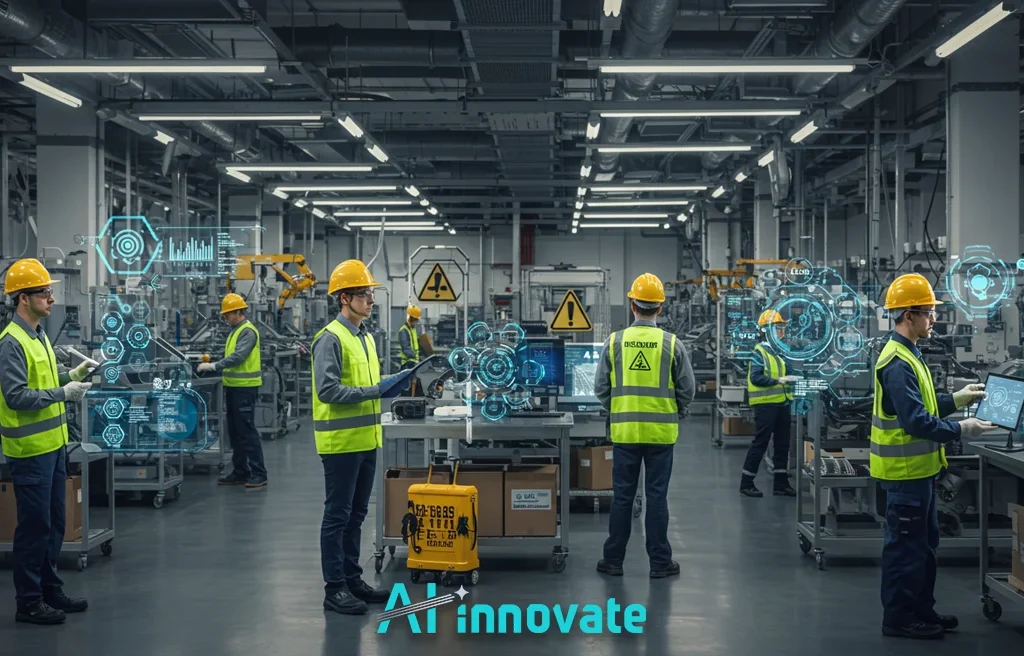
Ai-Innovate uses only high-quality sources, including peer-reviewed studies, to support the facts within our articles.

  1. NetSuite Resource Center. (n.d.). AI in Manufacturing.
    A business-oriented overview explaining how artificial intelligence is applied across manufacturing operations, including quality control, production planning, and supply chain automation.
    Retrieved from https://www.netsuite.com/portal/resource/articles/erp/ai-in-manufacturing.shtml

  2. Zendesk Blog. (n.d.). How AI Helps Manufacturing and Supply Chains.
    An industry article that discusses how AI capabilities support manufacturing workflows, improve supply chain visibility, and help flag quality and process issues earlier.
    Retrieved from https://www.zendesk.fr/blog/ai-in-manufacturing/

  3. SAP. (n.d.). AI in Manufacturing.
    A corporate resource highlighting how SAP integrates artificial intelligence into manufacturing systems for process optimization, predictive maintenance, and improved operational performance.
    Retrieved from https://www.sap.com/resources/ai-in-manufacturing

  4.  

FAQ

How does AI improve quality control on production lines?

AI-powered vision systems detect defects, inconsistencies, and deviations in real time, allowing manufacturers to correct issues before defective products accumulate.

Initial results may appear within a few months, depending on data availability, system integration, and the complexity of the use case.

Key skills include data analysis, process engineering, system integration, and basic AI model management. Many platforms also offer user-friendly interfaces to support non-specialists.