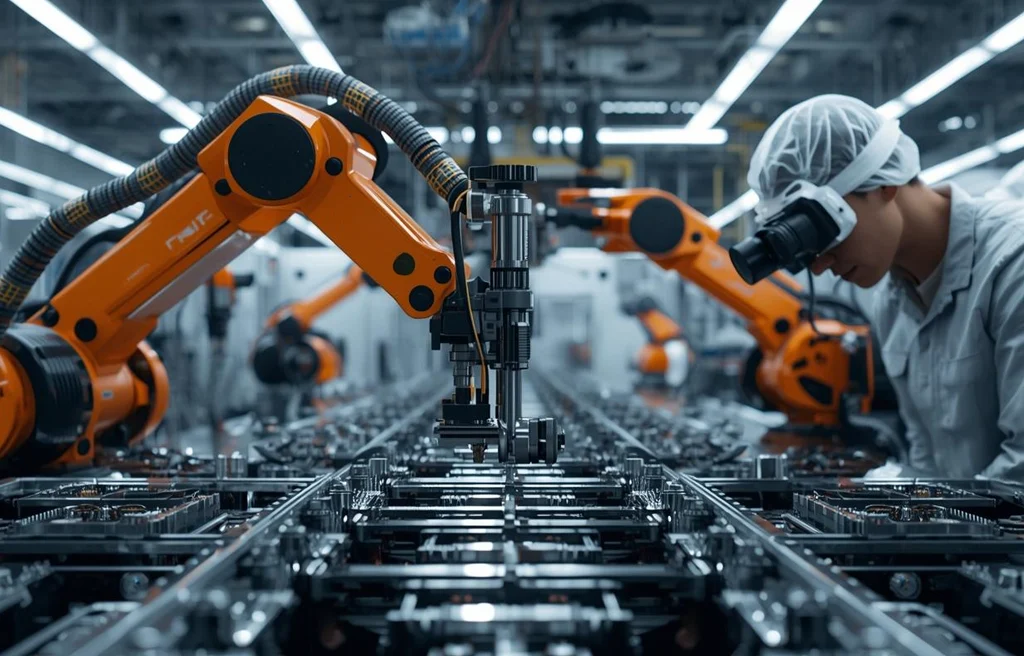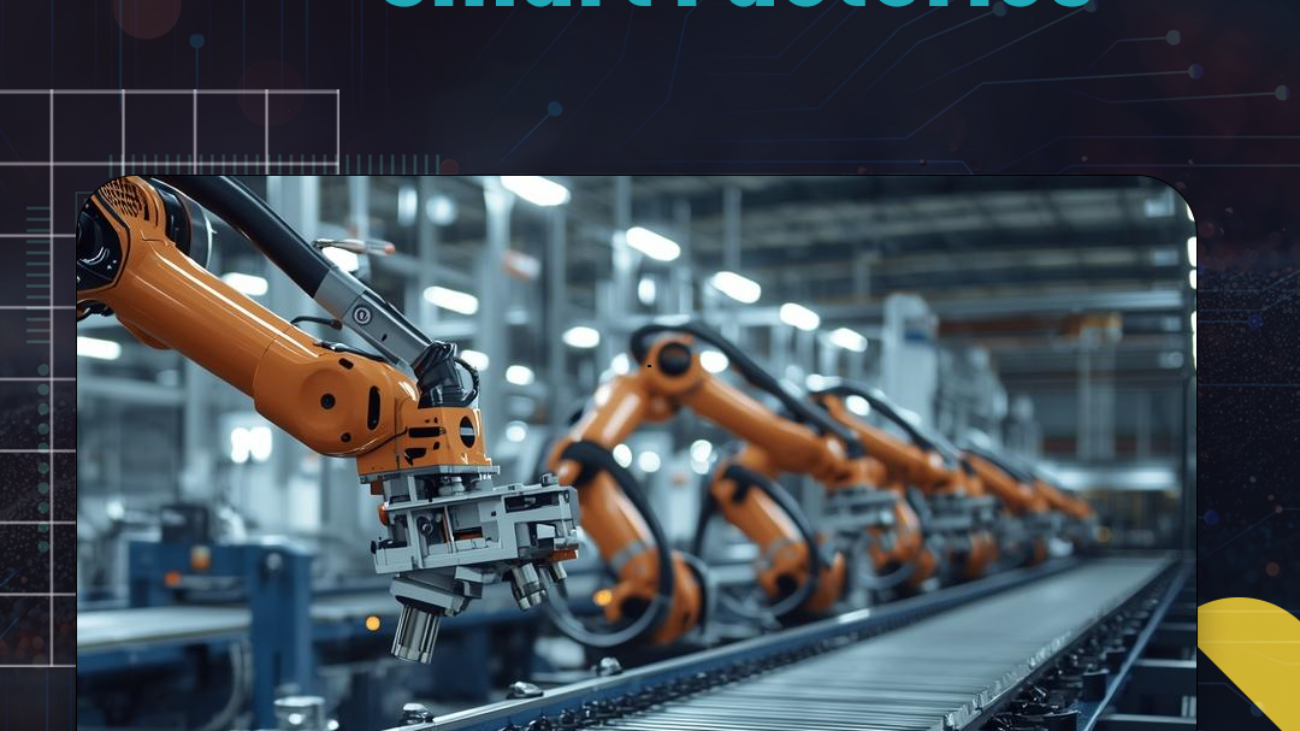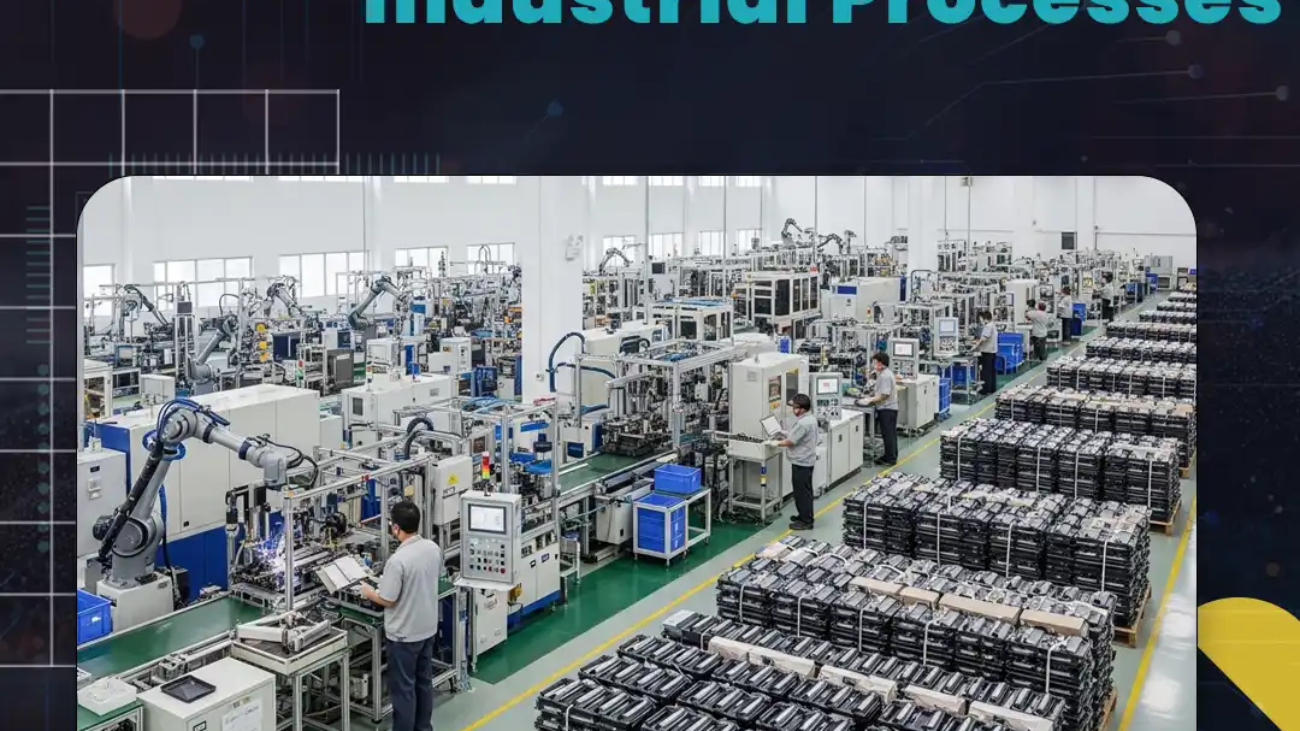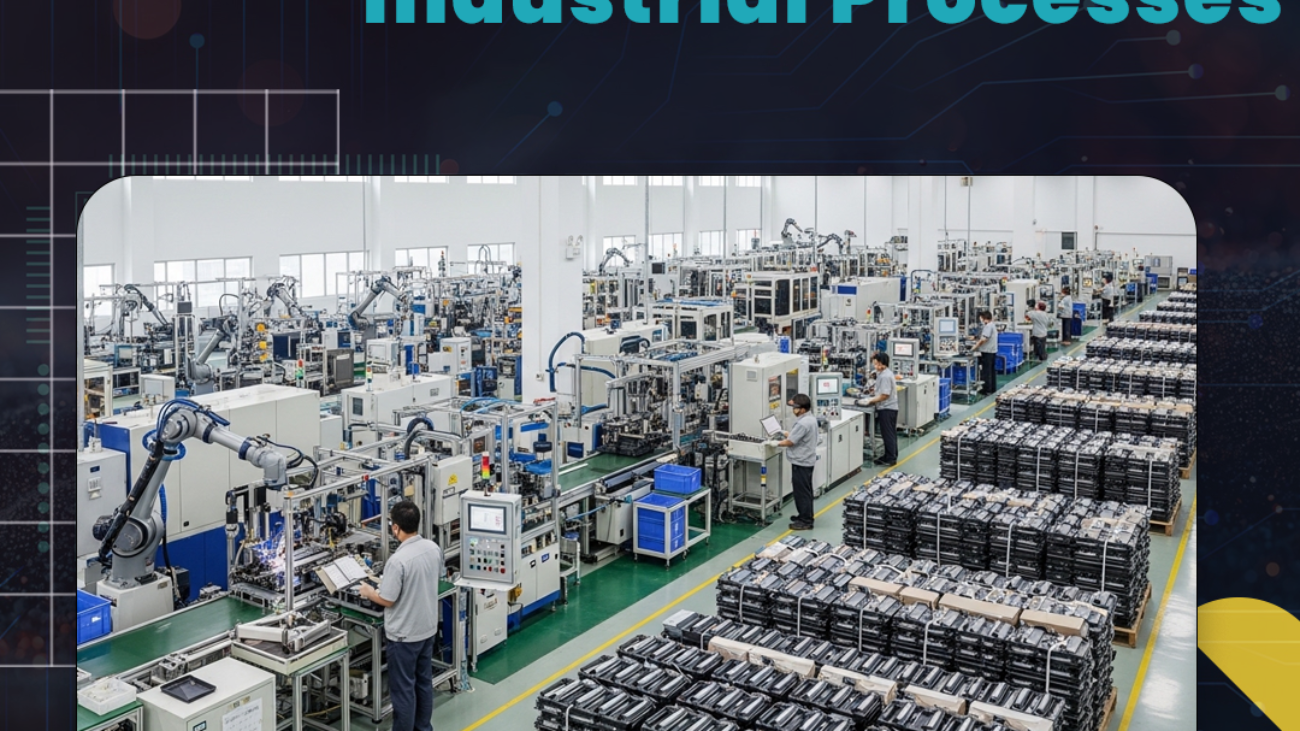
Anomaly Detection for Industrial Processes

Anomaly Detection for Industrial Processes: Why Anomaly Detection Is Critical in Modern Industry

In industrial operations, the most expensive failures rarely happen without warning. They begin as small, almost invisible irregularities, a slight vibration change in a motor, a minor temperature fluctuation in a furnace, or a subtle deviation in product dimensions. The challenge isn’t whether warning signs exist, but whether we can detect them early enough to act. Anomaly detection for industrial processes is designed to do exactly that. By combining statistical methods, machine learning, deep learning, and multi-source data monitoring, manufacturers can identify abnormal behavior before it escalates into downtime, defects, or safety risks.

In this article, we’ll explore how industrial anomaly detection works, the key methodologies and data sources behind it, its most impactful applications, the advanced techniques shaping the field, and the benefits and challenges organizations should consider before implementation.

Anomaly Detection for Detect Deviations Industrial Processes Prevent Downtime.

AI-powered anomaly detection continuously monitors industrial processes to identify abnormal patterns, equipment issues, and performance deviations in real time. Learn how intelligent monitoring systems improve reliability, reduce failures, and optimize operational efficiency.

Core Elements of Industrial Anomaly Detection

Effective anomaly detection systems rely on several elements working together to establish what “normal” looks like and flag when something falls outside that range. Different techniques are used depending on the complexity of the process and the available data.

Statistical methods are often the starting point. One common approach is the 3-sigma rule, where measurements falling outside three standard deviations from the mean are flagged as anomalies.

Machine learning models, particularly unsupervised learning, go further. Algorithms such as clustering or isolation forests learn patterns in normal operational data without needing labeled failure examples. When new data deviates significantly from learned patterns, it’s marked as unusual.

Deep learning techniques, including neural networks, are used in more complex scenarios. These models can capture nonlinear relationships and detect subtle, high-dimensional anomalies that simpler methods might miss.

Data Sources: Building a Reliable Baseline

Anomaly detection is only as good as the data it analyzes. Modern industrial processes generate data from multiple sources:

  • IoT sensors measuring vibration, temperature, pressure, and current
  • Video feeds from inspection cameras
  • Acoustic monitoring systems
  • Production and process logs
  • Control system data such as PLC outputs

By analyzing these data streams over time, systems can establish a baseline for normal behavior. For instance, a motor may exhibit a specific vibration pattern when functioning properly. Any deviation from that signature may indicate bearing wear or imbalance.


High-Impact Applications in Industrial Settings

Anomaly detection plays a central role in several critical industrial functions.

Predictive Maintenance

One of the most common applications is identifying equipment wear before failure occurs. Changes in vibration patterns, temperature spikes, or pressure fluctuations often appear long before a breakdown.

By detecting these subtle signals early, maintenance teams can:

  • Schedule repairs during planned downtime
  • Avoid catastrophic equipment damage
  • Reduce spare parts inventory uncertainty
  • Extend asset lifespan
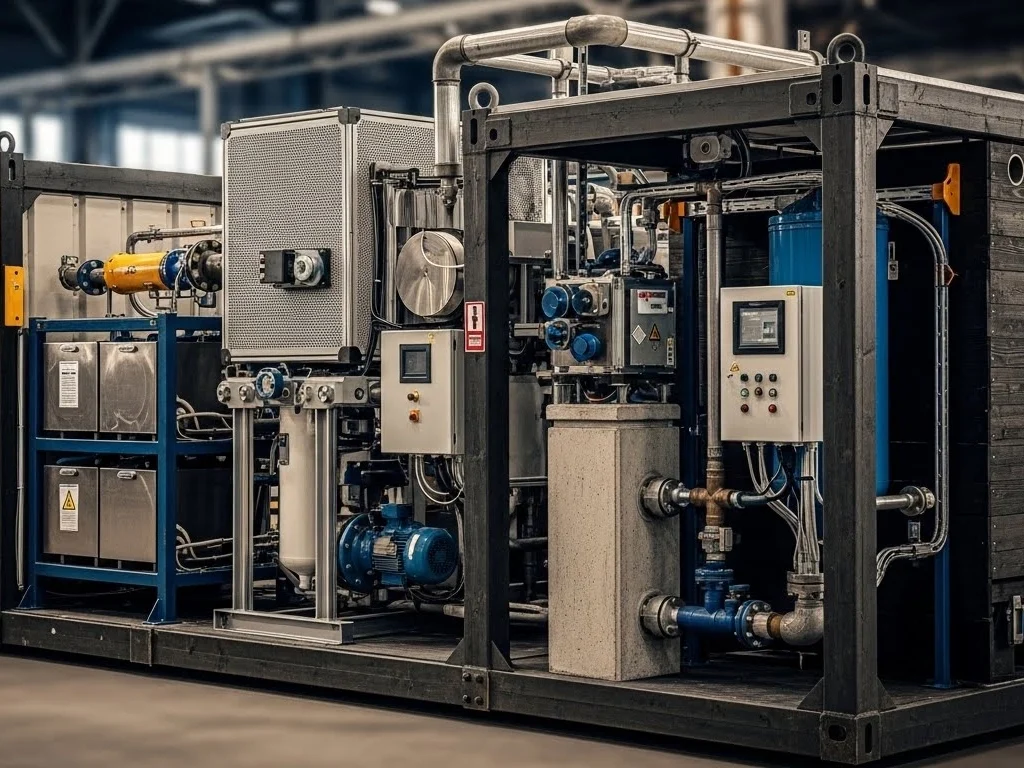
Modular industrial process unit with pumps, piping and control panels monitored for anomalies

Quality Control

In quality-sensitive industries, small deviations can result in defective products. Anomaly detection systems powered by computer vision technology can monitor surfaces for cracks, scratches, misalignments, and contamination.

This leads to:

  • Faster detection of defects
  • Reduced rework
  • Improved consistency
  • Lower warranty and return costs
  • Quality control becomes proactive rather than reactive.

Process Optimization

Anomaly detection ensures that machinery stays within its defined performance boundaries. If the pressure, temperature, or cycle time deviates unexpectedly, the system alerts operators before the production quality is affected.

This continuous monitoring supports:

  • Stable production output
  • Reduced material waste
  • Lower energy consumption
  • Improved process consistency


Advanced Techniques in Industrial Anomaly Detection


Although traditional methods remain valuable, newer AI models are expanding the possibilities.

Early vibration analysis systems relied on manually extracted features, such as frequency components or statistical metrics. Engineers would interpret these indicators to diagnose faults. Although effective, this approach required expertise and could overlook subtle patterns.

Modern deep learning models automate feature extraction. For example:

  • Convolutional neural networks analyze vibration spectrograms and image-based defect data.
  • Recurrent neural networks model time-series sensor behavior.
  • The Adaptive Mask Inpainting Network model reconstructs normal images and highlights irregular regions.
  • Diffusion-based models generate expected data distributions and localize anomalies by identifying deviations.
  • These advanced models are useful for identifying rare or complex defects. They can localize anomalies precisely, making root cause analysis faster and more accurate.


Benefits and Practical Challenges

Anomaly detection delivers clear advantages in industrial settings:

  • Early fault detection reduces downtime
  • Improved product quality increases customer satisfaction
  • Lower maintenance costs improve profitability
  • Data-driven insights support better operational decisions

Yet, challenges remain.

Data quality is a major concern. Incomplete or noisy sensor data can produce false alerts. Rare anomalies may be underrepresented in training data, limiting model accuracy.

There is also the challenge of interpretability. Complex deep learning models may detect anomalies effectively, but operators need clear explanations to trust and act on alerts.

Integration with existing control systems can require significant planning. Industrial environments are often built on legacy infrastructure, making deployment more complex.

Finally, over-alerting can lead to alarm fatigue. Systems must balance sensitivity with practicality to ensure alerts remain meaningful.

How AI-innovate Enables Intelligent Anomaly Detection in Industrial Environments

Detecting anomalies early requires more than standalone algorithms. It requires reliable data capture, powerful edge processing, scalable AI deployment, and seamless integration with industrial systems. AI-innovate supports manufacturers in transforming anomaly detection from theory into operational reality by helping with:

  • AI-powered visual anomaly detection using AI2Eye, enabling real-time identification of surface defects, structural irregularities, misalignments, and quality deviations directly on the production line
  • Synthetic data generation and validation through AI2Cam, allowing teFams to simulate rare fault scenarios, strengthen model robustness, and reduce dependency on hard-to-capture anomaly samples
  • High-performance edge AI processing powered by AIxCore, built on NVIDIA Jetson Orin AGX, delivering real-time inference for vibration monitoring, machine vision, thermal analysis, and multi-sensor anomaly detection within demanding industrial environments

Whether the goal is predictive maintenance, proactive quality control, or process stability, AI-innovate’s ecosystem helps manufacturers shift from reactive troubleshooting to intelligent, data-driven operations reducing downtime, improving reliability, and strengthening long-term operational resilience.

Final Thoughts: Moving from Reactive to Intelligent Operations

Anomaly detection in industrial processes marks a change in how manufacturers approach reliability and quality. The evolution of anomaly detection, from simple statistical thresholds to advanced deep learning models, reflects the growing complexity of industrial environments.

We believe that the key is not to choose the most advanced technology available but to select the right combination of methods, data sources, and integration strategies for the specific process.

Ai-Innovate uses only high-quality sources, including peer-reviewed studies, to support the facts within our articles.

  1. MDPI Electronics. (2023). AI-Driven Anomaly Detection in Industrial Systems.
    A peer-reviewed study outlining advanced AI methods for detecting anomalies in industrial environments, including performance evaluation and implementation considerations.
    Retrieved from https://www.mdpi.com/2079-9292/12/18/3971
  2. Groundlight AI Blog. (2025). Using AI Anomaly Detection in Industrial Manufacturing.
    A practical discussion of how anomaly detection powered by AI enhances manufacturing quality control, reduces defects, and supports predictive maintenance.
    Retrieved from https://www.groundlight.ai/blog/using-ai-anomaly-detection-in-industrial-manufacturing
  3. arXiv Preprint. (2025). Foundations and Advances in Industrial Anomaly Detection.
    A research preprint exploring state-of-the-art approaches for anomaly detection in industrial systems, including novel architectures and benchmark results.
    Retrieved from https://arxiv.org/abs/2501.11310
  4. Quix Glossary. (2025). Anomaly Detection in Industrial Systems.
    An introductory resource explaining key concepts, algorithms, and typical use cases for anomaly detection in industrial and IoT applications.
    Retrieved from https://quix.io/glossary/anomaly-detection-in-industrial-systems
  5.  

FAQ

How much historical data is required?

While some systems can start with as few as five days of data, it is recommended to gather extensive historical data that captures various operational cycles (seasonal or product-based) to establish an accurate baseline of “normal”.

Common metrics include preventing a specific failure type, reducing maintenance labor by a target percentage (e.g., 20%), or identifying a set number of actionable anomalies within the first six months to prove ROI.

Use a multi-pronged approach: avoid over-sensitive initial thresholds, implement tiered alerts (Information, Warning, Critical), and create a human-in-the-loop feedback loop where technicians tag false alarms to retrain the model.
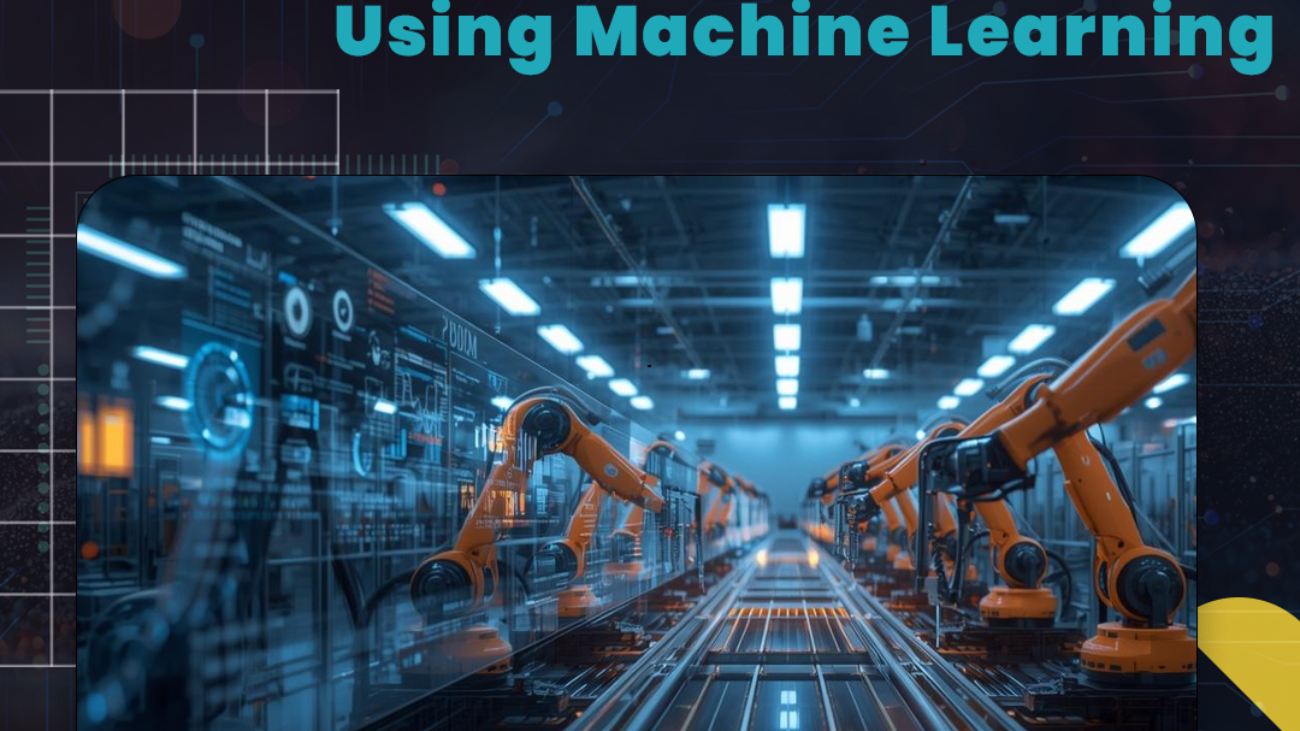
How to Implement Predictive Maintenance Using Machine Learning

How to Implement Predictive Maintenance Using Machine Learning

A machine fails, production stops, and teams rush to fix the issue. Maintenance used to be as such, a reactive process that would often end in great costs with each breakdown. With predictive maintenance, and most importantly with the addition of AI and machine learning models, organizations now use real-time data and advanced algorithms to anticipate issues before they disrupt operations. The result is fewer unplanned shutdowns, lower maintenance costs, and longer asset lifespans.

In this guide, we will walk through the practical first steps toward adopting predictive maintenance, explore common integration challenges, and outline actionable solutions that help ensure long-term success.

Predictive Maintenance with Machine Learning Protect Productivity.

Discover how to implement machine learning–powered predictive maintenance to monitor equipment health, forecast failures, and optimize maintenance schedules. Reduce unplanned downtime, lower costs, and extend asset life with data-driven maintenance strategies.

Where to Start: First Steps Towards Predictive Maintenance Adoption

Implementing predictive maintenance goes beyond a simple addition and requires an organizational shift. The following steps create a strong foundation for sustainable adoption.

  • Evaluate Organizational Readiness: It’s essential to be in tune with your organization. Consider the following:
    • Do leadership teams support data-driven decision-making?
    • Is there alignment between operations, maintenance, and IT teams?
    • Are maintenance processes standardized and documented?
    • Is there a culture open to technological change?
  • Build a Strong Change Management Framework: Introducing machine learning into maintenance workflows can create uncertainty among staff. Technicians may worry about job displacement or distrust automated recommendations. Predictive maintenance should be positioned as a support tool that enhances expertise, not replaces it. When employees understand how AI strengthens their work, adoption becomes smoother.
  • Assess Your Existing Data Infrastructure: Machine learning is dependent on high-quality data. Without reliable and structured data, predictive models won’t be able to perform effectively. Evaluate your current infrastructure by asking:
    • Are critical assets equipped with sensors?
    • Is data collected consistently and stored securely?
    • Are historical maintenance records digitized?
    • Can systems integrate with existing ERP or CMMS platforms?

Many organizations discover gaps at this stage. You may need to install IoT sensors to capture vibration, temperature, pressure, or acoustic data. Data cleaning and standardization are also essential to ensure accurate model training.

  • Identify the Right Technology Stack: Choosing the appropriate technology stack is a strategic decision. The goal isn’t to select the tools available that fit your operational needs.

A typical predictive maintenance stack includes:

    • IoT sensors for real-time monitoring
    • Edge or cloud data processing platforms
    • Machine learning frameworks for model development
    • Data visualization dashboards
    • Integration with maintenance management systems
  • Develop and Pilot Predictive Models: Instead of deploying predictive maintenance across all assets at once, begin with a pilot project focused on high-value or failure-prone equipment. Common machine learning techniques used are namely regression models, anomaly detection algorithms, and neural networks for time-series analysis. Once the pilot demonstrates measurable improvements such as lower downtime or maintenance cost savings, scaling gets easier and becomes more justified.


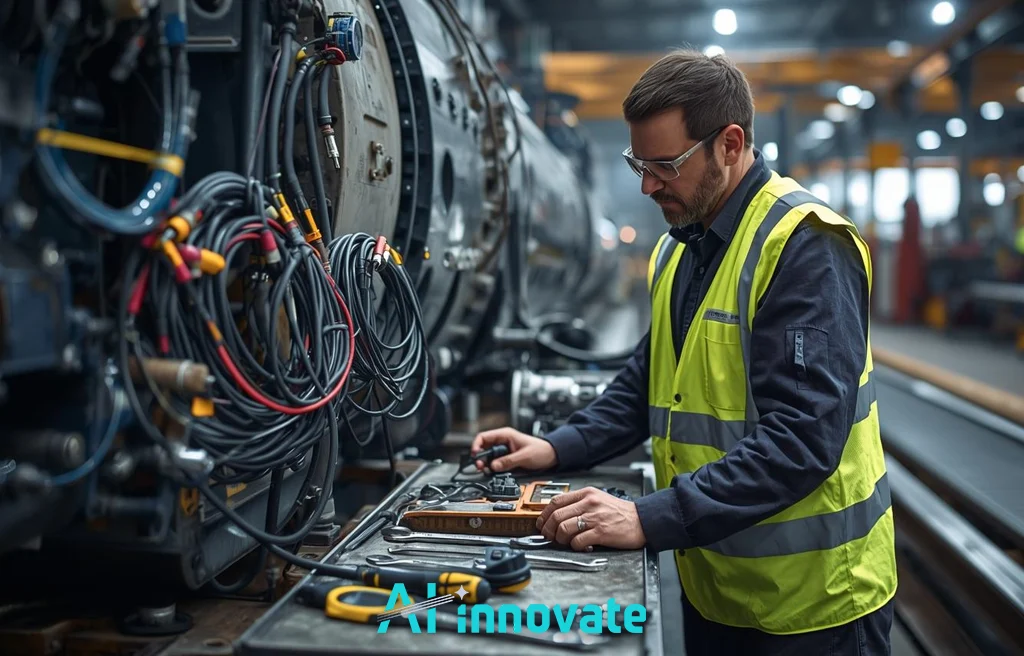
Maintenance technician wearing safety glasses and a high-visibility vest inspecting industrial machinery wiring and testing equipment on a factory floor, with tools and cables arranged on a workbench.

Predictive Maintenance Integration Challenges

Obstacles are inevitable when it comes to integrating predictive maintenance using machine learning into live operations. Common challenges include:

  • Poor data quality or inconsistent sensor readings
  • Limited historical failure data for training models
  • Resistance from maintenance personnel
  • Integration issues with legacy systems
  • High upfront investment costs
  • Overly complex models that are difficult to interpret

In some cases, predictive systems generate too many false positives. This can undermine trust in the technology and overwhelm maintenance teams with unnecessary alerts.

Another common issue is siloed data. Building accurate predictive models becomes more difficult when production data, maintenance logs, and operational metrics are stored in separate systems.

Practical Solutions to Predictive Maintenance Challenges

While these challenges are unavoidable, they’re manageable with structured strategies.

Improve Data Quality and Governance

Clean, consistent data dramatically improves model accuracy. You need to:

  • Standardize data collection processes
  • Calibrate sensors regularly
  • Implement centralized data storage
  • Establish data governance policies

Start with Semi-Supervised or Anomaly Detection Models

When failure data is limited, unsupervised or semi-supervised learning approaches can help. These models learn normal operating patterns and flag deviations without requiring extensive labeled failure examples.

Reduced Scrap and Rework

One of the most immediate sources of ROI is reduced scrap. When defects are detected early, faulty products don’t move further down the line where additional value has already been added. Early detection leads to:

  • Lower material waste
  • Fewer rework operations
  • Reduced disposal and handling costs

Prioritize System Integration Early

Work closely with IT teams for guaranteed compatibility between predictive platforms and existing ERP, MES, or CMMS systems. APIs and middleware solutions can help bridge gaps between legacy and modern systems.

Focus on Model Interpretability


Choose models that provide explainable outputs. Maintenance teams need to understand why a prediction is made. Clear visualizations and root-cause indicators increase trust and usability.


Demonstrate Quick Wins

Early measurable improvements build confidence. Track key performance indicators such as:

  • Reduction in unplanned downtime
  • Decrease in maintenance costs
  • Improvement in mean time between failures
  • Increased equipment availability

Turn Predictive Maintenance into Measurable Operational Gains

Predictive maintenance only delivers value when it’s deployed with the right infrastructure, integration strategy, and AI capabilities. Moving from pilot projects to plant-wide reliability requires scalable edge processing, reliable data pipelines, and models that operate in real time, not just in dashboards.

At AI-innovate, we help manufacturers bridge the gap between machine learning theory and operational execution by providing:

  • Edge AI infrastructure with AIxCore (powered by NVIDIA Jetson Orin AGX) for real-time vibration analysis, thermal monitoring, and multi-sensor data processing directly on the shop floor
  • Intelligent visual inspection with AIxEye, enabling early detection of wear, surface degradation, and structural irregularities before they escalate into failures
  • Synthetic data capabilities through AIxCam, helping teams strengthen predictive models when historical failure data is limited

Whether you’re starting with a single high-value asset or scaling predictive maintenance across multiple facilities, the key is combining robust data capture, explainable AI models, and industrial-grade deployment.

Conclusion

Implementing predictive maintenance using machine learning is more than just a technical project. Rather, it represents a fundamental shift in how organisations approach asset reliability. Proactively addressing integration challenges ensures smoother adoption and long-term sustainability.

When executed thoughtfully, we believe predictive maintenance shifts operations from reactive repairs to proactive optimisation. The result is greater equipment reliability, improved productivity and a manufacturing environment that is more resilient and ready to compete in an increasingly data-driven world.

Ai-Innovate uses only high-quality sources, including peer-reviewed studies, to support the facts within our articles.

  1. MDPI Electronics. (2023). AI-Driven Anomaly Detection in Industrial Systems.
    A peer-reviewed study outlining advanced AI methods for detecting anomalies in industrial environments, including performance evaluation and implementation considerations.
    Retrieved from https://www.mdpi.com/2079-9292/12/18/3971
  2. Groundlight AI Blog. (2025). Using AI Anomaly Detection in Industrial Manufacturing.
    A practical discussion of how anomaly detection powered by AI enhances manufacturing quality control, reduces defects, and supports predictive maintenance.
    Retrieved from https://www.groundlight.ai/blog/using-ai-anomaly-detection-in-industrial-manufacturing
  3. arXiv Preprint. (2025). Foundations and Advances in Industrial Anomaly Detection.
    A research preprint exploring state-of-the-art approaches for anomaly detection in industrial systems, including novel architectures and benchmark results.
    Retrieved from https://arxiv.org/abs/2501.11310
  4. Quix Glossary. (2025). Anomaly Detection in Industrial Systems.
    An introductory resource explaining key concepts, algorithms, and typical use cases for anomaly detection in industrial and IoT applications.
    Retrieved from https://quix.io/glossary/anomaly-detection-in-industrial-systems
  5.  

FAQ

How does machine learning work with predictive maintenance?

Machine learning analyzes historical and real-time data (e.g., vibration, temperature) to identify patterns that signal degradation or failure, enabling forecasts of equipment issues before they happen.

Industries with high-value machines and critical uptime requirements — manufacturing, energy, transportation, oil & gas, and utilities — see significant advantages from ML-based predictive maintenance. This is because missed failures in these sectors are costly and disruptive.

Predictive maintenance is a strategy that uses sensor and operational data to monitor equipment condition and detect anomalies, so maintenance can be planned before failures occur.

How To Improve Productivity in Manufacturing

How To Improve Productivity in Manufacturing? Top 6 Strategies You Must Know

Manufacturing has never been simple, but today it feels more complex than ever. Companies are expected to produce faster, maintain flawless quality, control costs, manage supply chain uncertainty, and adapt to shifting customer demands. At the same time, skilled labor shortages and rising operational expenses are putting additional pressure on production teams.

Improving productivity is no longer just about adding more workers or buying faster machines, but rather using data intelligently. Modern production lines generate enormous amounts of information every second, from machine sensors and quality inspections to energy usage and workflow timing. The challenge is turning that data into action.

This is where AI is making a real difference. AI doesn’t replace human expertise. Instead, it strengthens decision-making, identifies patterns humans might miss, and helps teams respond faster. If your goal is to improve productivity in manufacturing in a sustainable way, these six AI-driven strategies offer practical and measurable impact.

Boost Manufacturing Productivity Smarter Processes Better Results

Learn how AI, automation, and data-driven optimization can transform manufacturing productivity. From reducing downtime to improving quality and workflow efficiency, discover proven strategies to maximize output without increasing operational costs.

1. Reduce Downtime with Predictive Maintenance

Few things hurt productivity more than unexpected equipment failure. When a critical machine breaks down, production stops. Orders get delayed. Teams scramble to troubleshoot. Costs quickly rise.

Traditional maintenance strategies fall into two categories: reactive and preventive. Reactive maintenance waits until something fails. Preventive maintenance follows fixed schedules whether the machine actually needs servicing or not. Both approaches have limitations.

AI-powered predictive maintenance takes a smarter route. It uses:

Real-time sensor data such as vibration, temperature, and pressure

  • Historical maintenance record
  • Performance trends over time
  • Environmental operating conditions

Machine learning models analyze these data points to identify early warning signs of failure. Instead of guessing, the system predicts when a component is likely to degrade.

The benefits are significant:

  • Fewer unplanned shutdowns
  • Lower emergency repair costs
  • Better spare parts planning
  • Longer equipment lifespan

2.Improve First-Pass Yield with AI Quality Inspection

Quality issues directly reduce productivity. Every defective product requires rework, scrap, or replacement. That means wasted materials, wasted labor, and wasted time.

Manual inspection has limitations. Even skilled inspectors can miss micro-defects, especially when production volumes are high or parts are complex. Fatigue and inconsistency add further risk.

AI-powered computer vision systems solve this challenge by inspecting products in real time. High-resolution cameras capture images during production. Deep learning models then analyze those images to detect:

  • Surface scratches and cracks
  • Dimensional inconsistencies
  • Misalignments
  • Missing components
  • Packaging errors

Because these systems operate continuously and consistently, they catch defects earlier and more reliably.

The result is:

  • Higher first-pass yield
  • Lower scrap rates
  • Reduced rework
  • Faster production cycles


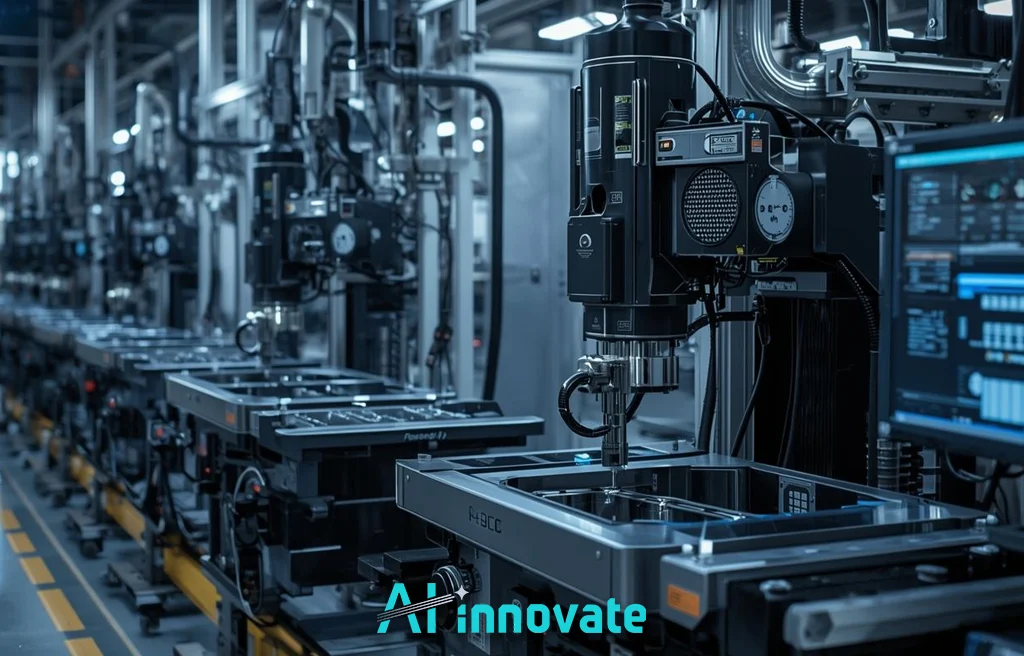
Automated CNC machining stations operating along a smart factory production line, with precision drilling equipment, integrated sensors, and a digital monitoring screen displaying real-time manufacturing data.

3.Optimize Production Scheduling in Real Time

Production scheduling is often more complicated than it appears. Managers must balance machine availability, labor shifts, maintenance windows, order priorities, and material supply. One disruption can cause a ripple effect across the entire plant.

Traditional scheduling systems rely on fixed rules and manual adjustments. They struggle to adapt when conditions change unexpectedly.

AI-based scheduling platforms analyze multiple variables simultaneously, including:

  • Current order backlog
  • Machine status and capacity
  • Workforce availability
  • Inventory levels
  • Delivery deadlines

When a disruption occurs, such as a delayed shipment or machine slowdown, the system recalculates the optimal production sequence in real time.

This dynamic adjustment reduces:

  • Idle machine time
  • Production bottlenecks
  • Late deliveries
  • Overtime costs

4.Use Data Analytics to Fine-Tune Processes

Some costs aren’t immediately noticeable when evaluating automated visual inspection ROI, but they still matter. Here are some common hidden or ongoing costs:

  • Periodic model updates as products or defect patterns change
  • Maintenance of cameras and lighting to preserve image quality
  • Software updates and cybersecurity management
  • System monitoring and performance validation

During the early stages, manufacturers may also do manual inspection as well as an automated one. This temporary overlap can increase short-term costs, but is often necessary to build confidence in the system. While these costs shouldn’t be ignored, they’re usually easy to predict and manage if you plan well.

5.Enhance Efficiency with Intelligent Robotics

Modern factories are filled with sensors and monitoring systems. Yet many manufacturers still use only a fraction of the data they collect.

AI-driven analytics platforms turn raw data into meaningful insights. These systems analyze patterns in:

  • Cycle times
  • Equipment performance
  • Energy usage
  • Material waste
  • Process variability

By identifying inefficiencies, AI can recommend specific adjustments. For example, slight changes in temperature settings, machine speed, or pressure levels may significantly improve output without compromising quality.

Over time, these small improvements compound. Manufacturers experience:

  • Increased throughput
  • Reduced variability
  • Lower energy consumption
  • More predictable production results

Rather than relying on trial and error, teams can make decisions backed by data.

6. Strengthen Supply Chain and Inventory Management

Even the most efficient production line cannot operate without the right materials at the right time. Supply chain disruptions and poor inventory planning are major productivity barriers. AI helps manufacturers anticipate and respond to these challenges. By analyzing historical demand patterns, supplier performance data, and market trends, AI systems can:

  • Forecast demand more accurately
  • Predict supply shortages
  • Recommend optimal inventory levels
  • Automate reordering decisions

This prevents both overstocking and stockouts. Excess inventory ties up capital and warehouse space. Material shortages halt production entirely. A stable supply chain directly supports consistent productivity.

How AI-innovate Helps Manufacturers Turn AI Strategy into Measurable Productivity Gains

Improving productivity requires more than ideas. It requires reliable deployment, scalable infrastructure, and inspection systems that operate in real time without disrupting production. AI-innovate supports manufacturers in implementing practical, high-impact AI solutions by helping with:

  • AI-powered visual inspection and defect detection using AIxEye, enabling real-time quality control that improves first-pass yield, reduces rework, and prevents costly downstream failures
  • Synthetic data generation and validation through AIxCam, allowing teams to train robust AI models faster while reducing dependence on rare defect samples and minimizing development time
  • Edge AI deployment and real-time industrial integration powered by AIxCore, an industrial AI edge compute unit built on NVIDIA Jetson Orin AGX, delivering high-performance processing for machine vision, robotics coordination, predictive maintenance, and production analytics directly on the factory floor

Whether manufacturers are starting with predictive maintenance, quality inspection, intelligent robotics, or data-driven optimization, AI-innovate provides the tools to convert AI from a concept into measurable improvements in uptime, yield, efficiency, and long-term operational performance.

Turning AI Into Practical Results

Adopting AI doesn’t require transforming your entire factory overnight. The most successful manufacturers begin with targeted implementations. They identify high-impact areas such as downtime reduction or quality improvement and deploy AI solutions strategically.

We believe manufacturers who embrace these six AI-driven strategies position themselves to operate more efficiently, respond faster to market changes, and remain competitive in an increasingly technology-driven world.

Ai-Innovate uses only high-quality sources, including peer-reviewed studies, to support the facts within our articles.

  1. NeuroSYS Blog. (2024). How to Improve Productivity in Manufacturing: 6 AI Strategies.
    A practical guide outlining key AI applications—such as predictive maintenance, computer vision, and automation—that help manufacturers reduce downtime and enhance operational efficiency.
    Retrieved from https://neurosys.com/blog/how-to-improve-productivity-ai-strategies
  2. Yourco Blog. (2025). 10 AI Strategies to Boost Manufacturing Productivity.
    A detailed breakdown of proven ways AI is being used in manufacturing, covering predictive models, real-time quality control, resource optimization, and workforce augmentation.
    Retrieved from https://www.yourco.io/blog/ai-strategies-boost-manufacturing-productivity
  3. MIT Sloan Management Review. (2023). How Generative AI Can Boost Highly Skilled Workers’ Productivity.
    Insights from research on how generative AI tools can significantly enhance the performance of highly skilled employees when integrated thoughtfully into workflows.
    Retrieved from https://mitsloan.mit.edu/ideas-made-to-matter/how-generative-ai-can-boost-highly-skilled-workers-productivity
  4. NeuroSYS Blog. (2024). Generative AI in Manufacturing: How to Drive ROI and Manage Risks.
    An exploration of generative AI’s potential to improve manufacturing productivity, with considerations for implementation challenges, risk management, and achieving measurable business value.
    Retrieved from https://neurosys.com/blog/generative-ai-in-manufacturing
  5.  

FAQ

How can AI be applied to improve productivity in manufacturing industries?

By analyzing performance and real-time sensor data from the factory floor, AI technologies can identify areas for improvement in existing manufacturing processes and equipment layouts. This allows companies to:
– identify bottlenecks and inefficiencies; and
– receive recommendations for improvement.


The best starting point is where your “loss tree” is largest. If machine downtime is your biggest expense, start with Predictive Maintenance; if scrap and rework are eroding margins, prioritize Automated Quality Control. For service-level issues like late deliveries, Intelligent Production Scheduling is the most effective first step.

AI is primarily used for Workforce Augmentation rather than replacement. It automates repetitive tasks—like generating reports or basic inspections—allowing employees to focus on complex problem-solving. Successful firms prioritize upskilling, teaching employees to collaborate with AI and maintain a “healthy skepticism” of machine-generated outputs.

Object Detection Is Transforming Quality Control

Smarter Inspections: How Object Detection Is Transforming Quality Control

The days of manual inspection are far behind us. With the ever-increasing demand and customer expectation, good and consistent quality has become the bare minimum. Production lines move fast, product variations are frequent, and even small defects can lead to major recalls or safety issues, and that’s why manual inspection isn’t satisfactory anymore. With the emergence of AI as a befitting alternative, modern systems identify, classify, and locate objects or defects within images in real time.

In this blog, we’ll discuss the role of object detection for quality control and its core principles, how to choose the right imaging method and the most important applications of object detection in quality control.

Machine Vision Automated Inspection for Accuracy at Production Speed.

Modern machine vision systems combine high-resolution imaging with AI analytics to detect defects in real time. Learn how automated inspection improves consistency, reduces labor costs, and ensures reliable quality across high-volume manufacturing environments.

Breaking Down AI Object Detection in Manufacturing

Taking image analysis a step further, AI object detection not only determines whether something is wrong but also pinpoints where the issue is located within the frame.

How Object Detection Algorithms Work

Object detection algorithms combine computer vision and machine learning to analyze images and detect predefined objects or anomalies. Here’s how the process typically works:

  • Image Acquisition: High resolution cameras capture images or video frames from the production line.
  • Preprocessing: The system adjusts brightness, contrast, and noise levels to improve image clarity.
  • Feature Extraction: Deep learning models analyze patterns such as edges, shapes, textures, and color differences.
  • Bounding Box Prediction: The algorithm draws a bounding box around detected objects and assigns a confidence score.
  • Classification: The system labels the object, such as scratch, crack, dent, missing part, or foreign object.

Popular deep learning architectures used in manufacturing include:

  • YOLO for real time detection
  • Faster R CNN for high accuracy detection
  • SSD for balanced speed and performance
  • Vision Transformers for complex pattern recognition

These models are trained on annotated datasets where defects or objects are labeled. The more diverse and accurate the training data, the better the system performs outside of the training ground.

Core Technologies That Power Reliable Detection

Successful implementation of object detection systems involves hardware, software, and workflow integration. Core technologies include:

  • High resolution industrial cameras for capturing detailed images
  • Edge AI processors or GPUs for real time inference
  • Deep learning frameworks for model training and deployment
  • Industrial lighting systems to ensure consistent image quality
  • Integration with PLC and MES systems for automated decision making

In simple terms, the steps to implementing object detection for quality control are:

  1. Define inspection goals and defect types
  2. Collect and annotate training data
  3. Train and validate the detection model
  4. Deploy the model on edge devices or industrial PCs
  5. Integrate with production line controls
  6. Continuously monitor and retrain for performance improvement

A strong feedback loop is essential. When new defect types appear, the dataset must be updated and the model retrained to maintain accuracy.

Choosing the Right Imaging Method for Foreign Object Detection

Foreign object detection requires selecting imaging technology based on material type, product characteristics, and defect visibility. Not all foreign objects are visible under standard lighting.

Here are key imaging methods and when to use them:

1.Standard RGB Cameras: They’re best for visible contaminants, packaging errors, and surface debris.


Advantages:

  • Cost effective
  • Easy to implement
  • Suitable for high speed lines


Limitations:

  • Cannot detect hidden or internal contaminants

2.X Ray Imaging: It’s suitable for detecting metal fragments inside food products, internal structural defects, and dense foreign objects.

Advantages:

  • Detects hidden contaminants
  • Works through packaging


Limitations:

  • Higher cost
  • Requires regulatory compliance

3.Hyperspectral Imaging: Works well with detecting chemical contamination, organic foreign materials, and subtle material differences.


Advantages:

  • Detects defects invisible to human eyes
  • Useful in food, pharmaceutical, and chemical industries


Limitations:

  • Complex data processing
  • Higher computational requirements

4.Infrared Imaging: This is best for detecting heat related defects, insulation flaws, and material inconsistencies.


Advantages:

  • Identifies temperature anomalies
  • Useful for predictive maintenance and quality validation

Selecting the right imaging method depends on product composition, production speed, regulatory requirements, and defect characteristics.


Real-World Applications Across Industries

Object detection is widely used across industries for improving inspection reliability and reducing waste, and so it’s used in a variety of industries for its benefits. Here is a list of real life use cases of object detection in quality control and what it’s used for.

Manufacturing:

  • Detecting scratches, dents, and cracks on metal parts
  • Identifying missing screws or misaligned components
  • Verifying label placement and barcode accuracy

Food and Beverage:

  • Detecting foreign objects in packaged food
  • Inspecting seal integrity
  • Verifying fill levels in bottles

Electronics:

  • Checking solder joint quality
  • Detecting missing or incorrectly placed components
  • Inspecting micro cracks on circuit boards

Automotive:

  • Verifying assembly sequence
  • Inspecting weld seams
  • Detecting paint defects and surface irregularities

Pharmaceuticals:

  • Identifying defective pills
  • Inspecting packaging for tampering
  • Verifying correct labeling and batch codes

How AI-innovate Powers Intelligent Object Detection in Quality Control

As manufacturers move from manual inspection to AI-driven quality assurance, reliable object detection systems require more than just algorithms. They need scalable infrastructure, high-quality training data, and real-time processing at the edge. AI-innovate’s product ecosystem is built to support advanced object detection in modern production environments by helping with:

  • AI-powered defect detection and object classification using AI2Eye, enabling real-time identification, localization, and labeling of scratches, cracks, foreign objects, assembly errors, and surface inconsistencies across high-speed production lines
  • Synthetic data generation and validation through AI2Cam, reducing dependence on rare defect samples by creating controlled training datasets that improve detection accuracy and model robustness
  • Edge deployment and industrial integration powered by AIxCore, an industrial AI edge compute unit built on NVIDIA Jetson Orin AGX, delivering real-time inference, robotics coordination, and seamless integration with PLC, MES, and existing inspection hardware

Whether manufacturers are implementing object detection for foreign object detection, assembly verification, or predictive quality control, AI-innovate provides the tools needed to transform inspection from reactive defect sorting to intelligent, data-driven prevention.

Final Thoughts: From Reactive Inspection to Intelligent Prevention

AI-powered object detection is transforming quality control from a reactive process of sorting out defects to a proactive process of ensuring quality. Rather than merely identifying defective products at the end of the production line, manufacturers can now detect issues earlier and adjust processes before defects become widespread.

I believe as production speeds increase and tolerance levels decrease, automated object detection will become a standard requirement rather than an optional upgrade. Those that adopt it strategically will enjoy greater reliability, lower costs and a competitive edge in an increasingly demanding market.

Ai-Innovate uses only high-quality sources, including peer-reviewed studies, to support the facts within our articles.

  1. ScienceDirect. (2022). Advances in Automated Visual Inspection and Quality Control.
    A research article examining recent developments in visual inspection, pattern recognition, and machine learning techniques for quality assurance in industrial settings.
    Retrieved from https://www.sciencedirect.com/science/article/pii/S2212827122015037
  2. Medium – API4AI. (2025). AI Object Detection API: Key to Automated Quality Control.
    Explains how object detection APIs powered by AI can streamline automated quality checks, improve defect detection accuracy, and reduce manual inspection effort.
    Retrieved from https://medium.com/@API4AI/ai-object-detection-api-key-to-automated-quality-control-a0ab2ebd3cdb
  3. DAC Digital. (2025). Foreign Object Detection for Quality Control Solutions.
    An overview of solutions that use machine vision and deep learning to identify foreign objects and anomalies in production environments.
    Retrieved from https://dac.digital/deep-tech/our-solutions/quality-control-solutions/foreign-object-detection-for-quality-control-solutions/
  4.  

FAQ

How often should models be retrained?

Models should be retrained whenever there are changes in the environment, such as new lighting, different background colors, or new types of product variations. Many manufacturers perform updates every few months to ensure accuracy remains high.

Variable lighting conditions and reflections off metallic or glass surfaces are the primary hurdles, often requiring custom strobes or polarized filters. Additionally, integrating the software with existing PLC hardware to trigger physical rejection arms in millisecond windows requires precise synchronization between the vision system and the assembly line.

You can start with as few as 30–50 images per defect class using transfer learning, though high-precision systems typically require hundreds or thousands. For rare defects, anomaly detection models can be trained solely on “good” parts to flag anything unusual, and synthetic data can fill gaps where real-world examples are missing.

Computer Vision Applications in Manufacturing for 2026

Computer Vision Applications in Manufacturing for 2026

Manufacturing in 2026 looks very different from what it did just a few years ago. Computer vision is no longer limited to basic inspection cameras on production lines. It has evolved into an intelligent system that connects quality control, robotics, maintenance, safety, and logistics into one coordinated ecosystem.

As factories continue to adopt Industry 4.0 technologies, computer vision is becoming one of the most impactful tools shaping smart manufacturing environments.

Below, we explore the top applications leading the way in 2026, followed by emerging technologies and high impact use cases across industries.

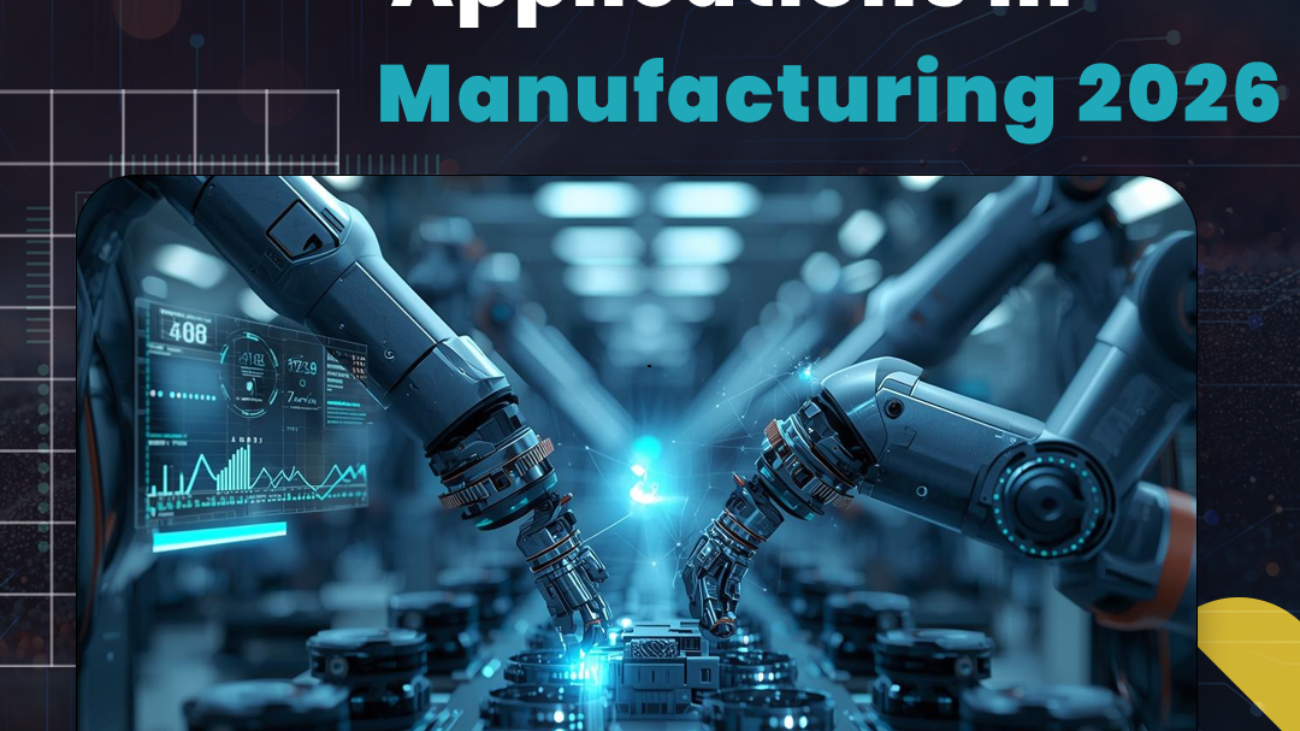
Computer Vision Applications in Manufacturing for 2026

Explore how computer vision is shaping manufacturing in 2026, from advanced defect detection and robotic guidance to predictive analytics and autonomous quality control. Learn how AI-powered vision systems drive efficiency, resilience, and competitive advantage.

Top 2026 Manufacturing Computer Vision Applications

Computer vision is widely used in smart factories for maximum optimization. Some of the manufacturing steps revolutionized by computer vision include:

Automated Defect Detection and Quality Control

Quality inspection remains the most widely adopted computer vision application in manufacturing. In 2026, systems use ultra high resolution cameras combined with Vision Transformers and advanced deep learning models to detect even microscopic defects.

Unlike traditional inspection systems, these AI-driven quality control platforms operate in real time and continuously learn from new production data.

Modern systems can identify:

  • Surface scratches and cracks
  • Micro fractures in metals and composites
  • Coating inconsistencies
  • Packaging and labeling defects
  • Assembly misalignments

Predictive Maintenance

Instead of waiting for equipment to fail, computer vision systems now monitor machinery continuously. Cameras track signs of wear such as:

  • Misaligned gears
  • Worn belts
  • Oil leaks
  • Vibrations and abnormal movement patterns

By analyzing visual patterns over time, AI models predict when maintenance is needed. Predictive maintenance is especially valuable in high throughput industries where every minute of downtime impacts revenue.

Robotic Guidance and Autonomous Systems

In 2026, 3D depth sensing and real time scene analysis allow robots and Automated Guided Vehicles to:

  • Navigate complex factory floors
  • Pick and place items with high precision
  • Adjust grip based on object shape
  • Work safely alongside human operators

Computer vision allows for more flexible automation by enabling dynamic path planning and object recognition. This is especially helpful in places that handle a variety of products or make frequent design changes.

Worker Safety and Compliance Monitoring

Overhead cameras powered by AI now monitor workplaces to ensure compliance with safety regulations. When violations occur, supervisors receive instant alerts. These systems can detect:

  • Missing personal protective equipment such as helmets or gloves
  • Unsafe worker behavior
  • Entry into restricted areas
  • Dangerous proximity to heavy machinery

Assembly Sequence Validation and Precision Inspection

Computer vision verifies that every step of the assembly process is completed correctly. Systems track component placement and confirm proper sequence at each production stage. This closed loop validation significantly reduces rework.

Smart Inventory and Logistics Management

Warehouse operations are becoming more automated, with systems that use vision technology. Cameras track inventory levels, monitor material movement, and automate stock counting.


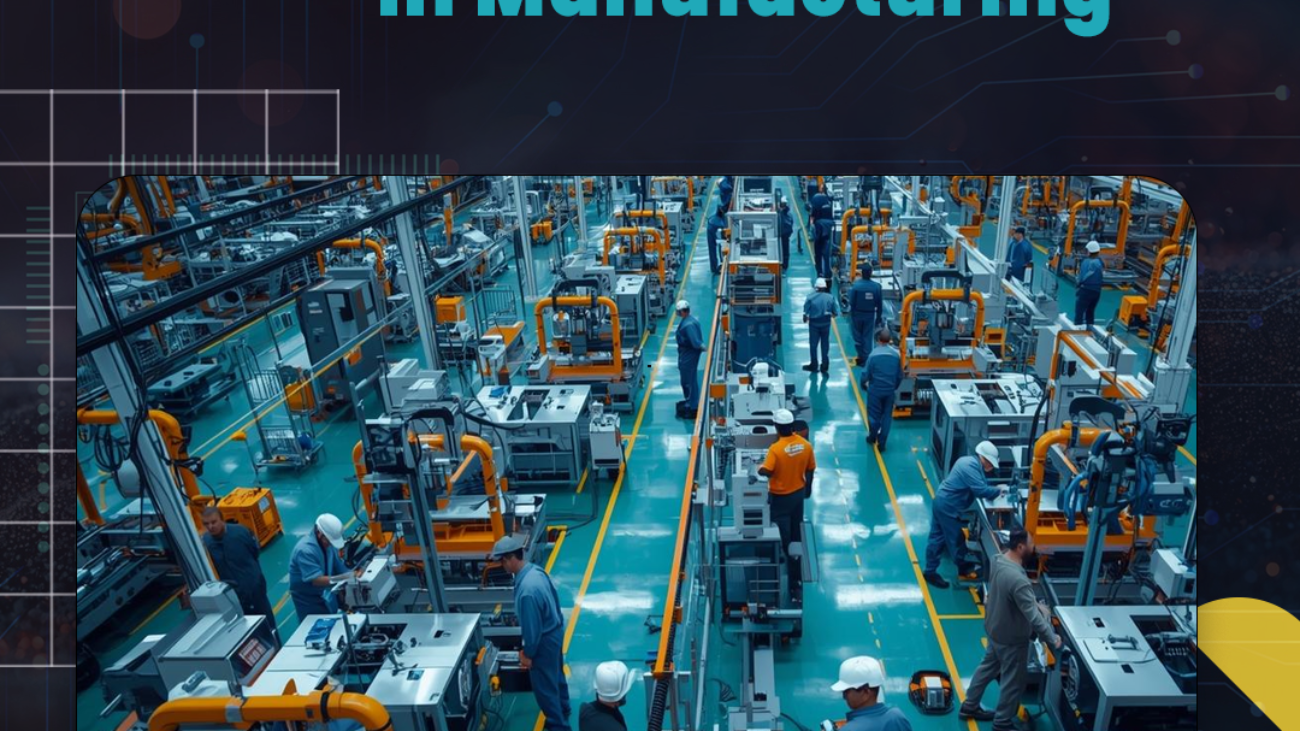
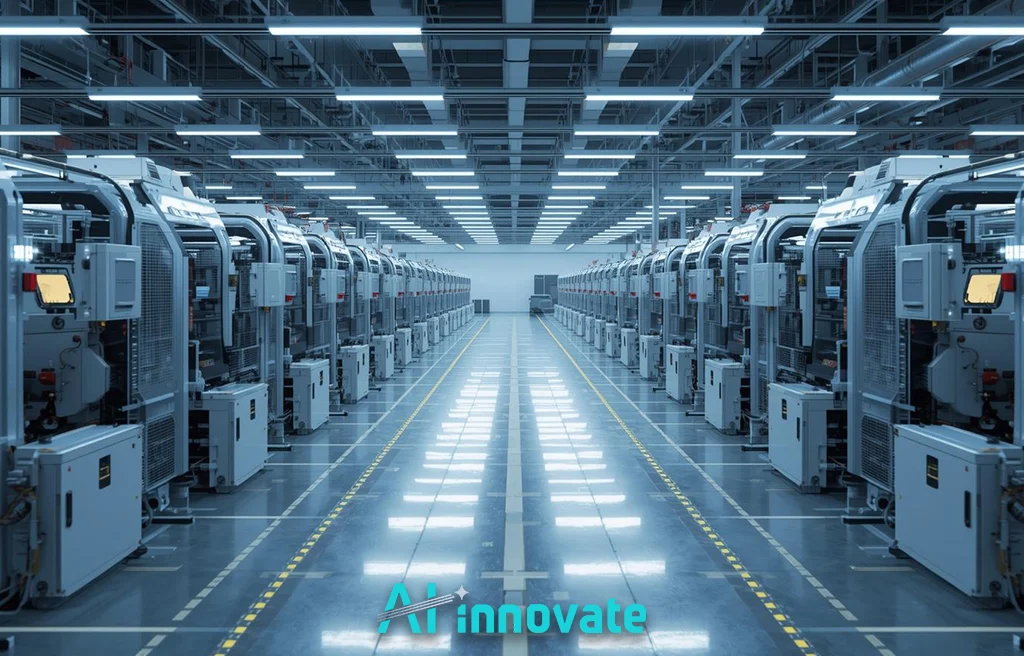
Modern factory floor with rows of automated industrial machines aligned symmetrically along a wide central aisle, bright overhead lighting, and a clean high-tech manufacturing environment.

Emerging 2026 Trends and Technologies

 The world of AI-powered tools is rapidly changing, and new technologies enter the scene every day. Some technologies that we’ll see more of in the near future include:

Edge AI and Real Time Processing

In 2026, more computer vision systems process data directly at the edge instead of sending everything to the cloud. Edge AI allows immediate decision making with minimal latency. Edge deployment is especially important in environments where split second decisions change everything.

Synthetic Data for Training

One of the biggest challenges in AI development is obtaining high quality labeled data. Synthetic data generation is becoming a major solution in 2026.

Manufacturers use simulated environments to create training datasets that include rare defect scenarios. This improves model performance without requiring massive real world data collection.


Hyperspectral Imaging

Hyperspectral imaging captures data beyond visible light, enabling deeper material analysis. In industries that manufacture complex products, hyperspectral imaging improves the quality control and validation of materials.

High Speed Vision Sensors

High Speed Vision Sensors enable faster image capture and processing. This is crucial for industries operating at extremely high production speeds. As costs decrease, adoption of HVS technology is expected to expand significantly.


High Impact Applications by Industry

This is where computer vision shines the most.

Autonomous and Assisted Mobility


Computer vision is central to perception stacks used in ADAS and autonomous systems. Detection, tracking, and semantic segmentation rely on advanced CV pipelines supported by radar and LiDAR integration.


Healthcare Imaging

Computer vision assists radiologists and pathologists by analyzing imaging data and identifying abnormalities. In surgical environments, vision guided systems enhance precision and reduce clinician workload when integrated into validated workflows.

Retail and Logistics

Vision systems are used in automated checkout, shelf analytics, demand forecasting, and warehouse picking automation. These capabilities reduce labor costs and increase operational efficiency.


Manufacturing Quality and Predictive Maintenance

In industrial production, computer vision drives closed loop quality control and predictive maintenance systems. Micro defect detection and automated corrective feedback increase yield and reduce manual inspection expenses.

AR VR and Wearables

Spatial computing and augmented reality devices rely on real time scene understanding. Major technology companies are accelerating development of AI driven AR experiences. Upcoming consumer hardware releases expected in 2026 highlight the growing practical demand for advanced vision processing.

How AI-innovate Enables Advanced Computer Vision Applications in 2026

AI-innovate supports manufacturers deploying next-generation computer vision systems by delivering an integrated AI ecosystem built for real-time performance, scalability, and industrial reliability. Our products help transform advanced vision strategies into practical, production-ready solutions through:

  • AI-powered defect detection and quality monitoring with AIxEye, enabling real-time surface inspection, assembly validation, and precision measurement across high-speed production environments
  • Synthetic data generation and model validation with AIxCam, accelerating training for rare defect scenarios, improving model robustness, and reducing reliance on extensive real-world data collection
  • Industrial edge processing with AIxCore, powered by NVIDIA Jetson Orin AGX, delivering real-time machine vision inference, robotics processing, isolated power architecture, and integrated industrial Ethernet for seamless factory integration

Whether manufacturers are modernizing legacy inspection systems or building fully connected smart factories, AI-innovate’s solutions provide the performance, flexibility, and edge intelligence required to deploy computer vision confidently at scale.

Conclusion

By 2026, computer vision will be a key part of manufacturing operations and other areas. New technologies like edge AI, synthetic data, hyperspectral imaging, and high-speed sensors are making performance better than ever. As industries move toward smarter, more connected ecosystems, we believe computer vision is no longer optional. It’s becoming a basic technology that increases efficiency, accuracy, safety, and innovation in modern manufacturing.

Ai-Innovate uses only high-quality sources, including peer-reviewed studies, to support the facts within our articles.

  1. Medium – Hire AI Developer. (2025). Computer Vision in 2026: Applications.
    A forward-looking overview of how computer vision technologies are evolving by 2026, including core technical trends and high-impact industry use cases across sectors like manufacturing, healthcare, and retail. (Medium)
    Retrieved from https://medium.com/@hireaideveloper/computer-vision-in-2026-applications-3bc7d89c1fd9
  2. Averroes.ai Blog. (2025). 7 Computer Vision Applications in Manufacturing & Industry.
    Practical insights into how computer vision enhances manufacturing operations, from real-time quality control and defect detection to process monitoring and integration with quality systems. (Averroes AI)
    Retrieved from https://averroes.ai/blog/computer-vision-manufacturing
  3. CVAT Resources. (2026). The Most Popular Datasets for Computer Vision Applications in 2026.
    A comprehensive guide to widely used computer vision datasets, explaining their strengths, typical tasks they support (e.g., object detection, segmentation), and considerations for choosing the right dataset for specific applications. (cvat.ai)
    Retrieved from https://www.cvat.ai/resources/blog/popular-computer-vision-datasets#examples-of-use-cases-for-computer-vision-datasets

FAQ

What is computer vision in manufacturing?

Computer vision in manufacturing refers to the use of AI-powered cameras and image-processing systems to inspect products, monitor production lines, and detect defects automatically. These systems help manufacturers improve quality, reduce human error, and increase production efficiency.

Real-world data collection and manual labeling have become bottlenecks. Manufacturers now use Digital Twins and Generative AI to simulate rare defects, cutting development cycles from months to weeks.

Processing data locally on the factory floor (at the “edge”) is now critical for maintaining high speeds and ensuring data privacy without relying on external cloud connections.

Computer vision systems analyze images and video in real time to identify scratches, cracks, missing components, alignment problems, and other production defects. Many manufacturers combine this technology with AI for Quality Assurance solutions to create faster and more accurate inspection workflows.

Yes. AI-powered computer vision systems can detect microscopic defects and inconsistencies that human inspectors may miss, especially during high-speed production. They also maintain consistent inspection standards without fatigue or human variability.

An Automated Optical Inspection Machine uses high-resolution cameras, lighting systems, and AI algorithms to inspect products for defects during manufacturing. These systems compare products against predefined quality standards and instantly flag defective items.

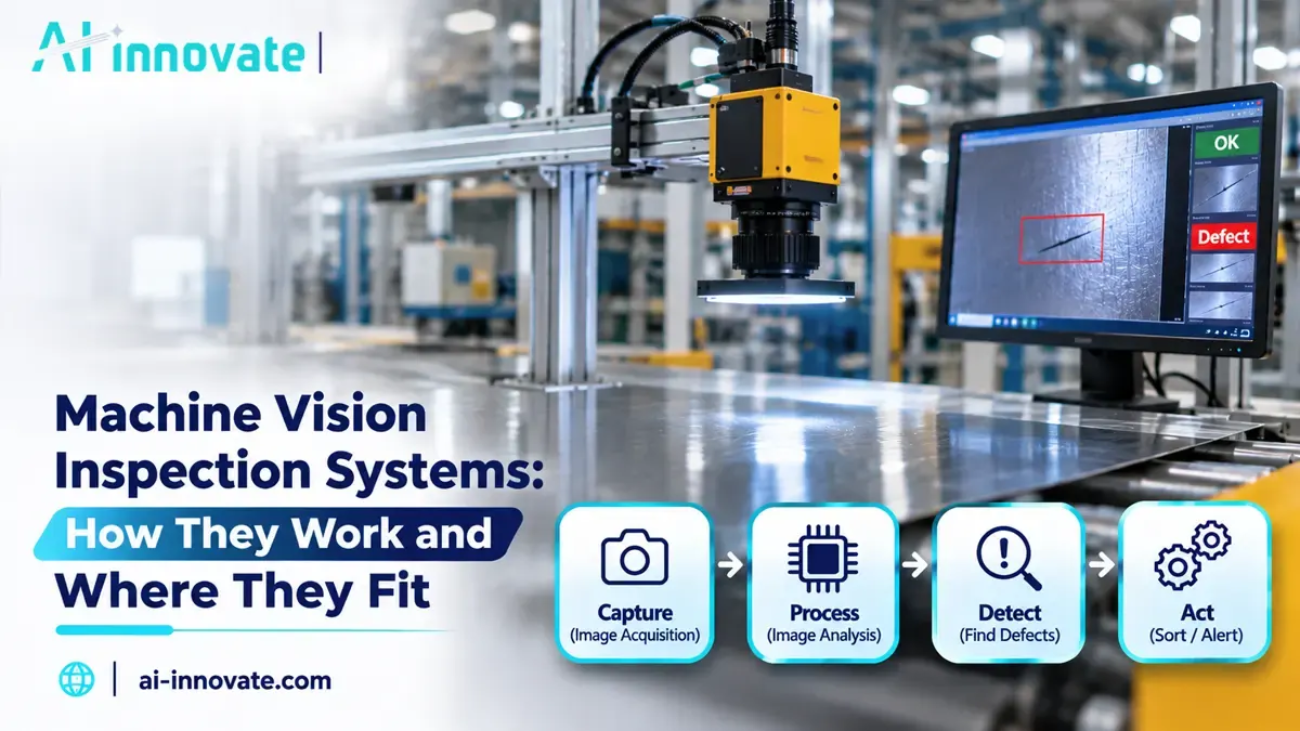
Machine vision inspection system with an industrial camera over a conveyor and a monitor flagging a surface defect, with capture, process, detect and act steps

Machine Vision Inspection Systems: How They Work and Where They Fit

A machine vision inspection system uses industrial cameras, controlled lighting, optics and image processing software to check every product on a production line against a defined quality standard, then passes or rejects it in real time. This guide explains how these systems work, their main components and types, where they fit best, and what to check before you invest.

Key Takeaways

A vision inspection system is a chain: trigger, image capture, processing, decision and action. The weakest link sets the result.

Lighting and optics decide what the camera can see; software can only analyze what has been captured.

2D systems handle most surface and label checks, 3D adds height and volume, and AI-based systems handle variable or hard-to-define defects.

Start from the smallest defect you must catch and your line speed; together they define camera resolution, frame rate and lighting.

What Is a Machine Vision Inspection System?

A machine vision inspection system is an automated quality control setup that captures images of parts or products and compares them with defined acceptance criteria or a trained model. It decides pass or fail in milliseconds, sends a signal to reject faulty items, and records each result for traceability. Unlike a single vision sensor, a full system combines imaging, processing and line integration.

Research on industrial vision describes these systems as a combination of image acquisition, image processing and decision stages working together (Golnabi and Asadpour, 2007). The term overlaps with automated visual inspection, which covers the wider practice of replacing manual checks with cameras and software.

How Does a Machine Vision Inspection System Work?

Every vision inspection system follows the same sequence, whether it checks labels on bottles or cracks on metal castings:

  • Trigger: a sensor or encoder signals that a part is in position.
  • Image acquisition: the camera captures the part under controlled lighting.
  • Preprocessing: the software corrects noise, contrast and position so that images are comparable.
  • Analysis: rule-based tools or deep learning models locate features, measure dimensions or flag defects.
  • Decision and action: the system sends a pass or fail signal to the PLC, which rejects the part or stops the line.
  • Data logging: results and images are stored so quality teams can trace defects back to shifts, suppliers or machines.
Machine vision inspection system workflow from trigger and image acquisition to analysis, PLC decision and data logging

Components of Machine Vision for Automated Inspection

A machine vision system is more than a camera: an integrated setup designed to capture, process, and analyze visual information quickly and reliably.

Here are the key components:

Cameras

Cameras capture images of products or components as they move along the production line. Depending on the application, systems may use:

  • 2D cameras for surface inspection
  • 3D cameras for depth and dimensional measurement
  • High resolution cameras for micro defect detection
  • Line scan cameras for continuous web or roll inspection

Area-scan cameras capture a full frame and suit discrete parts, while line-scan cameras build the image row by row and suit continuous materials such as paper, film or textiles. You can also choose between an all-in-one smart camera and a PC-based setup; the trade-offs are covered in smart cameras vs PC-based machine vision systems.

Lighting

Lighting is critical in machine vision. Poor lighting can cause shadows, reflections, or missed defects. Proper lighting plays a major role in getting the best possible results.

A survey of industrial defect detection research identifies lighting as a crucial component of visual inspection (Czimmermann et al., 2020).

Common lighting setups include:

  • Ring lights for uniform illumination
  • Backlighting for silhouette and shape detection
  • Structured lighting for 3D scanning
  • Infrared or ultraviolet lighting for material analysis

For a closer look at bright-field and dark-field setups, read our article on imaging components in machine vision.

Lenses and Optics

Lenses control how clear and wide an image is. If you set the right focal length and aperture, you can capture the target area accurately without distortion. Precision optics are very important for industries that have very exacting standards, where measurements must be extremely accurate.

Image Processing Software

The software is the brain of the system. It processes captured images and applies algorithms to detect anomalies, measure dimensions, or verify assembly.

Modern systems use:

  • Rule based algorithms for simple inspections
  • AI and deep learning models for complex defect detection
  • Pattern matching for assembly verification
  • Optical character recognition for label inspection

The right choice between rule-based tools and learning-based models depends on how predictable your defects are; we compare both in rule-based vs learning-based defect detection.

Processing Hardware

Industrial PCs, GPUs or edge devices run the image processing. Edge computing keeps the decision next to the line, so the reject signal does not depend on a network connection; learn more about edge AI in manufacturing.

Industrial camera and lighting setup in a machine vision inspection system

Types of Machine Vision Inspection Systems

Each machine vision system is made to complete certain tasks in the inspection process.

2D Vision Systems

These are the most common systems used for surface level inspections. They analyze flat images to detect defects, verify labels, and measure simple dimensions.

Best suited for:

  • Detecting scratches and cracks
  • Checking color consistency
  • Verifying printed text and barcodes
  • Identifying missing components

3D Vision Systems

3D systems measure depth and volume. They’re essential for dimensional accuracy and assembly validation.

Applications include:

  • Checking part alignment
  • Measuring height and depth
  • Inspecting weld seams
  • Robotic guidance

AI Based Vision Systems

AI-based systems use deep learning models trained on example images to recognize defects that are hard to describe with fixed rules, such as irregular scratches on textured surfaces or variations between product batches.

They are ideal for:

  • Complex surface defect detection
  • Detecting unpredictable defect types
  • Adapting to product variations
  • Learning from new data over time

Multispectral and Hyperspectral Vision Systems

These systems capture light beyond the visible range, such as near-infrared, to reveal differences in material composition, moisture or contamination that a standard camera cannot see. They are more specialized and costly, so they are usually chosen for food sorting, recycling or material identification rather than general surface checks.

The table below summarizes which system type fits which inspection task. For a detailed comparison of the first two, read 2D vs 3D machine vision.

System typeBest forMain limitation
2D visionSurface defects, labels, codes and presence checksNo height or depth information
3D visionHeight, volume, alignment and weld seamsHigher cost and heavier processing
AI-based visionVariable or hard-to-define defectsNeeds representative training images
Multispectral and hyperspectralMaterial composition and contaminationSpecialized hardware and higher cost

How to Choose a Machine Vision Inspection System

Before comparing vendors, define the inspection task. These questions shape every hardware and software decision:

  • What is the smallest defect you must detect, and how large is the field of view? Together they set the camera resolution.
  • How fast does the line run? Line speed sets frame rate, exposure time and the processing budget.
  • Are surfaces reflective, transparent or textured? Surface type decides the lighting and optics.
  • How often do products or defect types change? Frequent changes favor AI-based systems that can be retrained.
  • How will the system connect to your PLC, MES or quality database?

The best systems are flexible. Manufacturers are demanding platforms that can handle multiple inspection tasks without needing to completely change the hardware.

Modular systems that allow camera upgrades, software updates and AI model retraining make it easier to add products or inspection tasks later without replacing the whole setup.

Our vision system guide for manufacturers walks through budgeting and planning, and the guide on how to implement AI visual inspection covers the rollout step by step.

Machine Vision vs. Human Inspection: Accuracy, Speed and ROI

While human inspectors are skilled at recognizing obvious defects, machine vision systems offer measurable advantages in several areas.

Accuracy

Machine vision systems maintain consistent accuracy over time. They don’t experience fatigue, distraction, or variability between shifts. With suitable optics and lighting, AI-based systems can also detect very small defects that are hard for inspectors to see consistently.

For a full comparison of error sources and costs, see machine vision vs human inspection.

Speed

Modern production lines move at extremely high speeds. Machine vision systems inspect every part at full line speed without slowing down production, which manual inspection cannot sustain.

Return on Investment

Although the initial cost of installing a machine vision system may be significant, the return comes from lower scrap, less rework and steadier quality, and how quickly it pays back depends on your defect rates and line volume. Benefits can include:

  • Reduced scrap and rework
  • Lower labor costs
  • Fewer warranty claims
  • Improved production uptime
  • Enhanced product consistency

To estimate payback for your own line, see our breakdown of automated visual inspection ROI.

That said, machine vision doesn’t completely replace human oversight. Many facilities use hybrid systems where humans review flagged anomalies for final validation. Where to place each check, during production or at the end of the line, is covered in inline vs end-of-line inspection.

Real Deployment Example: Textile Defect Detection

In an AI-innovate project with a continuous textile manufacturer working with textured materials, an AIxEye-based machine vision setup moved inspection to 100% automated coverage and reduced the QC staff requirement by 50%. Inspection data was also linked to suppliers, raw materials and seasonal conditions to find the sources of recurring defects. Read the full textile defect detection case study.

Where Machine Vision Inspection Systems Are Used

Vision inspection is used wherever defects show up on the surface, shape or print of a product:

Common Challenges and How to Handle Them

Reflective and Textured Surfaces

Shiny metal, glass and glossy packaging create glare that hides defects. Diffuse or dark-field lighting and polarizing filters reduce the problem; the options are discussed in defects on reflective surfaces.

Rare or Unknown Defects

When defective samples are scarce, a model can be trained on good parts only and flag anything that deviates from them; this approach is explained in unsupervised anomaly detection.

Product Changes and Lighting Drift

New product variants, aging lights or dust on lenses gradually reduce accuracy. Scheduled recalibration and periodic model retraining keep results stable over time.

How AI-innovate Supports Machine Vision Inspection

AI-innovate builds machine vision inspection around two needs: detecting defects reliably and running inspection at the edge of the line. Its product ecosystem helps with:

  • AI-powered visual inspection with AIxEye, which identifies surface defects, subtle pattern deviations and complex quality issues in real time
  • Edge deployment and industrial integration powered by AIxCore, an industrial AI edge compute unit that delivers real-time machine vision processing, robotics integration and secure industrial Ethernet connectivity directly on the factory floor

Whether you need a first automated inspection station or an upgrade to an existing vision system, AI-innovate starts from the defect and the line conditions, then selects the camera, lighting and processing that can detect it reliably.

Conclusion

A machine vision inspection system is only as good as its weakest link. Cameras, lighting, optics, software and line integration all have to match the defect you need to catch and the speed your line runs at, which is why the inspection task should be defined before any hardware is chosen.

As production volumes and quality requirements grow, manufacturers that treat machine vision as part of their quality strategy, connected to robotics, predictive maintenance and production data, gain the most from automated inspection. Start with the smallest defect and the line speed, test on real parts, and scale once the results hold up.

This article draws on the following sources:

  1. Golnabi, H. and Asadpour, A. (2007). Design and application of industrial machine vision systems. Robotics and Computer-Integrated Manufacturing, 23(6), 630-637. doi.org/10.1016/j.rcim.2007.02.005
  2. Czimmermann, T. et al. (2020). Visual-Based Defect Detection and Classification Approaches for Industrial Applications: A Survey. Sensors, 20(5), 1459. doi.org/10.3390/s20051459

Frequently Asked Questions

What’s the difference between machine vision and manual inspection?

Machine vision systems provide consistent, high-speed, and objective inspections 24/7, whereas manual inspection is slower, subject to human error and fatigue, and less scalable.

These systems are widely used in automotive, electronics (PCB inspection), food & beverage, pharmaceuticals, packaging, and general manufacturing for quality checks, assembly verification, and sorting tasks.

Vision systems analyze captured images against predefined criteria or trained models to identify defects such as surface flaws, missing components, dimensional deviations, or labeling errors.

Cost depends on the number of cameras, the lighting, processing hardware, software licenses and integration work. A single-camera check costs far less than a multi-camera line with 3D or AI models, so the most reliable estimate comes from a feasibility test on your own parts.

Yes, if the software can be reconfigured or retrained. Rule-based tools need new settings for each variant, while AI-based systems can learn new variants from a set of labeled example images.

A smart camera combines sensor, processor and software in one housing and suits simpler tasks. A full machine vision system uses separate cameras and an industrial PC or edge device, which gives more processing power for multi-camera or AI-heavy inspection.

Anomaly Detection in Quality Control

Anomaly Detection in Quality Control: A Complete Guide

When it comes to manufacturing, what matters most in the end result is consistent quality, and maintaining consistent quality is precisely what quality control tries to achieve. As a part of quality control, anomaly detection plays a critical role in finding any small deviation and inconsistent patterns that can cause issues in production. In this blog, we’ll explain how anomaly detection fits the context of quality control and how it works in the industry, along with the proven benefits and potential limitations that come with the implementation of anomaly detection in quality control.

Anomaly Detection in Quality Control Find Problems Before They Spread.

AI-powered anomaly detection identifies unusual patterns, hidden defects, and process deviations in real time. Discover how intelligent monitoring helps prevent quality failures, reduce waste, and maintain consistent production performance.

What is Anomaly Detection in Quality Control?

Anomaly detection refers to the process of detecting abnormal and out of place productions that don’t follow the standard model. These anomalies can appear in sensor readings, images, machine outputs, or process metrics. Instead of relying solely on predefined rules, anomaly detection systems learn what normal production looks like and flag anything that falls outside expected patterns.

There are three main types of anomalies in manufacturing environments:

Point Anomalies

A point anomaly occurs when a single data point significantly deviates from normal behavior.

Examples include:

  • A sudden spike in temperature during a stable production run
  • A single product with a visible crack
  • An abnormal vibration reading from a machine
  • These are often easier to detect because they stand out clearly from typical data patterns.


Contextual Anomalies

Contextual anomalies depend on the surrounding conditions. A data point may be normal in one situation but abnormal in another.

For example:

  • A certain pressure level may be acceptable during startup but abnormal during steady operation
  • A temperature variation might be normal in summer but not in winter
  • These anomalies require systems that understand context and operating conditions.

Collective Anomalies


Collective anomalies occur when a group of data points together indicates abnormal behavior, even if individual points seem normal.

Examples include:

  • A gradual decline in product thickness across multiple batches
  • A series of small vibration changes that signal upcoming machine failure
  • A consistent but subtle color variation in coated materials
  • Collective anomalies are more complex and often require advanced analytics to detect
Robotic arms operating above a flat material sheet on an automated production line inside a modern factory, with industrial lighting and advanced machinery in the background.

Top Techniques for Anomaly Detection in Quality Control

Anomaly detection in manufacturing relies on a mix of statistical tools and advanced AI models. The right technique depends on the type of data that needs to be analyzed. Manufacturers use a combination of traditional and AI based methods to detect anomalies.

Common techniques include:

Statistical Process Control (SPC)

Statistical Process Control is one of the oldest and most trusted ways to check the quality of products. It uses control charts and statistical thresholds to monitor whether a process stays within acceptable limits.

SPC works by setting upper and lower control limits based on past production data. If a measurement is outside these limits, the system marks it as unusual.

While SPC is simple and reliable, it works best in stable, repetitive processes. It may not spot small or complicated changes that happen slowly over time.

Machine Learning Algorithms

Machine learning models learn patterns from past production data and automatically spot any changes. These models can adapt as processes change, which isn’t possible with rule-based systems.

Machine learning is especially useful when working with large sets of data that would be difficult to analyse manually. It can spot both obvious and subtle problems, depending on how well it has been trained.

Computer Vision Systems

In industries where product appearance matters, computer vision plays a major role in anomaly detection. High resolution cameras capture images of products, and AI models analyze them to detect defects.

Computer vision is commonly used for:

  • Surface defect detection such as scratches or cracks
  • Color consistency checks
  • Label and packaging verification
  • Assembly validation

Time Series Analysis

Many manufacturing systems generate data based on time, for example vibration signals, motor speeds, or temperature readings. Time series analysis looks for irregular patterns over time.

This is especially useful for predictive maintenance, as it can spot gradual changes that show equipment is wearing out before it breaks.

Deep Learning and Autoencoders

Deep learning techniques go a step further by analyzing highly complex data patterns. Autoencoders, for example, are neural networks trained to reconstruct normal data. When they encounter abnormal data, reconstruction errors increase, signaling an anomaly.

Deep learning is highly effective for:

  • Detecting subtle micro defects
  • Monitoring multi sensor systems
  • Analyzing high dimensional data
  • Identifying patterns humans may miss

What are The Three Anomaly Detection Approaches in Quality Control?

Different machine learning strategies are used depending on how much labeled data is available.

Supervised Anomaly Detection

Supervised anomaly detection uses labelled datasets where both normal and defective examples are clearly identified. The model learns to tell the difference between good and bad results. This approach works well when data about past defects is available.

Unsupervised Anomaly Detection

Unsupervised anomaly detection doesn’t rely on labelled defect data. Instead, it learns typical ways that things should be working and automatically flag anything that’s not normal. This approach is especially useful in environments where there are few or no examples of defects. It can spot new or unexpected problems. But sometimes, models that aren’t being supervised might identify harmless changes as problems, which can lead to false alarms.

Semi Supervised Anomaly Detection

Semi supervised approaches combine elements of both methods. The system is trained on normal data, but it may also include some samples with defects that have been labelled. This method is often practical in manufacturing because there’s a lot of normal production data, but not much defect data. Semi supervised systems are popular in smart factories because they balance accuracy and flexibility.

Close-up of a smooth reflective sheet moving along a conveyor system in a high-tech manufacturing facility, surrounded by automated equipment and bright overhead lights.

Advantages and Limitations of Anomaly Detection

Anomaly detection offers significant benefits for manufacturing quality control, but it can also come with certain challenges that need preparation. Despite these challenges, the long term gains in efficiency and quality often outweigh the initial investment.

Advantages

  • Early detection of defects and equipment issues
  • Reduced waste and scrap rates
  • Improved product consistency
  • Lower inspection costs
  • Enhanced predictive maintenance capabilities
  • Real-time defect analysis of production lines

Limitations

  • High quality data is required for reliable results
  • Complex systems may require skilled implementation
  • False positives can interrupt production
  • Integration with legacy systems may be challenging
  • Initial setup and training costs can be significant

How AI-Innovate Supports Anomaly Detection in Quality Control

As anomaly detection becomes more central to modern quality control, manufacturers need reliable AI tools that can operate in real time, integrate with existing production systems, and adapt to complex industrial environments. AI-Innovate’s product ecosystem is designed to support intelligent anomaly detection across manufacturing operations by helping with:

  • AI-powered visual anomaly detection using AI2Eye, enabling real-time identification of surface defects, subtle pattern deviations, and complex quality issues that traditional rule-based systems may miss
  • Synthetic data generation and validation through AI2Cam, helping teams train anomaly detection models efficiently, especially when real defect samples are rare or difficult to capture
  • Edge deployment and industrial integration powered by AIxCore, an industrial AI edge compute unit built on NVIDIA Jetson Orin AGX, delivering real-time machine vision processing, robotics integration, and secure industrial Ethernet connectivity directly on the factory floor

Whether manufacturers are implementing anomaly detection for defect prevention, predictive maintenance, or full smart factory integration, AI-Innovate’s solutions provide the infrastructure needed to move from reactive inspection to intelligent, AI driven quality control.

Conclusion

Anomaly detection in quality control is transforming how manufacturers monitor production. By identifying unusual patterns early, companies can prevent defects, reduce downtime, and improve overall efficiency.
Whether using supervised, unsupervised, or semi supervised methods, modern anomaly detection systems provide a powerful layer of intelligence to production environments. I believe as manufacturing becomes more data driven, anomaly detection will continue to play a central role in ensuring consistent quality and operational excellence.

Confused About Where to Start with AI?

Our specialists help you identify the right AI approach based on your process, data, and goals.

Ai-Innovate uses only high-quality sources, including peer-reviewed studies, to support the facts within our articles.

  1. Maddox AI Blog. (2025). Anomaly Detection: What It Is and How It Works.
    A clear introduction to anomaly detection concepts, algorithms, and practical applications in AI systems.
    Retrieved from https://www.maddox.ai/en/blogs-en/anomaly-detection/
  2. ScienceDirect. (2023). Deep Learning–Based Anomaly Detection for Industrial Applications.
    A study exploring the use of deep learning techniques for identifying anomalies in industrial data streams and quality monitoring.
    Retrieved from https://www.sciencedirect.com/science/article/pii/S0360835223000694
  3. Meegle – Topics. (2025). Anomaly Detection in Quality Control.
    An overview of how anomaly detection methods are applied to quality control, defect detection, and process improvement in manufacturing contexts.
    Retrieved from https://www.meegle.com/en_us/topics/anomaly-detection/anomaly-detection-in-quality-control
  4. DIVA Portal. (2025). Anomaly Detection in [Context of PDF Title].
    A comprehensive PDF resource detailing methodologies, case studies, and theoretical foundations of anomaly detection (full title available within document).
    Retrieved from http://www.diva-portal.org/smash/get/diva2:1891576/FULLTEXT01.pdf
  5.  

FAQ

What is anomaly detection?

Anomaly detection is the identification of rare events, items, or observations which are suspicious because they differ significantly from standard behaviors or patterns. Anomalies in data are also called standard deviations, outliers, noise, novelties, and exceptions.

The 3-sigma rule, also known as the 68-95-99.7 rule or the empirical rule, is a statistical guideline used in anomaly detection and quality control. It is based on the normal distribution and is used to identify outliers or anomalies in data.

A go-to example of anomaly detection is a credit card fraud detection system. This uses algorithms to identify unusual spending patterns in real-time: large purchases in a new location, for example, This alert for potentially fraudulent activity is then reviewed by the bank directly.

Surface Defect Detection Using Image Annotation

Surface Defect Detection Using Image Annotation

Manufacturing is nearly impossible without visual inspection, so it’s no question that a good visual inspection process is worth investing in. Customer expectations are ever-increasing, regulatory requirements are as tight as ever, and production lines have never been faster. That’s why many manufacturers are taking a closer look at automated visual inspection.

The big question isn’t whether the technology works, but whether the investment makes financial sense. So in this guide, we’ll break the discussion into what automated visual inspection brings, what it costs to implement, and how those costs translate into measurable returns.

Surface Defect Detection Powered by Precise Image Annotation.

Accurate image annotation is the foundation of high-performance defect detection models. Learn how labeled datasets enable AI systems to identify scratches, cracks, and surface irregularities with greater precision, consistency, and scalability in manufacturing environments.

Understanding Surface Defect Detection and the Role of Image Annotation

Surface defect detection is the process of finding flaws on materials or products. These flaws can be tiny scratches, dents, cracks, rust, or uneven paint. Finding them manually can take a long time and is more unreliable and prone to mistakes when compared to AI systems.

This is where image annotation comes to the rescue. Image annotation is the process of labelling or tagging images so that a computer vision model can “learn” to recognize specific patterns. When it comes to spotting surface defects, annotation helps AI models understand what a defect looks like and where it appears on a surface.

The better the notes, the better the AI system can spot defects as they happen. This means less waste, better quality, and faster production.

Annotation Types Explained in Simple Language

Each annotation type allows the AI model to “see” defects differently, and the choice depends on how precise the detection needs to be and the complexity of the surface. There are several ways to annotate images for surface defect detection, and each serves a specific purpose:

  • Bounding Boxes: Drawing rectangles around defects. This is simple and widely used for object detection. It’s used for scratches, dents, missing components, or foreign objects. Best when defects are clearly isolated and roughly rectangular.
  • Polygons: Drawing precise shapes around irregular defects. It’s used for cracks, corrosion spots, pits, or surface peeling. Ideal for defects with irregular or complex edges.
  • Semantic Segmentation: Label each pixel of the image to classify the type of surface or defect. This is detailed but very accurate. It’s used for coating inconsistencies, paint defects, or areas of discoloration. Good for continuous or widespread surface anomalies.
  • Instance Segmentation: Combines object detection and segmentation to distinguish multiple defects of the same type on a single surface. It’s used for multiple scratches, dents, or defects occurring close together where each must be treated individually.
  • Key Points or Landmarks: Identifies specific points on defects for measurements or pattern recognition. It’s used for measuring crack lengths, defect center points, or alignment issues in components. Useful for defects where size or position matters.
bounding box annotation in production line

Step-by-Step Workflow of Image Annotation for Surface Defect Detection

Creating high-quality annotated datasets is crucial for training AI. This is usually how the training process goes:

  1. Collect Images: Capture high-resolution images of surfaces, including both defective and defect-free samples. Preprocessing can involve adjustments such as resizing, contrast enhancement, or noise reduction.
  2. Organize and Preprocess: Sort images by type of surface, lighting conditions, or defect type.
  3. Select Annotation Tool: Choose a software tool suitable for your needs, such as Labelbox, CVAT, or Supervisely.
  4. Define Annotation Guidelines: Decide which defects to label, annotation type, and labeling conventions for consistency.
  5. Annotate Images: Mark defects in each image according to the defined guidelines. Accuracy and consistency are key at this stage.
  6. Quality Check: Review annotated images to ensure they match the guidelines and correct any errors.
  7. Split Data: Divide annotated images into training, validation, and test sets for machine learning.
  8. Train AI Model: Feed the annotated images into a computer vision model to teach it to detect defects.
  9. Evaluate Model Performance: Test the model on unseen images and adjust annotations or model parameters if needed.
  10. Deploy and Monitor: Implement the trained AI model on production lines and keep monitoring performance for new defect patterns.

Looking beyond the numbers, the value of automated visual inspection becomes clear from the return. The ROI often comes from multiple areas working together rather than a single cost-saving metric.


How AI-innovate Helps with Surface Defect Detection Using Image Annotation

AI-innovate supports manufacturers in deploying AI-powered surface defect detection by providing a complete ecosystem for creating, training, and scaling inspection models. Our products help transform image annotation into actionable quality control insights through:

  • Accurate defect detection and classification with AI2Eye, enabling real-time surface inspection for scratches, dents, corrosion, or coating inconsistencies across production lines
  • Data generation, labeling, and validation with AI2Cam, reducing the time and cost of building high-quality annotated datasets, and ensuring models perform reliably even on rare or complex defect types
  • Industrial edge AI processing through AIxCore, powered by NVIDIA Jetson Orin AGX, providing real-time inference on production lines, integrated robotics support, and robust industrial networking for continuous, high-speed inspection

Whether you’re developing AI models from scratch, validating new defect types, or scaling inspection across multiple production lines, AI-innovate’s tools turn image annotation into measurable improvements in quality, efficiency, and operational reliability.

Conclusion

Image annotation is a crucial step in leveraging AI-based surface defect detection. By carefully labelling defects and adhering to a structured workflow, manufacturers can train computer vision models to detect imperfections more quickly and accurately than humans alone, which improves product quality, reduces waste and increases efficiency on the production line. I believe that well-annotated datasets enable AI systems to learn and adapt continuously, thereby improving the reliability and accuracy of defect detection over time.

Ai-Innovate uses only high-quality sources, including peer-reviewed studies, to support the facts within our articles.

  1. Keymakr Blog. (2024). Surface Defect Detection with Computer Vision and Image Annotation. Explains how annotated images are used to train AI systems for detecting defects in industrial settings. Retrieved from https://keymakr.com/blog/surface-defect-detection-with-computer-vision-image-annotation/
  2. SpringerLink. (2025). Application of Mask R‑CNN and YOLOv8 for PCB Defect Detection. Compares deep learning‑based segmentation and object detection models for industrial defect recognition tasks. Retrieved from https://link.springer.com/article/10.1007/s42452-025-06641-x
  3. Nature Scientific Reports. (2025). Deep Learning for Metal Surface Defect Detection. Presents a study on applying deep neural networks to classify and detect surface defects. Retrieved from https://www.nature.com/articles/s41598-025-31235-3
  4. Industrial Engineering Journal (GDUT). (2024). A Review on Surface Defect Detection Based on Deep Intelligent Vision. Reviews various computer vision approaches to surface inspection and defect detection. Retrieved from https://iej.gdut.edu.cn/en/article/doi/10.3969/j.issn.1007-7375.230233
  5. SpringerLink. (2024). Surface Defect Inspection of Industrial Products with Object Detection Deep Networks. A systematic review of deep learning methods for surface defect detection, with insights into annotation and model training. Retrieved from https://link.springer.com/article/10.1007/s10462-024-10956-3
  6.  

FAQ

Why is image annotation important in defect detection?

Most manufacturers achieve a full ROI within 12 to 24 months. In high-volume or high-risk sectors like steel or pharmaceuticals, some case studies report much faster paybacks, with one instance showing a 280% ROI in just over 4 months.

Annotated images provide ground truth data. Models like CNNs (Convolutional Neural Networks) use this data to learn patterns of defects and distinguish them from normal surfaces during production.

Partially. Tools with AI-assisted labeling can suggest annotations based on pre-trained models, but human verification is usually required to ensure accuracy, especially for complex or subtle defects.

The required number depends on defect complexity and model type. For simple defects, a few hundred images may suffice. For complex or rare defects, thousands of high-quality annotated images are recommended.

Computer Vision in Smart Factories

Computer Vision in Smart Factories: What It Is and What It Does

Manufacturing is nearly impossible without visual inspection, so it’s no question that a good visual inspection process is worth investing in. Customer expectations are ever-increasing, regulatory requirements are as tight as ever, and production lines have never been faster. That’s why many manufacturers are taking a closer look at automated visual inspection.

The big question isn’t whether the technology works, but whether the investment makes financial sense. So in this guide, we’ll break the discussion into what automated visual inspection brings, what it costs to implement, and how those costs translate into measurable returns.

Computer Vision in Smart Factories. Turning Images into Intelligence.

Computer vision empowers smart factories to detect defects, monitor processes, and optimize production in real time. By transforming visual data into actionable insights, AI-driven vision systems improve quality, reduce waste, and accelerate data-driven decision making across the factory floor.

Overview of AI computer vision in a smart factory

Computer vision works like a tireless eye that looks at images and videos and analyzes them based on data. Cameras and sensors work as the “eye” and artificial intelligence algorithms analyze what they “see”. In a smart factory, these systems are integrated into production lines, robotic arms, inspection stations, and logistics workflows to speed up decision making.

Traditional vision systems use rules and simple patterns to identify defects, but AI-powered computer vision uses machine learning and deep learning models to do this. With the help of AI, it can also track objects, classify components and monitor processes. These systems get better the more data they process.

In practical terms, computer vision enables machines to:

  • Detect defects that may be invisible to the human eye
  • Measure dimensions with high precision
  • Monitor production lines in real time
  • Ensure compliance with quality standards
  • Improve safety by detecting hazardous conditions

It essentially adds visual intelligence to automation systems.

Benefits of Implementing Computer Vision AI

The addition of computer vision in smart factories has allowed for many operational advantages, some of which include:

Improved Quality Control

Computer vision systems are very effective during surface defect detection. Assembly errors, and dimensional inconsistencies are detected with great accuracy when compared to manual inspection.

Real-Time Decision Making

AI enables immediate image processing, so in case of a defect, it can trigger immediate corrective actions. This minimizes downtime and keeps production running efficiently.

Reduced Labor Costs

Computer vision can automate repetitive inspection tasks and allows human workers to focus on higher-value activities such as system optimization and strategic planning.

Increased Production Speed

Computer vision operates continuously without fatigue. Since no breaks are needed and the data processing is instant, it leads to faster inspection cycles and higher throughput.

Data-Driven Process Optimization

AI systems collect visual data that can be analysed to identify trends, root causes of defects, and opportunities for improvement.

Top 10 Use Cases of Computer Vision in Smart Factories in 2026


These examples show how computer vision is used in production systems, not as a separate tool. Here are ten practical ways that computer vision is used in modern manufacturing:

  1. Surface Defect Detection: Computer vision helps with identifying cracks, scratches, corrosion, or coating inconsistencies on products like metals, electronics, and automotive parts.
  2. Assembly Verification: It’s used to ensure that components are correctly installed, aligned, and assembled before moving to the next stage.
  3. Dimensional Measurement: Vision systems are used to measure part dimensions with high precision and verify tolerance compliance.
  4. Predictive Maintenance Support: Monitoring machinery for visual signs of wear, leaks, or misalignment to prevent unexpected breakdowns.
  5. Robot Guidance and Control: AI-powered systems allow robotic arms to locate, pick, and place parts accurately using visual input.
  6. Inventory Tracking and Logistics: computer vision automates tracking materials, identifying barcodes or QR codes, and monitoring warehouse flow.
  7. Packaging Inspection: It checks labels, seals, and packaging quality to ensure compliance with regulatory and branding standards.
  8. Worker Safety Monitoring: Computer vision can be used to protect human workers by detecting whether workers are wearing protective equipment and identifying unsafe behaviors in real time.
  9. Process Monitoring in Real Time: AI computer vision monitors manufacturing processes such as welding, soldering, or coating to detect anomalies instantly.
  10. Automated Sorting and Classification: With the ability to see and analyze, computer vision is able to sort products based on visual characteristics such as size, color, or defect presence.
Modern factory floor with rows of automated industrial machines aligned symmetrically along a wide central aisle, bright overhead lighting, and a clean high-tech manufacturing environment.

How AI-innovate Powers Computer Vision in Smart Factories

AI-innovate supports manufacturers implementing computer vision in smart factories by delivering a complete industrial AI ecosystem built for real-time performance, scalability, and reliability. Our products enable factories to move from isolated vision tools to fully integrated, intelligent automation systems by providing:

  • AI-driven quality control with AI2Eye, enabling accurate surface inspection, assembly verification, and real-time process monitoring across production lines
  • Synthetic data generation and model validation through AI2Cam, reducing dependency on rare defect samples and accelerating the development and optimization of vision models
  • Industrial-grade edge AI processing with AIxCore, powered by NVIDIA Jetson Orin AGX, delivering real-time machine vision, robotics processing, isolated power architecture, and integrated industrial Ethernet for seamless factory deployment

Whether manufacturers are building new smart factory infrastructure or upgrading existing automation systems, AI-innovate’s products provide the edge intelligence, flexibility, and performance needed to deploy computer vision at scale and turn visual data into operational advantage.

Conclusion

Computer vision is a foundational technology in smart factories. It has already had a revolutionary impact on automated inspection, improving quality, enhancing safety, and optimizing production processes. It’s no doubt that with the rapidly advancing world of AI, computer vision will become of even greater importance in the future.

I believe for manufacturers who want to stay competitive in a world that’s becoming more automated, using computer vision is now essential. It’s an investment that will make the manufacturing processes more efficient, reliable, and better in the long term.

Ai-Innovate uses only high-quality sources, including peer-reviewed studies, to support the facts within our articles.

  1. How Computer Vision Is Powering Smart Factories
    Medium — An accessible overview of how computer vision technologies are being integrated into smart manufacturing workflows.
    https://medium.com/@chinmayiadsul/how-computer-vision-is-powering-smart-factories-00c66e6093ea
  2. The Role of Computer Vision & AI in Smart Manufacturing
    Ripik — Discussion of how AI and computer vision support automation, quality inspection, and efficiency improvements in manufacturing.
    https://www.ripik.ai/the-role-of-computer-vision-ai-in-smart-manufacturing/
  3. Application of Computer Vision in Industry (MDPI Article)
    Applied Sciences (MDPI) — Peer-reviewed article on applied computer vision research relevant to industrial applications.
    https://www.mdpi.com/2076-3417/15/18/10157
  4. Computer Vision in Industrial Contexts (Theses Repository)
    Theseus — Academic thesis related to computer vision applications in industrial or engineering domains.
    https://www.theseus.fi/handle/10024/894015
  5.  

FAQ

How is computer vision used in manufacturing?

Computer vision systems improve robot-based manufacturing by allowing the robots to see exactly what they are doing. This means that they can spot any problems as they are putting parts together. A computer vision platform can guide robotic arms to do things like put parts in place and do welding.

Computer vision is used in many industries, like self-driving vehicles, manufacturing, agriculture, entertainment, city planning, and more. It changes how computers and machines interact with the world.

Computer vision is a technology that lets machines automatically recognise and describe images accurately and efficiently. Now, computers can access lots of images and video data from or created by smartphones, traffic cameras, security systems and other devices.

Yes, computer vision is a type of artificial intelligence (AI). At its most basic, AI refers to systems designed to perform tasks that usually require human-like reasoning, perception, or decision-making.

Anomaly detection Industrial Process

Common Causes of Defects in Manufacturing

Manufacturing defects are often seen as separate problems, but they are actually signs of bigger problems in the process. A defect rarely appears without warning. More often, problems develop over time from small inconsistencies. These inconsistencies go unnoticed until something goes wrong.

It is essential to understand the main causes of defects to improve reliability, reduce waste, and maintain stable production. If you don’t understand this, your inspection process will be passive. You’ll focus on finding defective parts instead of preventing them.

This article explains what usually causes problems in manufacturing. It also explains how these problems develop in production systems. Finally, it discusses why it is important to see these problems early on so that they can be dealt with and the manufacturing process can be made better over time.

Build and Test Machine Vision Without Hardware

Simulate, validate, and optimize vision systems faster using hardware-free AI-powered emulation.

Understanding the Root Causes of Manufacturing Defects

Defects usually come from the interaction of many different variables, not just one problem. Stable systems can handle changes. Unstable systems make it worse.

When the ways we check things out don’t show us how things actually work, problems are seen as results instead of causes. This limits the effectiveness of Quality Control in Manufacturing and makes it unclear when problems should be fixed. If manufacturers understand the root causes of problems, they can find ways to improve their products continuously.

Process Variability and Instability

One of the most common causes of manufacturing defects is process variation, meaning that the process is not controlled. Changes in temperature, pressure, speed, alignment, or timing can all have a negative impact on quality, even when they seem insignificant.

When processes are close to their limits, small changes can cause results to go beyond what is considered acceptable. These changes often go unnoticed if they’re not checked regularly. This is where AI for process monitoring and machine learning for manufacturing process optimization become important. They help identify drift before defects spread throughout production.

Material Inconsistency and Quality Issues

Another common reason for defects is variations in the raw materials used. Things like how it’s made, how thick it is, how the surface looks, or who made it can all have a big impact on how it works later on.

Traditional inspection systems often assume that materials are the same, which makes them not very good at finding small differences. This is especially true in surface-critical applications, where surface defect detection and AI for material defect identification must adapt to natural variability rather than fixed expectations.

Equipment Wear and Calibration Drift

Manufacturing equipment usually gets worse over time instead of breaking down all at once. Things like tool wear, sensor drift, mechanical fatigue, and misalignment can add up to small changes over time.

If you don’t keep an eye on these changes, you won’t know about them until your defect rates start to increase. Periodic maintenance helps reduce risk, but it does not replace AI for industrial process control supported by data-driven monitoring. If we track how the equipment is behaving all the time, we can find out early if there are any problems with the mechanical parts or the calibration.

From Insight to Implementation

See how AI-driven inspection and machine vision systems are deployed in real industrial environments

From Insight to Implementation

See how AI-driven inspection and machine vision systems are deployed in real industrial environments

See how AI-driven inspection and machine vision systems are deployed in real industrial environments

Human Factors and Manual Intervention

When people are involved, things can vary because of fatigue, differences in judgment, and inconsistent execution. Even experienced operators are affected by workload, environment, and shift changes.

When there are a lot of items to inspect, or when the defects are hard to see, it’s easy to miss something. This is why many manufacturers compare automated quality control to manual inspection and evaluate machine vision to human inspection as production scales.

Inadequate Inspection Strategies

Many defects persist not because processes fail, but because inspection systems are not designed to detect early-stage problems.

Sampling-based inspection means that defects are evenly distributed. Rule-based systems depend on predefined thresholds that can’t handle variation. This makes inspection reactive instead of preventive.

Modern automated visual inspection, supported by machine vision for defect detection, enables continuous analysis at production speed. When paired with automated optical inspection machine architectures and Deep Learning in Automated Visual Inspection, inspection shifts from simple pass or fail decisions to pattern recognition and trend analysis.

This Topic might also interest you :

Why Identifying Defect Causes Matters More Than Catching Defects

Finding defects is important, but it doesn’t stop them from happening again. Making things better in a way that can be maintained in the long term depends on understanding and controlling the things that cause problems to form.

Manufacturers that focus on finding the root cause of problems can improve their productivity, make their processes more stable, and reduce long-term costs. The main methods for doing this, from the 5 Whys to FMEA, are explained in our guide to defect analysis techniques. Finding those problems in the first place is covered in our guide to defect detection in manufacturing. This is where yield improvements in manufacturing and AI for predicting defects become important for business strategy instead of just technology.

How AI Innovate Helps Manufacturers Understand the Causes of Defects

Understanding why defects occur requires more than detecting them. It requires connecting inspection results with process behavior over time. AI Innovate supports this by enabling manufacturers to observe, analyze, and interpret defect patterns within their production systems.

  • AI2Cam helps teams simulate cameras, lighting conditions, and defect scenarios during development, making it easier to understand how different defect types appear and how inspection sensitivity affects detection consistency.

  • AI2Eye provides real-time, inline inspection that captures defects as they form, allowing manufacturers to correlate defect occurrence with specific production stages and operating conditions.

  • AIXCore connects inspection outputs with process data at the edge, enabling trend analysis, temporal correlation, and deeper insight into how process drift, equipment behavior, or environmental factors contribute to defect formation.

Together, these tools help manufacturers move beyond defect detection toward systematic root cause understanding, reducing recurrence and supporting more stable, predictable production.

Conclusion

Manufacturing defects rarely happen because of just one problem. They come from the interaction between processes, materials, equipment, people, and inspection systems. Defects that are missed are usually the result of a lack of visibility, not because the work is done poorly.

In terms of how they operate, the best quality strategies are all about finding problems early, keeping an eye on things, and making improvements based on what they see. As these systems improve, they can do more than just find defects early on. They can also show how processes change over time. This insight is key to protecting quality, improving yield, and ensuring profitability.

Confused About Where to Start with AI?

Our specialists help you identify the right AI approach based on your process, data, and goals.

Ai-Innovate uses only high-quality sources, including peer-reviewed studies, to support the facts within our articles.

  1. Government of Canada. (2024). Advanced Manufacturing and Digital Technologies
    Overview of how data-driven systems, automation, and digital inspection support quality improvement and process understanding in manufacturing.
    Retrieved from canada.ca
  2. Innovation, Science and Economic Development Canada. (2023). Artificial Intelligence in Manufacturing and Industrial Systems
    Explains how AI supports process monitoring, defect analysis, and operational decision-making in modern manufacturing environments.
    Retrieved from ised-isde.canada.ca
  3. National Research Council Canada. (2023). Digital Manufacturing and Industrial Quality Technologies
    Covers applied research on inspection, sensing, and data integration for understanding defect formation and improving manufacturing quality.
    Retrieved from nrc.canada.ca

FAQ

Why do defects keep repeating even after inspection catches them?

Because inspection alone identifies outcomes, not causes. If the underlying process conditions are not understood and adjusted, the same defect will continue to reappear.

Manufacturers need inspection images, time-based process data, and contextual information such as equipment state or environmental conditions. The value comes from linking these data sources, not viewing them separately.